Great Recession

Search documents
Why More Than Half of Gen X Are Worried They Won't Be Ready For Retirement
Investopedia· 2026-02-28 17:00
Core Insights - Generation X is approaching retirement but feels unprepared financially, with over half indicating insufficient savings for retirement [1] Group 1: Financial Challenges - Generation X was significantly impacted by the Great Recession starting in 2007, which hindered their ability to build a solid financial foundation [1] - Many Gen Xers are part of the "sandwich generation," balancing financial responsibilities for both aging parents and children, with 61% living in multi-generational homes [1] - Unexpected caregiving costs, including medical expenses and long-term care, are diverting resources away from retirement savings [1] Group 2: Unique Characteristics of Generation X - Unlike baby boomers, fewer Gen Xers have access to pensions, making them the first generation responsible for saving independently for retirement [1] - Generation X is likely to be the first affected by potential changes to Social Security, with funding expected to fall short beginning in 2034 [1] - The median net worth of Gen X households fell by 38% from $63,000 to $39,000 between 2007 and 2010, marking the largest percentage loss among generations [1] Group 3: Post-Recession Financial Priorities - Following the recession, 12% of Gen X reported being laid off, and a quarter experienced reduced work hours or wages, leading to a focus on debt repayment and basic living expenses rather than retirement savings [1] - Only about a quarter of Gen X indicated that saving for retirement was their greatest financial priority post-recession [1] - A well-designed financial plan is suggested to help Gen X address their unique challenges and work towards a stable retirement [1]


X @Bloomberg
Bloomberg· 2026-01-29 23:10
Wall Street’s booming year will not be enough to stave off a financial crisis NYC Mayor Zohran Mamdani says."We are talking about something that is larger, frankly, than what the city even faced during the Great Recession” https://t.co/ljHLGJ27Dp https://t.co/zdKOOu4qIH ...
46-year-old casual restaurant chain closed over 140 locations
Yahoo Finance· 2025-12-14 17:47
Core Insights - Chili's is recognized for popularizing fajitas and baby back ribs in the U.S. restaurant scene, with its first location opening in 1975 [2][4] - Damon's Grill, once a competitor to Chili's, experienced rapid growth followed by a significant decline due to market changes and internal challenges [4][5] Company Overview - Chili's began as a burger shack with 25 menu items and expanded its offerings, notably introducing fajitas in 1986 [2] - Damon's Grill peaked with over 150 locations but faced bankruptcy and a slow decline, attributed to liquidity issues and market competition [5] Market Conditions - The restaurant industry faced significant challenges during the "great recession," with foodservice sales projected to drop by 3.8% in 2010, reflecting a tough economic environment [6] - The period from 2008 to 2010 was marked as the weakest in foodservice history, with many restaurants experiencing slowed same-store sales [6]
The Great Recession 2.0? Experts Weigh In On The Possibility Of A Housing Market Crash If The AI Bubble Bursts
Yahoo Finance· 2025-11-27 17:31
Core Insights - AI stocks have experienced significant volatility in 2023, raising concerns among investors about the potential impact on home values if the AI bubble bursts [1] - Michael Burry has expressed concerns regarding the overvaluation of major tech companies, drawing parallels to his predictions before the 2008 housing market crash [2] - Homeownership remains a primary source of wealth for Americans, with an estimated 86.2 million homeowners in Q2 2025 and a median net worth of $369,200 [3] Homeownership and Wealth - The median net worth of renter households is significantly lower at $10,400, highlighting the wealth disparity between homeowners and renters [4] - Approximately 62% of Americans own stocks, but stock ownership is concentrated among higher-income households, with 90% of households earning over $100,000 owning stocks compared to only 28% of those earning below $50,000 [5] - For many families, home equity represents their most significant source of wealth [6] Economic Outlook - Economists suggest that homeowners today are in a stronger position compared to the Great Recession, indicating that the housing market is well-positioned to withstand potential corrections without leading to a crisis [7]
More Than Half of Gen X Doesn't Think They'll Be Ready For Retirement. Here's Why
Investopedia· 2025-11-26 21:01
Core Insights - Generation X is nearing retirement age, with over half feeling financially unprepared according to a Northwestern Mutual report [2][7] - Unique financial challenges faced by Gen X include caring for both aging parents and children, leading to increased financial strain [4][5][10] - The Great Recession significantly impacted Gen X's financial stability, with a median net worth decline of 38% from 2007 to 2010 [11][12] Financial Challenges - Gen X is often referred to as the "sandwich generation," balancing the financial needs of their children and aging parents [4][5] - A survey indicated that 61% of Gen Xers live in multi-generational homes, complicating their financial situation [4] - Unexpected caregiving costs, such as medical expenses, further divert resources from retirement savings [5][10] Retirement Preparedness - Unlike previous generations, fewer Gen Xers have access to pensions, placing the responsibility of retirement savings solely on them [9] - Potential changes to Social Security funding, expected to fall short by 2034, may disproportionately affect Gen X [10] - Many Gen Xers prioritize immediate financial needs over retirement savings, with only about a quarter focusing on retirement as their greatest financial priority [12][13]

The Stock Market Is Doing Something Observed Just 3 Times Since 1871 -- and History Is Crystal Clear What Happens Next
Yahoo Finance· 2025-10-27 10:00
Group 1 - The stock market's three main indexes, the S&P 500, Nasdaq Composite, and Dow Jones, have shown significant year-to-date gains of 14.7%, 19%, and 10.8% respectively through October 21 [1] - The Shiller price-to-earnings (P/E) ratio, a key metric for assessing the S&P 500's valuation, is currently around 40, indicating a historically high level of market expense [5][9] - The S&P 500 is trading at a 124% premium to its historical average, marking it as the third most expensive in history [7][9] Group 2 - Historical precedents indicate that the last two instances when the Shiller P/E ratio exceeded 40 were followed by significant market downturns, including a nearly 50% drop after the dot-com bubble and a 19% decline in 2022 [6][7] - The first instance of the Shiller P/E ratio surpassing 40 occurred in late 1999, leading to a severe market crash, particularly affecting the Nasdaq Composite, which fell by around 78% [6] - The second instance was in January 2022, during a bull run fueled by COVID-19, which resulted in the S&P 500's worst performance since 2008 [7]
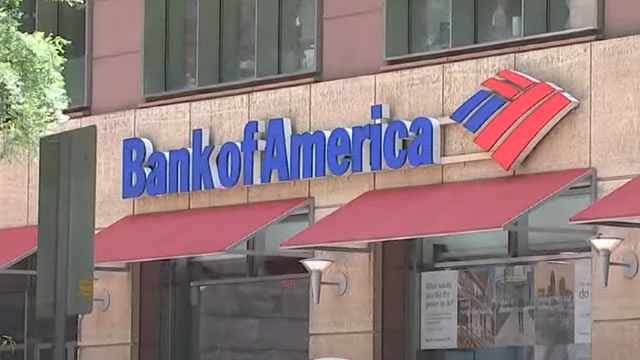
Bank of America Is Much Better Prepared for a Disaster Than Before the Great Recession. Here's Why
The Motley Fool· 2025-04-22 10:00
Core Viewpoint - Bank of America is in a stronger position compared to the Great Recession, with improved safety and soundness metrics, despite emerging economic stress [2][11]. Group 1: Bank's Strategy and Performance - Bank of America has adopted a conservative growth strategy under CEO Brian Moynihan since 2010, focusing on risk management and stability [3][4]. - The bank's total loan balances have seen minimal growth since Q4 2009, reflecting a cautious approach amid stricter regulations [4]. - The composition of the loan portfolio has shifted significantly, with reduced exposure to consumer and home equity loans, which were problematic during the Great Recession [4][5]. Group 2: Loan Quality and Risk Management - The quality of loans has improved, with wealth management loans more than doubling, while commercial real estate construction loans now represent only 15% of total loans, down from 39% in 2009 [5]. - Nonperforming loans and net charge-offs are significantly lower than during the peak of the Great Recession, indicating better loan performance [6][7]. - Tangible common equity is nearly double what it was in 2009, and global liquidity sources have increased more than fourfold, enhancing the bank's financial resilience [7]. Group 3: Stress Testing and Preparedness - Bank of America participates in rigorous stress testing by the Federal Reserve, which simulates severe economic downturns, and is expected to face losses of 5.5% of total loans, compared to 10% in Q4 2009 [7][8]. - The bank conducts its own stress tests to assess its preparedness for potential recessions, emphasizing the importance of underwriting discipline developed over the last decade [10]. - Despite inherent risks in banking, the bank's reshaped loan portfolio and risk management practices suggest it is well-equipped to handle potential credit issues [9]. Group 4: Market Position and Valuation - Bank of America's stock is currently trading at 138% of its tangible book value, below its five-year average of 156%, presenting a favorable risk-reward proposition [11][12].