Harness

Search documents
超越 Chatbot:Long-horizon Agent 如何重新定义 AI 产品形态|Jinqiu Select
锦秋集· 2026-02-05 11:40
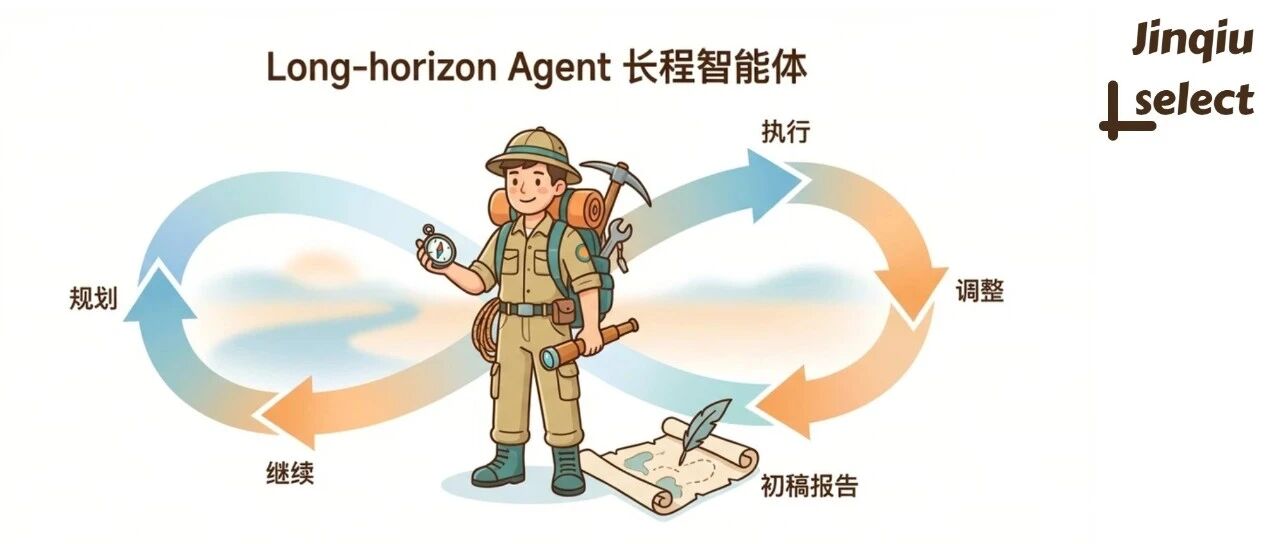
Core Insights - The article emphasizes the transition from traditional chatbots to Long-horizon Agents, which are capable of performing complex tasks over extended periods, thus redefining the value proposition of AI products from speed of response to quality of output [3][8][10]. Group 1: Long-horizon Agents - Long-horizon Agents are designed to operate autonomously over longer time spans, allowing for multi-step decision-making and iterative processes, which are essential for tasks like research reports and code reviews [16][20]. - The emergence of Long-horizon Agents marks a significant shift in AI capabilities, moving from simple question-answer interactions to producing high-quality deliverables that require time and context [7][8][11]. Group 2: Harness Concept - The concept of "Harness" is introduced as a runtime environment that includes best practices for building Long-horizon Agents, distinguishing it from traditional frameworks by providing integrated tools and capabilities [11][23]. - Harnesses facilitate the development of agents that can autonomously manage tasks, including planning, memory management, and sub-task coordination, thus enhancing their effectiveness [11][23][24]. Group 3: Evolution of AI Agents - The evolution of AI Agents is categorized into three phases: simple prompting and chaining, cognitive architecture, and the current Long-horizon Agent era, which began around mid-2025 [26][30][31]. - The transition to Long-horizon Agents is characterized by improved model capabilities and a focus on context engineering, which is crucial for optimizing agent performance [29][34]. Group 4: Applications and Future Directions - Long-horizon Agents are particularly effective in generating initial drafts for various applications, such as coding, research, and customer support, where they can significantly reduce the workload for human users [20][22]. - The future of AI development is expected to focus on enhancing context engineering, memory management, and the integration of file systems, which are seen as critical components for the success of Long-horizon Agents [34][42][46].

Zed 为什么不用自己造 Agent?OpenAI 架构师给出答案:Codex 重划 IDE × Coding Agent 的分工边界
AI前线· 2026-01-21 07:00
Core Insights - Coding Agents are a rapidly evolving area within applied AI, with a focus on maintaining resilience and rapid iteration amidst changing ecosystems [2] - OpenAI's Codex offers a solution through the co-development of models and Harness, emphasizing the importance of understanding model behavior [4][5] Group 1: Composition of Coding Agents - A Coding Agent consists of three main components: user interface, model, and Harness, where the user interface can be command-line tools or integrated development environments [4] - The model refers to recent releases like the GPT-5.1 series, while the Harness acts as the core agent loop that interacts with the model [4] Group 2: Challenges in Building Harness - Building an efficient Harness is complex, facing challenges such as adapting to new tools that the model may not be familiar with, and managing prompt adjustments based on model characteristics [8][9] - Delays in model processing and the need for effective prompt design to enhance user experience are significant challenges [9][10] Group 3: Codex as a Harness/Agent - Codex is designed to function across various programming environments, allowing for complex tasks such as navigating code repositories and executing commands [12] - The integration of Codex into an agent system simplifies the development of features like parallel tool calls and security management [12][18] Group 4: Future of Codex and SDK Development - The future of Codex is promising, with expectations for models to handle more complex tasks without supervision, and the SDK evolving to support these capabilities [19] - Companies can leverage Codex to create customized agents, enhancing their products with advanced coding capabilities [15][18]

Zed 为什么不用自己造 Agent?OpenAI 架构师给出答案:Codex 重划 IDE × Coding Agent 的分工边界
AI前线· 2026-01-17 06:25
Core Insights - Coding Agents have become one of the most active areas in applied AI, with a focus on maintaining rapid iteration and resilience amidst changing ecosystems [2] - OpenAI's Codex proposes a solution through the co-development of models and Harness, emphasizing the importance of understanding model behavior [4][6] Composition of Coding Agents - A Coding Agent consists of three main components: User Interface, Models, and Harness. The User Interface can be a command-line tool, integrated development environment (IDE), or cloud-based agent. Models include the latest GPT-5.1 series and others. Harness is a more complex part that interacts directly with the model, serving as the core agent loop [3][5] Importance of Harness - The Harness acts as the interface layer between the model and users, facilitating interaction and code generation. Building an efficient Harness is challenging due to issues like AV tool compatibility, latency management, and API changes [6][9] Challenges in Building Harness - Adapting models to the Harness requires extensive prompt design, as the model's training can lead to specific habits that must be understood for effective interaction. The relationship between steerability, intelligence, and habit is crucial for prompt engineering [7][8] Codex Capabilities - Codex is designed to function across various programming environments, allowing users to convert ideas into executable code, navigate code repositories, and execute commands. Its Harness must handle complex tasks, including parallel tool calls and security management [9][10] Future of Codex - Codex is rapidly evolving, currently serving hundreds of billions of tokens weekly, and is expected to handle more complex tasks with increased trust. The future will focus on large codebases and non-standard libraries, with continuous improvements in SDK capabilities [16][17] Building Custom Agents with Codex - Companies looking to integrate Codex into their agents can benefit from a model where the Harness serves as a new abstraction layer, allowing for easier updates and differentiation in product features [12][14] Successful Collaborations - Top partners like GitHub have successfully integrated Codex, allowing for direct interaction and optimization of their systems. The SDK facilitates various integrations, enhancing the capabilities of custom agents [15][16]