IP零售+企业定制

Search documents
新股前瞻|当资本爱上9.9元手办:桑尼森迪的“下沉奇迹”能持续多久?
智通财经网· 2026-01-11 10:40
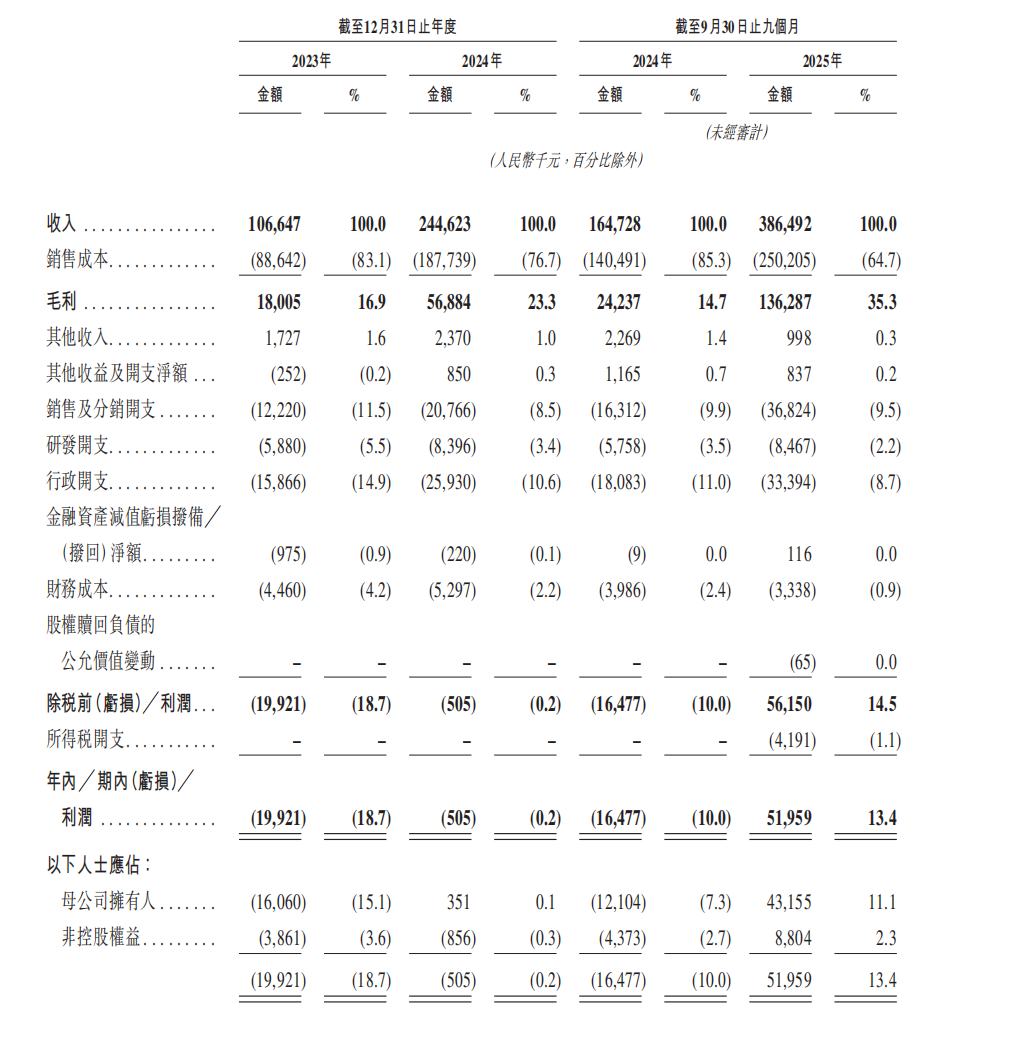
Core Viewpoint - The company, Sunnysondi, has submitted its IPO application, positioning itself as a low-cost IP toy manufacturer targeting the mass market with products priced below 20 RMB, achieving significant sales growth and market penetration in a short period [1][2]. Financial Performance - In the first three quarters of 2025, the company reported revenue of 386.49 million RMB, a 135% year-on-year increase, with a net profit exceeding 52 million RMB and a net profit margin maintained at around 14% for three consecutive years [2][3]. - The revenue structure shows a significant shift, with the "IP toy products" segment accounting for 78.3% of total revenue in the first nine months of 2025, indicating a transition from a reliance on OEM business to a focus on branded products [7][8]. Growth Strategy - The company employs a dual-driven model of "IP retail + enterprise customization," establishing a distribution network covering over 32,000 retail points nationwide [2]. - The growth strategy heavily relies on popular IPs, with two major animated IPs contributing approximately 200 million RMB, over half of the total revenue for the period [9]. Risks and Challenges - The company's growth is highly dependent on scale expansion, with a history of net losses in 2023 and 2024, only turning profitable in 2025, indicating a sensitivity of profitability to growth rates and market competition [4][5]. - The gross profit margin has shown significant volatility, rising from 16.9% in 2023 to 35.3% in the first nine months of 2025, but with fluctuations that raise concerns about cost control and operational efficiency [4][5]. - The reliance on short-term IP licenses (typically 1-2 years) poses a risk to sustainable operations, as the company may struggle to maintain a consistent product pipeline and could face increased costs upon renewal [10]. Market Position - The low-cost strategy has created a narrow competitive moat, with the potential for competitors to erode market share through price wars and imitation, especially as the market for affordable toys is characterized by low entry barriers [11]. - The company has achieved a high valuation through rapid capital influx, but this places it under pressure to meet high expectations without a solid foundation of proprietary IP or brand loyalty [10][11].