下沉市场

Search documents
春季旅游高景气,关注相关行业基本面改善
SINOLINK SECURITIES· 2026-03-29 08:24
Investment Rating - The report indicates a positive outlook for the duty-free market in Hainan, expecting sustained growth throughout the year [11][27]. Core Insights - The duty-free sales in Hainan reached CNY 15.62 billion with a year-on-year growth of 27.64% as of March 24, driven by high demand for cosmetics, jewelry, and electronics [11]. - The hotel sector, particularly Jinjiang Hotels, showed signs of recovery with a RevPAR of CNY 240.77 in Q4 2025, marking a slight year-on-year increase of 0.14% [12]. - Retail data for January-February 2026 showed a total retail sales of CNY 86,079 billion, growing by 2.8% year-on-year, with service consumption being a key growth driver [13][16]. Summary by Sections Core Insights and Company Dynamics - Duty-free market in Hainan has seen significant growth post-border closure, with sales reaching CNY 15.62 billion and shopping visits totaling 1.9684 million, reflecting a year-on-year increase of 27.64% [11]. - Jinjiang Hotels reported a slight recovery in RevPAR, achieving CNY 240.77 in Q4 2025, with an occupancy rate of 63.48% [12]. Industry Data Tracking - Retail sales in January-February 2026 showed a recovery, with service retail growing by 5.6%, outpacing goods retail [13]. - The restaurant sector demonstrated strong recovery, with revenues of CNY 10,264 billion, a year-on-year increase of 4.8% [13][16]. Market Review - The stock market indices showed declines, with the Shanghai Composite Index down by 1.09% and the retail sector down by 1.10% [20]. - Notable stock performances included Lionhead Co. and Nanjing Commercial Travel, which saw significant gains due to favorable restructuring and tourism policies [20]. Investment Recommendations - The report suggests optimism in the duty-free sector due to improved sales data and expected profit margin growth driven by reduced discounts and currency appreciation [27]. - Recommendations for the gold and jewelry sector include brands like Laopu Gold and Chaohongji, which are expected to benefit from strong consumer acceptance of price increases [27]. - For offline retail, the report highlights Yonghui Supermarket's shift towards a selective retail model, which is anticipated to drive long-term growth [27].
县域消费韧性与潜力并存,关注低线市场发展红利
ZHONGTAI SECURITIES· 2026-03-29 00:50
Investment Rating - The report maintains an "Overweight" rating for the industry, indicating a positive outlook for future performance [5]. Core Insights - The county-level economy shows resilience and potential, with significant growth in consumer spending expected, particularly in lower-tier markets [7][28]. - The report highlights three main drivers for the expansion of county-level consumption: the rise of rural e-commerce, the downward expansion of retail and dining brands, and the comprehensive development of cold chain logistics [28][30][32]. - Policy support is crucial, with government initiatives aimed at promoting rural revitalization and the development of distinctive county economies [17][22]. Summary by Relevant Sections County Economic Overview - The county population is approximately 725 million, accounting for 51.5% of the national total [7]. - By 2024, the total economic output of counties is projected to reach 54 trillion yuan, representing nearly 40% of the national GDP, with 62 counties exceeding 100 billion yuan in economic output [10]. - Personal consumption expenditure in rural areas is expected to grow significantly, with projections indicating a rise from 7,485.15 yuan in 2013 to 20,259 yuan by 2025 [15]. Policy Support and Consumer Behavior - Recent government policies emphasize the importance of developing unique county economies and enhancing rural industries [17][22]. - Consumers in county areas are increasingly valuing practical and emotional aspects of their purchases, leading to a shift in shopping preferences towards local and cost-effective options [26]. Drivers of Consumption Expansion - Rural e-commerce is set to benefit from systematic upgrades, with a projected national rural online retail sales reaching 2.73 trillion yuan by 2025 [28]. - The expansion of dining brands into county markets is accelerating, with a reported growth rate of over 13% in the number of dining establishments [30]. - Cold chain logistics infrastructure is being developed to enhance the supply chain for agricultural products, with 105 key cold chain logistics bases expected to be operational by mid-2025 [32].

古茗(01364):利润端超预期,继续快速开店
Soochow Securities· 2026-03-26 14:50
Investment Rating - The investment rating for the company is "Buy" (maintained) [1] Core Insights - The company achieved a total revenue of 12.914 billion yuan in 2025, representing a year-on-year increase of 46.89%. The net profit attributable to the parent company reached 3.109 billion yuan, up 110.29% year-on-year [8] - The company is experiencing rapid store expansion, with a total of 13,554 stores by the end of 2025, a 37% increase year-on-year. The company opened 4,292 new stores in 2025, with a net increase of 3,640 stores after closures [8] - The company is focusing on enhancing single-store operations, with a daily average GMV of 7,800 yuan per store, a 20% increase year-on-year [8] Financial Projections - Total revenue projections for 2026, 2027, and 2028 are 16.213 billion yuan, 18.657 billion yuan, and 21.055 billion yuan, respectively, with year-on-year growth rates of 25.55%, 15.08%, and 12.85% [1] - The net profit attributable to the parent company is projected to be 3.351 billion yuan in 2026, 3.847 billion yuan in 2027, and 4.358 billion yuan in 2028, with corresponding year-on-year growth rates of 7.79%, 14.80%, and 13.27% [1] - The company’s earnings per share (EPS) are expected to be 1.41 yuan in 2026, 1.62 yuan in 2027, and 1.83 yuan in 2028 [1] Business Performance - The company’s sales of goods and equipment reached 10.269 billion yuan in 2025, a 46% increase year-on-year, accounting for 80% of total revenue. Franchise management service revenue was 2.628 billion yuan, up 50% year-on-year, making up 20% of total revenue [8] - The company’s gross merchandise volume (GMV) for 2025 was 32.7 billion yuan, reflecting a 46% year-on-year increase [8]
古茗20260324
2026-03-26 13:20
Summary of Gu Ming's Conference Call Company Overview - Gu Ming is a tea beverage company focusing on the mid-price range (10 to 20 RMB) with a franchise model as its core business strategy. The company employs a regional concentration strategy to build a dense store network, expanding into neighboring provinces once a critical scale of over 500 stores is achieved in a specific province. Currently, Gu Ming has established a significant presence in 8 provinces, contributing over 85% of its total GMV [3][4]. Industry Insights - The ready-to-drink beverage industry in China has a market size of approximately 600 to 700 billion RMB, with the ready-to-drink tea segment larger than that of ready-to-drink coffee. However, ready-to-drink coffee is growing at a faster rate. The number of consumers in the ready-to-drink tea segment has a CAGR of about 7% from 2018 to 2023, while per capita annual consumption has a CAGR of approximately 17%, indicating an increase in consumption frequency [6][7]. Key Financial Metrics - Gu Ming's revenue is primarily derived from selling products to franchisees, with 74.6% from product sales and 5.3% from equipment sales, totaling around 80% of revenue. The company maintains a stable gross margin of approximately 30%. For the first half of 2025, revenue growth was 41%, and adjusted net profit growth was 42.4% [5][11]. Store Network and Growth - As of mid-2025, Gu Ming has 11,179 stores, ranking second in the ready-to-drink tea industry and first among mid-price brands. The company has a strong presence in lower-tier cities, with over 80% of its stores located in second-tier and below cities. The store distribution is as follows: first-tier cities 3%, new first-tier cities 16%, second-tier cities 29%, third-tier cities 27%, and fourth-tier and below cities 25% [2][4]. User Engagement and Retention - Gu Ming has demonstrated high user engagement, with 178 million registered members on its mini-program and a quarterly repurchase rate exceeding 50%, significantly higher than the industry average of around 30%. This high repurchase rate supports the opening and operation of new stores in lower-tier markets [10]. Future Projections - Gu Ming plans to open over 3,000 new stores in 2025, with similar growth expected in 2026. By 2027, the total number of stores is projected to reach 20,000. Revenue forecasts for 2025, 2026, and 2027 are 12.8 billion RMB, 15.974 billion RMB, and 19.223 billion RMB, with year-on-year growth rates of 45.7%, 24.7%, and 20.3%, respectively [11][12]. Competitive Landscape - The competitive landscape shows that Gu Ming holds a 2.5% market share, ranking second behind Mi Xue Bing Cheng at 8.5%. Other competitors include Hu Shang A Yi (2.2%), Cha Bai Dao (2.1%), and Ba Wang Cha Ji (1.5%). The industry is expected to grow primarily in the mid and low-price segments, with projected CAGRs of 20.9% and 20.2% from 2023 to 2028 [6][7]. Strategic Advantages - Gu Ming's core competitive advantages include a robust self-operated warehousing and cold chain logistics system, strong single-store profitability, and a unique product strategy that balances a stable menu with frequent new product launches. The company’s single-store operating profit margin is 20.2%, above the industry average of about 15% [8][9].
绿茶集团(06831):同店企稳与新店高效驱动增长,出海与下沉打开空间
Haitong Securities International· 2026-03-25 13:11
Investment Rating - The report maintains an "Outperform" rating for Green Tea Group [2][14]. Core Insights - Green Tea Group is expected to achieve revenues of RMB 5.89 billion, RMB 7.16 billion, and RMB 8.46 billion for 2026-2028, with year-on-year growth rates of 23.7%, 21.6%, and 18.1% respectively. Net profit attributable to shareholders is projected at RMB 641 million, RMB 779 million, and RMB 963 million, with corresponding growth rates of 31.7%, 21.6%, and 23.7% [3][14]. - The company reported strong performance in 2025, with revenue reaching RMB 4.76 billion (+24.1% YoY) and adjusted net profit at RMB 509 million (+41.0% YoY). Same-store sales resumed growth from Q2 2025, and the company added 157 new stores, bringing the total to 609 [4][15]. - The overseas expansion is becoming a significant growth driver, with overseas revenue exceeding RMB 140 million in 2025, representing a 15-fold increase year-on-year. The company aims to add over 15 overseas stores in 2026, targeting a total of over 30 stores [6][18]. Financial Performance Summary - Revenue projections for Green Tea Group are as follows: RMB 4,763 million for 2025, RMB 5,892 million for 2026, RMB 7,164 million for 2027, and RMB 8,463 million for 2028, with respective year-on-year growth rates of 24.1%, 23.7%, 21.6%, and 18.1% [9][12]. - The net profit for the same years is projected to be RMB 486 million, RMB 640 million, RMB 779 million, and RMB 963 million, with net profit margins of 10.2%, 10.9%, 10.9%, and 11.4% respectively [9][12]. - The company maintains a gross profit margin of 68.3% across the forecast period [9][12]. Market Strategy - The company is focusing on expanding into lower-tier cities, with over 60% of new stores planned for tier-2 and below, where profit margins are higher. The target for 2026 is approximately 30% store growth, equating to 180-190 new stores [5][17]. - Delivery services have increased to 25.3% of total revenue, with a significant year-on-year growth of 66.5% in delivery revenue. The company aims to keep the delivery mix below 30% to protect the dine-in experience [5][16]. - The company is actively adjusting its store formats and enhancing menu innovation to adapt to changing consumer preferences, particularly the shift from business dining to family dining [19].
ST易购(002024) - 2026年3月22日投资者关系活动记录表
2026-03-23 01:52
Group 1: Investor Relations Activity - The event was a site visit at Suning Max Chengdu Tianfu Interchange Store on March 22, 2026 [1] - Participants included representatives from Changjiang Appliances, Wufeng Fund, Jiutai Fund, and Beijing Xinsun Capital [1] - The company ensured compliance with information disclosure regulations, maintaining the accuracy and completeness of shared information [1] Group 2: Store Insights and Market Conditions - Investors learned about the store's basic conditions, implementation of national subsidy policies, and performance across various categories [1] - Discussion included market conditions for new and old residential areas, as well as the business of renovating old neighborhoods [1] - The company highlighted marketing strategies, consumer trends, and the provision of home appliance and home decoration services [1] Group 3: Business Expansion and Product Experience - The meeting covered topics such as store expansion and strategies for penetrating lower-tier markets [1] - Investors experienced new products introduced in the store during the visit [1]

批发和零售贸易行业研究:社零增速环比回暖,服务及悦已消费动力强劲
SINOLINK SECURITIES· 2026-03-22 11:45
Investment Rating - The report does not explicitly state an investment rating for the industry, but it implies a positive outlook for certain segments such as duty-free and gold jewelry [28]. Core Insights - Duty-free: On March 20, China Duty Free Group announced a revenue forecast of 53.694 billion yuan for 2025, a year-on-year decrease of 4.92%, with a net profit of 3.586 billion yuan, down 15.97%. Excluding goodwill impairment, the net profit is projected at 3.924 billion yuan, a decline of 8.04%. The main business gross margin increased by 0.51 percentage points, and inventory turnover rose by approximately 10% [12]. - The gross margin for Q4 2025 exceeded expectations, and the company is expected to maintain an improving profit margin trend in 2026. The gross margin reached 32.66% in Q4 2025, up 4.12 percentage points year-on-year, the highest since 2021. Key drivers for margin improvement include increased customer traffic, reduced discount rates, and RMB appreciation [12]. - Retail data for January-February 2026 showed better-than-expected growth, with service consumption being a highlight. The total retail sales reached 86,079 billion yuan, a year-on-year increase of 2.8%, and service retail sales grew by 5.6%, outpacing goods retail [13][16]. Summary by Sections Industry Data Tracking - The retail sales growth for January-February 2026 was 2.8%, with a notable recovery in service consumption, particularly in the restaurant sector, which saw a 4.8% year-on-year increase [13][16]. - Structural opportunities are emerging, with essential goods like grain and oil retail sales increasing by 10.2%, and discretionary items such as gold and jewelry growing by 13.0% and 10.4%, respectively [16]. Market Review - From March 16 to March 20, 2026, major indices such as the Shanghai Composite Index and Shenzhen Component Index fell by 3.38% and 2.90%, respectively. The retail sector underperformed, with a decline of 4.55% [19][20]. - Notable stock performances included Jifeng Technology and Yiyaton, which benefited from supply chain recovery and increased consumer activity [19]. Investment Recommendations - Duty-free: March data improvements enhance optimistic expectations. Short-term drivers include reduced discounts and currency appreciation, while mid-term prospects hinge on high-end consumption recovery and returning Japanese tourists [25]. - Gold and jewelry: Top brands exceeded expectations, with price acceptance among consumers. Recommendations include Laopu Gold and Chaohongji, both expected to benefit from product updates and operational strategies [25][26].

10元的蜜雪小蛋糕,是“把蛋糕价格打下来了”还是“拉完了”?
东京烘焙职业人· 2026-03-18 09:57
Core Viewpoint - Mixue Ice City has introduced a range of affordable pre-packaged cakes, targeting the under-served lower-tier market, emphasizing convenience and affordability over premium quality [1][2][31] Group 1: Product Launch and Features - Mixue Ice City has launched five classic flavors of pre-packaged cakes, priced at 10.9 yuan and 12 yuan [2] - The cakes utilize a mix of animal and plant-based creams, indicating cost control measures to maintain a low price point [13] - The cakes have a long shelf life of 18 months, achieved through freezing and sterile packaging rather than relying on preservatives [14] Group 2: Market Insights - The Chinese baked goods market is nearing a trillion yuan, with projections indicating a retail market size exceeding 700 billion yuan by 2026, growing at a stable compound annual growth rate of over 8% [26] - There is a significant gap in the affordable baked goods segment, with most existing brands focusing on high-end or mid-range products, leaving a large opportunity for national chains [26][29] - Consumer preferences have shifted from occasional purchases for special occasions to frequent consumption for everyday needs, particularly among younger demographics [28] Group 3: Target Audience - The primary consumers of Mixue's cakes are young people and students in lower-tier cities, who prioritize affordability and convenience over premium quality [20][21][23] - The introduction of a 10 yuan cake caters to the basic needs of consumers who seek quick, affordable treats without the burden of high costs [24][31]



华莱士退市,一个时代结束了
创业邦· 2026-03-13 10:49
Core Viewpoint - Wallace, a fast-food brand known for its low prices, has officially delisted from the New Third Board, marking the end of its capital market journey while continuing to operate nearly 20,000 stores across China [5][6][19]. Group 1: Company Background - Wallace was founded in 2001 by brothers Hua Huaiyu and Hua Huaqing in Fuzhou, starting with an initial investment of 80,000 yuan [8]. - The brand initially struggled against established competitors like KFC and McDonald's, which dominated the fast-food market with high prices [8][10]. - To survive, Wallace adopted a groundbreaking low-price strategy, offering items like cola for 1 yuan and hamburgers for 3 yuan, appealing to budget-conscious consumers [10][12]. Group 2: Growth and Expansion - From 2001 to 2022, Wallace expanded from 1 store to over 20,000, surpassing the total number of KFC and McDonald's outlets in China [12]. - The company innovated with a unique business model involving store crowdfunding and employee partnerships, which helped it scale rapidly [12][16]. - Despite its growth, Wallace's low-price model led to long-term financial challenges, with gross margins hovering around 6-7%, significantly below the industry average of 20% [16]. Group 3: Challenges and Decline - Rising costs for ingredients, labor, and rent have pressured Wallace's profit margins, forcing the company to cut costs, which has raised food safety concerns [17]. - The rapid expansion created management difficulties, leading to declining same-store sales as new locations cannibalized existing ones [17]. - Increased competition from both established brands and new entrants in the market has intensified the challenges faced by Wallace [17]. Group 4: Future Outlook - Wallace's delisting is seen as a strategic move to focus on operational efficiency and reduce compliance costs associated with being a public company [14][19]. - Post-delisting, the company plans to invest in supply chain optimization, product quality improvements, and innovation, shifting from a low-price focus to a quality-driven approach [19]. - The brand aims to adapt to changing consumer preferences, recognizing that quality and safety are essential for retaining customers in the evolving market landscape [21].

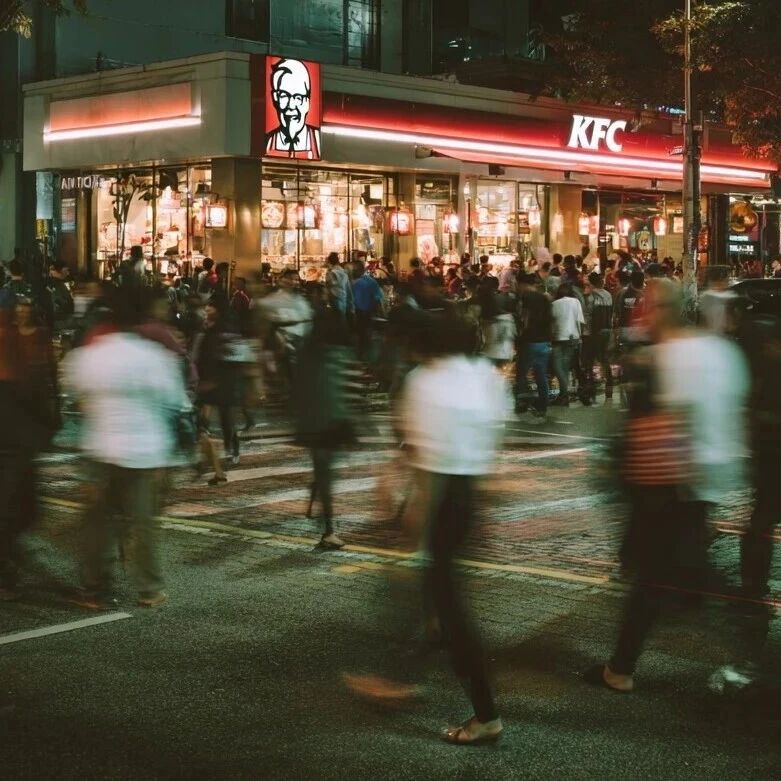
肯德基猛攻县城
创业邦· 2026-03-10 10:35
Core Viewpoint - KFC's parent company, Yum China, achieved a record revenue of $11.8 billion in 2025, with a year-on-year growth rate of less than 5%, which is considered strong given the overall downturn in the restaurant industry [4][1]. Group 1: Revenue Structure - Yum China's revenue structure can be simplified as 1+0.5+N, where KFC accounts for over 70% of revenue, Pizza Hut around 20%, and other brands like Little Sheep and Taco Bell contribute less than 10% [7]. - KFC's performance significantly influences Yum China's overall results, highlighting its dominance in the company's revenue generation [7]. Group 2: Expansion Strategy - Yum China's recent strategy focuses on KFC's expansion into lower-tier cities and Pizza Hut's price reduction, with KFC opening 1,349 new stores in 2025, covering 270 new towns [11][1]. - KFC currently operates nearly 13,000 stores in China, compared to McDonald's 7,700, indicating a strong market presence [11]. Group 3: Market Insights - The rapid expansion of brands like Mixue Ice City, which opened nearly 25,000 stores from 2020 to 2023, has reshaped the restaurant industry's perception of the potential in lower-tier markets [15][2]. - Mixue Ice City has 57% of its stores in third-tier cities and below, demonstrating the vast potential of these markets [15]. Group 4: Franchise Model Shift - The restaurant industry has shifted from a direct ownership model to a franchise model post-pandemic, as franchises allow for faster expansion and lower capital requirements [17]. - KFC's franchise model has historically been stringent, but the company is now adapting to attract franchisees in lower-tier markets by reducing investment thresholds [19]. Group 5: Cost Management - KFC is adjusting its store formats to lower the investment required for franchisees, with standard stores costing around $120,000 and mini-stores as low as $50,000 [22]. - The average investment for new KFC stores has decreased to below $1.5 million, aligning with the company's expansion goals [24]. Group 6: Pizza Hut's Adaptation - Pizza Hut is adopting a similar strategy to KFC by introducing WOW stores, which feature simplified menus and lower prices, significantly increasing the proportion of franchise stores in its new openings [28]. - In 2025, Pizza Hut reported a 19% increase in operating profit, showcasing the effectiveness of its new strategy in a competitive market [30].