
IPO审核问询

Search documents
手动统计2025年IPO上会阶段审核问询重点!不同问题问询频次较2023年以来有哪些变化?
Sou Hu Cai Jing· 2026-01-28 02:09
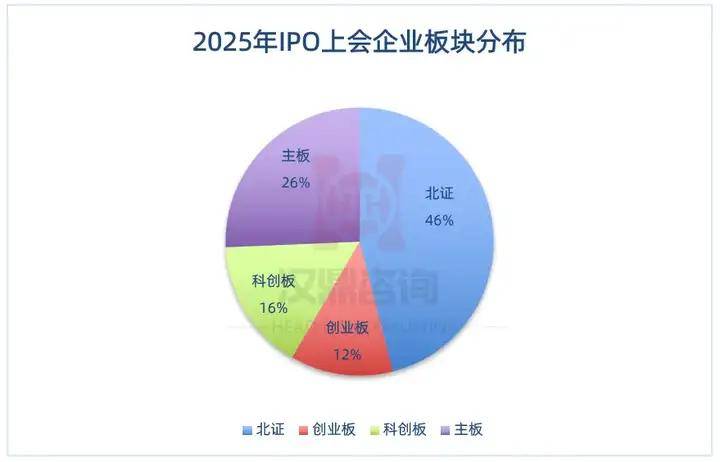
Core Insights - The IPO market is showing signs of recovery in 2025, particularly for technology innovation and unprofitable companies, with a total of 113 IPOs approved across three major exchanges [1][4] - The overall approval rate for IPOs is high at 98.23%, with the Beijing Stock Exchange having a slightly lower rate of 96.15% [3][4] - Regulatory scrutiny remains stringent, focusing on the rationality and necessity of fundraising projects, as well as the financial authenticity and stability of earnings [3][4] Summary by Sections IPO Market Overview - In 2025, the three major exchanges received a total of 113 IPO applications, with the Beijing Stock Exchange accounting for 46% of the approvals, followed by the Main Board (26%), the Sci-Tech Innovation Board (16%), and the Growth Enterprise Market (12%) [1] - The number of newly accepted companies increased significantly in June and December, indicating a warming trend in the market [1] Approval Rates and Regulatory Focus - A total of 111 companies were approved, with only 2 from the Beijing Stock Exchange being deferred, resulting in an overall approval rate of 98.23% [3] - The approval rates for other boards were 100%, indicating a strong market confidence despite stringent regulatory measures [3] Key Concerns During Approval Process - The most frequently raised concerns during the approval process included the stability of operating performance, financial authenticity, and the risks associated with fundraising projects [4][5] - The focus on the rationality and necessity of fundraising projects has increased, with a notable emphasis on the sustainability of earnings and the potential for financial fraud [3][4] Main Board Insights - The Main Board saw a significant increase in inquiries regarding performance volatility risks, which rose to 82.76% in 2025, reflecting heightened regulatory scrutiny [5][6] - The necessity and rationality of fundraising projects were also highlighted, with inquiries in this area reaching 17.24% [6] Sci-Tech Innovation Board Insights - The Sci-Tech Innovation Board's primary concerns included performance volatility risks and financial authenticity, with the latter being a focus in 28.57% of inquiries [7][9] - The board also emphasized the importance of forward-looking information regarding profitability forecasts [10] Growth Enterprise Market Insights - The Growth Enterprise Market maintained a high level of scrutiny on business growth and innovation, with performance volatility risks being the most frequently raised issue at 92.86% [11][12] - Concerns regarding technical innovation and core competitiveness were also prevalent [12] Beijing Stock Exchange Insights - The Beijing Stock Exchange saw a decline in inquiries related to related party transactions, while concerns regarding performance volatility and financial authenticity increased significantly [13][14] - The focus on technical advancement and innovation capabilities was also noted as a rising concern [14]

应进一步提升对IPO企业问询的广度与深度
Guo Ji Jin Rong Bao· 2025-09-15 09:48
Group 1 - The core viewpoint emphasizes the necessity for IPO companies to enhance the breadth and depth of inquiry during the IPO process to present a more transparent image to the market [1][3] - The inquiry process is crucial in the IPO journey, as the initial application documents often fail to reveal the complete picture of a company, necessitating deeper scrutiny by regulatory bodies [1][2] - Historical trends show that many companies withdraw their IPO applications either voluntarily or due to issues uncovered during inquiries, highlighting the evolving nature of the IPO review process [2][3] Group 2 - The IPO review process has evolved from a binary outcome (approval or rejection) to a more nuanced approach that includes conditional approvals, reflecting advancements in market practices [2] - Current inquiries focus on the authenticity of financial data, sustainability of performance, and feasibility of fundraising projects, indicating a shift in regulatory priorities [2] - To achieve greater transparency, inquiries should expand beyond traditional areas to include aspects like debt solutions, inventory risks, and core technology, ensuring a comprehensive evaluation of potential issues [3]