Intelligent Transportation

Search documents
Agereh Expands Intelligent Transportation Portfolio with Launch of Smart Door Sensor™ and retains Hillside C&M Inc.
Globenewswire· 2026-02-05 13:00
Core Insights - Agereh Technologies Inc. has expanded its intelligent sensing portfolio with the introduction of the Smart Door Sensor™, enhancing real-time operational intelligence in the transportation industry [1][2] - The Smart Door Sensor™ complements existing solutions, HeadCounter™ and MapNTrack™, providing a unified, wireless intelligence layer for better visibility into people movement, asset location, and access activity [1][4] Product Overview - The Smart Door Sensor™ is battery-powered and wireless, designed for deployment across doors and access points, offering real-time visibility into door activity and movement events [2][7] - HeadCounter™ delivers anonymous, real-time intelligence on passenger counts, movement patterns, congestion, and body temperature insights [7] - MapNTrack™ uses Wi-Fi-assisted cellular positioning to track mobile equipment indoors and outdoors without the need for costly infrastructure [7] Strategic Partnerships - The company has entered into a consulting and awareness service agreement with Hillside Consulting & Media Inc. for various marketing services, with a cash fee of $50,000 per month for a duration of two months [5][6]


红绿灯背后的AI大模型:从被动响应到全局预判
2 1 Shi Ji Jing Ji Bao Dao· 2025-12-13 10:35
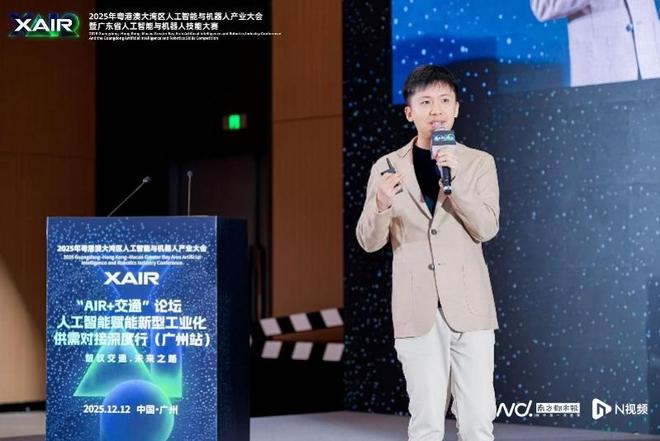
Core Insights - The 2025 Guangdong-Hong Kong-Macao Greater Bay Area Artificial Intelligence and Robotics Industry Conference highlighted the role of AI in transforming traffic systems and the challenges of commercialization [1][2]. Group 1: AI in Traffic Management - AI models are shifting traffic signal control from passive response to proactive prediction, enhancing traffic management efficiency [1]. - In Guangzhou, AI models are used to optimize traffic light configurations at major intersections, significantly improving traffic flow [2]. - The implementation of AI in traffic management has led to 24/7 AI oversight of hundreds of intersections, achieving substantial improvements in efficiency and control [2]. Group 2: Human-Robot Applications - Human-shaped robots are expected to be the first to achieve large-scale application in the traffic sector due to structured product design and stable environments [2]. - The automotive industry is exploring human-robot applications in traffic, with significant market potential identified [2]. Group 3: Challenges in AI Implementation - Two main challenges in deploying AI in urban traffic include the need for algorithm accuracy improvement from 90% to 99.9% and breaking down barriers between different traffic subsystems [2]. - The integration of AI in traffic systems requires a comprehensive approach to ensure effective coordination and response to emergencies [2]. Group 4: Talent Development and Collaboration - There is an urgent need to cultivate "AI + Traffic" interdisciplinary talent to support technological advancements [3]. - Educational institutions are restructuring curricula and establishing partnerships with enterprises to enhance practical skills among students [3]. - Collaboration between academia and industry is essential for sustainable innovation, focusing on shared data and real-world applications [3].



AI如何预判机场大客流、调优红绿灯?这场大会聚焦智慧交通
Nan Fang Du Shi Bao· 2025-12-12 16:51
Core Insights - The event highlighted the advancement of AI in traffic management, emphasizing the shift from reactive to proactive decision-making in transportation systems [1][2][4] Group 1: AI Applications in Traffic Management - AI is being utilized to predict and manage large passenger flows at airports, with systems capable of analyzing weather forecasts and social sentiment to anticipate delays and passenger congestion [4] - The implementation of AI-driven traffic signal optimization has expanded from pilot projects in Guangzhou to six major urban areas, significantly improving traffic flow efficiency [5] - The "Road Xiao Ling Tong" AI system enhances real-time monitoring and management of highway networks in Guangdong, addressing the challenges posed by high traffic volumes [5] Group 2: Industry Collaboration and Development - The event aimed to create a collaborative ecosystem involving government, industry, academia, and research to facilitate the integration of AI in transportation and manufacturing sectors [2][6] - The project led by the China Industrial Internet Research Institute focuses on building a comprehensive service platform that connects technology development with industry needs, promoting efficient collaboration [5]
速腾聚创全栈自研芯片通过AEC-Q车规认证,目标识别率提升至99%
Ju Chao Zi Xun· 2025-10-15 03:31
Core Insights - RoboSense has achieved a significant milestone by having its fully self-developed chip pass the AEC-Q automotive certification, making it the only company globally to reach this achievement, which enhances its competitive edge in the lidar technology sector [2][7] Group 1: SPAD-SoC Chip - RoboSense's SPAD-SoC chip is the world's first lidar receiving processing SoC chip and the only one to pass the AEC-Q102 certification, featuring high performance, high integration, and high reliability [3] - The chip improves target recognition rate to 99% and has a sampling capability of 44 billion samples per second, effectively preventing missed detections [3] - It includes a 384-Core signal processing capability for high dynamic response and can detect low-reflectivity objects, while also being resistant to rain, fog, and dust interference [3] Group 2: Proprietary Technologies - The chip incorporates three proprietary technologies that enhance performance and reliability, including Crosstalk Immunity Encoding (ClE), which improves sunlight noise resistance by 95% and cross-talk resistance by 90% [4] - PicoSecond Timing Technology (PTT) enhances distance measurement accuracy by 15 times to 3 cm while reducing power consumption [4] - The Adaptive Fusion Algorithm (AFA) optimizes signal extraction, reducing blind spots by 70 times [4] Group 3: 3D Stacking and Bonding Technology - RoboSense has achieved a global first by integrating SPAD and SoC through 3D stacking, resulting in over 50% reduction in size and high integration [5] - Copper-copper bonding technology provides each SPAD with an independent processing circuit, ensuring low-loss and low-latency signal transmission [5] Group 4: 2D VCSEL Chip - RoboSense's 2D VCSEL chip is the only mass-producible two-dimensional addressable VCSEL chip in the industry, utilizing two-dimensional addressable scanning to suppress high reflectivity expansion [6] - The chip supports flexible matrix scanning, significantly enhancing laser emission efficiency, and features a combined SiP technology that improves accuracy while reducing parasitic parameters [6] Group 5: E Platform - The E platform, equipped with the AEC-Q certified SPAD-SOC and 2D VCSEL chips, is the first mass-producible all-solid-state digital lidar platform in the industry [7] - This platform not only showcases RoboSense's leading position in lidar technology but also provides robust technical support for the development of autonomous driving and intelligent transportation [7]

【前瞻分析】2025年全球智慧交通行业市场规模及投资建设分析
Sou Hu Cai Jing· 2025-09-04 09:10
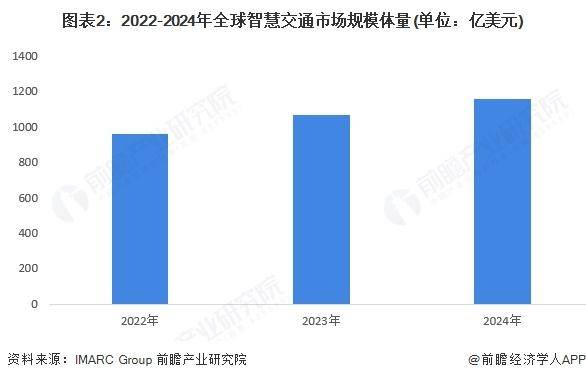
Group 1 - The global smart transportation market was approximately $96.1 billion in 2022 and is projected to reach $115.8 billion by 2024, with a compound annual growth rate (CAGR) of 8% [1] - The investment in smart city construction globally is expected to approach $80 billion by 2024, driven by urbanization challenges, with Asian countries having significant growth potential [3] - China's fixed asset investment in transportation increased from 2.87 trillion yuan in 2016 to 3.9 trillion yuan in 2023, with a forecast of 3.8 trillion yuan for 2024 [5][6] Group 2 - The market size of smart transportation in China grew from 97.3 billion yuan in 2016 to 236.7 billion yuan in 2023, with expectations to exceed 240 billion yuan in 2024 [7] - The comprehensive three-dimensional transportation network in China has a route mileage exceeding 260,000 kilometers, with a completion rate of about 90% [6]




花旗:千方科技-2025 年第一季度业绩喜忧参半,经营利润未达预期,但投资收益助力盈利超预期
花旗· 2025-05-06 02:28
Investment Rating - The investment rating for China TransInfo Technology is "Sell" with a target price of Rmb5.1, indicating an expected share price return of -39.5% and a total return of -39.2% [3][7]. Core Insights - The company reported a mixed performance in 1Q25, with revenue increasing by 2% year-over-year to Rmb1.6 billion, which was 18% above Bloomberg consensus estimates. However, the operating profit missed expectations, resulting in an operating loss of Rmb77 million [1][2]. - The gross margin expanded by 0.6 percentage points year-over-year to 29.7%, but this was still 4.6 percentage points below consensus estimates. Operating expenses were flat year-over-year at Rmb555 million, which was 34% higher than expected [1][2]. - Net profit for 1Q25 was Rmb221 million, significantly exceeding consensus estimates by 101%, primarily due to a gain from a fair value change in investments amounting to Rmb302 million [1][2]. Summary by Sections Financial Performance - 1Q25 revenue was Rmb1.609 billion, 17.9% higher than consensus estimates and 1.8% higher year-over-year. Gross profit was Rmb478 million, reflecting a 4% increase year-over-year [2][5]. - The operating loss of Rmb77 million resulted in an operating margin of -4.8%, which was 8.7 percentage points below consensus expectations [2][5]. - The net income of Rmb221 million marked a significant recovery from a net loss of Rmb58 million in the same quarter last year [2][5]. Valuation - The target price of Rmb5.1 is based on a price-to-earnings ratio of 19.0x for the second half of 2024 to the first half of 2025, aligning with the five-year sector average [7].
Actelis Networks Receives Follow-On Order from City of Eugene, Oregon for Traffic Management System Modernization
Newsfilter· 2025-04-14 12:30
Core Viewpoint - Actelis Networks, Inc. has received a follow-on order from the City of Eugene, Oregon to expand its traffic management system, indicating the growing adoption of its hybrid fiber-copper networking solutions for smart city applications [1][2][5] Company Overview - Actelis Networks is a market leader in cyber-hardened, rapid deployment networking solutions, specializing in hybrid fiber-copper technologies for IoT and broadband applications [1][5] - The company offers fiber-grade performance with the flexibility and cost-efficiency of hybrid fiber-copper networks, enhancing connectivity for various sectors including government and transportation [5] Recent Developments - The new order builds on a previous deployment announced in February 2023, as part of Eugene's Transportation Management Plan aimed at tripling the current rate of transit by foot, bicycles, and public transport by 2035 [2] - Actelis' technology integrates with traffic controllers and IoT devices, providing live data to the city's operations center, thereby modernizing traffic management capabilities [3][4] Partnerships - The equipment is being delivered through Western Systems, a long-standing partner of Actelis, which collaborates with various agencies to implement advanced traffic solutions across the western United States [4]