
Interest Expense

Search documents
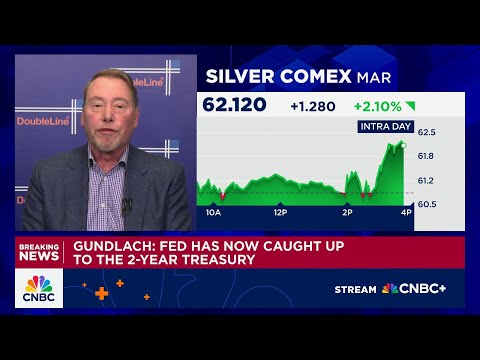
DoubleLine's Gundlach: I've turned positive on commodities broadly
CNBC Television· 2025-12-10 21:31
So Jeffrey, you you so rightly told me last time that you were looking for a steeper yield curve. Um, and it's exactly what what we've gotten as you alluded to that. Why do you think rates have backed up on the long end the way that they have >> people are worried about the interest expense on the Treasury debt and they're worried about the fact that the budget deficit is 6.2% 2% of GDP while we're in an extended economic expansion.So they're worried that the interest expense is going to be out of control b ...

Why Is Prologis (PLD) Up 2.3% Since Last Earnings Report?
ZACKS· 2025-11-14 17:31
Core Insights - Prologis reported a third-quarter 2025 core FFO per share of $1.49, exceeding the Zacks Consensus Estimate of $1.44 and showing an increase from $1.43 in the same quarter last year [2] - Rental revenues reached $2.05 billion, slightly below the Zacks Consensus Estimate of $2.10 billion but up from $1.90 billion year-over-year [3] - Total revenues increased to $2.21 billion from $2.04 billion in the prior year [3] Financial Performance - The company experienced a 12.2% year-over-year increase in interest expenses, totaling $258.3 million [7] - Average occupancy in Prologis' portfolio was 94.8%, a slight decrease from 94.9% in the previous quarter and 95.9% year-over-year [5] - Cash same-store net operating income (NOI) grew by 5.2%, compared to 4.9% in the previous quarter [5] Market Position and Strategy - Prologis' CEO highlighted a strong pipeline and improving customer sentiment, indicating a favorable logistics market for rent and occupancy growth [4] - The company commenced 65.6 million square feet of leases in the quarter, with a retention level of 77.2% [4] - Prologis' share of net effective rent change was 49.4%, with a cash rent change of 29.4% [5] Liquidity and Debt Management - Prologis ended the third quarter with cash and cash equivalents of $1.19 billion, up from $1.07 billion at the end of the previous quarter [8] - Total liquidity was reported at $7.5 billion, with debt constituting 26.5% of total market capitalization [8] - The company issued $2.3 billion of debt at a weighted average interest rate of 4.2% during the quarter [9] Guidance and Future Outlook - Prologis raised its 2025 core FFO per share guidance to a range of $5.78-$5.81, up from $5.75-$5.80 [11] - The company revised its capital deployment outlook for development starts to $2.75-$3.25 billion, and for dispositions to $750-$1,000 million [12] - Estimates for the stock have been trending downward, with a Zacks Rank of 3 (Hold), indicating an expectation of in-line returns in the coming months [15]

X @Nick Szabo
Nick Szabo· 2025-10-11 14:29
RT Charlie Bilello (@charliebilello)The Interest Expense on US National Debt rose to a record $1.22 trillion in the last 12 months, more than doubling over the past 4 years. The US Government now spends more money on interest than it does on National Defense.Video: https://t.co/2vr4renD4x ...
X @Joe Consorti ⚡️
Joe Consorti ⚡️· 2025-09-30 23:51
The US government pays $1.2 trillion on its interest expense alone.Shutting down the government is unironically the best cost-cutting measure in decades. https://t.co/lMyyhqHx4h ...
Federal Agricultural Mortgage (AGM) Update / Briefing Transcript
2025-09-03 16:02
Summary of Federal Agricultural Mortgage (AGM) Update / Briefing September 03, 2025 Industry Overview - The briefing focuses on the agricultural sector, specifically the USDA's farm income and wealth statistics for 2025, highlighting the financial health of farmers and the impact of government payments on farm income [80][81]. Key Points and Arguments 1. **USDA Data Release**: The USDA's revision for farm income is a significant event, with expectations of changes in net cash farm income and government payments [33][80]. 2. **Net Cash Farm Income Forecast**: The USDA forecasted net cash farm income for 2025 at $180.7 billion, representing a downward revision of approximately 5-7% from previous estimates [98][100]. 3. **Government Payments**: There is a notable decrease in government payments, with a drop of $3 billion, which may be attributed to timing issues and changes in program qualifications [116][119]. 4. **Crop and Livestock Performance**: - Livestock revenues are expected to increase significantly, particularly in beef and dairy sectors, while crop receipts remain largely unchanged from previous forecasts [113][115]. - The overall profitability across sectors shows livestock up slightly, while crops are down, reflecting market conditions [90]. 5. **Increased Costs**: - The USDA anticipates a $30 billion increase in cash expenses for farmers, driven by higher feed costs and interest expenses [122][128]. - Feed costs are projected to rise from $62 billion to over $68 billion, indicating increased financial pressure on farmers [125]. 6. **Debt Levels**: - Total debt is expected to rise by $30 billion in 2025, with real estate debt increasing significantly, reflecting higher borrowing needs among farmers [135][136]. - The debt-to-asset ratio may begin to rise, but remains below historical levels from the 1980s, indicating a relatively stable financial environment [146]. 7. **Market Sentiment**: Farmers are experiencing a shift in sentiment as they begin to see better-than-expected crop yields, leading to a more optimistic outlook despite lower prices [57][59]. Additional Important Insights 1. **Equity and Asset Values**: The USDA revised down the total value of real estate assets by $45 billion, despite an increase in farmland values, indicating a complex market dynamic [134]. 2. **Family Living Expenses**: Family living expenses are rising and may not decrease as quickly, contributing to overall financial strain on farmers [150][151]. 3. **Regional Variations**: There are regional differences in crop performance, with some areas, like the West Coast, seeing better prices for specific crops such as almonds [156]. This summary encapsulates the critical insights from the briefing, providing a comprehensive overview of the current state of the agricultural sector as reflected in the USDA's latest data.
