
Livestock

Search documents
X @The Economist
The Economist· 2026-04-07 10:20
Britain has almost 15m breeding ewes, most of which need a haircut between May and July. The question is: who should do the shearing? https://t.co/Ngeg1OsjOl ...
Uncovering the Hidden Drivers of Commodities
Yahoo Finance· 2026-03-17 15:00
Core Insights - The commodities market has experienced significant fluctuations post-financial crisis, with precious metals and grains leading the recovery, followed by a period of price declines until a resurgence in precious metals began in August 2018, culminating in an accelerated rise by May 2024 [1] Historical Performance - The BCOM industrial metals sector saw a rally of approximately 395% from November 2001 to May 2007, driven by China's industrialization and urban migration, which increased demand for construction materials [2] - The grain markets experienced multiple rallies between 2002 and 2012, influenced by a declining U.S. dollar, the rise of biofuels, increased per capita income, and population growth [2] - The BCOM energy sector led the index with an 860% rally from February 1999 to September 2005, attributed to rising demand from China and India, alongside supply shocks from geopolitical issues [2] - A second energy-sector rally of 107% occurred from January 2007 to July 2008, as WTI crude oil prices surged above $147 per barrel due to global demand and geopolitical tensions [2] Recent Trends - The precious metals sector has outperformed the index in recent years due to geopolitical tensions, fiscal and monetary policies, and increased central bank gold accumulation [5] - In 2025, gold and silver reached record highs of over $5,000 and $100 per ounce, respectively, with investor focus shifting to oil amid ongoing Mideast conflicts in 2026 [4] Inflation Dynamics - Post-financial crisis, commodity prices generally moved sideways or lower, indicating a dampening effect on the Personal Consumption Expenditures (PCE) Price index, with inflation primarily affecting the services sector [8] - During the COVID-19 pandemic, commodity sectors declined, followed by a rally that lasted about two years, coinciding with increases in CPI and PCE inflation indices [11] Correlation and Diversification - Commodities can move independently or exhibit higher positive correlations depending on various micro and macro factors, suggesting potential diversification opportunities within the commodity universe [3][14] - The correlation matrix indicates that most commodity sectors have relatively low positive correlations, allowing for diversification strategies [14] Livestock Sector Performance - The BCOM livestock sector, particularly live cattle, appreciated by 86% from April 2020 to March 2026, driven by the smallest herd size since 1951 and strong consumer demand [13] U.S. Dollar Influence - The relationship between commodities and the U.S. dollar is significant, as a declining dollar can make commodities cheaper in other currencies, potentially increasing global demand [18][19] - The DXY index showed a negative correlation with the BCOM index, indicating that as the dollar weakens, commodity prices may rise [21]
为更清洁的天空而耕种:农业如何为清洁空气解决方案做出贡献(英)2026
Shi Jie Yin Hang· 2026-03-16 03:30
Investment Rating - The report does not explicitly provide an investment rating for the agriculture sector in relation to air pollution and clean air solutions. Core Insights - The agriculture sector has a complex relationship with air pollution, contributing to and being affected by it. Agricultural practices such as crop residue burning, pesticide application, fertilizer use, and livestock management release pollutants, while air pollution negatively impacts crop yields and soil health [11][12][15]. - Particulate matter (PM2.5) is a significant air pollutant originating from agricultural activities, which can travel long distances and affect urban areas [11][14]. - Effective solutions to reduce air pollution from agriculture require a multifaceted approach, including policy changes, technological advancements, education, and collaboration [11][12]. Summary by Sections 1. Overview - Agricultural activities contribute to air pollution and are adversely affected by it, necessitating strategies to mitigate these impacts for sustainable food production and environmental health [12][15]. 2. Crop Residue Burning - Crop residue burning reached 402 million metric tons globally in 2021, a 64% increase since 1961, with major contributions from China, India, and the United States [19][20]. - The practice is prevalent in regions like India and China, where it significantly contributes to air pollution and health risks [20][22]. 3. Fertilizers and Pesticides - Global artificial fertilizer production has surged from 20 million tons in 1950 to nearly 190 million tons today, with usage increasing by 32% from 2000 to 2022 [49][51]. - Fertilizers are a primary source of ammonia emissions, contributing significantly to PM2.5 levels in various regions [55][60]. 4. Livestock Operations and Manure Management - Intensive livestock farming generates substantial PM2.5 emissions from manure management and feedlots, contributing to air pollution [11][14]. 5. Soil Health, Deforestation, and Farm Machinery - Agricultural practices disturb soil, leading to dust generation and PM2.5 pollution, particularly in arid regions [11][14]. 6. A Way Forward - Solutions to reduce air pollution from agriculture include promoting sustainable practices, improving nitrogen use efficiency, and developing value chains for crop residues [35][39][67].
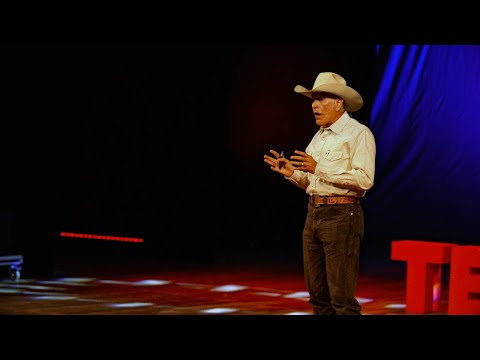
Como conciliar a pecuária e a preservação da floresta? | Mauro Lúcio | TEDxAmazônia
TEDx Talks· 2026-03-13 15:51
Para mim um desafio falar para vocês aqui nesta tarde. Avalia agora depois da palestra da donete, né. Fica muito tudo fica muito mais mais difícil, mas eu queria muito que vocês me ouvissem com o coração.O que eu quero falar são palavras em um tempo aonde os discursos são muito inflamados, palavras com rancor são muito levadas e as mensagens entendidas às vezes com uma pitada de ódio. Eu queria quebrar esse clima, quebrar isso e levar as minhas palavras com muito amor que com muito carinho. E eu queria que ...

Blockchain is quietly moving into the cattle industry
Yahoo Finance· 2026-02-25 13:30
Core Insights - Blockchain technology has significant applications beyond finance, particularly in the livestock industry, as highlighted by Rob Jennings, President of CattleProof [1] Group 1: Current Practices in Agriculture - Modern ranching is complex, involving market hedging, credit management, and data tracking across extensive supply chains, contrary to the perception of agriculture as low-tech [2] - Ranchers currently utilize management apps, RFID scanners, and digital records for tracking cattle, but the data remains fragmented and isolated within different systems, complicating sharing and verification [3] Group 2: Blockchain's Role - Blockchain can serve as a neutral layer that connects fragmented records without replacing existing ranch management tools, addressing issues related to disease tracking and origin claims [3][4] - By creating a digital identity for each cattle, blockchain transforms them into non-fungible tokens (NFTs), allowing for unique identification and verified data regarding origin, age, and handling practices [4][5] Group 3: Consumer Implications - Blockchain technology can enhance transparency for consumers, enabling them to verify claims such as "cage free" or "pasture raised" by scanning QR codes that provide a verified history of the animal's upbringing [6]
X @Bloomberg
Bloomberg· 2026-02-14 15:02
US cattle herds have shrank to the smallest since the early 1950s, pushing beef prices by 15% at grocery stores in the past year https://t.co/YnZoztti5O ...
X @Bloomberg
Bloomberg· 2026-02-11 11:16
Namibia has allocated $3.6 million to shield its livestock industry from an outbreak of foot-and-mouth disease https://t.co/uafSIfsORW ...
把更多产业链变成致富链
Xin Lang Cai Jing· 2026-02-09 22:25
Core Insights - The concept of "quality and price" is emphasized as a means to encourage consumers to pay a premium for quality and uniqueness, rather than merely increasing prices [2][5] - The agricultural sector is experiencing a significant increase in income for farmers, with rural residents' per capita disposable income projected to reach 24,456 yuan in 2025, reflecting a 6.0% growth [3] - Successful agricultural models in provinces like Zhejiang and Guangdong focus on enhancing brand value and expanding market reach, moving beyond traditional farming practices [4][5] Group 1: Agricultural Income and Models - Jiangxi Province's agricultural leader, Ling Jihua, distributed 21.29 million yuan as year-end bonuses to farmers, showcasing a successful model that combines high yield and low cost [2] - The average annual income increase for farmers during the "14th Five-Year Plan" period is approximately 1,500 yuan, marking it as a peak period for income growth [3] - The income growth rate for farmers has slowed from around 10% to approximately 6%, indicating a need for new strategies to sustain growth [3] Group 2: Regional Agricultural Strategies - Zhejiang's "土特产富" initiative aims to enhance the value of local specialties through a comprehensive development approach, exemplified by the successful two-headed black pig industry chain [4] - Guangdong's innovation in agricultural products, such as the development of frozen lychee, demonstrates the potential of technology to enhance product value and marketability [5] - Both provinces are focusing on restructuring the value of local specialties through brand development, market alignment, and industry integration, creating a seamless value chain from production to consumption [5]

Cattle, Hog Bulls Still Have an Edge. What Needs to Happen for Prices to Keep Climbing.
Yahoo Finance· 2026-02-09 15:01
Market Overview - April live cattle futures rose by $1.65 to $237.25, with a weekly increase of 45 cents [1] - March feeder cattle futures gained $3.35 to $367.425, marking a weekly gain of $7.15 [1] - Despite increased volatility and profit-taking from short-term traders, the long-term fundamentals for cash and beef markets remain solid, with a bullish technical posture for cattle futures [1] Cash Cattle Trading - Cash cattle trading activity increased, with USDA reporting steers averaging $239.91 and heifers averaging $239.85 [4] - The previous week's average cash cattle trading was reported at $239.44 [4] Market Fundamentals - Cash cattle and beef market fundamentals and technicals are solid, although the U.S. stock market has shown instability, affecting other commodity markets like gold, silver, and copper [5] - The USDA's semi-annual cattle inventory report confirmed a decline in the U.S. herd for the ninth consecutive year, indicating historically low cattle supplies on feedlots [7] - Strong demand for ground beef and reduced cattle slaughter are expected to support cash and futures prices [7] Future Price Trends - There is potential for live cattle and feeder cattle futures prices to challenge record highs from last fall, possibly in the near term [8] - April lean hog futures fell by 42.5 cents to $97.95 but saw a weekly increase of $2.80, with bullish technicals likely to keep hog futures elevated [9]
X @Bloomberg
Bloomberg· 2026-02-06 01:52
Muyuan plans to partner with Asian pig farmers and enhance its global feed-grain supply network after raising HK$10.7 billion ($1.4 billion) in Hong Kong’s biggest listing of the year so far https://t.co/6YQmjiHlQW ...