K线技术

Search documents
K线不枯燥:8张动态图带你看懂“头肩底”!不再与黑马擦肩而过!
Sou Hu Cai Jing· 2025-04-13 15:49
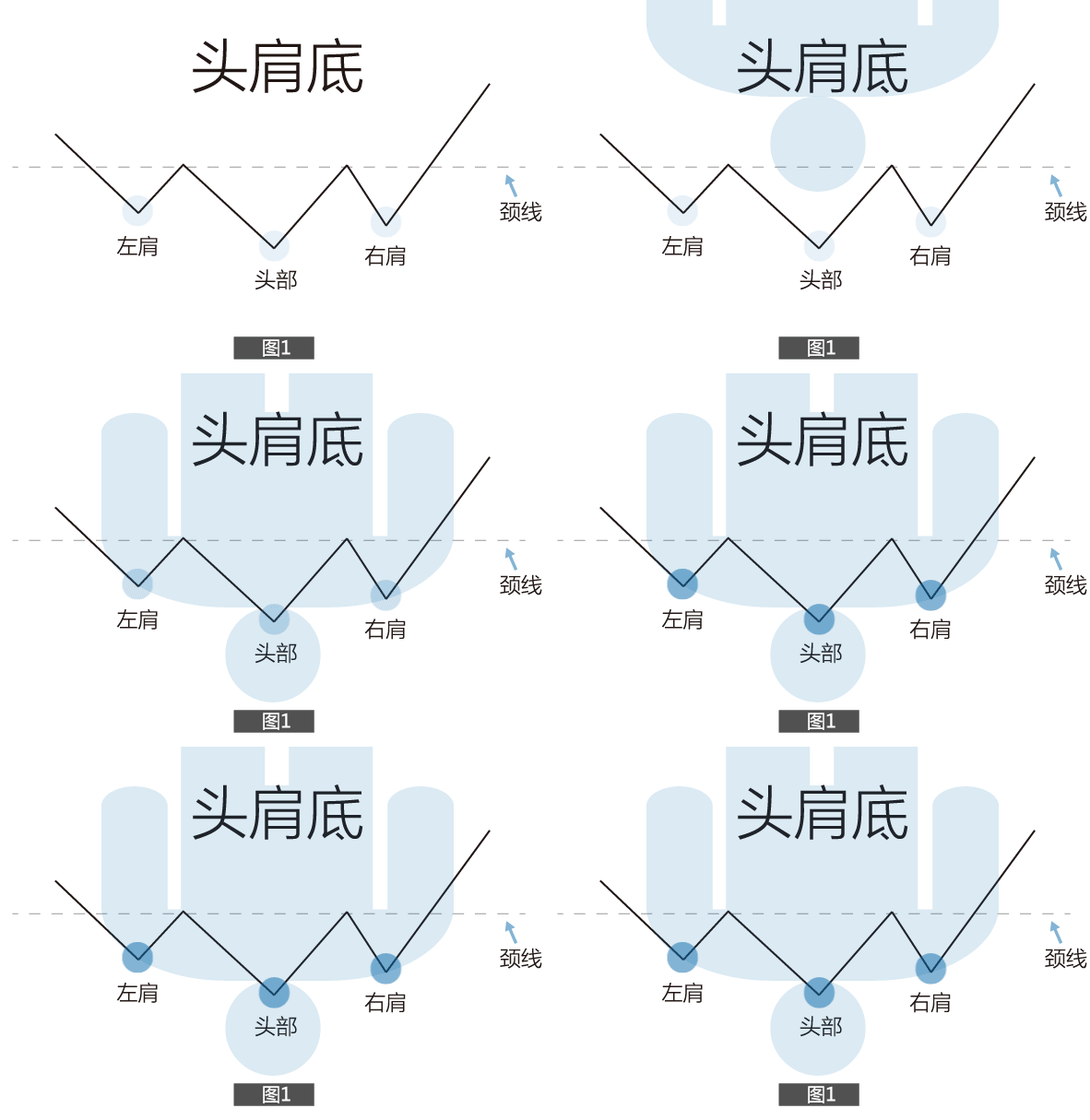
Core Viewpoint - The article discusses the "Head and Shoulders Bottom" pattern in technical analysis, emphasizing its significance as a bullish reversal signal typically appearing at the end of a bear market. Group 1: Definition and Characteristics - The "Head and Shoulders Bottom" pattern consists of three parts: left shoulder, head, right shoulder, and a neckline, resembling two shoulders supporting a head [1] - The neckline is formed by connecting the first and second rebound high points, and it can be either horizontal or sloped [3] Group 2: Breakout Patterns - There are two types of breakout patterns: one involves a pullback after breaking the neckline, while the other sees the price rise continuously without retracing [4] Group 3: Buying Strategies - For aggressive buyers, the first buying point is when the price breaks above the neckline with increased volume, although this carries some risk of a false breakout [5] - For conservative buyers, the second buying point occurs when the price breaks the neckline, pulls back, and then rises again near the neckline [5] Group 4: Cautionary Notes - A significant increase in volume is necessary when breaking the neckline; otherwise, it may indicate a false breakout [7] - After an upward breakout, a temporary pullback is acceptable, but it should not fall below the neckline to avoid a failed pattern [9] Group 5: Case Studies - A successful case is illustrated with the Shanghai Composite Index from May to October 2010, where it formed a "Head and Shoulders Bottom" and subsequently rose significantly [10] - A failed case is presented with Northeast Pharmaceutical (000597) from May to September 2010, where the price fell below the neckline after a breakout, leading to a loss of market confidence [11]