
Liquidity Infusion

Search documents
RBI likely to infuse Rs 5 lakh crore into market in FY27
The Economic Times· 2026-02-23 00:35
Core Insights - The Reserve Bank of India (RBI) is expected to infuse at least ₹5 lakh crore through liquidity operations in the next fiscal year to address supply-demand imbalances in the bond market [7][2] - Total issuances from the Centre, states, and companies are estimated to be a minimum of ₹40 lakh crore, making liquidity measures crucial for containing borrowing costs [7][1] - The RBI has already bought back nearly half of the central government's borrowings in FY26 through open market operations (OMO), setting a record for OMO purchases [7][1] Government Borrowing Plans - The central government plans to borrow ₹14.77 lakh crore via dated securities in the current fiscal year, with the RBI having already bought back ₹6.88 lakh crore of sovereign bonds from the market [2][7] - Economists predict that the RBI will need to act as a balancing factor in the bond market due to potential bearishness stemming from states' fiscal challenges [2][7] Banking System Liquidity - The banking system liquidity is currently at a daily average surplus of ₹2.66 lakh crore, which is approximately 2.6% of net demand and time liabilities (NDTL) as of February [5][7] - Economists emphasize the need for the RBI to ensure that core liquidity surplus does not fall below 1% of NDTL by March 2027 [6][7]



RBI to infuse Rs 1.25 trn; $10 billion USD-INR buy-sell swap
Rediff· 2026-01-24 19:25
Core Viewpoint - The Reserve Bank of India (RBI) has announced liquidity measures including open market operations (OMOs), dollar-rupee buy-sell swaps, and long-term variable rate repo (VRR) operations to infuse liquidity into the banking system [3][6]. Group 1: Liquidity Measures - The RBI will purchase Government of India securities worth Rs 1 trillion in two tranches of Rs 50,000 crore each on February 5 and February 12 [3]. - A dollar-rupee buy-sell swap of $10 billion for three years will be conducted on February 4 [5][12]. - A 90-day VRR auction for Rs 25,000 crore will be held on January 30 [4][12]. Group 2: Current Liquidity Conditions - Surplus liquidity in the system fell to about Rs 10,000 crore as of Thursday [7]. - Economists predict that the RBI may conduct additional OMOs of Rs 1 trillion by March-end to maintain liquidity around 0.9% of net demand and time liabilities (NDTL) [8][9]. - The RBI aims to ensure orderly liquidity conditions and will continue to monitor evolving market conditions [6]. Group 3: Impact on Forward Book and Market - Buy-sell swaps are primarily used to lengthen the maturity profile of the RBI's forward book rather than to add fresh liquidity [9][10]. - The net short-dollar positions in contracts of less than a year decreased to $37.9 billion at the end of November, while short positions in contracts of more than a year increased to $28 billion [10]. - OMO auctions are expected to soften the yield on the benchmark 10-year government bond by 2-3 basis points [11][13].

RBI needs to ramp up bond purchases to cool yields, funds say
BusinessLine· 2026-01-20 03:32
Core Viewpoint - The Reserve Bank of India (RBI) is expected to significantly increase liquidity in the banking system due to ineffective transmission of interest rate cuts and elevated bond yields [1][3]. Group 1: RBI's Bond Purchases - The RBI is projected to buy up to 5 trillion rupees ($55 billion) in bonds by March 2027, with estimates of 2.5 trillion rupees in the upcoming fiscal year and up to 2 trillion rupees in the near term [2]. - Despite the RBI's efforts, including a record liquidity injection of 14.5 trillion rupees since December 2024, long-term bond yields have shown minimal response, with only a 17 basis point decrease in the 10-year yield last year [5][7]. Group 2: Market Dynamics - The disconnect between monetary policy and bond yields is evident, as corporate bond borrowing costs have increased, with the Small Industries Development Bank of India paying 30 basis points more for a bond than two months prior [6]. - The pressure on the Indian rupee has further complicated the situation, as the RBI's foreign-exchange operations have drained liquidity, negatively impacting bond demand [8]. Group 3: Investor Behavior - Demand for bonds has decreased due to reduced interest from key investors like insurers and pension funds, which are reallocating towards equities [9]. - Higher costs associated with bond funds are leading companies to prefer bank loans, which align more closely with policy rates, as seen with Power Finance Corp. opting for bank loans to reduce funding costs [10]. Group 4: Future Outlook - There may be potential relief if a trade deal with the US materializes, which could alleviate growth concerns and lessen the need for extensive bond purchases [11]. - Investors anticipate further action from the RBI, as current liquidity constraints and ongoing foreign exchange interventions suggest that additional bond purchases are likely in the coming months [12].

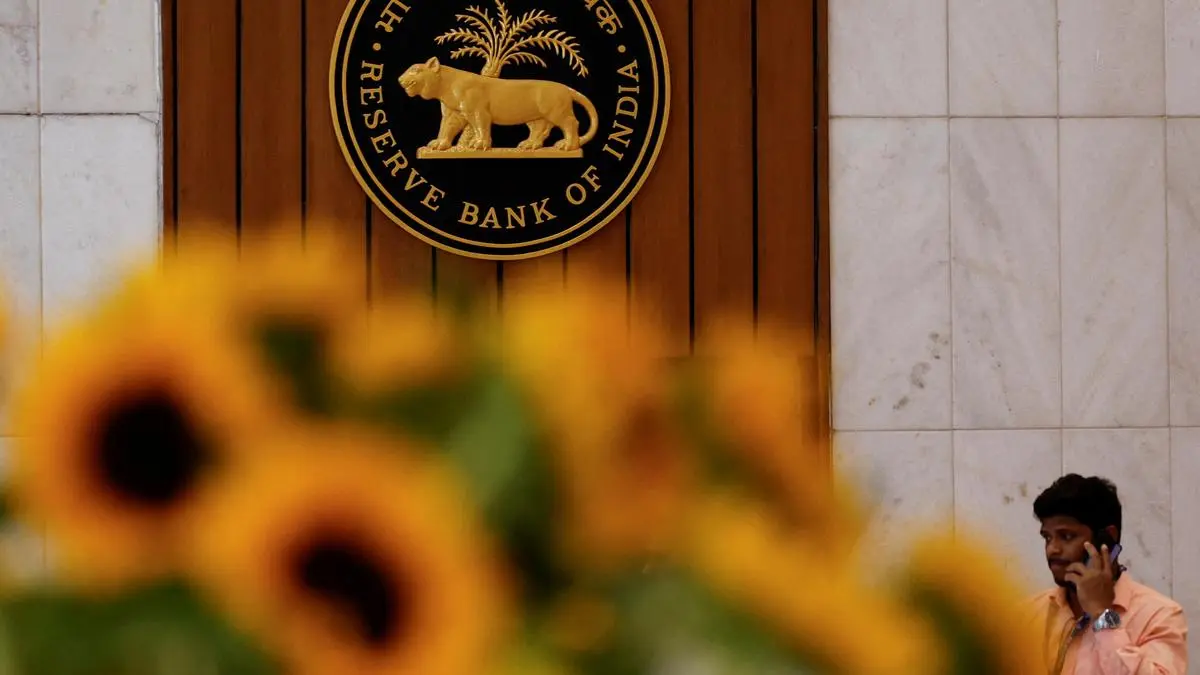
RBI to infuse Rs 2.90 lakh crore liquidity via bond buys, USD swap
The Economic Times· 2025-12-23 13:58
Core Insights - The Reserve Bank of India (RBI) plans to inject Rs 2.90 lakh crore of durable liquidity into the banking system through bond purchases and a dollar-rupee swap to address tight cash conditions [1][2][6] - The RBI will conduct a $10-billion buy/sell swap auction on January 13 to ease dollar liquidity [1][2] - The measures aim to stabilize yields and improve transmission across the curve, as system liquidity turned negative mid-December, pushing the weighted average call rate to 5.46%, above the 5.25% repo rate [1][2][6] Liquidity and Market Conditions - Between December 11 and 18, the RBI infused Rs 1.45 lakh crore through open market operations (OMOs) and a $5-billion swap, but liquidity tightened again due to tax outflows, leading to higher yields [2][6] - The 10-year benchmark yield has increased by 20 basis points since December 5, despite a recent quarter percentage point policy rate cut [5][6] - The benchmark yield eased to 6.63% on Tuesday from 6.66% a day earlier, after reaching 6.70%, the highest since March [6] Government Bond Sales - State governments collectively raised Rs 33,720 crore through bond sales on Tuesday at cutoff yields higher than expected, indicating adverse demand-supply conditions in the market [6] - The Bank of India raised Rs 10,000 crore in long-term infrastructure bonds at a yield of 7.23%, receiving a total of 83 bids amounting to Rs 15,305 crore, with 37 bids accepted [7]
RBI may need to inject further '2 lakh crore to let rates transmit
The Economic Times· 2025-12-07 18:52
Core Viewpoint - The Reserve Bank of India (RBI) has announced liquidity measures amounting to ₹1.45 lakh crore, but this may not be sufficient due to concurrent advance tax payments estimated at ₹2-2.5 lakh crore, which could drain funds from the banking system [1][9]. Liquidity Measures - Economists and treasury officials suggest that the RBI may need to provide an additional ₹1.5-2 lakh crore of durable liquidity to ensure effective transmission of recent rate cuts, assuming no further foreign exchange intervention [9]. - The average system liquidity was reported at ₹1.68 lakh crore in November and ₹2.63 lakh crore in December so far, with liquidity being about 0.8% of Net Demand and Time Liabilities (NDTL) in November [9]. Deposit and Lending Rates - Fresh deposit rates have decreased by 92 basis points to 5.57% since February, while outstanding deposit rates have only fallen by 24 basis points to 6.78% [6]. - On the lending side, fresh loan rates have dropped by 76 basis points to 8.64%, whereas outstanding lending rates have increased by 56 basis points to 9.24% [6]. Market Reactions - Treasury heads from various banks are monitoring market reactions before making decisions on lowering deposit rates, indicating that the impact of liquidity on deposit rates will depend on market conditions in the last quarter of the year [5][9].