Loose Monetary Policy

Search documents
美联储,重要发布!金价,大涨!
Sou Hu Cai Jing· 2025-11-27 04:59
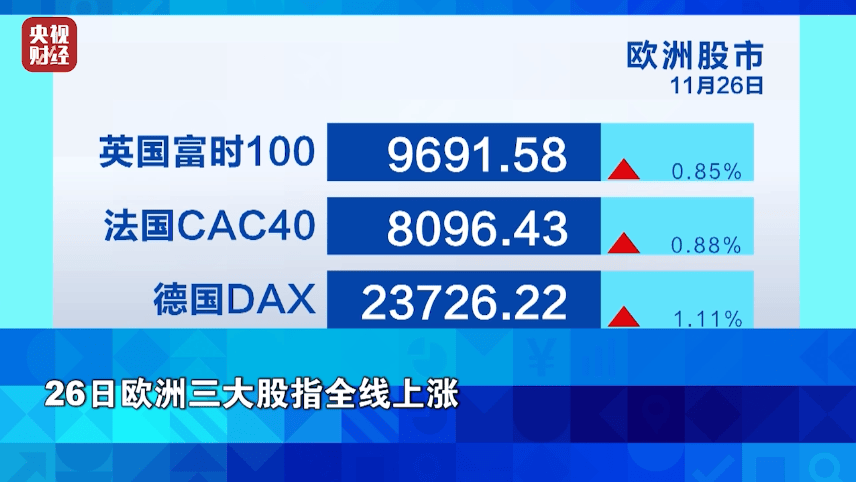
Group 1 - The Federal Reserve's latest Beige Book indicates a further decline in overall consumer spending and signs of weakness in the job market, with AI technology applications suppressing hiring demand and tariff policies increasing costs for U.S. manufacturing and retail sectors [1] - Economic data reflects a slowdown in consumer spending, which is the core engine of the U.S. economy, and an increase in downside risks for the job market, leading to heightened expectations for a rate cut by the Federal Reserve in December [1] - As of Wednesday, the probability of a 25 basis point rate cut by the Federal Reserve in December exceeds 90%, which has positively impacted tech stocks, including popular chip and AI concept stocks, resulting in gains for the three major U.S. stock indices [1] Group 2 - In Europe, the rising expectations for a Federal Reserve rate cut and potential peace talks between Russia and Ukraine have boosted market risk appetite, leading to widespread gains in retail, banking, and defense stocks [3] - The three major European stock indices all closed higher, with the UK market up 0.85%, France up 0.88%, and Germany up 1.11% [3] Group 3 - The U.S. Energy Information Administration reported a significant increase in daily crude oil imports, rising by 1.05 million barrels to a two-month high, indicating a rebound in oil consumption demand ahead of the holiday season [5] - This increase in imports contributed to a rise in international oil prices, with light crude oil futures for January delivery closing at $58.65 per barrel, up 1.21%, and Brent crude oil futures at $63.13 per barrel, up 1.04% [5] Group 4 - Market expectations for a Federal Reserve rate cut in December, along with the leading "dovish" candidates for the next Fed chair, have led investors to anticipate continued easing monetary policy next year [7] - As a result, U.S. Treasury yields and the dollar index fell, contributing to a significant increase in international gold prices, which rose back above the $4,200 per ounce mark [7] - The December gold futures price closed at $4,202.3 per ounce, reflecting a 1.50% increase [7]

This Dividend Stock Has Fallen as Gold Prices Crash. Should You Buy You Buy the Dip or Stay Far Away?
Yahoo Finance· 2025-10-28 23:30
Group 1: Gold Price Movement - Gold prices have recently crashed below the $4,000 level after previously rising past $5,000 per ounce, impacting gold mining companies significantly [1] - The recent decline in gold prices is viewed as a healthy correction, with expectations that prices will not fall much below the $4,000 level [4] Group 2: Gold Mining Companies - Anglogold Ashanti (AU) stock has seen a significant increase, tripling in value this year, but is now nearing bear market territory with a potential drawdown of 20% from its peak [2] - The outlook for AU and similar mining companies is primarily driven by gold prices rather than company-specific factors [4] Group 3: Long-term Drivers for Gold - Central banks globally are engaged in de-dollarization, with their gold holdings surpassing U.S. Treasury holdings for the first time in three decades, indicating a strong demand for gold [5] - Trust in fiat currencies has diminished due to rising national debts, with many investors turning to gold as a safe-haven asset [5] - Loose monetary policies and low interest rates are expected to support gold prices, as lower rates are favorable for non-yielding assets like gold [5] - Ongoing geopolitical tensions, particularly from countries like China and Russia, are likely to keep demand for gold elevated [5]

Japanese Stocks Surge on "Takaichi Trade": ETFs in Focus
ZACKS· 2025-10-08 11:01
Core Viewpoint - Japan's Nikkei 225 index reached an all-time high, driven by optimism surrounding government spending and monetary policy following the election of Sanae Takaichi as the new leader of the ruling Liberal Democratic Party [1][2]. Market Reaction - The 30-year Japanese government bond yield hit a record high, while the two-year note yield decreased due to expectations of delayed rate hikes by the Bank of Japan [3]. - The yen experienced a moderate decline against the U.S. dollar and reached historic lows against the euro [3]. Political Context - Takaichi is perceived as the most expansionist candidate, succeeding the hawkish Prime Minister Shigeru Ishiba, which contributed to the surge in the Nikkei index [4]. - Takaichi's agenda includes enhancing investment in strategic sectors such as artificial intelligence, semiconductors, nuclear fusion, and defense [5]. Investment Opportunities - The rally in Japanese equities is expected to increase demand for Japan-focused large-cap ETFs, particularly in a falling yen environment, which benefits export-oriented companies [7]. - Specific ETFs poised to gain include WisdomTree Japan Hedged Equity Fund (DXJ), Xtrackers MSCI Japan Hedged Equity ETF (DBJP), and iShares Currency Hedged MSCI Japan ETF (HEWJ), with DXJ rising 2.8% on October 6, 2025 [8]. - ProShares UltraShort Yen (YCS) gained 3.8% on the same day, while the Invesco CurrencyShares Japanese Yen Trust (FXY) fell by 1.9% due to expectations of easier monetary policy [9].