Manufacturing Digital Transformation

Search documents
行稳致远访名企丨服务中国智造 探索科学智能 行业独角兽创新向前
Sou Hu Cai Jing· 2026-02-13 16:00
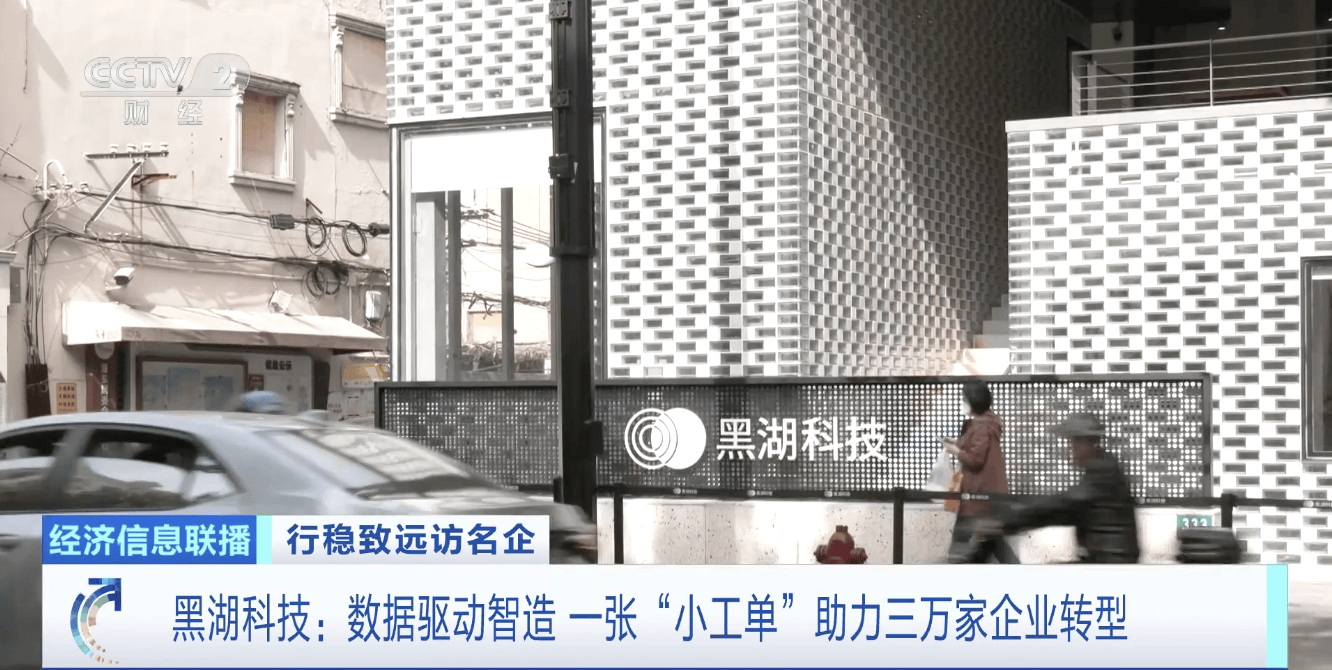
Core Insights - In 2025, China is projected to have 409 unicorn companies, ranking second globally and accounting for nearly 30% of the total [1] - The focus is on two unicorn companies, Heihu Technology and Silang Technology, which are leveraging "AI+" innovations to empower China's manufacturing sector [1] Group 1: Heihu Technology - Heihu Technology has grown from a small team to serving over 30,000 manufacturing enterprises in digital transformation within less than ten years [3] - The company has developed a lightweight digital management software called "Small Order" to address the challenges faced by small and medium-sized production enterprises in the cultural and creative toy sector [5] - Heihu has implemented an AI-driven large-scale manufacturing platform, increasing factory utilization to 83% and reducing energy consumption by 18% [7] - The founder, Zhou Yuxiang, is optimistic about future growth, stating that they have only served 30,000 out of 5 million factories in China [13] Group 2: Silang Technology - Silang Technology has initiated its IPO process and aims to become the first domestic stock in scientific intelligence [15] - The company has developed China's first general-purpose 3D scientific computer, which is aiding in innovative drug research for chronic blood diseases [15] - Silang has built 19 "Tianqiong" 3D scientific computers across the country, providing computational support to over 200 scientists and related enterprises [18] - The architecture of these scientific computers is significantly different from traditional computers, making them suitable for solving real-world three-dimensional simulation tasks [19] - The CEO, Cha Hao, emphasizes the importance of advancing chip technology and larger machines, viewing the successful computation of the first drug as a pivotal moment for scientific intelligence [23]

万亿产业迎利好,工信部重磅部署
21世纪经济报道· 2026-01-13 16:17
Core Viewpoint - The Ministry of Industry and Information Technology (MIIT) released the "Action Plan for Promoting High-Quality Development of Industrial Internet Platforms (2026-2028)", aiming for significant advancements in the industrial internet platform ecosystem by 2028, including over 450 influential platforms and a device connection count exceeding 120 million [1][3]. Group 1: Action Plan Goals - By 2025, the core industry scale of China's industrial internet is expected to exceed 1.6 trillion yuan, driving an industrial value-added growth of approximately 2.5 trillion yuan [1]. - The action plan outlines four major actions: platform cultivation and enhancement, data intelligence improvement, large-scale application, and ecological support [1][5]. Group 2: Platform Cultivation and Differentiation - The plan emphasizes the cultivation of specialized platforms for various industrial scenarios, enhancing the development and deployment capabilities of vertical industry solutions [5][6]. - It aims to promote collaborative platforms to facilitate efficient flow and allocation of production factors, with a classification mechanism for platform development [5][6]. Group 3: Data Utilization and AI Integration - The action plan focuses on enhancing data collection and integration capabilities, establishing a data labeling system, and developing governance tools for data quality [6][7]. - It encourages the integration of artificial intelligence into industrial internet platforms, promoting AI applications across the industrial chain and fostering the development of intelligent industrial entities [7]. Group 4: Support for SMEs - The plan highlights the need to support small and medium-sized enterprises (SMEs) in adopting platform solutions, including low-cost, easily deployable standardized products [5][10]. - It encourages innovative service promotion models, such as "pay after use" and subscription services, to facilitate the scaling of platform solutions [10]. Group 5: Ecosystem Support and Standards - The action plan proposes exploring open-source mechanisms for industrial internet platforms and enhancing cooperation levels among stakeholders [11]. - It aims to establish a new standard system for industrial internet platforms, focusing on interoperability, data models, and application standards [11].

广东出台AI赋能制造业16条,鼓励地市设立“模型券”
Nan Fang Du Shi Bao· 2025-10-22 08:45
Core Viewpoint - Guangdong Province has introduced the "Action Plan for High-Quality Development of Manufacturing Empowered by Artificial Intelligence (2025-2027)" to accelerate the integration of AI and manufacturing, aiming to create a globally influential demonstration zone for this integration [1][2]. Group 1: Policy Measures - The Action Plan outlines 16 policy measures across four main areas: strengthening key supply, promoting application, building support systems, and optimizing element guarantees [2][3]. - The first five measures focus on enhancing the supply of industrial AI, targeting key industries such as electronics, smart home appliances, automotive, and robotics, and promoting the development of vertical large models and specialized small models [2][3]. - Measures six to ten emphasize the large-scale application of industrial AI, establishing a "diagnosis-transformation-promotion" system for manufacturing enterprises to facilitate AI adoption [3]. - Measures eleven to thirteen aim to build a supporting system for industrial AI, including the establishment of AI application pilot bases and digital transformation promotion centers [3][4]. - The final three measures focus on optimizing the guarantees for industrial AI, including financial support through provincial and municipal funds and encouraging financial institutions to offer financing services for AI product development [3][4]. Group 2: Industry Focus - The Action Plan identifies specific industries for AI integration, including consumer electronics, high-end equipment, automotive, petrochemicals, metal manufacturing, advanced materials, and more [4][5]. - The plan aims to enhance the entire manufacturing process, from R&D and production to sales and management, by leveraging AI technologies [4][5]. Group 3: Financial Support and Investment - Guangdong Province plans to allocate 132 million yuan in its 2025 budget to support cutting-edge AI technology projects, with a total of 2.196 billion yuan designated for AI research and platform construction [7]. - The province aims to increase AI-related investments to over 20 billion yuan by 2027, driving the scale of related industries to exceed 100 billion yuan [7][8]. - Various funds, including the Advanced Manufacturing Industry Investment Fund, have been established, with a cumulative subscribed scale of approximately 70 billion yuan [7][8].
首批重点培育!探秘大湾区工业互联网公共技术服务平台
Nan Fang Du Shi Bao· 2025-05-13 15:34
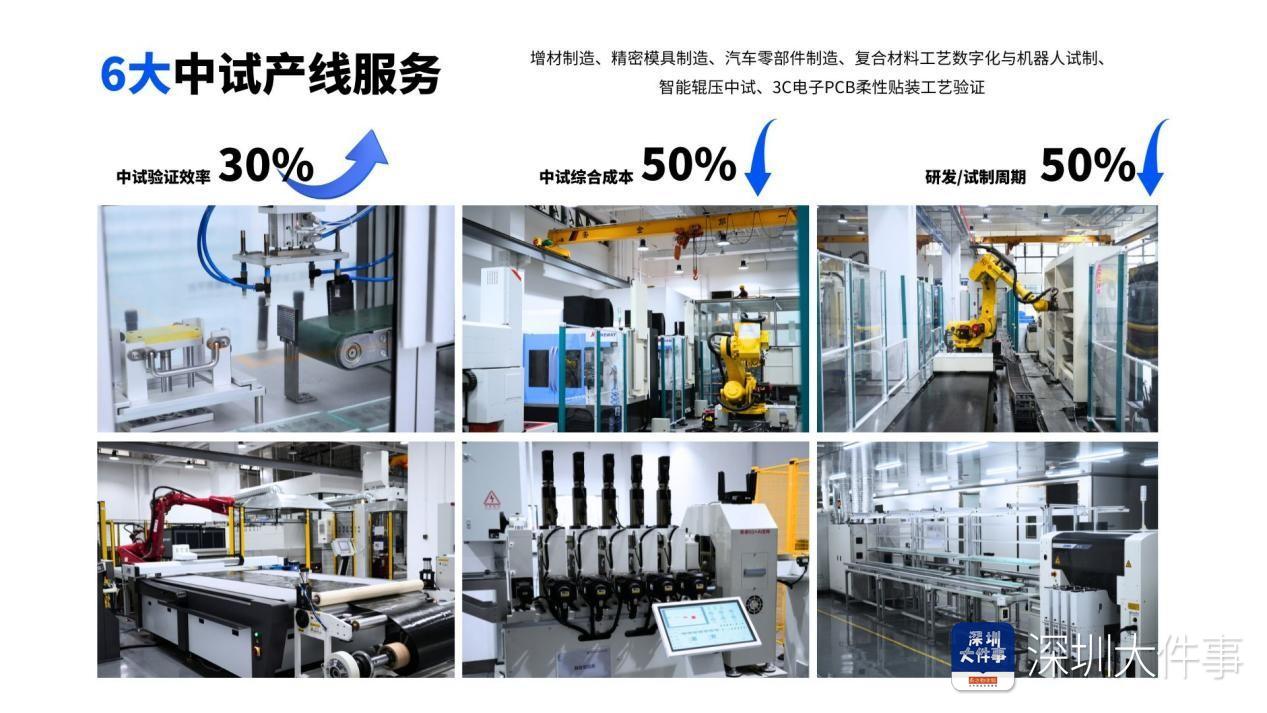
Core Viewpoint - The Guangdong-Hong Kong-Macao Greater Bay Area Industrial Internet Public Technology Service Platform has been recognized as a key pilot platform, marking its role as a crucial hub for the industrial internet technology transition from research and development to industrial application in China [1][2]. Group 1: Importance of Pilot Platforms - Pilot platforms address the "last mile" challenges in manufacturing, such as equipment interconnectivity, data silos, and high trial costs, acting as an intermediary testing ground for technology validation and industrial application [2]. - The Greater Bay Area Industrial Internet Platform aims to integrate cutting-edge technologies like 5G, big data, and artificial intelligence to create a comprehensive industrial internet technology verification and service platform [2][3]. Group 2: Technical Integration - The platform offers services across six major pilot verification production lines, enhancing trial verification efficiency by 30%, reducing comprehensive trial costs by 50%, and shortening R&D cycles by 50% for small and medium-sized manufacturing enterprises [3]. Group 3: Data Utilization - The platform aggregates eight categories of heterogeneous industry data, improving data collection efficiency by 20% and equipment utilization by 15%, thereby promoting industrial digital transformation and high-quality innovation [5]. Group 4: Ecosystem Collaboration - The platform is co-built by Shenzhen National High-tech Industry Innovation Center and major companies like Huawei and China Unicom, establishing a three-tier collaborative model to support small and medium-sized manufacturing enterprises [8]. Group 5: Lightweight Transformation - The platform introduces a "lightweight digital transformation" approach for small and medium enterprises, providing tailored service packages that have already benefited over 2,000 companies in Shenzhen, with plans to expand services to 5,000 enterprises [9].