天穹3D科学计算机

Search documents
习近平总书记关切事·两会看落实|创新催生新产业、新模式、新动能
Xin Hua She· 2026-02-26 08:03
Group 1: Core Insights - The integration of technological innovation and industrial innovation is essential for developing new productive forces, as emphasized by President Xi Jinping [1][3][10] - Significant breakthroughs in basic research have been achieved, including the conversion of thorium-uranium nuclear fuel and the development of the "Zu Chongzhi No. 3" superconducting quantum computing prototype [3][11] - The "China Sky Eye" (FAST) has made critical advancements in understanding fast radio bursts, showcasing the capabilities of China's largest single-dish radio telescope [2][3] Group 2: Industry Developments - The development of high-performance carbon fiber in Shanxi represents a significant leap from following to keeping pace with global advancements, providing essential materials for aerospace and renewable energy sectors [5][7][8] - The launch of the first domestic 3D scientific computer, "Tianqiong," marks a major innovation in computational technology, enhancing capabilities in artificial intelligence and scientific research [9][10] - Traditional industries are being revitalized through technological innovation, leading to a transformation towards high-end, intelligent, and green development [8][10] Group 3: Future Outlook - The emphasis on strengthening the role of enterprises in technological innovation is crucial for the deep integration of technology and industry, fostering a robust innovation ecosystem [11] - Continuous optimization of the innovation environment and enhancement of technological empowerment are expected to accelerate the transformation of scientific achievements into productive forces [11]

行稳致远访名企丨服务中国智造 探索科学智能 行业独角兽创新向前
Sou Hu Cai Jing· 2026-02-13 16:00
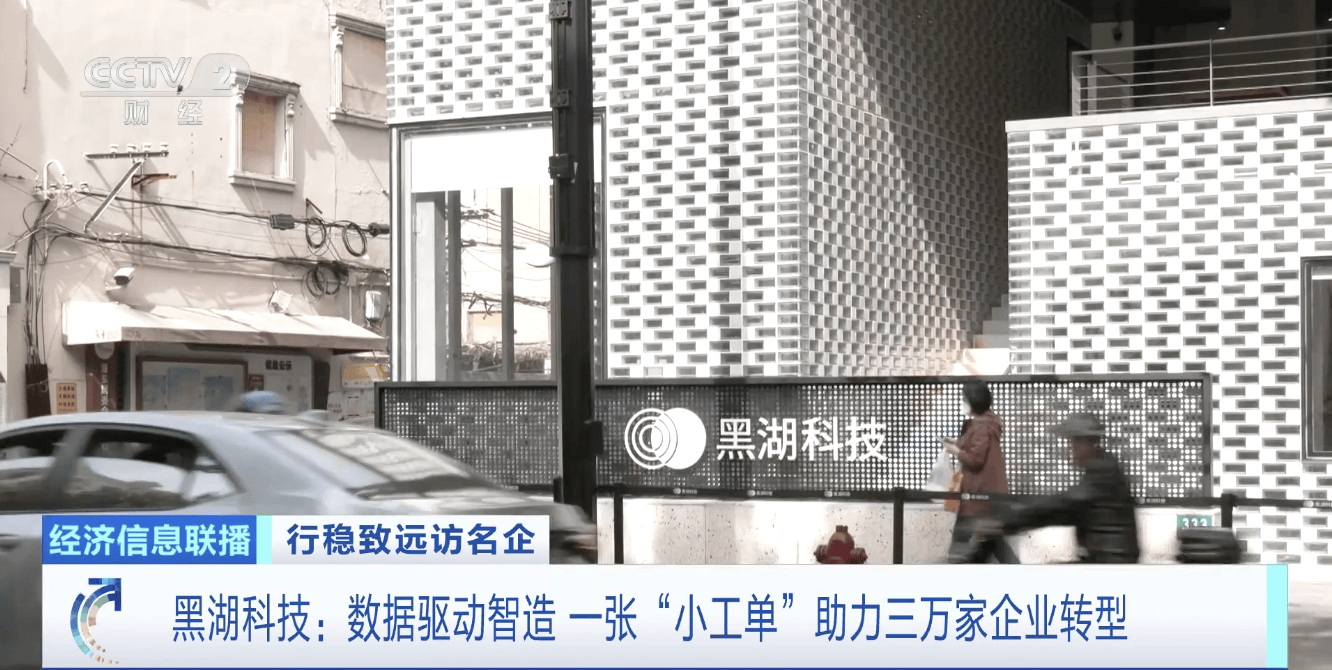
Core Insights - In 2025, China is projected to have 409 unicorn companies, ranking second globally and accounting for nearly 30% of the total [1] - The focus is on two unicorn companies, Heihu Technology and Silang Technology, which are leveraging "AI+" innovations to empower China's manufacturing sector [1] Group 1: Heihu Technology - Heihu Technology has grown from a small team to serving over 30,000 manufacturing enterprises in digital transformation within less than ten years [3] - The company has developed a lightweight digital management software called "Small Order" to address the challenges faced by small and medium-sized production enterprises in the cultural and creative toy sector [5] - Heihu has implemented an AI-driven large-scale manufacturing platform, increasing factory utilization to 83% and reducing energy consumption by 18% [7] - The founder, Zhou Yuxiang, is optimistic about future growth, stating that they have only served 30,000 out of 5 million factories in China [13] Group 2: Silang Technology - Silang Technology has initiated its IPO process and aims to become the first domestic stock in scientific intelligence [15] - The company has developed China's first general-purpose 3D scientific computer, which is aiding in innovative drug research for chronic blood diseases [15] - Silang has built 19 "Tianqiong" 3D scientific computers across the country, providing computational support to over 200 scientists and related enterprises [18] - The architecture of these scientific computers is significantly different from traditional computers, making them suitable for solving real-world three-dimensional simulation tasks [19] - The CEO, Cha Hao, emphasizes the importance of advancing chip technology and larger machines, viewing the successful computation of the first drug as a pivotal moment for scientific intelligence [23]

思朗科技启动IPO辅导 深耕科学智能“超算”赛道
Zheng Quan Shi Bao Wang· 2026-01-05 09:40
Core Insights - Shanghai Silang Technology Co., Ltd. (Silang Technology) has filed for IPO guidance with the Shanghai Securities Regulatory Bureau, with Guotai Junan Securities as the advisory institution [1] - The company, founded in 2016, focuses on the design and application of high-performance domestic computing chips, specifically for AI in scientific research, and holds complete intellectual property rights for its trillion operations per second algebra processing unit (MaPU) [1] - The MaPU architecture combines the efficiency of ASICs with the programmability of CPUs/GPUs, achieving performance that can exceed traditional architectures by several times in specific scientific computing tasks [1] Company Developments - Based on the MaPU architecture, Silang Technology has developed a series of communication baseband products and the "Tianqiong" 3D scientific computer, which is the first fully domestically developed 3D scientific computer in China [2] - The "Tianqiong" computer offers significant advantages in low communication latency and computational efficiency, providing 2 to 4 orders of magnitude acceleration compared to traditional 2D supercomputers [2] - The company has established a commercial supercomputing center in Xiaogan, Hubei Province, which is the first operational center for the "Tianqiong" in China, launched in 2023 [3] Industry Context - The distinction between "supercomputing" and "intelligent computing" is highlighted, with supercomputing focusing on large-scale calculations for scientific research, while intelligent computing is tailored for AI training and inference [2][3] - The integration of AI with physical, chemical, and biological research is emphasized, showcasing the need for high-performance chips in supercomputing to meet the demands of extensive computational requirements [3] - Silang Technology's MaPU architecture has also made strides in the communication sector, with its UCP baseband chips being adopted in 5G small base stations by major telecom operators and participating in low Earth orbit satellite communication projects [4]
又一半导体独角兽启动IPO辅导 团队脱胎于中科院自动化研究所 茅台、宁德时代投了
Xin Lang Cai Jing· 2025-12-23 08:45
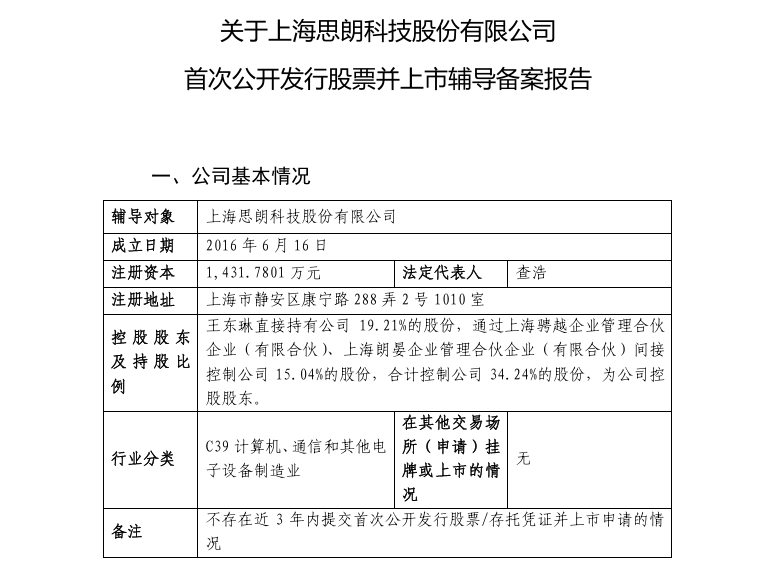
Group 1: Company Overview - Shanghai Silang Technology Co., Ltd. was established on June 16, 2016, with a registered capital of 14.317801 million yuan and is located in Shanghai [1] - The company focuses on the research and development of domestic autonomous processor cores, chip design, and applications, and is recognized as a high-tech semiconductor unicorn [1] - The core technology team consists of PhDs and postdoctoral researchers, with the founder Wang Donglin being a leading expert in the integrated circuit field [4] Group 2: Product Development - The MaPU architecture, developed by the company, is a reconfigurable chip design based on the "software-defined hardware" concept, integrating the efficiency of ASICs, programmability of FPGAs, and flexibility of CPUs [2] - The company launched the UCP series chips, including UCP1002 and UCP4008, in September 2021, with UCP1002 being China's first domestically produced 5G small base station processor chip that has achieved mass production [2] - In September 2024, the company will release the next-generation UCP product "Xinxin" UCP8016, which features 8T8R processing capability and a computing power of 100 TOPS [3] Group 3: Market Applications - The UCP4008 chip has been adopted by major domestic companies such as China Mobile Research Institute and New H3C for various commercial products [2] - The "Tianqiong" 3D scientific computing product, based on the self-developed MaPU architecture, is expected to revolutionize drug development and has already shown significant breakthroughs in several new drug trials [3] - The UCP series chips are recognized by major telecom operators and are currently serving two domestic low-orbit satellite internet constellations [3] Group 4: Financing and Investment - The company has completed nine rounds of financing, with several rounds exceeding 100 million yuan, including a D round led by CATL Capital [5][6] - In 2024, notable new investors such as Moutai Technology Investment Fund joined the company's shareholder list, focusing on high-tech investments [6][7] - The financing will be used to attract top industry talent and accelerate product development and commercialization [5]