Marijuana legalization

Search documents
Canopy Growth: Is There Any Hope Left for This Beaten-Down Stock?
Yahoo Finance· 2026-03-09 16:20
Core Viewpoint - Canopy Growth has significantly underperformed as an investment, with its market capitalization dropping from approximately $14 billion five years ago to under $500 million today [1]. Financial Performance - The company has reported losses totaling CA$326.6 million over the past 12 months and has burned through CA$78.7 million from its daily operations during the same period [3]. - In the most recent quarter ending December 31, 2025, Canopy Growth's net revenue remained flat at CA$74.5 million [3]. Market Position and Challenges - Canopy Growth is struggling to generate growth in a competitive Canadian cannabis market characterized by thin margins [4]. - Efforts to improve efficiency and cut costs have not led to profitability, contributing to investor reluctance [4][5]. Investment Outlook - There is no compelling reason to invest in Canopy Growth, as the stock may only experience temporary increases in value tied to U.S. legalization discussions, without a sustainable long-term growth strategy [5]. - The stock is considered risky and speculative, with no assurance that its share price won't decline further [6].

Tilray Brands Just Posted Record Numbers for Q2. Is the Stock a Buy?
The Motley Fool· 2026-01-21 09:00
Core Viewpoint - Tilray Brands has shown some improvement in its financial performance, with a significant increase in international cannabis sales and a reduction in operating losses, but overall growth remains inconsistent and the company continues to face challenges in the cannabis market [1][2][4]. Financial Performance - The company reported a record revenue of $217.5 million for the second quarter of fiscal 2026, marking a 3% increase year over year [2]. - International medical cannabis sales surged by 36%, while beverage sales declined by 21% to $50.1 million [3]. - Operating loss was reduced to $22.3 million from $42.2 million a year ago, attributed to a decline in restructuring costs and amortization expenses [4]. Market Context - The cannabis industry remains volatile, with the potential for short-term gains driven by market excitement, but long-term investment prospects are uncertain [9][10]. - Recent regulatory changes, such as President Trump's executive order to reschedule marijuana, may facilitate research and reduce tax burdens, but do not significantly enhance growth prospects for companies like Tilray [7][8]. Growth Prospects - Despite some positive indicators, Tilray's growth has been inconsistent, often reliant on acquisitions for short-term boosts rather than sustainable organic growth [6]. - The lack of consistent growth and ongoing uncertainty in the cannabis market make Tilray a risky investment, appealing primarily to speculative investors [9][11].


Marijuana industry taking fight against Wall Street blockades straight to Trump
New York Post· 2026-01-09 12:00
Core Viewpoint - Pot Inc. is lobbying the Trump administration, arguing that Wall Street is obstructing the implementation of the president's executive order that classifies marijuana as a medical drug [1][6]. Group 1: Executive Order and Banking Issues - The Trump executive order reclassifies marijuana from a Schedule 1 drug to a Schedule 3 drug, similar to Tylenol with codeine, but does not grant banks the authority to provide services to the marijuana industry [2][4]. - Major banks, including JPMorgan, Bank of America, and Citigroup, have expressed that they cannot support the marijuana industry until it is formally classified as a Schedule III drug and the law changes [4][5]. - The U.S. Attorney General Pam Bondi has yet to finalize the executive order, which is necessary for full implementation [4]. Group 2: Market Potential and Advocacy - The recreational marijuana market, which includes products like joints and gummies, is not addressed in the executive order, leading to concerns from bankers about their ability to support this segment [3][4]. - Marc Cohodes, a former hedge fund manager, argues that banks are misinterpreting the executive order and emphasizes the need for banking services in the medical marijuana sector, which is projected to be a $35 billion market [10][14]. - Pot Inc. is a $60 billion industry, and advocates believe that the reclassification will lead to significant growth opportunities for dispensaries and related businesses [14][15]. Group 3: Exchange Listings and Regulatory Challenges - Current policies of major U.S. stock exchanges, such as NYSE and Nasdaq, prevent the listing of U.S. marijuana companies, although Canadian companies are listed due to their foreign domicile [5][7]. - The inability to access banking services poses significant hurdles for marijuana companies in their expansion plans, as banking is heavily regulated at the federal level [15].

Trump just legalized marijuana nationwide — here's why potheads are rejoicing
New York Post· 2025-12-19 14:44
Core Perspective - The recent executive order signed by President Trump reclassifies marijuana to a "Schedule III" drug, significantly changing its legal status and implications for the industry [2][5]. Industry Implications - The reclassification allows the $60 billion marijuana industry in the US to access banking services, which were previously restricted due to its "Schedule I" status [6][9]. - Wall Street is expected to become more involved in the marijuana sector, providing easier financing options for companies that handle marijuana, moving away from reliance on alternative funding methods [7][10]. Regulatory and Economic Benefits - A Schedule III classification enables safer regulation of marijuana, potentially reducing income for drug cartels and increasing tax revenues as the industry expands [11]. - The medical community may benefit from increased marijuana use as an alternative to opioids, which are more dangerous and addictive [11]. Political Context - The move is seen as politically advantageous for Trump, appealing to a demographic of single-issue voters who support marijuana legalization [13][14]. - Public perception of marijuana has shifted, with many Americans viewing it as less dangerous than alcohol, aligning with the president's decision [14].
Former WH drug policy advisor: Mass commercialization and promotion of marijuana isn't a good thing
CNBC Television· 2025-12-19 12:53
Regulatory Landscape & Policy - The executive order directs the Attorney General to expedite the process for marijuana reclassification from schedule one to schedule three, but it doesn't enact any new changes [13] - The reclassification process started in the last administration as a political issue [14] - The executive order does not legalize banking for the marijuana industry, which caused pot stocks to fall [14] - The reclassification will allow for tax breaks for the marijuana industry, which could increase advertising and promotion [15][16] Health & Societal Concerns - Today's marijuana is 10 to 30 times stronger than it once was, with some cases reaching 99% THC [4] - Increased THC levels are linked to psychosis, violence, reduction in IQ, heart failure, diabetes, and stroke [5] - Medical associations worldwide agree that marijuana consumption is not beneficial and is causing addiction [7] - 30% of medical marijuana users are addicted to marijuana [10] - Concerns exist regarding the impact of marijuana legalization on the workforce, including pilots, doctors, and bus drivers [10] Market & Investment - Investors were disappointed that the executive order didn't legalize banking, leading to a drop in pot stocks [14] - Some marijuana stocks increased due to potential tax breaks, but not as much as anticipated [15] - There is no momentum in Congress for federal legalization [26] - Some states are considering repealing marijuana sales legalization [12][26]

Former WH drug policy advisor: Mass commercialization and promotion of marijuana isn't a good thing
Youtube· 2025-12-19 12:53
Core Perspective - President Trump signed an executive order to reclassify marijuana from a Schedule I to a Schedule III drug, which eases federal restrictions but does not fully legalize it [1][12]. Industry Implications - The executive order encourages the reclassification process but does not legalize banking for the marijuana industry, leading to a decline in pot stocks [14][15]. - Tax breaks for the marijuana industry may increase advertising and promotion, which raises concerns about commercialization and its impact on public health [15][16]. - The marijuana industry is facing skepticism due to rising addiction rates and health concerns associated with stronger marijuana products [7][10]. Health Concerns - Current marijuana is significantly stronger than in the past, with THC levels reaching up to 99%, leading to increased risks of psychosis, violence, and other health issues [4][5][10]. - Medical associations worldwide agree that marijuana consumption poses health risks, and many users of medical marijuana may not benefit from it [7][10]. - There is a growing public awareness of the negative effects of marijuana, leading to a shift in opinions against its legalization in some states [11][27]. Regulatory Landscape - The executive order does not create new regulations but rather directs the attorney general to expedite existing processes for reclassification [13]. - There is no current momentum in Congress for federal legalization, and some states are even considering repealing legalization measures [26][28]. - The administration is attempting to draw a distinction between medical and recreational use, which presents regulatory challenges [19].
TLRY Soars on Marijuana Reclassification Hopes, Burning Question Centers on Profits
Youtube· 2025-12-18 19:30
Industry Overview - The marijuana industry is currently experiencing volatility, with potential changes in legislation under the Trump administration that may lead to the reclassification of marijuana for therapeutic use [2][3] - The cannabis sector is described as "the wild west," characterized by a lack of standardization and a diverse range of products from various suppliers, making it challenging for companies to achieve steady revenue growth [5][6] Company Insights - Company Tillray operates in the marijuana space, including CBD oils and beverages, and is noted as the fourth largest craft brew company in the U.S. [3] - Despite the potential for short-term opportunities due to legislative changes, Tillray faces significant challenges in standardizing its products and maintaining profitability [5][6] - Tillray's sales were approximately $830 million last year, with growth in the mid-single digits, but the company reported a loss of around $2 billion, which continues to pressure its equity [8] Market Dynamics - The cannabis ETF has seen a decline of over 85% from its peak, indicating a loss of enthusiasm in the market despite positive headlines regarding legalization [6] - Positive news in the marijuana sector often leads to short-term price increases, but these gains are not sustainable due to the industry's profitability challenges [7]
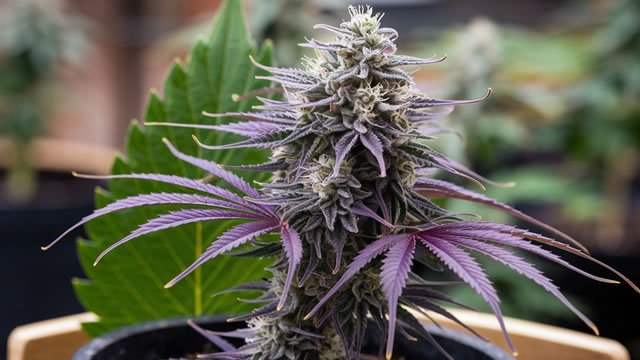
Trump Signs Order Easing Federal Restrictions on Marijuana
Youtube· 2025-12-18 19:29
Core Point - The order being signed does not legalize marijuana or sanction its use as a recreational drug, emphasizing that it is not related to future legalization efforts [1] Group 1 - The statement highlights the distinction between the order and the legalization of marijuana, clarifying that it does not endorse recreational use [1]
Trump signs executive order easing federal restrictions on marijuana
Business Insider· 2025-12-18 19:06
Core Points - President Trump signed an executive order to reclassify marijuana as a Schedule III drug, easing some federal restrictions and allowing for more research opportunities [1][3] - The reclassification is aimed at addressing the medical needs of individuals suffering from extreme pain and incurable diseases, positioning marijuana as a substitute for opioid painkillers [2][4] - Marijuana stocks experienced a surge in value following rumors of the executive order prior to its announcement [3] Industry Impact - The reclassification could provide tax relief for marijuana businesses in states where the substance is already legalized, potentially boosting the industry [2] - Trump's campaign for a third term in 2024 indicates a shift towards a more favorable stance on marijuana, suggesting future legislative support for the industry [4][5] - The executive order does not fully legalize marijuana but represents a significant step towards more lenient regulations, which could enhance market conditions for marijuana-related businesses [1][4]
Why Green Thumb Industries Stock Trounced Market on Tuesday
The Motley Fool· 2025-12-16 21:19
Industry Overview - Investors are optimistic about potential changes in U.S. drug laws, particularly regarding marijuana legalization, which could significantly impact the industry [1][6] - The prospect of decriminalization has led to increased interest in marijuana stocks, with notable price movements observed [2][6] Company Specifics - Green Thumb Industries (GTBIF) experienced a surge of over 14% following comments from President Trump regarding the potential for rescheduling marijuana [2][5] - The current market capitalization of Green Thumb Industries is $1.9 billion, with a day's trading range between $8.48 and $9.95 [6] - The company has a gross margin of 48.93%, indicating a strong financial position within the industry [6] Regulatory Impact - President Trump's remarks suggest that the administration is considering an executive order to reschedule marijuana, which could lead to significant research opportunities and a more favorable business environment for companies like Green Thumb [5][7] - If rescheduling occurs, it would effectively legalize marijuana across the U.S., marking a historic shift for the industry [6]