
Marijuana

Search documents
X @The Wall Street Journal
The Wall Street Journal· 2026-03-17 05:55
Legalization of recreational marijuana by many states has made it easier for teens to get access to highly potent and convenient forms of the drug, creating new hazards for teen health.Here’s what the science says about cannabis and teens: 🔗 https://t.co/vpnh5dGdXZ https://t.co/EQKqIdB01o ...
Is It Time to Dump Your Shares of Canopy Growth?
The Motley Fool· 2026-03-07 10:15
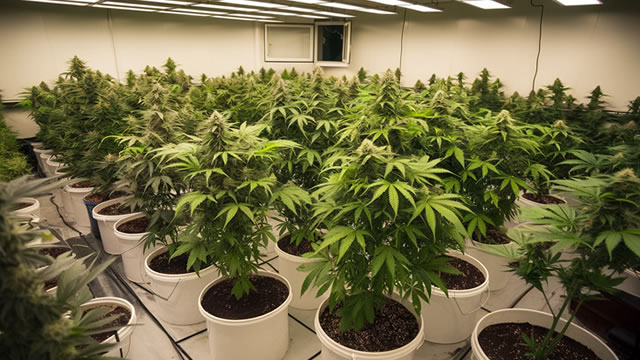
Core Insights - Canopy Growth is a leading player in the Canadian marijuana market but has experienced significant stock price volatility, currently trading around $1 per share, down 99% from its all-time high of $568 [1][2] Industry Overview - The marijuana sector has not met Wall Street's high expectations, leading to unrealistic stock valuations and subsequent declines [2] - Competition in the legal marijuana market is intense, with ongoing illicit sales that avoid regulatory costs, impacting profitability for legal operators like Canopy Growth [4] Company Performance - Canopy Growth has not yet achieved sustainable profitability, although it is making progress towards breaking even [5] - The company recently recapitalized its balance sheet, improving its financial position, but this action indicates underlying issues [6] - Canopy is pursuing an acquisition to enhance its medical marijuana segment, which will involve cash expenditure and stock issuance, potentially diluting existing shareholders [6] Stock Analysis - Current market capitalization stands at $362 million, with a gross margin of 18.25% [8] - The stock's recent trading range has been between $0.77 and $2.38 over the past year, with a current price of $1.07 [8] - Investors who bought shares at higher prices may consider selling to realize losses for tax benefits, as a return to previous highs appears unlikely in the near term [8][9]


Here's Why I Wouldn't Touch Tilray With a 10‑Foot Pole
Yahoo Finance· 2026-02-23 15:20
Core Viewpoint - Tilray Brands is transitioning from a marijuana company to a broader "global lifestyle and consumer packaged goods company" by expanding into CBD products and alcohol, amidst challenges in the marijuana market [1][4]. Industry Overview - The marijuana market has not met Wall Street's high expectations, with fierce competition leading to a lack of profitability despite increased sales due to legalization [2]. - Legal marijuana sellers face competition from illegal drug sales, which remain prevalent and often cheaper due to the absence of taxes and regulatory costs [3]. Company Strategy - Tilray's diversification into CBD and alcoholic beverages is a logical move given the stagnation in its core marijuana business [4]. - The company has rapidly acquired 19 brands since 2021, which raises concerns about the ability to effectively integrate these acquisitions [5]. Financial Implications - The company's share count has increased by over 300% since the beginning of 2021, primarily due to funding acquisitions through stock sales, leading to dilution for existing shareholders [6]. - Write-downs across all business lines indicate potential missteps in the acquisition strategy, which could have significant costs for shareholders [6]. Management Focus - There are concerns that Tilray's management may be overly focused on empire building through acquisitions, which could lead to mistakes and unsustainable profits [7].

Don't Even Think About Buying Tilray Stock Until You Read This Warning
Yahoo Finance· 2026-02-22 21:48
Core Viewpoint - Tilray Brands is struggling to achieve profitability despite its diverse product offerings in the beverage, cannabis, and wellness industries, with significant competition and ongoing losses impacting its financial performance [1][4]. Group 1: Financial Performance - Tilray Brands' stock price has decreased by 99% from its all-time high, reflecting investor fatigue over the company's inability to generate profits [4]. - The company has been expanding aggressively into other areas, particularly alcohol, but this strategy has not yet resulted in positive earnings [4]. Group 2: Revenue Growth and Strategy - Tilray is focusing on revenue growth through aggressive brand acquisitions since 2021, which has led to increased revenue and potential synergies [5]. - However, the rising share count due to stock sales for cash or acquisitions is diluting existing shareholders and complicating profit generation [6]. Group 3: Investment Risks - The ongoing losses and aggressive acquisition strategy present high risks for investors, with the company having to take write-downs across all divisions [7]. - Investors are advised to be cautious and may benefit from observing the company's performance before committing capital [7].
Here's Why I Wouldn't Touch Canopy Growth With a 10‑Foot Pole in 2026
The Motley Fool· 2026-02-21 15:45
Core Viewpoint - Canopy Growth is considered a high-risk investment primarily due to its low stock price and ongoing financial struggles, making it unsuitable for most investors [1][9]. Group 1: Stock Performance - Canopy Growth's stock is trading around $1, categorizing it as a penny stock, which is typically associated with high risk and potential struggles [2]. - The current stock price is $1.19, with a market capitalization of $403 million [6][7]. - The stock has a 52-week range of $0.77 to $2.38, indicating significant volatility [7]. Group 2: Financial Health - The company recently recapitalized its balance sheet, pushing out debt maturities, which is a positive sign; however, it had to offer incentives like warrants, indicating financial weakness [5]. - Canopy Growth has never been profitable and continues to incur losses, although the losses are reportedly decreasing [8]. Group 3: Business Strategy - Despite financial challenges, Canopy Growth is proceeding with the acquisition of MTL Cannabis, which is expected to enhance its geographic positioning in the marijuana sector [7]. - The all-stock deal for the acquisition will increase the company's share count, leading to shareholder dilution and complicating profitability efforts [7].
The marijuana business grows up as Trump eases the rules
Yahoo Finance· 2026-01-19 23:36
Core Insights - The cannabis industry has faced numerous challenges and disappointments regarding federal legalization, leading to a perception of broken promises and financial instability [1][2] Tax Implications - President Trump's executive order to reschedule marijuana from Schedule I to Schedule III could significantly alter the tax landscape for cannabis companies, which currently face effective tax rates between 60% and 90% due to Section 280E of the tax code [3][4] - The eight largest multistate cannabis operators have only paid $600 million of approximately $2.6 billion owed in taxes from 2019 to September 2025, indicating a growing financial crisis for technically profitable companies [4] - Rescheduling to Schedule III would eliminate the punitive tax treatment, allowing companies to redirect funds previously set aside for tax liabilities towards expansion and growth initiatives [5] Financial System Access - Rescheduling could also facilitate cannabis companies' access to the American financial system, which has been largely inaccessible due to the classification of marijuana as a Schedule I substance [6] - Currently, most cannabis retailers operate as cash businesses, creating security risks and making them targets for robberies focused on cash rather than products [7]
Trump Is Warming to Cannabis, but Investors Aren't Impressed
WSJ· 2025-12-30 10:30
Core Viewpoint - The stock market experienced an unexpected decline following the White House's decision to reclassify marijuana as a less dangerous drug [1] Group 1 - The reclassification of marijuana is seen as a significant regulatory change that could impact the cannabis industry [1] - Investors reacted negatively to the news, leading to a drop in stock prices across various sectors [1] - The move may influence future legislation and market dynamics related to cannabis [1]


Everything Investors Need to Know About President Trump's Executive Order Reclassifying Marijuana as a Lower Class of Drug
Yahoo Finance· 2025-12-23 11:35
Core Insights - Speculation regarding President Trump's potential policy changes on cannabis classification led to temporary increases in cannabis stock prices, including Trulieve Cannabis, Curaleaf Holdings, Tilray Brands, and Green Thumb Industries [1] - On December 18, Trump signed an executive order that facilitates the rescheduling of marijuana, which is significant for the regulatory landscape affecting marijuana businesses [3] - Following the announcement, cannabis stocks experienced a sharp sell-off, raising questions about potential buying opportunities [3] Regulatory Changes - The U.S. drug policy is governed by the Controlled Substances Act (CSA), which classifies substances into five schedules based on their criteria [4] - The executive order reclassifies marijuana from a Schedule I narcotic to a Schedule III substance, aligning it with anabolic steroids and ketamine [5] - This reclassification could reduce barriers for cannabis companies in clinical research and financial regulation, potentially improving banking relationships [9] Industry Implications - Rescheduling marijuana to Schedule III may lead to enhanced integration of cannabis and CBD into modern medicine, opening avenues for partnerships between cannabis companies and pharmaceutical firms [9]
Former WH drug policy advisor: Mass commercialization and promotion of marijuana isn't a good thing
Youtube· 2025-12-19 12:53
Core Perspective - President Trump signed an executive order to reclassify marijuana from a Schedule I to a Schedule III drug, which eases federal restrictions but does not fully legalize it [1][12]. Industry Implications - The executive order encourages the reclassification process but does not legalize banking for the marijuana industry, leading to a decline in pot stocks [14][15]. - Tax breaks for the marijuana industry may increase advertising and promotion, which raises concerns about commercialization and its impact on public health [15][16]. - The marijuana industry is facing skepticism due to rising addiction rates and health concerns associated with stronger marijuana products [7][10]. Health Concerns - Current marijuana is significantly stronger than in the past, with THC levels reaching up to 99%, leading to increased risks of psychosis, violence, and other health issues [4][5][10]. - Medical associations worldwide agree that marijuana consumption poses health risks, and many users of medical marijuana may not benefit from it [7][10]. - There is a growing public awareness of the negative effects of marijuana, leading to a shift in opinions against its legalization in some states [11][27]. Regulatory Landscape - The executive order does not create new regulations but rather directs the attorney general to expedite existing processes for reclassification [13]. - There is no current momentum in Congress for federal legalization, and some states are even considering repealing legalization measures [26][28]. - The administration is attempting to draw a distinction between medical and recreational use, which presents regulatory challenges [19].

Roundup: UL Lafayette / Marijuana / Stock market
Baton Rouge Business Report· 2025-12-18 20:16
Group 1 - The University of Louisiana System has formed a presidential search committee for the University of Louisiana at Lafayette to guide the search process following the resignation of President Joseph Savoie after 17 years [1] - The committee will include representatives from the UL Lafayette community and key stakeholders, with the first meeting scheduled for January 14 [1] Group 2 - President Donald Trump signed an executive order to expedite the rescheduling of marijuana from Schedule I to Schedule III, aiming to expand cannabis research [2] - The rescheduling process was initially started by former President Joe Biden but remained unresolved when Trump took office [2] Group 3 - U.S. stocks experienced a significant rise following a positive inflation report, which may influence the Federal Reserve's interest rate decisions next year [3] - Micron Technology's strong profit report contributed to a temporary halt in the decline of AI stocks, with the S&P 500 increasing by 0.9% and the Nasdaq composite leading with a 1.5% rise [3] - The Dow Jones Industrial Average rose by 124 points, or 0.3%, indicating overall market strength [3]

