
Market overvaluation

Search documents
Is the Stock Market Going to Crash in 2026? History Suggests There's Good and Bad News
Yahoo Finance· 2025-12-21 16:35
Group 1 - The stock market is closing out a record-breaking year, but investors have mixed feelings about the future, with around 80% of Americans concerned about a potential recession and 44% feeling optimistic about the market [1][2] - Historical data suggests that stock prices are likely to fall eventually, but the timing of such a downturn remains uncertain [2][4] - The Buffett indicator, which measures the ratio of the U.S. stock market's total market cap to GDP, is currently at nearly 234%, indicating that the market may be significantly overvalued [5][6] Group 2 - Despite warning signs from some market indicators, there are reasons for optimism about the long-term future of the market, as it is expected to recover from periods of volatility [8][9] - Investors with a long-term outlook have historically earned the most in the stock market, even after significant downturns [9]
BSTZ: Buy The Dip If You Are Still Bullish On The Technology Growth
Seeking Alpha· 2025-10-29 17:05
Core Insights - The article highlights a disparity between the overall market performance, particularly the S&P 500 reaching new record highs, and the underperformance of many technology stocks recently [1]. Group 1: Market Overview - The S&P 500 has achieved another record high, indicating strong overall market performance [1]. - Despite the market's success, many technology stocks are not performing well, suggesting a potential disconnect between market indices and individual stock performance [1].


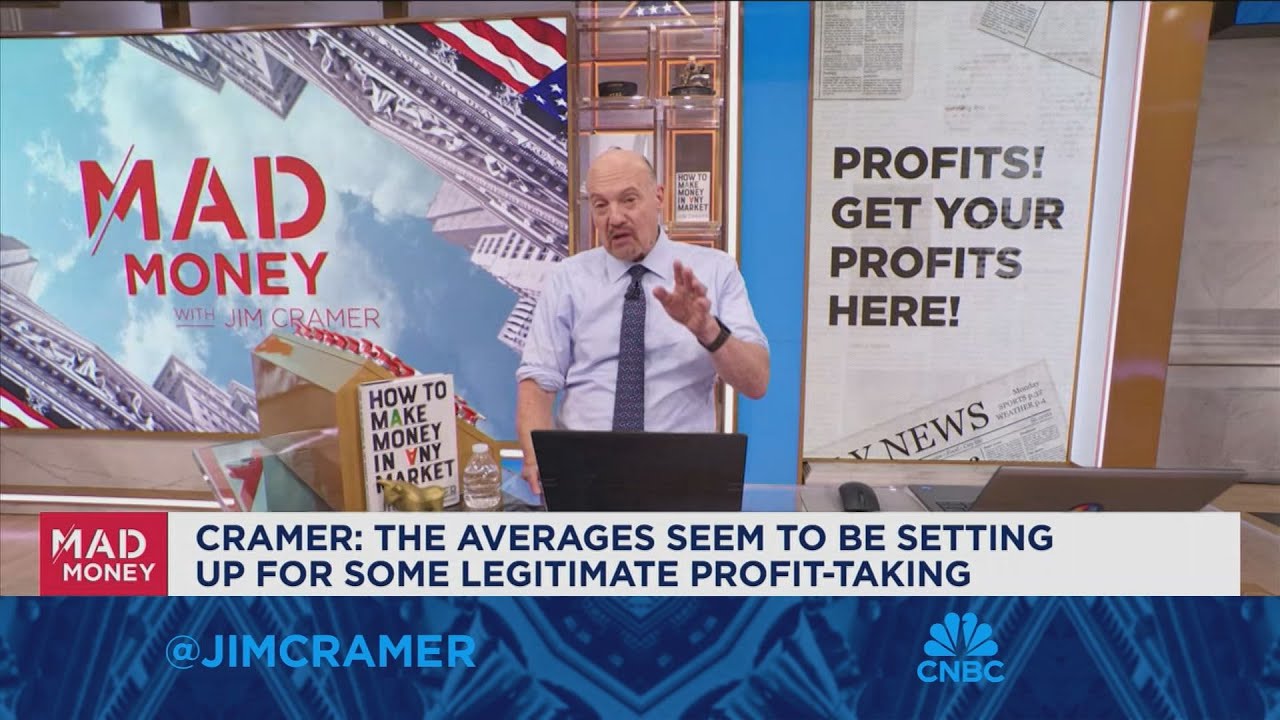
Averages seem to be setting up for some legitimate profit-taking, says Jim Cramer
Youtube· 2025-10-07 23:44
Market Overview - The stock market experienced a legitimate pullback, with the Dow dropping 92 points, S&P declining 0.38%, and NASDAQ losing 67 points, indicating a potential for profit-taking after a significant upward trend [1][2]. Selloff Dynamics - The current selloff is characterized by a rally followed by a reversal, leading to early buyers being "underwater," which creates distrust among shareholders who may not want to invest further [3][4]. - Investors who entered the market at high prices may be influenced by bearish sentiments, drawing parallels to past market collapses, such as the dot-com boom [4]. Market Sentiment - There is a persistent narrative that stocks have risen too quickly, with concerns about overvaluation and the potential for a market bubble being common themes throughout market history [5][6].
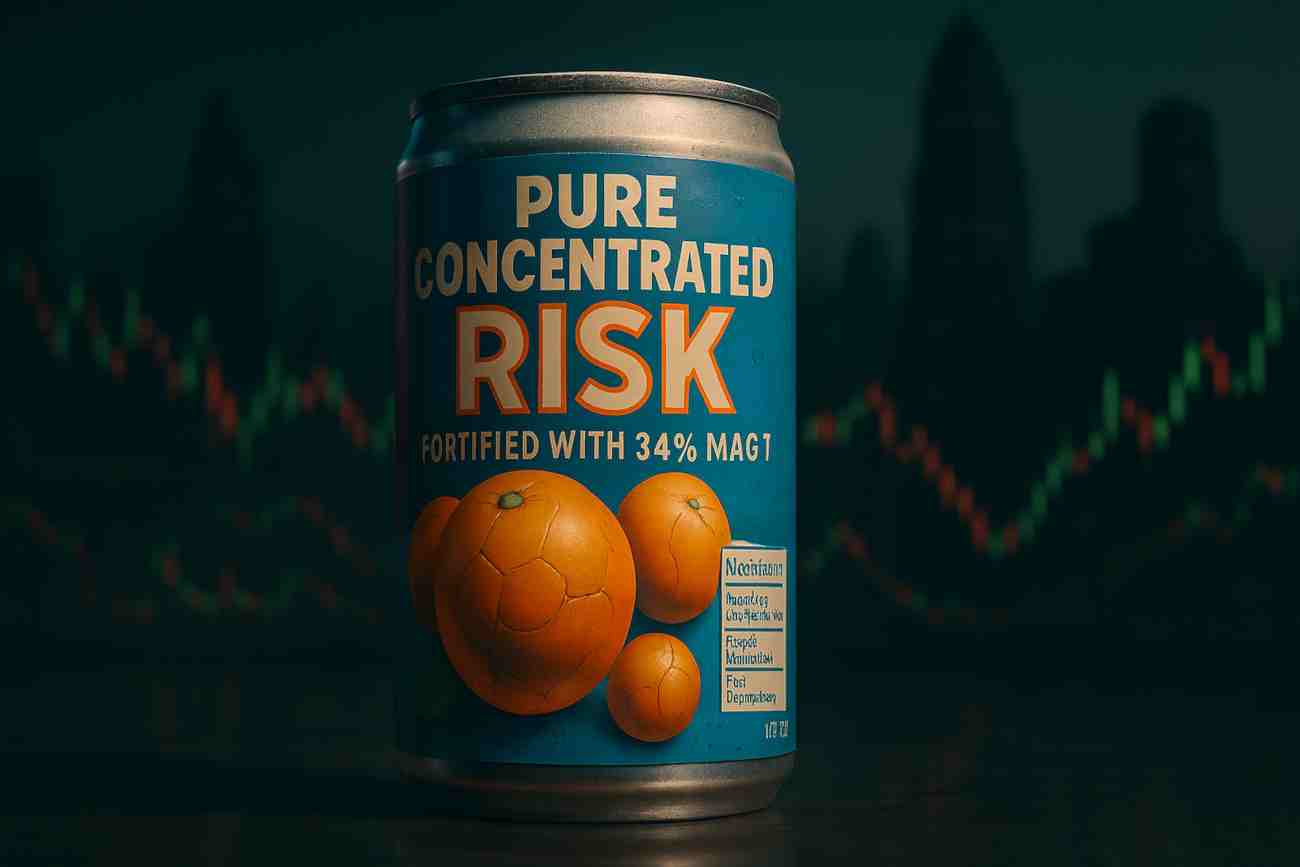
Pure, Concentrated Risk
Daily Reckoning· 2025-09-26 22:00
Core Insights - The S&P 500 has seen a significant increase, with a $10,000 investment growing to approximately $38,260 over the past decade, while the Nasdaq 100 has outperformed, turning the same investment into about $58,866 [1][2] - Current market valuations, as indicated by the Shiller PE ratio of 39, suggest that stocks are overvalued, raising concerns about sustainability of these high returns [4][5] - The "Magnificent 7" tech companies have driven substantial gains, averaging a 39% annual return over the last decade, with NVIDIA now valued at $4.3 trillion and constituting 7.7% of the S&P 500 [6][7] Market Valuation - The Shiller PE ratio is at a high level, close to historical peaks, indicating potential overvaluation and low future returns [4][5] - Comparisons to past market peaks, such as 2000 and 1929, highlight the current market's elevated valuation [4] Concentration Risk - The performance of U.S. stock indexes is heavily reliant on a small number of tech stocks, with the "Magnificent 7" making up about 34% of the S&P 500 [6][7] - The Nasdaq 100 shows even greater concentration, with NVIDIA, Microsoft, and Apple making up significant portions of the index [7] Investment Strategy - In light of potential market volatility, diversifying investments outside the U.S. is recommended, with gold, silver, and emerging markets being highlighted as effective hedges [9][10] - The iShares Brazil ETF has shown positive performance, indicating that emerging markets may offer better value and lower risk in the current environment [10] Economic Outlook - The current market conditions are described as precarious, with precious metals signaling potential instability in the stock market [12] - The necessity of hedging investments is emphasized as a strategic response to anticipated market chaos [11][12]

Market is at inflection point where leadership could start broadening beyond megacaps: Matt Powers
Youtube· 2025-09-19 13:39
Market Valuation - Current market valuations are considered stretched and frothy, particularly among large-cap stocks, indicating potential overvaluation risks [1][2] - The S&P 500 index is trading at multiples not seen in a long time, with a heavy reliance on a few leading companies, which raises concerns about the index's stability if any of these companies falter [2] Small Cap Performance - Small-cap stocks have shown signs of outperforming large caps, with the Russell 2000 index rallying 9% in August and achieving its longest rally in five years [3][4] - Many sectors are still trading below the index multiple, suggesting a potential shift in market leadership from mega caps to small caps and other rate-sensitive areas [4] Interest Rates and Small Caps - Lower interest rates are expected to benefit small-cap companies, which typically carry more floating-rate debt, allowing for improved profitability as borrowing costs decrease [5][6] - Investors are increasingly looking for opportunities in small caps, which are still trading at a discount compared to large caps, making them attractive for potential investment [6] Economic Implications - Participation of small caps in the market rally could lead to a more sustainable economic recovery, enhancing the overall market breadth [6][7] - The iShares Core S&P Small Cap ETF (IGR) is highlighted as a potential investment option, focusing on profitable small-cap companies [7] Asset Allocation and Market Trends - Asset allocation remains crucial for investors, with recommendations to extend duration in bond investments to capture higher yields and potential principal appreciation [8][9] - There is a significant amount of capital in money market funds, with over $6 trillion currently held, which could shift into underappreciated market areas as interest rates decline [9][11]
Where Will Berkshire Hathaway Stock Be in 1 Year?
The Motley Fool· 2025-09-12 21:11
Core Insights - Berkshire Hathaway has experienced significant growth under Warren Buffett, with stock surging over 5,520,000% since 1965, compared to the S&P 500's 39,000% [1] - The company has diversified into various sectors, including insurance, railroads, energy, and consumer staples, while building a substantial investment portfolio [2] - Recent leadership changes, including Buffett's retirement announcement and potential departure of key executives, have raised concerns among investors [4][5][6] Company Performance - Over the past five years, Berkshire's operating earnings grew at a compound annual rate of 15%, demonstrating resilience amid economic challenges [8] - Approximately 50% of operating earnings come from insurance subsidiaries, which are less affected by economic downturns, helping to stabilize overall profits [9] - The company's cash generated from insurance premiums, known as "float," increased from $129 billion in 2019 to $171 billion in 2024, providing capital for investments [9] Future Outlook - After the leadership transition, it is expected that the new CEO, Greg Abel, will continue to follow Buffett's investment strategies and focus on core business growth [10] - Berkshire's stock currently trades at 22 times last year's operating earnings, which is not considered overvalued compared to its historical valuation [11] - While there may be short-term underperformance relative to the S&P 500 due to leadership changes, long-term prospects remain positive if the business model is maintained [12]