NAFTA

Search documents
Trump Privately Weighs Quitting USMCA Trade Pact He Signed
Bloomberg Television· 2026-02-11 21:49
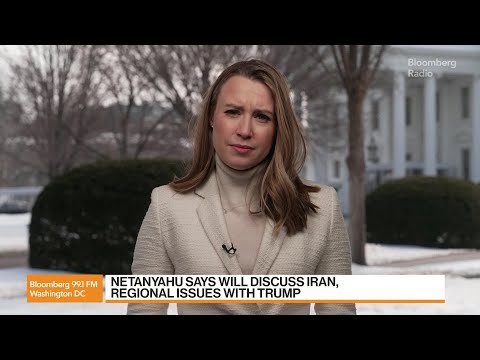
This is the Israeli Prime minister, Benjamin Netanyahu's seventh visit to the White House under President Trump's second term. And it is our understanding that he is here today with the main mission being that he wants to talk to the president about the U.S. Iran negotiations there is reporting that he is set to introduce some new military intelligence regarding Iran's military capabilities to the president as these talks continue. Now, this visit to the U.S. by Netanyahu follows his own meeting in Jerusale ...

Mexico’s Nearshoring Boom Faces Trade Risks
Bloomberg Television· 2025-09-27 12:00
Nearshoring and Trade Dynamics - Companies are relocating production from China to Mexico, driven by factors like the North American Free Trade Agreement (NAFTA) and its successor, USMCA [2][3] - Chinese companies are establishing plants in Mexico to compete, forcing existing companies to improve competitiveness [3][4] - The USMCA agreement is up for review in 2026, with China's role in North American supply chains being a key issue [9][10] - Tariffs on Mexican exports could lead to higher prices for US consumers due to the integrated nature of the economies [12] Investment Climate and Risks - Investors are concerned about issues like judicial reform and security in Mexico, which are creating uncertainty [5][6][7] - Homicide rates remain high, and extortion and kidnappings have increased, contributing to investor uncertainty [6][7] - Investment in Mexico has been frozen due to uncertainty, despite the search for alternatives to Asia [8] - Mexico aims to increase its share of North American imports to approximately 25% through integration with the US, contingent on attracting private capital [17] Automotive Industry and Tariffs - Tariffs on steel, aluminum, and auto imports, particularly those imposed by the US, are disrupting the automotive supply chain [18][19][20] - Parts can cross the border multiple times during the manufacturing process, making the industry vulnerable to tariffs [20] - Canada imports more vehicles from Mexico than from the US for the first time in 30 years [24] - The industry advocates for tariff-free movement of vehicles and parts within North America to ensure competitiveness and lower consumer costs [29][30] - Stronger North American content rules and penalties for non-compliance are needed, along with measures to encourage OEMs in Europe, Japan, and Korea to manufacture more vehicles in North America [26][27] - The industry suggests keeping China out of the North American automotive market due to concerns about unfair competition [28]