
Natural language processing

Search documents
OpenClaw tracks my entire life
Matthew Berman· 2026-02-18 19:20
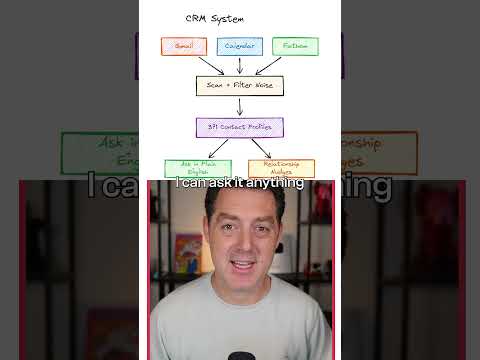
I'm still running it on this little MacBook that sits right on my desk. An incredibly personal AI assistant that is capable of accomplishing almost any task. The first major use case I want to show you is my CRM.It is a custom CRM that I built that specifically serves my needs. You're not writing any code yourself. You're just describing in natural language to OpenClaw exactly the functionality that you want to see.So, it filters out things like newsletters and cold pitches. just really I only want real con ...

PEARL DIVER CREDIT COMPANY INC.(PDCC) - 2025 Q3 - Earnings Call Transcript
2025-11-18 17:02
Financial Data and Key Metrics Changes - For Q3 2025, the company reported invested income of $5.4 million or $0.80 per share, a slight decrease from $5.5 million in the previous quarter [15] - Total expenses remained stable at $2.4 million or $0.35 per share, consistent with the prior quarter [15] - The company recorded net unrealized losses on investments of $6.9 million or $1.02 per share, alongside a modest net realized loss of $424,000, resulting in a net loss of $4.3 million or $0.64 per share [15] - Recurring cash flows from the CLO portfolio totaled $8.7 million or $1.28 per share, an increase from $8 million or $1.18 per share in the previous quarter [15][16] - Total assets as of September 30, 2025, were $157.5 million, down from $166.1 million as of June 30, 2025 [16] Business Line Data and Key Metrics Changes - The portfolio's average junior OC cushion stands at 4.5%, with deals exposed to First Brands having a slightly higher cushion of 4.6% [6] - The weighted average gap yield of the portfolio increased from 12.75% to 13.07% due to refinancing activities [10] Market Data and Key Metrics Changes - The broader CLO equity market faced headwinds, primarily due to spread tightening in the broadly syndicated loans market [5] - The company noted a significant uptick in leveraged buyout (LBO) activity, with approximately $200 billion in deals announced during the first three quarters of 2025, surpassing the $164 billion recorded for all of 2024 [9] Company Strategy and Development Direction - The company remains focused on disciplined portfolio management and long-term total return, viewing market dislocations as opportunities [5][9] - The investment platform combines machine learning and natural language processing with traditional credit analysis, providing a competitive advantage in sourcing opportunities [11][12] - The company plans to utilize leverage opportunistically when attractive investment opportunities arise [16] Management's Comments on Operating Environment and Future Outlook - Management views the current environment as presenting opportunities in the CLO market, with expectations of a constructive outlook for CLO equity performance in a gradually easing monetary environment [10][19] - The company believes that CLOs provide an efficient way to access senior secured corporate loans and can offer an attractive risk-return profile across various credit cycles [19] Other Important Information - The company has started to tap its at-the-market equity issuance program, issuing approximately 26,600 shares for net proceeds of approximately $0.4 million [17] - Dividends of $0.22 per common share were distributed in July, August, September, and October, with plans for the same in November, December, and January, representing an annualized dividend yield of approximately 16% [17] Q&A Session Summary Question: Insights on the primary CLO market and investment opportunities - Management indicated that arbitrage returns in the primary CLO equity market are currently not adequate for large-scale participation, with more attractive opportunities in the secondary CLO equity markets [21][22][23] Question: Impact of resets and refinancings on expected yields - Management preferred not to comment on intra-quarter activities but noted that previous resets and refinancings contributed significantly to yield improvements [24][25] Question: Mix of opportunities between U.S. and European CLOs - The majority of the portfolio is focused on the U.S. CLO market, with occasional consideration of European CLOs, particularly single B positions that can provide stronger NAV protection [29] Question: Future ATM issuance versus share repurchase - Management is evaluating both ATM issuance and share repurchase options but considers it too early to prioritize one over the other [31] Question: Potential portfolio growth and leverage management - Management stated that portfolio growth will depend on the attractiveness of leverage costs and will continue to monitor conditions as they evolve [32][33]