New energy

Search documents
Sinopec Announced 2025 Annual Results Annual Payout Ratio Reached 81%
Accessnewswire· 2026-03-23 11:32
Core Viewpoint - Sinopec Corp. reported its annual results for 2025, highlighting stable financial performance despite challenges in the oil and gas sector, with a focus on shareholder returns and strategic initiatives for future growth [1][2][6]. Financial Performance - The company's revenue for 2025 reached RMB 2.78 trillion, with an operating profit of RMB 48.608 billion and a profit attributable to shareholders of RMB 32.476 billion [2][30]. - Basic earnings per share were RMB 0.268, while net cash generated from operating activities increased by RMB 13.1 billion year-on-year to RMB 162.5 billion [2][30]. - The annual payout ratio reached 81% according to CASs, with a proposed final cash dividend of RMB 0.112 per share [4][30]. Production and Operations - Oil and gas equivalent output hit a record high of 525.28 million barrels, up 1.9% year-on-year, with natural gas production increasing by 4.0% to 1,456.6 billion cubic feet [3][8]. - The refining segment processed 250 million tonnes of crude oil, producing 149 million tonnes of refined oil products, with jet fuel production up by 7.3% [3][9]. - Total chemical sales volume reached 87.12 million tonnes, marking a 3.6% increase year-on-year, with significant growth in export volume [3][16]. Strategic Initiatives - The company plans to enhance exploration and production efforts, focusing on high-quality reserves and profitable development, with an annual target of producing 280.91 million barrels of crude oil in 2026 [23][24]. - In refining, the strategy includes optimizing resource procurement and increasing the output of chemical feedstocks while reducing refined oil products [24][25]. - The marketing and distribution segment aims to expand its integrated energy services, including the development of EV charging and hydrogen refueling networks [25][26]. Research and Development - Significant advancements in R&D were reported, including breakthroughs in shale oil development technologies and digital intelligence initiatives, with nearly 10,000 patent applications filed [19][27]. - The company is focusing on integrating technological innovation with industrial applications to enhance productivity and efficiency across its operations [27][28]. Capital Expenditures - Capital expenditures for 2025 totaled RMB 147.2 billion, with significant investments in exploration and production, refining, and chemical projects [21][29]. - Planned capital expenditures for 2026 are projected between RMB 131.6 billion and RMB 148.6 billion, reflecting a continued commitment to growth and development [29].



Yuchai International(CYD) - 2025 Q4 - Earnings Call Transcript
2026-02-24 14:02
Financial Data and Key Metrics Changes - For the second half of 2025, revenue increased by 33.5% year-over-year to RMB 11.8 billion, or $1.7 billion, with gross profit rising by 58.4% to RMB 2.2 billion, or $317 million, and gross margin at 18.9% [8][9] - Operating profit surged by 993.1% year-over-year to RMB 469.2 million, or $66.7 million, with basic and diluted earnings per share improving by 108.7% to RMB 4.57, or $0.65 [8][9] - For the fiscal year 2025, revenue increased by 38.9% to RMB 34.7 billion, or $3.5 billion, with gross profit up by 44.3% to RMB 4.1 billion, or $578.7 million, and gross margin at 16.5% [9][26] Business Line Data and Key Metrics Changes - Off-road engine unit sales increased by 13% year-over-year, with marine and genset engines and industrial engines each recording unit sales growth of over 34% [10] - Truck and bus engine unit sales rose by 49.2%, with heavy-duty truck engine sales increasing by 100.61% year-over-year [17] - Total number of engines sold in FY 2025 increased by 29.4% year-over-year to 461,309 units, with truck and bus engine units rising by 42.8% [24] Market Data and Key Metrics Changes - Exports have become an important sales channel, with significant growth in international markets, including Vietnam and Mexico [11] - The company has expanded its international sales and service support offices to strengthen its global reach [11] Company Strategy and Development Direction - The company aims to enhance engine efficiency and performance, focusing on National VI and Tier 4 emission compliance engines, while also developing new energy products [12][28] - Strategic alliances and joint ventures have produced a 9.4% year-over-year growth in profit, driven by higher sales and profit, particularly from MTU Yuchai [12] - The company is investing in R&D for alternative fuel engines and has acquired a 27.97% equity interest in a fuel injection system technology company [13] Management's Comments on Operating Environment and Future Outlook - Management expressed confidence in future revenue and profit growth, citing strong demand for backup generators and data center operations [10] - The outlook for 2026 remains uncertain due to reliance on government policies affecting sales, but there is optimism for continued growth in data center demand [60] Other Important Information - Cash and bank balances were over RMB 7.9 billion, or $1.1 billion, as of December 31, 2025, indicating strong liquidity [14][32] - The company paid a cash dividend of $0.53 per ordinary share in July 2025, reflecting its commitment to shareholder value [14] Q&A Session Summary Question: Can you share more on the higher expenses in the second half where the effective tax rate is about 44%? - Management explained that the effective tax rate is higher due to a net write-off of RMB 100 million in tax assets, which is a non-cash item, and the adjusted effective tax rate is around 20-21% [37][38][39] Question: What are the reasons for the decrease in other operating income and the outlook for 2026? - The reduction is mainly due to lower government grants, which were halved in 2025 compared to 2024, and the trend is expected to remain similar [41][46][47] Question: What is the profit growth for the MTU joint venture? - The joint venture generated net profits of RMB 211 million, increasing by 22% from 2024, with sales volume and revenue up by over 30% [48][52] Question: Can you elaborate on the reasons behind the improved gross profit margin? - The improvement is attributed to increased unit sales, particularly of high horsepower engines, and leveraging fixed costs due to higher volume [55][58][59] Question: What is the outlook for the domestic truck and bus industry sales in 2026? - Management expects continued growth in the heavy-duty truck segment, driven by partnerships with vehicle OEMs, barring unforeseen circumstances [73][77] Question: Is the backlog for data center engines getting larger? - The backlog remains stable, with delivery times between 3 to 4 months, and supply constraints are primarily affecting joint venture operations [80][83] Question: What is the outlook for the European business? - The export market accounts for a small percentage of Yuchai's operations, but there is growth potential, particularly in the joint venture segment [86][88]

甲醇技术路线重构商用车绿色发展版图,加速进入主流市场
Xin Hua Cai Jing· 2026-01-22 01:45
Core Viewpoint - The methanol-based alcohol-hydrogen electric technology is accelerating its entry into the mainstream commercial vehicle market, providing a competitive alternative to pure electric and hydrogen fuel cell technologies, and is expected to create a new trillion-level renewable energy sector [1][4]. Group 1: Market Overview - China is the largest commercial vehicle market globally, with rapid development expected in electric, hydrogen fuel cell, and methanol technologies, driven by supportive policies and both domestic and export demand [2]. - By 2025, domestic sales of commercial vehicles are projected to reach 3.237 million units, with 871,000 units being new energy commercial vehicles, resulting in a penetration rate of 26.9% [2]. - The current penetration rate of new energy in commercial vehicles is low compared to passenger vehicles, which have surpassed 50% [2]. Group 2: Challenges and Opportunities - The slow development of new energy in commercial vehicles is attributed to the limitations of existing technologies, which do not meet the specific needs of commercial vehicle usage [3]. - The commercial vehicle sector is a significant energy consumer, accounting for over half of vehicle fuel consumption and 56% of CO2 emissions from all vehicles [2]. Group 3: Technological Advantages - The alcohol-hydrogen electric vehicle technology, which utilizes methanol as a liquid hydrogen substitute, has shown practical and economic advantages, making it suitable for various operational conditions [4][5]. - Compared to pure electric vehicles, alcohol-hydrogen electric vehicles offer stronger endurance, less impact from weather conditions, and lower infrastructure costs [5]. - The latest generation of methanol-powered systems has achieved a thermal efficiency of 50.3%, with comprehensive energy costs reduced by 32%-52% compared to diesel vehicles [5]. Group 4: Infrastructure and Policy Support - The existing oil and gas pipeline network can be utilized for low-cost transportation of liquid methanol, and converting existing gas stations to methanol refueling stations is significantly cheaper than building new hydrogen stations [6]. - The Chinese government has introduced over 70 policy documents to support the promotion of methanol vehicles, indicating strong institutional backing for the industry [8][9]. Group 5: Global Trends and Future Outlook - European car manufacturers are increasingly developing methanol as a vehicle fuel, with models expected to enter the market post-2035 [7]. - The global methanol industry is expanding, with 414 ships confirmed to adopt methanol fuel by the end of 2025, indicating a growing acceptance of methanol in various transportation sectors [7]. - The integration of green hydrogen, ammonia, and methanol is becoming a key pathway for clean energy consumption and industrial innovation [10].

中国多资产:五年规划与出口能见度提升带来积极催化-China Multi-Asset Positive Catalysts from Five-Year Plan and Clearer Exports Visibility
2026-01-14 05:05
Summary of Key Points from the Conference Call Industry and Company Overview - **Industry**: China Multi-Asset and Equity Markets - **Focus**: The impact of the 15th Five-Year Plan (FYP) on China's economy and stock market, particularly in sectors like Technology, Healthcare, Internet, and Basic Materials Core Insights and Arguments 1. **Positive Catalysts from the 15th FYP**: The FYP aims to consolidate the economy, endorse technological developments, and build a strong domestic market, which is expected to positively influence the market through 2026 [2][24][26] 2. **Export Growth**: China's share of global exports increased by 0.4 percentage points year-on-year to 15.0% in 2025, with expectations for continued growth in 2026 due to comprehensive value chains and automation in manufacturing [3][38] 3. **EPS Growth Projections**: HSI EPS growth is projected to rise to 9.1% year-on-year in 2026 from 2.2% in 2025, driven by reduced competition in the internet sector and upward revisions in other sectors [4][44] 4. **Sector Upgrades and Downgrades**: Basic Materials upgraded to Overweight due to rising commodity prices, while Consumer is downgraded to Neutral and Auto to Underweight due to low consumption prospects and retail sales declines [5][49] 5. **Economic Outlook**: A measured policy expansion is anticipated, with a fiscal stimulus of approximately RMB 1 trillion and rate cuts expected to support economic growth [6][12] Additional Important Insights 1. **K-Shaped Growth Pattern**: The economy is experiencing a K-shaped recovery, with the new economy performing well while traditional sectors lag behind [6][18] 2. **Government Debt and Fiscal Policy**: The fiscal deficit rose to 4% in 2025, with limited room for further expansion in 2026 due to rising government gearing [14][41] 3. **Youth Unemployment**: High youth unemployment remains a concern, hovering around 20%, while overall unemployment is less of a concern due to rising retirement numbers [18][22] 4. **Trade Relations**: The signing of a China-US trade deal has improved confidence in international trade, which is expected to boost export growth in 2026 [32][36] 5. **Sector Preferences**: The technology sector is prioritized, with expectations for continued upgrades in AI server supply chains and hardware, while the software sector is expected to recover earnings as IT budgets normalize [28][29] Conclusion The conference call highlighted a positive outlook for China's economy and stock market driven by the 15th FYP, with specific sectoral shifts and growth projections. The focus on technological innovation and export competitiveness positions China favorably for the coming years, despite challenges in traditional sectors and youth unemployment.
11月汽车批发量分析
数说新能源· 2025-12-10 04:22
Industry & New Energy Production - In November, the automotive industry saw production and sales growth both year-on-year and month-on-month, with production figures of 3.106 million and 2.998 million units, representing a year-on-year increase of 3.0% and 2.3% respectively. The wholesale of new energy vehicles increased by 18.7%, with a penetration rate of 58.6% [1]. Export Situation - The automotive export in November showed stable growth both year-on-year and month-on-month, with a total of 604,000 units exported, marking a year-on-year increase of 52.4%. BYD's exports reached 128,000 units, reflecting a significant year-on-year growth of 59.9% [2]. Company Focus - The focus for main engine manufacturers is on battery cell procurement, balancing performance and cost [4]. Market Expansion - BYD is intensifying its efforts in Southeast Asia, while CATL is experiencing growth in the energy storage market that surpasses that of the power market [8].


河北南网电力市场“1+7”规则体系:储能容量租赁、现货交易及辅助服务重点梳理
中关村储能产业技术联盟· 2025-11-27 08:36
Core Viewpoint - The article discusses the release of the "1+7" rule system (V4.0 version) for the Hebei Southern Power Grid electricity market, detailing revisions in market structure, spot trading, capacity leasing, ancillary services, and settlement mechanisms [2]. Market Structure and Participant Access - The Hebei Southern Power Grid electricity market includes three main trading segments: energy trading, ancillary service trading, and capacity trading. Energy trading is further divided into medium-long term and spot trading, while ancillary services include frequency regulation, ramping, and backup services [2]. - The scope of market participants has been expanded to include new entities such as energy storage companies, virtual power plants, aggregators, and smart microgrids. Specific technical parameters have been set for participation, such as a minimum independent storage charging power of 10 MW for frequency regulation [3]. Spot Market Trading Mechanism - The spot market operates on a model where generation side reports quantity and pricing, while the user side only reports quantity. The goal is to minimize system generation costs through centralized optimization [4]. - Pricing mechanisms involve node electricity prices for the generation side and a unified settlement point price for the user side. New entities must submit operational discharge curves for day-ahead market participation [4]. Medium-Long Term and Capacity Leasing Trading - Medium-long term trading requires segmented time periods, forming 24-hour segmented electricity and pricing, categorized into segmented trading and curve trading [5]. - Capacity trading is managed under the medium-long term market, with independent storage companies as lessors and renewable energy companies as lessees. Lessees must meet specific charging and discharging power and duration requirements [5]. Ancillary Services Market Operation - Currently, the Hebei Southern Power Grid primarily conducts frequency regulation auxiliary services and plans to establish a backup market. The frequency regulation market is organized after determining the day-ahead generation unit combination, using centralized bidding and marginal clearing [6]. - New market participants must declare parameters such as adjustment rate and rated power, with restrictions on their share of total frequency regulation rate demand set at a factor of k, currently defined as 0.3 [6]. Retail and Settlement Management - The retail market adopts a package system, divided into public and private packages, with various pricing methods including market linkage, fixed prices, or profit-sharing [7]. - Settlement for spot trading participants generally follows a "daily clearing, monthly settlement" model, with green electricity trading separating energy and environmental value settlements [8].

看灯猜车:“狭长犀利”成为越来越多车企的选择
Zhong Guo Jing Ji Wang· 2025-11-24 06:21
Group 1 - The article highlights the trend of automotive companies increasingly opting for "narrow and sharp" designs in car lighting [1] - This design choice is becoming more prevalent among various car manufacturers, particularly in the context of the 2025 Guangzhou International Auto Show [1] - The focus on sporty aesthetics and new energy vehicles is driving this design evolution in the automotive industry [1]
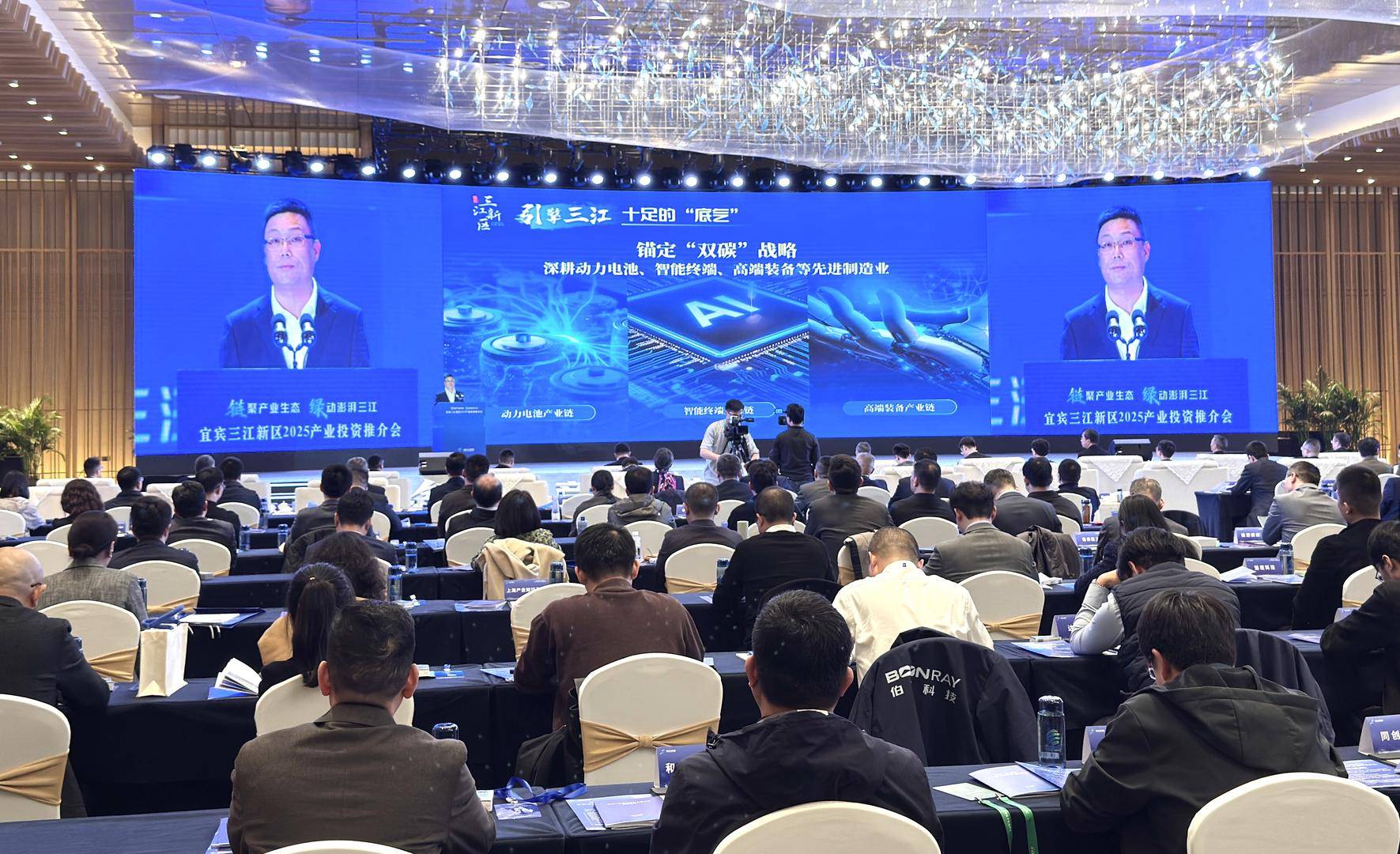
借力2025世界动力电池大会 宜宾三江新区引资247.38亿元
Sou Hu Cai Jing· 2025-11-12 12:10
Core Insights - The "Yibin Sanjiang New Area 2025 Industry Investment Promotion Conference" successfully signed 84 projects with a total investment of 24.738 billion yuan, covering multiple sectors including new energy and new materials [1][3] Group 1: Investment and Economic Development - The conference attracted participation from 100 well-known enterprises and 18 fund institutions, indicating strong interest in the region's investment potential [3] - A fund matrix with a total scale exceeding 26.55 billion yuan is planned to be established, alongside a list of 47 quality cooperation projects with a total investment exceeding 12 billion yuan [3] - The Sanjiang New Area has become a core engine for Yibin's development, ranking 15th among the top 50 potential urban new areas in the country [3][4] Group 2: Industry Focus and Growth - Yibin has adopted an eco-friendly and green development path, focusing on the transformation of traditional industries and the expansion of the digital economy [4] - The GDP of Sanjiang New Area has crossed five hundred billion yuan milestones for five consecutive years, with a projected GDP of over 60 billion yuan in 2024 [4] - The region is recognized as the "Battery Capital," producing one out of every ten power batteries globally, highlighting its significant role in the power battery industry [4]
宁沪高速-基本面扎实且收益率具吸引力;2025 年第三季度简报要点
2025-11-07 01:28
Summary of Jiangsu Expressway - H/A Conference Call Company Overview - **Company**: Jiangsu Expressway - **Ticker**: 177 HK (H shares), 600377 CH (A shares) - **Market Cap**: $6.133 billion (H shares), $9.658 billion (A shares) [4][27] Key Industry Insights - **Sector**: Infrastructure, Industrials & Transport - **Performance**: Jiangsu Expressway has shown solid operational performance and cost efficiencies in 3Q25, supporting a positive outlook [2][12] - **Market Context**: H shares have declined by 5% and A shares by 15% since June, while the CSI300 index gained 11%, attributed to fund rotation into growth names [2] Financial Performance - **3Q25 Results**: - Revenue growth of 6.6% year-over-year (Y/Y) for Shanghai-Nanjing Expressway, driven by a 12% increase in truck traffic [6] - Cost of revenue decreased by 5.6% Y/Y, with expectations for continued decline in road maintenance costs [6] - **Earnings Estimates**: - 4Q25 earnings expected to rise by 15% Y/Y due to resilient toll revenue and cost-reduction efforts [6] Dividend and Valuation - **Dividend Yield**: 5.7% for Jiangsu Expressway - H, with a commitment to maintain dividend stability [2][12] - **Price Target**: - H shares: HK$11.00 by Dec-26 [4][17] - A shares: Rmb15.00 by Dec-26 [27][41] - **Valuation Metrics**: - Adjusted EPS for FY25E: Rmb0.95, FY26E: Rmb1.01 [9][27] Strategic Initiatives - **Expansion Projects**: - Ongoing preparations for the Shanghai-Nanjing Expressway expansion, with completion aimed before the concession expires in 2032 [8] - Several major projects are progressing as scheduled, including the Ningyang Yangtze River Bridge North Connection and Xitai Project [7][8] - **Regulatory Environment**: - Anticipated revisions to the National Tollroad Regulation Policy, potentially extending concession periods and promoting balanced tolling [6] Risks and Considerations - **Downside Risks**: - Larger-than-expected decline in traffic, higher-than-expected capital expenditures for new projects, and less favorable toll-road industry policy terms [23][42] - **Upside Risks**: - Larger-than-expected increase in traffic and lower-than-expected capital expenditures [42] Conclusion - **Investment Stance**: Overweight on Jiangsu Expressway - H due to solid fundamentals, attractive yield, and growth potential in the toll-road sector [2][12][21] - **Neutral on Jiangsu Expressway - A** due to valuation concerns after recent price rallies [30][40]

Chinese leaders meet to create latest 5-year economic plan
CNBC Television· 2025-10-21 00:52
Economic Strategy & Policy Focus - China's top policymakers are creating a 5-year roadmap, focusing on economic priorities from 2026 to 2030 [1][2] - The primary goal is to transform China into a global tech leader, dominating in technologies like AI, semiconductors, robotics, and new energy [3] - There's an expectation that the 5-year plan will acknowledge the need to encourage more household consumption, potentially setting consumption growth targets at a local level [4] Economic Performance & Stimulus - Q3 economic growth came in at 48%, slightly slower than Q2, with an overall economic growth target of 5% [6] - Many economists believe that there won't be much more stimulus for the rest of the year, partly due to the Q3 economic growth number [6]