OAuth授权滥用

Search documents
谷歌封杀OpenClaw?封号、薅羊毛与巨头焦虑
3 6 Ke· 2026-02-26 00:01
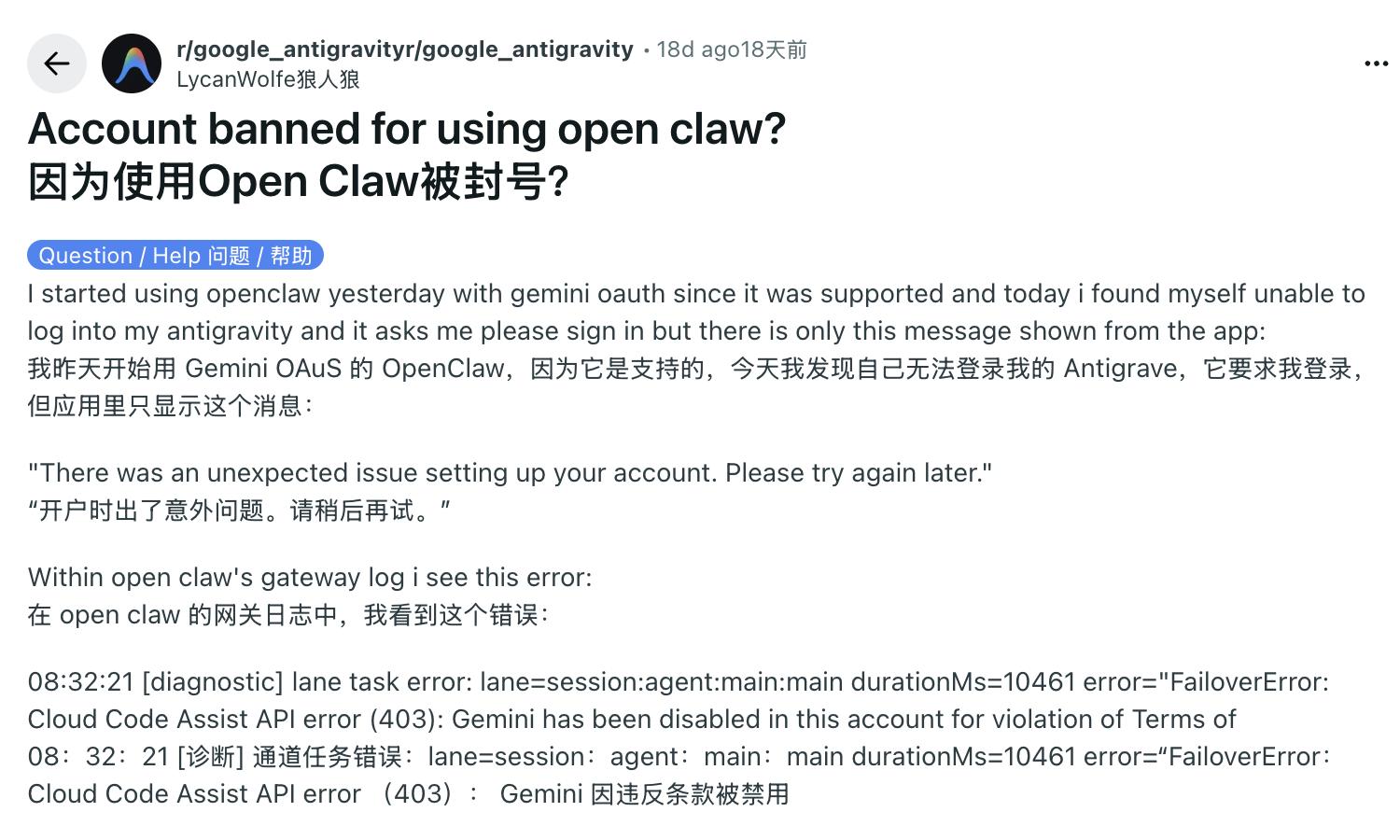
Core Viewpoint - The recent actions by Google to ban accounts using OpenClaw to access its AI services have sparked significant backlash from users, raising questions about the company's decision-making and user communication strategies [1][4][5]. Group 1: Google’s Actions and User Reactions - Google has implemented widespread account bans for users accessing its AI services through OpenClaw, leading to user frustration and criticism on platforms like Reddit and X [1][2][4]. - Many users reported being unable to log into their accounts after using OpenClaw, with some receiving vague error messages without prior warning about potential violations [2][4][5]. - The founder of OpenClaw, Peter Steinberger, criticized Google's harsh measures and noted that other companies, like Anthropic, have been more cooperative in addressing similar issues [4][6]. Group 2: OAuth Authorization Abuse - The primary trigger for Google's account bans is identified as "OAuth authorization abuse," where users exploit the authorization mechanism to access services without proper payment [5][7]. - OAuth allows users to grant third-party applications access to their accounts without sharing passwords, but its misuse has led to significant service quality issues for Google [7][11]. - The combination of OpenClaw and OAuth has enabled users to utilize Google’s AI services in a cost-effective manner, undermining the traditional subscription and API payment models [11][12]. Group 3: Competitive Landscape and Industry Response - In contrast to Google’s restrictive approach, Chinese AI companies are embracing OpenClaw, integrating it into their products and enhancing user experience [17][25]. - The recent release of domestic AI models, such as Kimi K2.5, has positioned them as strong competitors in the AI landscape, focusing on capabilities that align with the needs of intelligent agents [24][25]. - The differing strategies between Google and Chinese firms highlight a fundamental divergence in how AI services are structured, with Google favoring tight integration and control, while Chinese companies adopt a more open and service-oriented approach [25].