
AI智能体

Search documents
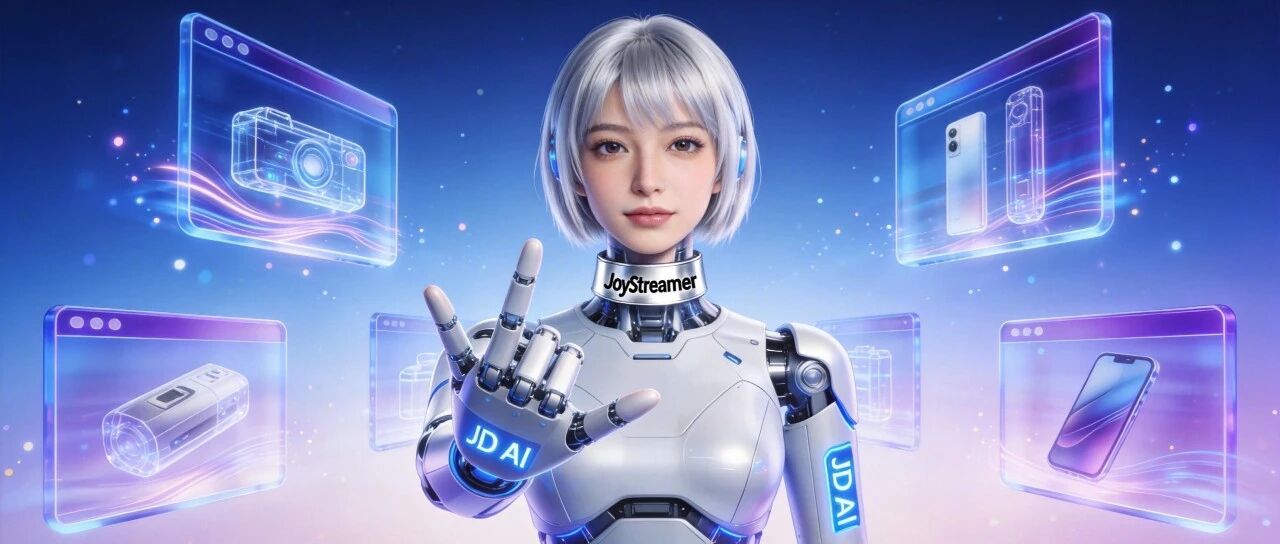
京东卷出新高度!硬刚「复杂指令」长时长、自由态数字人直播终于丝滑了
机器之心· 2026-03-31 09:00
Core Viewpoint - The article emphasizes that the AI industry is entering the "Agent" era, but there is a significant challenge in creating a dynamic "body" for AI agents, which is crucial for effective human interaction [1][2]. Group 1: Technological Innovations - JD's digital human models, JoyStreamer and JoyStreamer-Flash, have addressed long-standing issues such as weak text command control, multi-modal signal conflicts, and insufficient long-duration generation capabilities, achieving real-time interactive digital human generation [3]. - The JoyStreamer series demonstrates a significant leap in performance, moving beyond static reporting to executing complex actions and maintaining lip-sync with audio even during dynamic movements [5][6]. - The dual-teacher DMD (Distribution Matching Distillation) post-training approach allows the digital human model to inherit text controllability without additional training data, effectively balancing text and audio signals [10][14][15]. Group 2: Performance and Evaluation - JoyStreamer has shown superior performance in subjective GSB scoring compared to mainstream SOTA closed-source models, achieving scores of 1.36 and 1.73 in key dimensions such as text adherence and lip-sync accuracy [18]. - The model's ability to support over 30 seconds of long video generation while maintaining identity stability and smooth actions addresses the challenge of "identity drift" in AI-generated content [16]. Group 3: Commercial Applications - The breakthrough in long-duration, real-time interactive technology positions JD's digital humans as a core component of e-commerce live streaming, enhancing user engagement and interaction [20][21]. - JD has made its digital human capabilities accessible to small and medium-sized businesses for free, allowing them to create customized digital avatars that closely resemble real human hosts [22][23]. - The "live streaming room replication" feature enables merchants to convert successful live streams into reusable digital assets, significantly improving their operational efficiency [23]. Group 4: Competitive Landscape - JD's approach to AI development emphasizes efficiency, cost, and performance balance, contrasting with the prevalent "compute power arms race" in the industry [27]. - The integration of AI technology into JD's extensive supply chain across various business scenarios enhances its competitive edge, leveraging real-time feedback from thousands of merchants to drive continuous improvement [28][29].


“龙虾”热潮来袭,ClawCon亚洲首聚落地涩谷
日经中文网· 2026-03-31 08:01
Core Insights - The "ClawCon Tokyo" event attracted over 1,100 participants, marking OpenClaw's first event in Asia, showcasing the growing interest in AI technologies [2][4] - OpenClaw allows users to freely access and utilize AI capabilities on personal computers, automating tasks such as email sending and software development [4] - The event featured discussions on the evolution of AI, with developers emphasizing the gradual adoption of AI in personal and enterprise settings [4] Group 1 - The "ClawCon" event in Tokyo was well-attended, with participants engaging in discussions while enjoying lobster-themed cuisine [2][4] - OpenClaw is positioned as a user-friendly AI agent software that can perform various tasks autonomously, indicating a shift towards more accessible AI technology [4][5] - The developer, Peter Steinberger, highlighted the collaboration with major AI companies to enhance development speed while maintaining open-source attributes [5] Group 2 - NVIDIA's CEO praised OpenClaw, suggesting it could be the next significant advancement in AI similar to ChatGPT [5] - Concerns regarding security vulnerabilities in OpenClaw have been acknowledged, with measures implemented since January to enhance data access permissions and user-defined security settings [5]

智能体应用研究系列(一):AI应用元年,OpenClaw引领Agent发展
CMS· 2026-03-30 09:17
Investment Rating - The report maintains a positive investment rating for the AI application industry, particularly focusing on OpenClaw and related sectors [3]. Core Insights - The report emphasizes that the industry has entered a new phase of collaboration between major tech companies and local policies, with cloud computing services being the most certain direction for growth [1]. - OpenClaw is identified as the fastest-growing open-source AI agent application framework globally, with significant advancements in product positioning, technical architecture, and market dynamics [1][10]. - The report suggests actively monitoring key players in cloud computing, domestic computing chips, computing leasing, and AI infrastructure sectors [1]. Summary by Sections 1. Overview of OpenClaw - OpenClaw is an open-source, cross-platform AI agent application framework designed for local operation and message-driven interaction, significantly lowering user deployment barriers [10]. - The framework has rapidly gained popularity due to its user-friendly installation and configuration processes, allowing for quick deployment and usability [12][26]. 2. Development Trajectory - OpenClaw achieved remarkable growth, becoming one of the most popular open-source projects within four months of its launch, surpassing established frameworks like React in GitHub stars [15][17]. - The project has undergone significant milestones, including rebranding and community engagement, which have contributed to its rapid expansion [13][14]. 3. Industry Attention and Ecosystem Growth - The ecosystem surrounding OpenClaw has seen explosive growth, with over 39,802 skills available in the ClawHub skill store, driven by contributions from a large developer community [18][19]. - Major cloud service providers have responded quickly to OpenClaw's rise, offering one-click deployment solutions, which enhance accessibility for enterprise users [22][24]. 4. Technological Innovations - OpenClaw's unique features include a simplified skill extension mechanism through SKILL.md, which allows for natural language programming, significantly lowering the barrier for skill development [28]. - The framework employs a lane-aware FIFO queue for task scheduling and a layered memory architecture to optimize performance in complex task scenarios [30][32]. 5. Strategic Moves by Tech Giants - Major tech companies, including NVIDIA, Google, and AWS, are actively positioning themselves in the AI agent space, launching products and services that integrate with OpenClaw [42][44][46]. - Domestic tech giants like Tencent, Baidu, and Xiaomi have also quickly adapted to OpenClaw's capabilities, launching various applications and services that leverage its framework [47][49][52].
预告 | 杜雨博士携新书《养龙虾》做客刘润直播间
未可知人工智能研究院· 2026-03-30 04:39
Core Viewpoint - The article discusses the transition from "talking AI" to "doing AI," highlighting the emergence of AI agents like OpenClaw as transformative tools for productivity in various sectors [5][6]. Group 1: AI Agents and Their Impact - OpenClaw is defined as a core unit of next-generation digital productivity, capable of autonomous task planning, tool invocation, and collaborative work, marking a significant shift in AI capabilities [5]. - The book "养龙虾" (Raising Lobsters) uses the metaphor of raising lobsters to explain complex AI agent technologies in an accessible manner, covering aspects from building to training and collaboration of AI agents [5][10]. Group 2: Insights from the Author - Dr. Du Yu, a seasoned investor and author, provides a unique industry perspective, integrating technology, business, and societal implications of AI agents [6][10]. - The book addresses three core questions: how AI agents reconstruct production relationships in enterprises, how individuals can coexist with AI agents, and the ethical and governance challenges posed by autonomous AI [7][8][9]. Group 3: Educational Initiatives - The Liu Run Book Club aims to transform knowledge into competitive advantage, featuring Dr. Du Yu to discuss the implications of AI agents and the insights from his book [11][12]. - The upcoming live session will serve as an introductory course on AI agents, targeting a broad audience including tech professionals and curious readers [13]. Group 4: Future Opportunities - The article emphasizes that the wave of AI agents is already here, and "养龙虾" serves as a guide to understanding this revolution and preparing for future opportunities [15][20]. - Key topics for discussion include the fundamental differences between AI agents and existing models like ChatGPT, practical steps for individuals to build their own AI agents, and the industries likely to see rapid AI adoption in the next five years [17].

突发!华为盘古大模型负责人离职
程序员的那些事· 2026-03-28 11:05
Core Viewpoint - The departure of key figures in AI development, such as Wang Yunhe from Huawei, indicates significant shifts in the competitive landscape of AI and large model development in the industry [3][5][8]. Group 1: Departure of Key Personnel - Wang Yunhe, the head of Huawei's Pangu large model and director of the Noah's Ark Lab, confirmed his departure after nearly 9 years with the company [3]. - His career at Huawei is notable, having progressed from an intern in 2017 to leading the top AI lab, showcasing internal growth and technical leadership [5]. - Wang was responsible for the overall R&D planning of the Pangu large model, making him a crucial figure in Huawei's competitive stance in the large model sector [6]. Group 2: Future Directions - Industry rumors suggest that Wang Yunhe's next venture will focus on AI intelligent body entrepreneurship, which is seen as a direction with significant commercial potential for large model applications [8]. Group 3: Model Controversies - On June 30, 2025, Huawei open-sourced the Pangu Pro MoE and other models, which later faced scrutiny for alleged similarities to Qwen in parameter distribution and retained third-party copyright information, leading to accusations of "retraining" or "shelling" [10]. - In response to these allegations, the Noah's Ark Lab issued a denial on July 5, 2025 [10].

王云鹤离职,曾任华为诺亚方舟实验室主任
第一财经· 2026-03-28 07:55
Core Viewpoint - The departure of Wang Yunhe, former director of Huawei's Noah's Ark Lab, marks a significant shift in the company's AI leadership, with speculation about his future involvement in AI entrepreneurship [1] Group 1: Departure Details - Wang Yunhe announced his departure from Huawei on March 28, having joined the company as an intern in 2017 and officially becoming an employee in 2018 [1] - Over nearly 9 years, he held various positions including Senior Engineer, Technical Expert, and Head of the Algorithm Application Department, before becoming the director of Noah's Ark Lab in March 2025 [1] - The specific reasons for his departure and future plans have not been disclosed, but there are industry rumors suggesting he may pursue entrepreneurship in AI [1]

美图公司(01357)发布年度业绩,经调整净利润9.65亿元 同比增长64.7% 核心业务影像与设计产品快速增长
智通财经网· 2026-03-27 09:04
Core Insights - The company reported a revenue of RMB 3.859 billion for the year ending December 31, 2025, representing a year-on-year growth of 28.8% [1][2] - Gross profit reached RMB 2.839 billion, with a year-on-year increase of 24.6% [1] - Net profit attributable to equity holders decreased by 12.7% to RMB 698 million, primarily due to a high comparative base from a one-time gain from cryptocurrency sales in 2024 and one-time non-cash expenses related to convertible bonds issued to Alibaba [2] - Adjusted net profit attributable to equity holders increased by 64.7% to RMB 965 million, reflecting strong growth momentum in the core business [2] User Growth and Globalization - The number of paid subscription users surpassed 16.91 million, with 2.16 million coming from productivity tools, which saw a year-on-year growth of 67.4% [1] - Monthly active users (MAU) from markets outside mainland China exceeded 100 million, with accelerated growth in new international paid subscribers in the second half of the year [1] - Most new paid subscribers came from high ARPU regions, including Europe, the Americas, and East Asia [1] Product Development - The company integrated AI agent capabilities into most of its products by the end of 2025 [1] - The "Agent" feature in the Meitu Design Studio became a major driver of revenue growth since its launch in December 2025 [1]
AI夜校| 未可知 x 浙江大学: 《用提示词打造专属AI智能体》银发班
未可知人工智能研究院· 2026-03-27 03:31
Core Viewpoint - The article discusses the continuation of a public welfare course for middle-aged and elderly individuals organized by the Unseen AI Research Institute, focusing on creating personalized AI agents to enhance digital living skills [1][30]. Group 1: Course Overview - The second lesson of the AI night school is themed "Creating AI Agents with Prompts," aimed at helping participants progress from basic AI tool usage to independently creating personalized AI agents [1][5]. - The course adopts a practical and easy-to-understand teaching style, emphasizing hands-on practice and aligning with the learning habits of middle-aged and elderly students [5][6]. Group 2: AI Collaboration Models - The instructor, Yu Tangxuan, explains three collaboration modes between humans and AI to help students understand the positioning and value of AI agents [7][10]. - **Embedding Mode**: Humans perform the main tasks while AI provides support [8]. - **Copilot Mode**: Humans and AI collaborate, with AI drafting initial content and humans guiding the direction [10]. - **Agents Mode**: AI acts autonomously under human-set goals [10]. Group 3: Advantages of Creating AI Agents - The course highlights the core advantages of creating AI agents, including: - Practical teaching that allows zero-based users to create personal AI agents [13]. - Familiarization with mainstream AI agent platforms like Doubao, Tencent Yuanbao, and Tongyi Qianwen, covering various life scenarios [13]. - The instructor provides step-by-step guidance on using the Doubao platform to create AI agents, focusing on efficiency, professionalism, and low operational barriers [15][16]. Group 4: Prompt Structure and Skills - The instructor elaborates on the structure of prompt words for AI agent avatars, detailing four components: subject, subject modifiers, lighting, and style settings [19]. - A standardized framework for setting prompt words is introduced, covering roles, skills/tasks, and limitations to ensure clarity and accuracy in AI understanding [21][23]. Group 5: Advanced Practices - The latter part of the course introduces the Tencent Yuanqi platform, demonstrating how to create AI agents that can interface with WeChat public accounts, supporting knowledge base imports and automated replies [24]. - Future courses will include specialized topics like OpenClaw, focusing on automating processes to further lower the usage threshold for elderly users [26][27]. Group 6: Commitment to Public Welfare - The Unseen AI Research Institute emphasizes its commitment to reducing technological barriers for the elderly, aiming to help them enjoy the conveniences brought by AI [30].

AI替代智力,人类如何反击?“不能完全交给市场”
第一财经· 2026-03-26 13:16
Core Viewpoint - The article discusses the transformative impact of AI agents, which are evolving from traditional AI models to more proactive roles, raising significant challenges, particularly in employment [3][5]. Group 1: AI Transformation - AI agents are compared to having "hands" and tools, moving beyond just answering questions to actively managing tasks [5]. - The shift from traditional AI to intelligent agents signifies a direct challenge to human intellect, unlike previous technological revolutions that replaced physical labor or information processing [5]. Group 2: Employment Concerns - The article emphasizes the need for serious consideration of employment issues arising from AI advancements, suggesting that historical assumptions about technology creating new jobs may not hold true this time [5][6]. - There is a consensus among experts that the government must play a role in addressing the employment challenges posed by AI, rather than leaving it solely to market forces [5][6]. Group 3: Policy Recommendations - Experts advocate for government intervention to ensure fair distribution of resources and to address the potential job displacement caused by AI [6][7]. - The article suggests that social security policies need to be adjusted to support individuals who may lose income during employment transitions due to AI [7]. Group 4: Skills and Education - The need for a shift towards "generalist" skills is highlighted, with a call for both humanities and science students to acquire skills relevant to AI applications [8]. - The article stresses the importance of fostering learning and creative abilities rather than just traditional vocational skills in response to AI's rapid evolution [7][8]. Group 5: Future of AI - A critical question posed is the societal choice regarding the role of AI: whether it should fully replace humans or serve as an assistant [8]. - The article concludes that while the development of AI should continue, it is essential to establish ethical boundaries similar to those in biotechnology [8].
人工智能研究专题:人工智能为国内工业升级带来的机遇
Guoxin Securities· 2026-03-25 11:15
Investment Rating - The report maintains an "Outperform" rating for the industry, indicating expected performance above the market benchmark by over 10% [1]. Core Insights - The report emphasizes that embracing AI is not optional but essential for the survival and development of the manufacturing industry [20]. - It highlights the urgent need for traditional manufacturing to undergo intelligent upgrades to overcome cost and efficiency bottlenecks, thereby building sustainable competitiveness [17]. Summary by Sections 1. Background of the Era - China has a solid foundation and vast potential for developing intelligent manufacturing, supported by a complete and independent modern industrial system [10]. 2. Core Engines - Key AI technologies empowering manufacturing include Digital Twin, Machine Learning, Computer Vision, and AI Agents, which enhance simulation, optimization, and decision-making capabilities [23][24]. 3. Deep Applications - AI penetrates the entire value chain of manufacturing, including R&D, production, supply chain management, and quality control, leading to significant efficiency improvements [26][27]. 4. Market Insights - The global AI in manufacturing market is projected to reach $125 billion with a CAGR of 28%, while China's intelligent manufacturing core industry is expected to exceed 5 trillion yuan by 2026, growing at a CAGR of 18% [80][81]. 5. Leading Practices - Case studies from companies like Haier, Sany Heavy Industry, and Foxconn illustrate the tangible benefits of AI, such as increased production efficiency and reduced defect rates [30][31][60]. 6. Future Outlook - The report predicts ongoing technological evolution and highlights the challenges of transformation, emphasizing the importance of AI in driving the future of manufacturing [7][96].