
Orbital data center

Search documents
Intuitive Machines’ (LUNR) $175M Equity Raise Lays Out the Company’s Push Toward Recurring Comms and In-Space Data Processing
Yahoo Finance· 2026-03-04 17:31
Core Insights - Intuitive Machines, Inc. (NASDAQ:LUNR) has announced a $175 million strategic equity investment aimed at supporting revenue expansion and advancing technologies in satellite communications and in-space data processing networks [1][2]. Group 1: Investment and Financial Strategy - The company plans to utilize the proceeds from the investment to enhance its revenue and fund technologies, particularly following its acquisition of Lanteris Space Systems [1]. - The investment will support the expansion of the Near Space Network Services and aims to build a 'solar system internet' independent of Earth, with applications in GEO, cislunar operations, and Mars communications [2]. - The securities purchase agreement involves the issuance of Class A common stock, with the transaction expected to close on February 27, 2026, subject to customary conditions [2]. Group 2: Business Operations and Market Focus - Intuitive Machines is a Houston-based space infrastructure company that builds spacecraft and provides communications and navigation-related capabilities for various customers, including commercial, civil, and national security sectors [3]. - The company is focusing on higher-margin, recurring revenue programs, including initiatives like Golden Dome, NASA's Tracking and Data Relay Satellite System, and the Mars Telecommunications Orbiter [2].

'Muskonomy' shakeup: SpaceX valuation approaches Tesla's after merger with xAI
CNBC· 2026-02-04 01:48
Core Viewpoint - Elon Musk's merger of SpaceX with his AI venture xAI indicates a significant shift in his corporate strategy, reflecting challenges faced by Tesla and the potential for growth in SpaceX and xAI [1][2]. Tesla Overview - Tesla's market capitalization is approximately $1.58 trillion, which is 26% higher than SpaceX's private valuation of $1.25 trillion [2]. - Tesla's stock has declined by 6% in 2026, with a reported 16% year-over-year drop in vehicle deliveries and a 3% decline in total revenue for 2025, marking its first annual revenue decline [3][4]. - The company is facing increased competition in the electric vehicle market, particularly from manufacturers in China and Europe, and has been impacted by the removal of federal tax incentives for EV purchases in the U.S. [4]. Strategic Shifts - Musk is redirecting Tesla's focus towards Robotaxi services and Optimus humanoid robots, despite facing significant competition in these areas [5]. - Production of Tesla's Model S and X vehicles is being halted as the company reallocates resources to new priorities, with these models contributing less than 3% to annual deliveries in 2025 [5]. SpaceX Overview - SpaceX is a leading provider of orbital launch services, with contracts worth billions from NASA and the Department of Defense, and operates the Starlink satellite internet service with over 9,000 satellites and approximately 9 million customers [7]. - The merger values SpaceX at $1 trillion and xAI at $250 billion, with SpaceX reportedly pursuing an IPO this year [8]. Financial Performance - SpaceX generated about $15 billion in revenue and $8 billion in profit last year, while Tesla reported nearly $95 billion in sales and adjusted earnings of about $5 billion for 2025, indicating a steep decline from the previous year [17]. - Tesla has committed to investing $2 billion in xAI, which is now considered a SpaceX investment following the merger [18]. Regulatory and Legal Challenges - xAI is under investigation in multiple jurisdictions for issues related to its Grok image generator, which has raised concerns about the creation of explicit deepfake images [13]. - The merger may introduce legal and regulatory risks that could affect SpaceX shareholders, as the intertwined nature of Musk's companies could impact their regulatory standing [12][14].


SpaceX seeks FCC nod to build data center constellation in space
Fortune· 2026-02-02 00:01
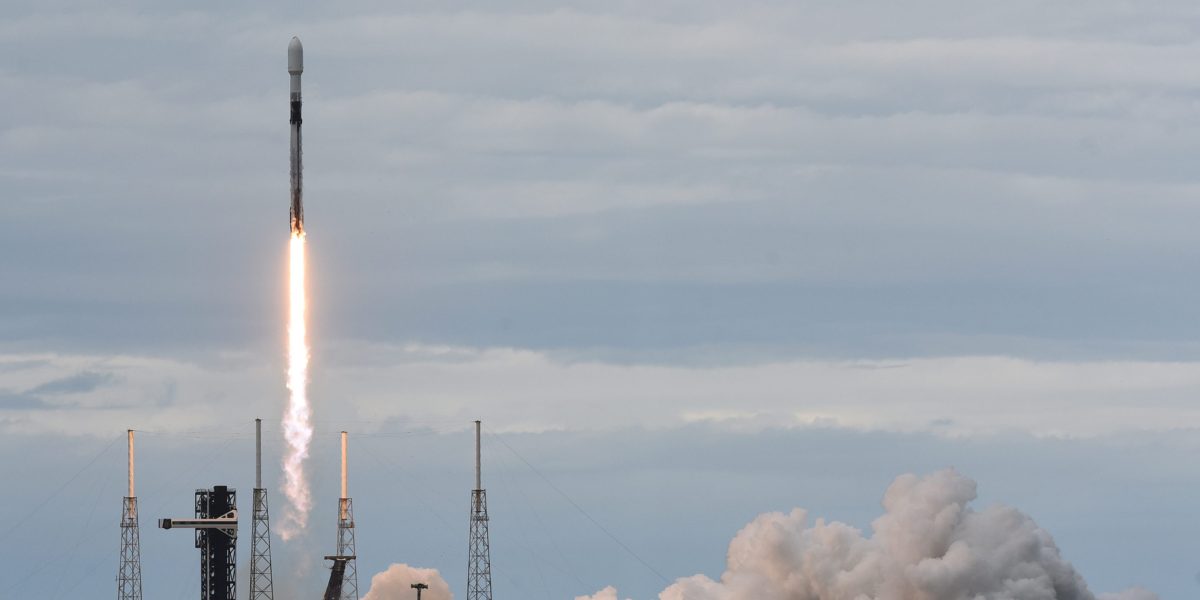
Core Viewpoint - SpaceX is seeking permission to launch up to 1 million satellites into Earth's orbit to create solar-powered data centers in space, aimed at meeting the growing data demands driven by artificial intelligence [1][4]. Group 1: Satellite Network and Technology - The proposed satellite system will be launched using SpaceX's reusable Starship rocket, offering a cost-effective and environmentally friendly alternative to traditional land-based data centers [2]. - The network will utilize radiative cooling in space, eliminating the need for large water volumes for cooling systems and reducing reliance on batteries by harnessing solar energy [3]. - Satellites will communicate via laser links and will be positioned in orbits between 500 km (310.69 miles) and 2,000 km to ensure near-constant solar access [3]. Group 2: Strategic Implications and Future Plans - The FCC filing coincides with SpaceX's plans for an IPO later this year and potential mergers with Musk's xAI or Tesla, which could enhance cash flow and integrate capabilities in AI, satellite production, and rocket launches [4]. - Musk has emphasized the necessity of orbital data centers, predicting that space will become the most cost-effective location for AI data centers within two to three years [5].
‘Greetings, earthlings': Nvidia-backed Starcloud trains first AI model in space as orbital data center race heats up
CNBC· 2025-12-10 14:05
Core Insights - The launch of Starcloud-1 satellite marks the first instance of an artificial intelligence model, Gemma, being trained and operated in space, utilizing a Nvidia H100 GPU that is 100 times more powerful than previous space GPUs [2][3] - Starcloud aims to establish orbital data centers to address the growing digital infrastructure crisis on Earth, which is facing increasing energy consumption and environmental concerns [4][5] Company Overview - Starcloud, co-founded in 2024, is backed by Nvidia and has successfully demonstrated the operation of AI models in space, indicating the feasibility of space-based data centers [5][6] - The company plans to build a 5-gigawatt orbital data center equipped with solar and cooling panels, which would be more efficient and cost-effective compared to terrestrial facilities [8] Technological Innovations - The satellite's AI model, Gemma, is capable of sophisticated responses similar to Earth-based databases, showcasing the potential of space-based AI applications [7] - Starcloud has also trained another model, NanoGPT, using the complete works of Shakespeare, demonstrating the versatility of its technology [7] Environmental Impact - Orbital data centers are projected to have 10 times lower energy costs than terrestrial data centers, addressing the constraints of energy consumption on Earth [5] - These space-based facilities can harness constant solar energy, unaffected by terrestrial weather and day-night cycles, contributing to environmental sustainability [9][12] Applications and Use Cases - Starcloud's orbital data centers have potential commercial and military applications, such as real-time intelligence for disaster response, including wildfire detection [10] - The company is working on integrating advanced AI workloads from space, enhancing capabilities for various industries [11]

