
Population Growth

Search documents
X @The Economist
The Economist· 2026-03-19 18:00
By 2050 Africa’s population may have risen from 1.5bn to 2.5bn. Whether this proves a boom or a burden depends in part on the capital the continent can attract https://t.co/tI4APSK8Rx ...
X @The Economist
The Economist· 2026-02-14 09:40
By 2050 Africa will be home to 2.5bn, a quarter of humanity. Thought-provoking new books about the continent are therefore sorely needed. We review one of them https://t.co/XlsxX3VSgO ...
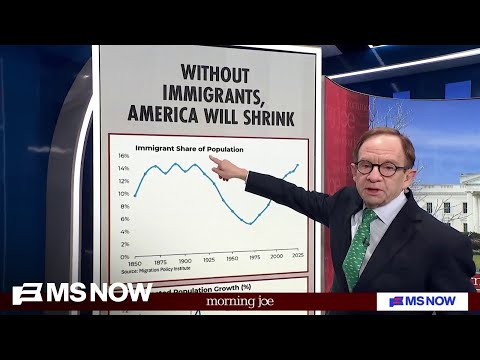
Steve Rattner: Immigration is fundamental to maintain a growing population
MSNBC· 2026-02-13 13:34
impacting the United States and also the immigration approach by this government, let's bring in former Treasury official and Morning Joe economic analyst, Steve Ratner. Steve, what are we seeing as the immigration numbers go WELL, WHAT DO YOU THINK ABOUT THE DEPARTMENT OF HOMELAND SECURITY SHUT DOWN THIS WEEKEND BECAUSE THE TWO SIDES CAN'T AGREE ON RULES OF THE ROAD GOING FORWARD. But yes, it is very important to put the immigration thing in perspective and what the impact of immigration has been on this i ...

X @Nick Szabo
Nick Szabo· 2026-02-08 19:07
RT Philip Pilkington (@philippilk)All of Britain’s population growth is now from migration. Domestic population growth has collapsed because of a huge 33% increase in abortions in the past few years. A third of children are now aborted in Britain and so the population is gradually being replaced. 🇬🇧 https://t.co/cjxmzIDuvc ...
X @Nick Szabo
Nick Szabo· 2026-02-08 17:30
RT Wall Street Mav (@WallStreetMav)Greek Defense Minister Nikos Dendias supports the elimination of Greece’s native population:“Population growth in Europe is almost negative, so it is clear that we need young people.I think India could be one of the best choices for legal migration.”https://t.co/Zo3DvUrRxS ...
Economic Forecast Slower Due To Lower Immigration, New Data Confirm
Forbes· 2026-01-30 12:40
Population Growth and Economic Implications - The latest U.S. Census Bureau estimates indicate very low population growth from June 30, 2024, to July 1, 2025, suggesting potential future weaknesses in economic growth [2] - Natural population increase has been low, with fluctuations primarily driven by net migration, which is not perfectly measured [4] - Population growth in the coming years is expected to be lower than the recent gains, with net migration showing significant fluctuations during different presidential administrations [7] Labor Market and Productivity - Most immigrants are of working age but tend to be lower-skilled and earn lower wages, which means a drop in immigration has a less significant impact compared to a decline in native-born workers [5] - Low-skilled workers complement high-skilled workers, affecting overall productivity and earnings in various sectors [6] - Labor productivity growth is beginning to reflect advancements in artificial intelligence, with historical productivity gains showing variability [8] Economic Growth Forecast - With approximately zero population growth and an expected productivity growth of around two percent, inflation-adjusted GDP is projected to increase by slightly more than two percent in the near term [9] - Business planning should be slightly less optimistic than in previous years, particularly for sectors serving low-wage consumers, which will experience slower growth [10] - The economy can remain healthy with low immigration, but its size and characteristics will differ from scenarios with higher immigration levels [11]

X @The Wall Street Journal
The Wall Street Journal· 2026-01-28 04:36
The U.S. government’s dramatic immigration restrictions have slowed population growth to the lowest levels since the Covid pandemic, new federal data show https://t.co/8GLKWlivy4 ...
X @Bloomberg
Bloomberg· 2026-01-27 17:04
US population growth cooled significantly last year amid a sharp slowdown in immigration, according to new US Census Bureau data https://t.co/SBXp3CsVGN ...
X @The Wall Street Journal
The Wall Street Journal· 2026-01-27 16:56
The U.S. government’s dramatic immigration restrictions have slowed population growth to the lowest levels since the Covid pandemic, new federal data show https://t.co/j8gUjvpExd ...
X @Bloomberg
Bloomberg· 2025-12-17 14:22
Canada’s population fell by 0.2% in the third quarter to stand at 41.6 million, marking the only quarterly decline on record outside the Covid-19 era and a dramatic shift from explosive post-pandemic immigration growth https://t.co/UQ3NkH1k1q ...