Quick commerce

Search documents
Delivery Hero H2 Earnings Call Highlights
Yahoo Finance· 2026-03-26 15:08
Delivery Hero logo Delivery Hero (ETR:DHER) executives used the company’s full-year 2025 earnings call to emphasize what CEO Niklas Östberg described as a “defining year,” pointing to profitable growth, rising cash generation, and accelerating traction in quick commerce as the group moves toward an “Everyday App” strategy that spans multiple verticals beyond restaurant delivery. Strategy: from food delivery to a multi-vertical “Everyday App” Östberg said Delivery Hero entered 2025 with a plan to delive ...
阿里巴巴:业绩疲软,展望改善
2026-03-26 13:20
更多资料加入知识星球:水木调研纪要 关注公众号:水木纪要 BABA also confirmed that its AliCloud revenue will likely accelerate further in coming quarters driven by strong demand. The EBITA margin of AliCloud will likely reach ~20% in the long run from the current 9%, according to management. On traditional e-commerce, BABA guided for its CMR to improve markedly in the March quarter (March Q) to over mid-single digit percent (MSD), which is in line with the latest Street consensus of 5.4% while surpassing our cautious estimate of 1% y-y ...

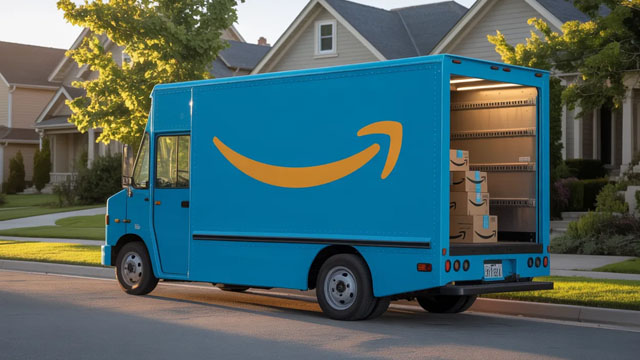
Amazon adds 1-hour and 3-hour delivery options in the US
TechCrunch· 2026-03-17 11:34
Core Insights - Amazon is introducing one-hour and three-hour delivery options in various U.S. cities to compete with instant delivery services like Instacart, DoorDash, and Uber Eats [1] - Over 90,000 items will be available for these new delivery options, with specific labels and filters in the Amazon app [1][3] Pricing Structure - Amazon Prime subscribers will pay $9.99 for one-hour deliveries and $4.99 for three-hour deliveries, while non-Prime members will be charged $19.99 and $14.99 respectively [2] Geographic Availability - The one-hour delivery option will be available in hundreds of U.S. cities, including major metropolitan areas such as Los Angeles, Chicago, and Washington, D.C., while the three-hour option will cover over 2,000 cities and towns [3] Operational Strategy - Amazon aims to leverage its existing same-day fulfillment sites for these new delivery options, enhancing customer convenience and value for Prime members [4] Historical Context - This is not Amazon's first attempt at instant deliveries; the company previously offered one-hour deliveries through the "Prime Now" service from 2014 until its discontinuation in 2021 [8] - Amazon has also launched quick delivery services in other countries, such as a 10-minute delivery service in India and a 15-minute service in the UAE [9]


中国互联网行业_月度电商速览:补贴持续常态化-China Internet Sector_ Quick commerce monthly_ Subsidies continue normalizing
2026-03-16 02:20
Summary of the Conference Call on China's Quick Commerce Sector Industry Overview - **Industry**: China's Quick Commerce Sector - **Key Players**: Meituan, Taobao, JD.com Core Insights and Arguments 1. **Sector Volume Trends**: - Total daily food delivery volumes averaged 120 million in January and 110 million in February, down from 130 million in Q4 2025, indicating a sequential decline due to moderating subsidies and lower beverage mix [3][4] - Beverage mix dropped below 20% across platforms, compared to 30-40% at peak [3] 2. **Regulatory Changes**: - New regulations from the State Administration for Market Regulation (SAMR) effective June 1, 2026, will tighten oversight on 'ghost kitchens' and require online merchants to present consistent business identities [3][9] 3. **Shift in Competitive Dynamics**: - Market share for Meituan, Alibaba (BABA), and JD remained stable at 67%, 23%, and 10% respectively in February [4] - Meituan's market share slightly moderated to 60-65% as competitors shifted subsidies to higher Average Order Value (AOV) regular meals [4] 4. **Rider and Merchant Dynamics**: - First-party (1P) rider time spent increased to 19% in February, indicating a shift from volume growth to service quality [5] - Merchant time spent share shifted towards Meituan at 54% in February, up from 50% in September [7] 5. **Stock Preferences**: - Preferred stock ratings: Alibaba > Meituan > JD, with Alibaba seen as a direct beneficiary of AI investments [8] - Meituan's marginal earnings improvement could act as a catalyst for re-rating into 2026 [8] Additional Important Points 1. **Consumer Behavior**: - Alibaba's Qwen campaign attracted 130 million consumers but had a low retention rate below 20%, indicating a price-sensitive user base [4] - Meituan is focusing on higher AOV categories and non-food quick commerce to enhance user experience [3] 2. **Investment Risks**: - Key risks for the sector include evolving competition, regulatory changes, and macroeconomic headwinds [42][43][44][45] - For Alibaba, risks include regulatory changes, competitive pressure, and potential loss of founder Jack Ma's influence [43] 3. **Valuation Metrics**: - JD's valuation remains undemanding at 8x core 2026E PE, with 50% of its market cap as net cash [8] 4. **Future Outlook**: - The sector is transitioning towards sustainable development, focusing on quality and consumer stickiness rather than just volume expansion [3][8] This summary encapsulates the key points discussed in the conference call regarding the current state and future outlook of China's quick commerce sector, highlighting the competitive landscape, regulatory environment, and investment opportunities.
MercadoLibre vs Alibaba: Which E-Commerce Giant Is the Better Buy in 2026?
247Wallst· 2026-02-17 13:45
Core Insights - MercadoLibre is focusing on logistics and fintech in Latin America, achieving a 39% revenue growth and generating $2.2 billion in free cash flow, while Alibaba is investing heavily in AI and cloud infrastructure, resulting in a 5% revenue growth but a significant net income drop of 53% [1] Financial Performance - MercadoLibre reported Q3 2025 revenue of $7.41 billion, a 39% year-over-year increase, with total payment volume reaching $71.2 billion, up 41% [1] - Alibaba's Q2 2026 revenue was $34.81 billion, only a 5% increase, with a net income decline of 53% and free cash flow turning negative at $3.1 billion [1] Strategic Focus - MercadoLibre is expanding its logistics network and investing in free shipping and social commerce initiatives, while maintaining positive cash flow [1] - Alibaba is prioritizing AI infrastructure and quick commerce, framing its current profitability challenges as investments for future growth [1] Market Positioning - MercadoLibre holds a trailing price-to-earnings ratio of 48.5 and a forward multiple of 29.6, indicating strong investor confidence in its market share growth potential [1] - Alibaba trades at 20.5x trailing earnings and 17.2x forward earnings, which appears cheap but is overshadowed by a 51.8% year-over-year earnings decline [1] Risk-Reward Profiles - MercadoLibre's strategy is seen as less risky due to its positive cash flow and growth potential in a less penetrated e-commerce market [1] - Alibaba's investment thesis hinges on the stabilization of China's regulatory environment and the success of its AI investments, presenting a higher risk profile [1]


Thunder on wheels: Coca-Cola expands last-mile reach with micromobility
MINT· 2026-01-16 14:20
Core Insights - Coca-Cola is enhancing its direct distribution strategy in India by utilizing small vehicles for last-mile delivery to retail stores, aiming to improve access in hard-to-reach areas [1][2][3] Group 1: Distribution Strategy - The direct-to-store delivery approach allows Coca-Cola to reduce reliance on middlemen and traditional wholesale channels, thereby gaining better control over costs and profitability [2] - The company is investing significantly to strengthen last-mile access, although specific financial details have not been disclosed [2] - Coca-Cola operates nearly 6 million retail outlets in India and has a growing fleet of over 5,000 electric vehicles for product distribution [3] Group 2: Market Competition - Local competitors like Campa Cola and Lahori Jeera are increasing their market share in the carbonated soft drinks sector, with their combined share rising to nearly 15% from about 7% year-on-year [8] - The market share of Coca-Cola and PepsiCo has declined from 93% to around 85% during the same period, indicating increased competitive pressure [9] - The competitive landscape is prompting Coca-Cola to remain agile and responsive to market dynamics [10] Group 3: Financial Performance - Hindustan Coca-Cola Beverages reported revenues of ₹12,751 crore for FY25, reflecting a 9% year-on-year decline due to the sale of several manufacturing plants [11] - The bottler is preparing for an initial public offering (IPO) to raise approximately $1 billion [11] Group 4: Consumer Trends - There is a growing consumer preference for healthier beverage options, with low- and no-sugar products gaining traction [12][13] - Coca-Cola is expanding its portfolio to include healthier choices, such as Diet Coke and Coke Zero, which are becoming more visible in retail outlets [13][14] - The company is also innovating with new product offerings like Thums Up XForce and Schweppes Zero, aligning with the trend towards healthier consumption [14]

With a $35 billion push, Amazon puts e-commerce rivals on notice
MINT· 2025-12-11 09:22
Core Insights - Amazon.com Inc. plans to invest an additional $35 billion in India by 2030, intensifying competition in online commerce and prompting rivals to increase their infrastructure and consumer acquisition spending [1][2][3] Investment Plans - The company has already invested $40 billion in India and will allocate funds across its core e-commerce operations, Amazon Web Services, entertainment businesses, and devices segment [2] - Amazon's investment strategy includes expanding its operational infrastructure with ₹2,000 crore planned for 2025 to enhance fulfilment and sortation centres [12] Market Dynamics - The overall retail market in India is projected to grow from $1 trillion in 2024 to $1.7 trillion by 2030, while online retail is expected to grow from $75 billion in 2024 to $260 billion by 2030, doubling its share of total retail to 14% [8] - Analysts predict that India's e-commerce market will expand significantly, potentially doubling the customer base and increasing the seller ecosystem [18][20] Competitive Landscape - Other players in the market, such as Swiggy and Flipkart, are also ramping up investments to compete with Amazon, with Swiggy planning to raise $1.3 billion for its quick-commerce network [10][16] - Amazon's quick-commerce service, Amazon Now, is expanding rapidly, with plans to open around 300 dark stores to enhance its delivery capabilities [15] Consumer Behavior - Young shoppers are increasingly comfortable purchasing a wide range of products online, particularly post-COVID, which has led to the rise of quick-commerce platforms [9] - A significant number of Amazon's Prime customers have migrated to quick-commerce platforms for small-ticket items, indicating a shift in consumer purchasing patterns [14] Future Outlook - The investment by Amazon is seen as a long-term bet on India's potential as a global digital and supply-chain hub, indicating a strategic focus on infrastructure and logistics [20] - The market is expected to split between convenience-led platforms and value-led platforms targeting non-metro consumers, necessitating significant investment in physical infrastructure [19]

Can Alibaba’s Big Bets Pay Off After a Breakout Year?
Yahoo Finance· 2025-12-04 15:40
Mobile phone displaying the Alibaba logo. Key Points Even after falling slightly post-earnings, Alibaba's stock price has nearly doubled in 2025. The company's growth metrics were impressive last quarter. However, investments required to achieve this growth pressured profitability. With massive market shares in e-commerce and cloud computing, Alibaba has a solid chance to deliver long-term value for investors despite near-term issues. Interested in Alibaba Group Holding Limited? Here are five stocks w ...
BABA(BABA) - 2026 Q2 - Earnings Call Presentation
2025-11-25 12:30
Financial Performance - Total revenue increased by 5% year-over-year to RMB 247795 million for the quarter ended September 30, 2025[10] - Income from operations decreased significantly by 85% year-over-year to RMB 5365 million[10] - Adjusted EBITA decreased by 78% year-over-year to RMB 9073 million[10] - Net loss from free cash flow was RMB 21840 million, compared to a positive free cash flow of RMB 13735 million in the same quarter of 2024[10] Segment Performance - Alibaba China E-commerce Group revenue increased by 16% year-over-year[7] - Alibaba International Digital Commerce Group (AIDC) revenue increased by 10% year-over-year[7] - Cloud Intelligence Group revenue increased significantly by 34% year-over-year[7] - All Others segment revenue decreased by 25% year-over-year[25] Business Highlights - Quick commerce revenue increased by 60%, driven by order growth from "Taobao Instant Commerce"[31] - Customer management revenue increased by 10% year-over-year, driven by improved take rate[8] - The company repurchased 17 million ordinary shares (equivalent to approximately 2 million ADSs) for a total of US$253 million[14]
Quick-Delivery price war hits Eternal, Swiggy shares
BusinessLine· 2025-11-10 03:12
Group 1 - Intensifying competition in India's online grocery delivery space is negatively impacting the shares of market leader Eternal Ltd. and its competitor Swiggy Ltd., with Eternal's shares dropping nearly 4% to their lowest level in three months [1] - The ongoing discount war is raising concerns about the profitability of India's delivery firms, as second-quarter earnings missed estimates and companies are prioritizing growth over margins, which could affect investor sentiment ahead of Swiggy's planned follow-on share sale of over $1 billion and Zepto Pvt. Ltd.'s upcoming IPO [2] - The quick commerce market is not infinitely expanding, and as companies increase charges to achieve profitability, growth is expected to slow significantly [3] Group 2 - Swiggy's Instamart and Zepto have recently removed certain charges and lowered minimum order values for free deliveries, with Jefferies noting more aggressive discounting across categories, led by Amazon Now [4] - The price war in India mirrors a similar trend in China, where companies like Meituan, JD.com, and Alibaba are offering deep discounts, with Meituan losing almost a third of its market value this year due to market share loss [5]