
Real interest rates

Search documents
Here’s the Gold Miner ETF to Buy for the Metal’s Next Run Higher
Yahoo Finance· 2026-03-25 16:35
Group 1: Gold Market Dynamics - The trajectory of real interest rates, particularly the 10-year Treasury yield adjusted for inflation, is crucial for the performance of gold miners over the next 12 months [2][5] - Gold miners have experienced significant volatility, with the Sprott Gold Miners ETF (SGDM) declining by 21.16% over the past month, while year-to-date it has gained 3.21%, outperforming the VanEck Gold Miners ETF (GDX) which is up 0.92% [4][6] - A sustained move of the 10-year Treasury yield below 4% would signal renewed strength for gold and its miners, as lower yields make gold more attractive compared to bonds [5][7] Group 2: SGDM ETF Characteristics - SGDM utilizes a factor-based construction that weights companies based on revenue growth, free cash flow yield, and debt-to-equity ratios, focusing on miners with strong financial fundamentals rather than just size [3][6] - The fund currently holds $662.2 million in total net assets and charges a competitive expense ratio of 0.50% for a specialized mining fund [10] - The next index rebalance will reflect updated scores for free cash flow yield, revenue growth, and debt reduction, potentially concentrating the fund in the strongest operators if gold prices remain elevated [9][11] Group 3: Monitoring and Strategy - Investors are advised to monitor the Federal Reserve's FRED database for the 10-year yield and the Fed's dot plot for insights on future rate expectations [8] - Top holdings in SGDM include Agnico Eagle Mines (10.15%), Newmont (7.75%), and Wheaton Precious Metals (7.36%), which have scored well on the index's quality factors [9]
Gold Back Under $5,000 – Is This the Best ETF to Buy for Its Next Run Higher?
247Wallst· 2026-03-20 17:55
Core Viewpoint - Gold prices have recently fallen below $5,000 per ounce, currently trading below $4,600, raising questions about the best ETF for potential investment as the market adjusts [4]. Group 1: ETF Performance and Structure - iShares Gold Trust (IAU) has a 0.25% annual expense ratio, making it more cost-efficient compared to SPDR Gold Trust (GLD) at 0.40% and SPDR Gold MiniShares (GLDM) at 0.10% [1][7]. - IAU has returned 50% over the past year, despite a recent sharp pullback of nearly 9% in a single week, but remains up about 6% year-to-date [5][6]. - Each share of IAU represents fractional ownership of physical gold held in allocated vaults, with no earnings or dividends involved [7]. Group 2: Market Influences on Gold Prices - Gold's performance over the next 12 months will depend on Federal Reserve signals regarding rate cuts, which would lower real yields and support gold as a non-yielding asset [2][8]. - The current 10-year Treasury yield is at 4.26%, up from a low of 3.97% in late February, which has coincided with gold's recent pullback [9]. - If Treasury yields rise towards the May 2025 peak of 4.58%, gold prices may face continued pressure [9]. Group 3: Competitive Landscape and Risks - IAU's main structural risk is competition from lower-cost alternatives like GLDM, which charges only 0.10% annually, potentially attracting fee-conscious investors [11]. - IAU currently has $70.6 billion in net assets, providing deep liquidity, but sustained outflows could erode this advantage [11]. - The amount of gold each IAU share represents declines slightly over time due to the fund selling small amounts of gold to cover its annual fee, leading to a minor drag on performance compared to spot gold [12].

GLD's $75 Billion Couldn't Shield It From the Tariff-Driven Selloff
247Wallst· 2026-03-07 13:07
Core Insights - The SPDR Gold Trust (GLD) experienced a 2.43% decline over the past week despite a year-to-date gain of 19.1% and a 75.96% return over the past year, with net assets totaling $174.1 billion [1] - Tariff escalations and real interest rate pressures have negatively impacted gold prices, as Core PCE inflation rises while Treasury yields remain at 4.09% [1] - Retail sentiment shifted from bullish to neutral during the selloff, indicating a reconsideration of investment strategies rather than a complete abandonment of gold [1] Market Performance - GLD's performance is significantly influenced by real interest rates, which are crucial for its appeal since gold does not generate cash flow [1] - The 10-year Treasury yield has decreased from a peak of 4.29% in early February to 4.09%, which has provided some support for gold prices [1] - Core PCE inflation has shown a steady increase, reaching an index value of 127.92 in December 2025, which could further impact gold's performance depending on future Fed actions [1] Investment Dynamics - Institutional investors' behavior can lead to significant fluctuations in GLD's price, particularly during risk-off periods, as evidenced by a 31.9% increase in the VIX over the past month [1] - Historical data shows that GLD attracted approximately $30 billion in inflows following a 40% drawdown, highlighting the sensitivity of investor sentiment [1] - Monitoring GLD's physical gold holdings is essential, as a sustained drop in reported ounces may indicate institutional redemptions, while an increase suggests new investments [1]
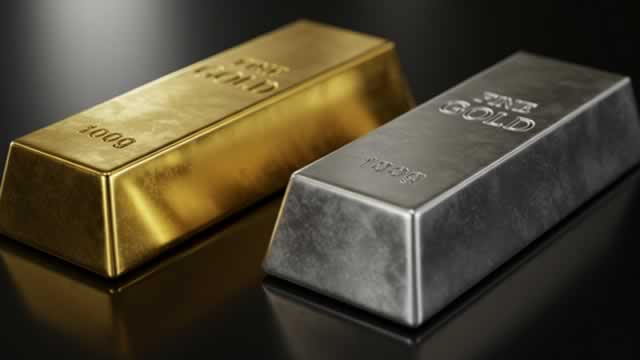
Central bank buying strengthens gold; silver to be volatile, says ING Group
Invezz· 2026-02-04 12:06
Core Viewpoint - Central bank buying is strengthening gold, while silver is expected to remain volatile due to its smaller market capitalization and sensitivity to demand changes [1][2] Group 1: Market Dynamics - Gold and silver are recovering after a significant sell-off, which was the sharpest in over a decade, with gold experiencing its largest single-day decline since 2013 and silver its largest daily drop on record [1] - The recent sell-off followed a three-month rally where gold prices surged from $4,000 per ounce to over $5,600 per ounce, and silver prices more than doubled from about $50 per ounce to nearly $120 per ounce [1] - The sell-off was triggered by President Trump's nomination of Kevin Warsh as the next Fed chair, leading to a rise in the US dollar and profit-taking by investors [1] Group 2: Recovery and Future Outlook - Following the sell-off, gold rebounded over 6% and silver rose around 8% as market stress eased, indicating that the earlier sell-off was likely overdone [1] - The medium-term outlook for gold remains positive, supported by ongoing central bank purchases and safe-haven demand, despite a slight moderation in central bank buying last year [1][2] - Silver's recovery is contingent on stabilizing ETF outflows, which have decreased for eight consecutive days, highlighting its sensitivity to market sentiment [1] Group 3: Volatility and Investment Sentiment - Silver is characterized by higher volatility compared to gold, making it more susceptible to changes in sentiment and positioning [1] - The medium-term fundamentals for silver remain unchanged, driven by industrial demand and tight physical balances, but its price movements are expected to be more erratic [1][2] - Market volatility is anticipated to remain high in the near term due to ongoing adjustments in market positioning following recent events [2]
日本股票策略:长期利率上行背景下的日本投资策略指南-Japan Equity Strategy-Investment Strategy Playbook for Japan Amid Rising Long-Term Interest Rates
2026-01-23 15:35
Summary of the Japan Equity Strategy Conference Call Industry Overview - The focus is on the Japanese equity market amid rising long-term interest rates, particularly the implications for stock selection and investment strategies in Japan [1][6][15]. Core Insights - **Negative Real Interest Rates**: Despite rising long-term interest rates, Japan's real interest rates remain negative, which is supportive of equity valuations [6][15][16]. - **Equity Valuations**: Japanese equities are considered inexpensive in a global context, with a higher yield spread compared to the US and Europe, indicating that rising rates do not necessarily lead to a bearish outlook for Japanese stocks [17][36]. - **Leverage Metrics**: Leverage-related metrics are not expected to be significant drivers of stock selection in the current environment, with a shift towards value factors becoming more effective [6][22][32]. Market Dynamics - **Long-Term Interest Rates**: The Bank of Japan (BoJ) faces challenges with rising yields, particularly in the super-long segment of the Japanese Government Bonds (JGB) market, which has seen a lack of buyers and increased selling pressure [7][8][11]. - **Fiscal Concerns**: There are concerns regarding fiscal dominance as the government considers consumption tax cuts, which could impact market confidence and bond yields [11][14][35]. - **Investment Strategy**: The current environment suggests that investors should not adopt excessive pessimism towards Japanese equities, as the fundamentals remain supportive [15][36]. Key Data Points - **JGB Yields**: As of January 20, 2026, 10-year JGB yields exceeded 2.3%, marking a significant rise [38]. - **Dividend Yields**: For over 20 years, long-term yields have remained below dividend yields, but recent trends show a slight inversion, indicating changing market dynamics [39][41]. - **Value Factor Performance**: A 1% increase in Japanese long-term rates is estimated to raise composite value factor returns by 23.83%, significantly higher than the impact of US long-term rates [33][62]. Additional Considerations - **Market Liquidity**: The lack of buyers in the super-long JGB market has led to a self-reinforcing negative cycle, raising concerns about fiscal stability and market liquidity [8][10]. - **Equity Growth Expectations**: In rising rate environments, companies with higher leverage may outperform due to enhanced growth expectations, countering the typical profit pressure from increased interest expenses [22][25][28]. - **Inflation Dynamics**: Historical data suggests that moderate inflation levels are beneficial for equities, indicating potential for improved returns if Japan transitions from deflation to a stable inflationary environment [57]. Conclusion - The Japanese equity market is positioned to navigate rising long-term interest rates without significant adverse effects, supported by negative real interest rates and attractive equity valuations. Investors are encouraged to focus on value factors and remain optimistic about the potential for growth in the Japanese market [15][36].
Bitcoin Shines as a 'Liquidity Barometer,' Not an Inflation Hedge, NYDIG Says
Yahoo Finance· 2025-10-26 12:00
Core Insights - Bitcoin is often referred to as "digital gold" and is marketed as a hedge against inflation, but recent data from NYDIG indicates that this narrative is not supported by strong evidence [1][2] - The correlation between bitcoin and inflation is found to be weak and inconsistent, challenging the traditional view that rising inflation boosts gold prices as well [2][3] Bitcoin and Gold Dynamics - Both bitcoin and gold are influenced more by real interest rates and money supply rather than inflation directly [3][4] - Bitcoin's inverse relationship with real interest rates has strengthened in recent years, suggesting its growing integration into the financial system [4] Investment Perspective - Investors are advised to reconsider the role of bitcoin, viewing it not as an inflation hedge but rather as a measure of global liquidity that responds to interest rates and capital flow [4][5] - Gold is characterized as a real-rate hedge, while bitcoin has evolved into a liquidity barometer [5]
Gold, silver tumble in biggest daily drop in years as stunning precious metals rally comes to a halt
Yahoo Finance· 2025-10-21 15:59
Core Insights - Gold prices experienced a significant decline, with futures dropping as much as 5% to around $4,141 per troy ounce, marking the largest drop since August 2020, while spot gold fell over 6%, the biggest one-day decline in 12 years [1][2] - The decline in gold prices is attributed to easing trade tensions between the US and China, a strengthening US dollar, and technical indicators suggesting overbought conditions [2] - Analysts are debating whether this decline signifies a necessary correction after a substantial rally, with some suggesting that buyers may return around $4,200 [3][4] Market Dynamics - Gold has risen 28% since mid-August, driven by central bank purchases and inflows into gold-backed ETFs, as investors seek to hedge against trade tensions and currency fluctuations [4][6] - Analysts from Bank of America maintain a bullish outlook on gold, predicting a peak of $6,000 per ounce by mid-2026, while Goldman Sachs has raised its price target for gold to $4,900 per troy ounce by the end of next year [7]
Gold tumbles in biggest daily drop in 4 years as stunning rally comes to a halt
Yahoo Finance· 2025-10-21 15:59
Core Viewpoint - Gold futures experienced a significant decline of up to 5%, marking the largest one-day drop since August 2020, as the market correction followed a substantial rally earlier in the year [1][4]. Price Movements - Gold futures fell to approximately $4,141 per troy ounce from an intraday record exceeding $4,380, while silver futures dropped as much as 7%, the largest decline since 2021 [1]. - The first major support level for gold is around $4,000, with potential buying interest expected around $4,200 [3]. Market Analysis - Analysts suggest that the recent drop may be a necessary correction after a 28% increase in gold prices since mid-August, driven by central bank purchases and inflows into gold-backed ETFs [4][6]. - The market remains bullish on gold, with Bank of America forecasting a peak of $6,000 per ounce by mid-2026, while Goldman Sachs has raised its price target for gold to $4,900 by the end of next year [7][8]. Investor Sentiment - Investors have shown resilience, buying the dip when gold briefly fell more than 1.5%, indicating ongoing confidence in the metal as a hedge against economic uncertainties [3][4]. - Geopolitical concerns, elevated inflation, and low real interest rates are contributing factors that continue to support bullish sentiment for gold [4][5].
Gold tumbles in biggest daily drop in years as stunning rally comes to a halt
Yahoo Finance· 2025-10-21 15:59
Core Viewpoint - Gold prices experienced a significant decline of 5%, marking the largest daily drop in over a decade, with futures hovering near $4,141 per troy ounce and spot gold dropping to as low as $4,082 [1][2] Group 1: Market Dynamics - The decline in gold prices is attributed to easing trade tensions between the US and China, a strengthening US dollar, and technical indicators suggesting overbought conditions [2] - Analysts suggest that the recent drop may represent a necessary correction after a substantial rally year-to-date, with gold having increased by 28% since mid-August [4][6] Group 2: Price Predictions and Investor Sentiment - Analysts from Bank of America maintain a bullish outlook on gold, predicting a peak of $6,000 per ounce by mid-2026, while Goldman Sachs has raised its price target for gold to $4,900 per troy ounce by the end of next year [7][8] - Despite the recent dip, investor sentiment remains optimistic, with some viewing the decline as a temporary setback rather than a long-term trend [3][4]
Gold tumbles in biggest daily drop in more than five years as stunning precious metals rally comes to a halt
Yahoo Finance· 2025-10-21 15:59
Core Viewpoint - Gold prices experienced a significant decline, marking the largest daily drop in years, as a rally in precious metals came to an abrupt halt [1][2]. Price Movements - Futures for gold dropped as much as 5%, nearing $4,141 per troy ounce, while spot gold fell over 6%, representing its largest one-day decline in 12 years [1]. - Silver futures also saw a decline of up to 7%, marking the largest drop in more than four years [1]. Market Conditions - The decline in gold prices coincided with easing trade tensions between the US and China, a strengthening US dollar, and technical indicators suggesting overbought conditions [2]. - Analysts noted that gold faced resistance when attempting to surpass $4,400, raising questions about whether the current slide indicates a necessary correction after a strong year-to-date performance [2]. Investor Sentiment - The first significant support level for gold is around $4,000, with potential buying interest around $4,200 [3]. - Investors previously bought the dip when gold briefly fell more than 1.5%, indicating ongoing interest despite recent price drops [3]. Economic Factors - Elevated inflation, low real interest rates, geopolitical concerns, and US government dysfunction are seen as supportive factors for gold prices [4]. - Gold has risen 28% since mid-August, driven by central bank purchases and inflows into gold-backed ETFs, as investors seek to hedge against trade tensions and currency fluctuations [4][6]. Future Projections - Analysts from Bank of America maintain a "long gold" recommendation, predicting a peak of $6,000 per ounce by mid-2026 [7]. - Goldman Sachs has raised its gold price target to $4,900 per troy ounce by the end of next year, up from a previous forecast of $4,300 [7]. - JPMorgan analysts project that gold could reach $6,000 per ounce by 2029 [8].