Regional Coordination

Search documents
视频丨十年守护换来绿色蝶变 东西协作产业协同释放长江经济带新活力
Yang Shi Xin Wen Ke Hu Duan· 2026-01-09 14:19
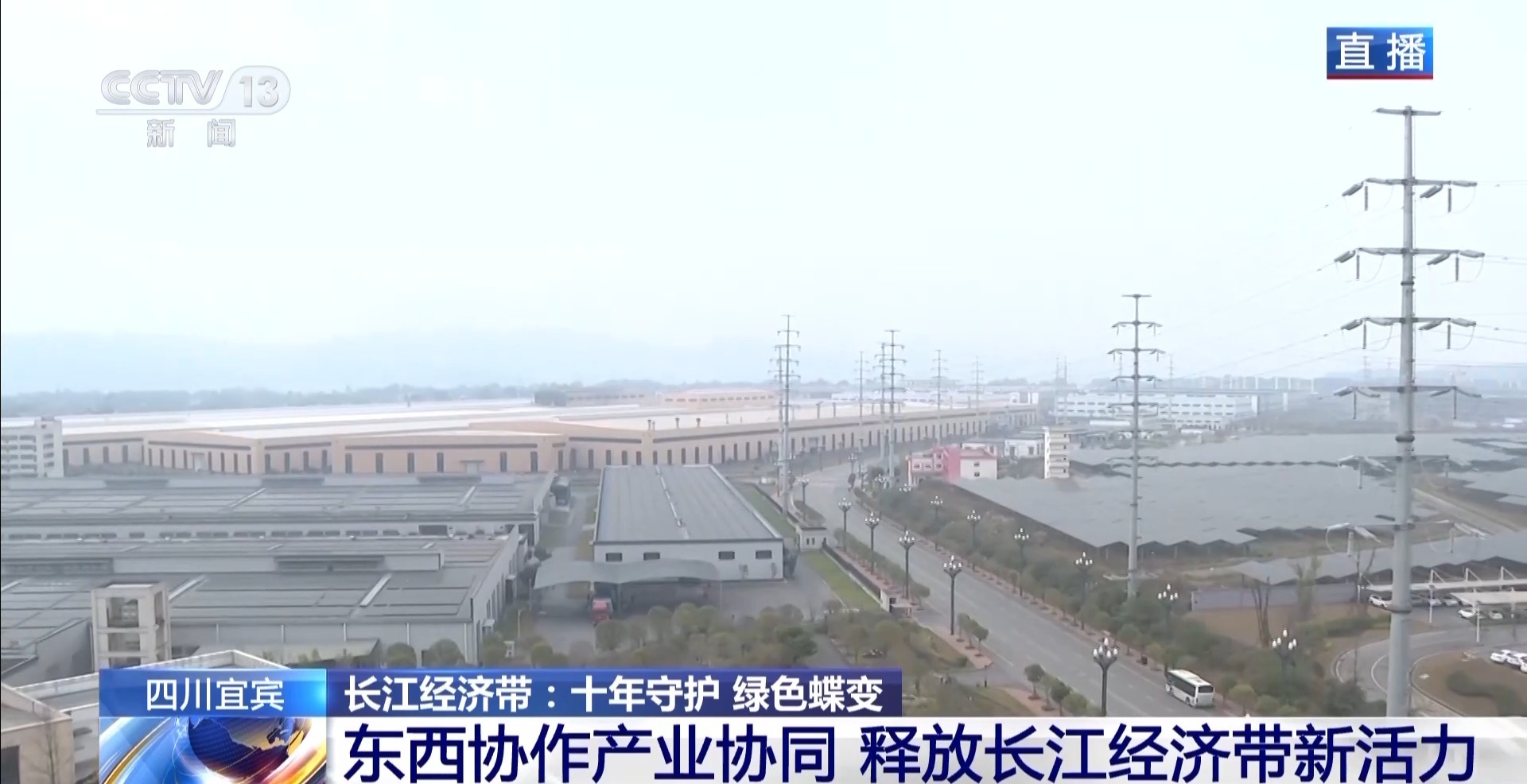
Core Viewpoint - The Yangtze River Economic Belt, covering 11 provinces and cities, accounts for about half of the national population and economic total, emphasizing ecological protection and sustainable development over large-scale exploitation [1]. Group 1: Development Strategy - The development strategy of the Yangtze River Economic Belt has been implemented for ten years, focusing on ecological preservation and sustainable growth [1]. - The "Zhechuan Industrial Cooperation Demonstration Park" in Yibin, Sichuan, has transformed the textile industry into a key component of the Yangtze River Economic Belt, promoting green and coordinated regional development [1]. Group 2: Industrial Growth - The park covers an area of 6.91 square kilometers, with approximately 5 square kilometers completed, housing 39 operational enterprises, 6 under construction, and 1 planned [3]. - The park has established itself with a focus on green development, transitioning the textile industry from labor-intensive to technology-intensive [5][9]. Group 3: Technological Advancements - The enterprises in the park utilize multi-story factory designs to optimize land use and enhance logistics efficiency, while adhering to higher environmental standards for enterprise admission [7]. - Modern production lines exceeding 10,000 square meters require only a small workforce, with innovations and collaborations with educational institutions driving further advancements [11]. Group 4: Collaborative Efforts - The protection of the Yangtze River requires upstream and downstream collaboration, as well as east-west cooperation to develop the economic belt effectively [13].

一系列重大信号释放,中国经济经济布局将迎来已经调整
Sou Hu Cai Jing· 2025-12-10 19:41
Group 1: Economic Transformation - The Chinese economy is undergoing a deep structural adjustment driven by a series of government policies and strategic directions over the past few years, focusing on areas like artificial intelligence, new energy, industrial internet, regional collaboration, and consumption upgrades [1][4][8] - The application of artificial intelligence is expanding across various industries, with the market size of China's AI industry expected to exceed 200 billion yuan in 2024, growing at around 40% [4][8] - In the new energy sector, China's installed capacity for renewable energy is projected to reach 1.2 billion kilowatts in 2024, accounting for over 60% of global new installations, indicating a significant shift in the global energy landscape [4][8] Group 2: Industrial Internet and Regional Collaboration - The industrial internet is transforming traditional manufacturing by integrating internet technologies, with the market size expected to reach approximately 200 billion yuan in 2024, involving over 500,000 participating companies [5][8] - Regional collaboration strategies, such as the Yangtze River Economic Belt and Yellow River Basin, aim to break down administrative barriers and enhance resource allocation, potentially leading to higher efficiency and greater output [6][8] Group 3: Consumption Upgrade - Consumption patterns in China are evolving, with consumers increasingly prioritizing quality, health, and personalization over mere price considerations, leading to a faster growth rate in sales of upgraded products like smart home devices and electric vehicles [7][8] - The retail sales growth of consumer goods is moderating, but the structure is improving, with upgraded goods experiencing double-digit growth rates [7][8] Group 4: Long-term Implications - The ongoing adjustments in the economy are not immediate but are part of a long-term process that may take a decade or two to fully materialize, with varying rates of change across different regions [10] - The transformation is expected to enhance individual capabilities, leading to improved overall productivity and a more vibrant domestic market [10]
山东城市观察|从“强省会”到“强都市圈”,济南都市圈加速崛起北方新增长极
Xin Lang Cai Jing· 2025-09-22 09:38
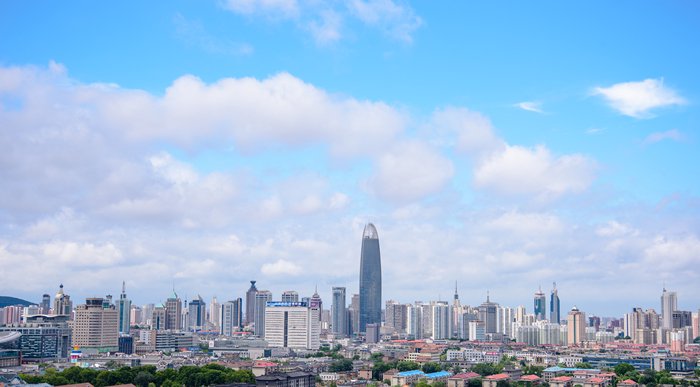
Core Viewpoint - The Jinan Metropolitan Area is accelerating its development through deep collaboration across administrative boundaries, aiming to establish a modern metropolitan area with strong international influence and regional driving force by 2035 [1][3][15] Group 1: Planning and Development - The "Jinan Metropolitan Area Land Spatial Planning (2025-2035)" has been publicly solicited for opinions, marking a new phase of accelerated construction [1] - The metropolitan area covers 6 cities and 25 counties, with a total area exceeding 22,000 square kilometers, aiming to become a dual-circulation hub and an important growth pole in the Yellow River Basin [1][3] - The planning introduces an innovative spatial development pattern of "one core, two axes, one screen, one belt, and multiple plates" to enhance regional coordination [4] Group 2: Infrastructure and Transportation - Jinan is targeting the creation of a "one-hour commuting circle" by improving its highway network and advancing high-speed rail projects [8] - The Jinan-Binzhou high-speed rail, with a design speed of 350 km/h, will strengthen economic ties between cities [8] - A new intercity bus service between Jinan and Liaocheng has been launched, enhancing connectivity between the two cities [8] Group 3: Industrial Collaboration - A mechanism for stronger counties to assist weaker ones has been established, promoting industrial development and transformation through collaborative efforts [8][9] - High-quality cooperation projects have been signed, including agreements in the biopharmaceutical sector and regional financial support [9] Group 4: Energy Cooperation - The "Liaocheng Heat into Jinan" project aims to enhance heating capacity and reduce coal consumption and CO2 emissions significantly [9] - Seven energy station projects are under construction in Jinan to improve energy infrastructure and environmental quality [9] Group 5: Institutional and Public Service Innovations - The Jinan Metropolitan Area has achieved mutual recognition of foreign investor qualifications, enhancing the ease of business registration [11] - Public services have been streamlined, allowing for quick social security transfers and access to shared digital library resources [11] Group 6: Cultural and Tourism Integration - A joint ticketing mechanism between Mount Tai and Lingyan Temple in Jinan has been introduced to promote cross-regional tourism [12] - Collaborative efforts in cultural tourism are enhancing consumer experiences and driving economic activity in the region [12][13] Group 7: Future Outlook - The Jinan Metropolitan Area is set to strengthen collaborative development mechanisms, break down administrative barriers, and promote the free flow of resources [15] - The area aims to build a modern industrial system through deep integration of innovation, industry, and supply chains, while enhancing ecological protection [15]