
Rent

Search documents
X @The Economist
The Economist· 2026-03-15 02:00
Rents in Hong Kong are rising, even at the bottom of the housing heap. This is happening for two main reasons https://t.co/bMqd2sdiybIllustration: Dongyan Xu https://t.co/nF7NEcTv8O ...
X @The Economist
The Economist· 2026-03-14 09:20
Limited supply and high military wages are allowing landlords to push up rent close to the Ukrainian front lines https://t.co/pmLVjpQTaN ...
X @The Economist
The Economist· 2026-03-14 04:00
Rents in Hong Kong are rising, even at the bottom of the housing heap. This is happening for two main reasons https://t.co/aX8gxhcw1g ...
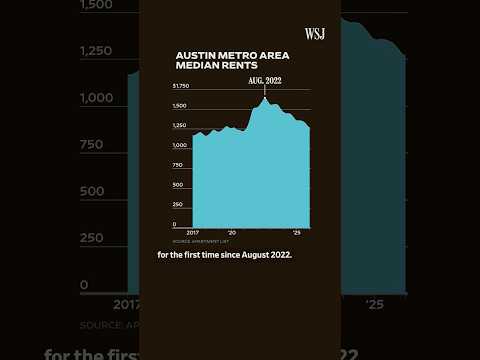
Why Austin's Cheap Rent Era May Be Ending
The Wall Street Journal· 2026-03-05 17:43
After 2 and 1/2 years of rent decreases, Austin, Texas is about to get expensive again. Analysts are projecting that the city's rents are going to stay flat or even increase this year for the first time since August 2022. And now investors are flocking back to the market.This marks a major turning point for the Texas capital. During the pandemic, remote workers and businesses flocked to the region because of low taxes and relaxed business regulation. Starting in 2020, the city added tens of thousands of new ...

深圳写字楼市场报告2025年第四季度
莱坊· 2026-02-05 07:25
Investment Rating - The report indicates a cautious recovery in the Shenzhen Grade-A office market, with a focus on owner-occupiers driving the investment activity [7][24][26]. Core Insights - The Shenzhen Grade-A office market is experiencing a dual mode of "net absorption recovery under continuous rental pressure," with net absorption reaching 163,123 square meters in Q4 2025, the highest quarterly level for the year [5][18]. - The average effective rent has decreased to RMB 145.6 per square meter per month, reflecting a 1.9% quarter-on-quarter decline, although the rate of decline has slowed compared to previous quarters [5][12]. - The overall transaction volume for the year reached RMB 8.67 billion, indicating a robust recovery from a low valuation base [26]. Supply and Demand Summary - The total supply is expected to exceed 1.04 million square meters, with significant new projects in Qianhai and Shenzhen Headquarters Base [6][23]. - The market is characterized by a temporary interruption in supply due to project delays, leading to a net absorption of 314,000 square meters for the year, which is at the lower end of the past decade's range [18]. - The demand is primarily driven by the TMT sector (47.9%) and financial services (25.9%), with relocation transactions dominating at 54.2% of total activity [19][21][22]. Rental Trends - The average net effective rent for Grade-A offices has shown a continuous decline, with landlords shifting pricing strategies towards targeted incentives to attract tenants [12][15]. - The rental decline has been more pronounced in secondary markets, with Qianhai and Bao'an experiencing the largest decreases of 3.4% and 3.2% respectively [13][17]. - The rental trends indicate a potential for volatility but overall weakness, with future stability dependent on a shift from relocation-driven demand to more sustainable expansion-driven leasing [15][22]. Investment Market Overview - The investment market remains cautious, with owner-occupiers leading the activity, as evidenced by a notable transaction where Fuyao Technology acquired the entire Runrong Building for approximately RMB 710 million [24][25]. - The overall sentiment in the investment market is defensive, with a focus on price discounts and uncertainties in rental structures and cash flows [25].
X @The Economist
The Economist· 2026-01-28 16:00
By our measure, most are unaffordable. These charts reveal how much you’d need to earn to rent alone in the continent’s big cities https://t.co/ICPOejRTna https://t.co/suIX2miKo6 ...
X @The Economist
The Economist· 2026-01-27 21:40
Affording an apartment on a single salary can be tricky. These charts show which European cities are the least affordable for solo renters https://t.co/nZR6ENHcj6 ...
X @The Economist
The Economist· 2026-01-26 18:00
By our measure, most are unaffordable. These charts reveal how much you’d need to earn to rent alone in the continent’s big cities https://t.co/nZR6ENHcj6 ...
Inside the DSCR Loan Boom — and Why Some Landlords Are in Trouble
Business Insider· 2025-12-03 09:35
Core Insights - The rise of Debt-Service Coverage Ratio (DSCR) loans has allowed small and midsize real estate investors to acquire properties with less scrutiny from lenders, focusing on the property's cash flow rather than the borrower's creditworthiness [1][3][4] - Serious delinquencies on DSCR loans have increased significantly, indicating financial strain among landlords amid a rental market slowdown, although these troubled loans represent a small fraction of the total [2][9] - Despite the challenges, the demand for DSCR loans remains strong, with substantial amounts being secured by landlords, suggesting ongoing interest in real estate investment [14][15] Group 1: DSCR Loans Overview - DSCR loans enable landlords to purchase rental properties by demonstrating that the expected rental income will cover mortgage payments and basic expenses, rather than relying on personal financial history [1][5] - The popularity of DSCR loans surged during the pandemic, with over $44 billion in loans issued in 2022, up from $5.6 billion in 2019, driven by low borrowing rates and rising home prices [7][8] - Institutional investors have increasingly embraced DSCR loans, contributing to the growth of this asset class [8][14] Group 2: Market Dynamics and Challenges - The percentage of DSCR loans in serious delinquency has nearly quadrupled since mid-2022, rising from around 0.5% to just under 2% of securitized loans, signaling potential risks in the market [9][10] - Landlords who refinanced traditional loans into DSCR loans faced higher borrowing rates, which required higher rents to cover payments, leading to over-leveraged positions for some [11][12] - The rental market is experiencing slower growth, with single-family rents increasing by only 1.4% year over year as of August, the lowest in 15 years, which may impact landlords' cash flow [16] Group 3: Future Outlook - The ongoing preference for renting over buying could benefit landlords, but stagnant rent growth poses challenges for maintaining profitability [16][17] - As the market adjusts to higher interest rates and changing economic conditions, the landscape for DSCR loans and real estate investment may continue to evolve, with potential opportunities for first-time buyers as distressed assets become available [16][17]

Mom-and-pop landlords' bet on rising rents is coming back to bite them
Yahoo Finance· 2025-12-03 09:11
Core Insights - The small and midsize players dominate the investor purchases in the real estate market, particularly through DSCR loans, despite concerns over larger Wall Street-backed firms [1][3] - The DSCR loan market has seen significant growth, with over $44 billion in loans issued in 2022, up from $5.6 billion in 2019, driven by increased demand from landlords and institutional investors [6][12] - Serious delinquencies on DSCR loans have nearly quadrupled in the past three years, indicating financial strain among landlords amid a rental market slowdown [2][8] DSCR Loans Overview - DSCR loans allow landlords to purchase rental properties based on the expected rental income rather than personal creditworthiness, making them attractive for small investors [3][4] - The loans focus on the ratio of expected rental income to mortgage payments and basic expenses, with a preferred coverage ratio above 1 [5][10] - The popularity of DSCR loans surged during the pandemic as borrowing rates dropped, enabling many to capitalize on rising home prices [6][7] Market Dynamics - The Federal Reserve's interest rate hikes and slowing rent growth have created challenges for landlords who took on higher-rate loans expecting continued rent increases [7][14] - The percentage of DSCR loans in serious delinquency has increased, with nearly 2% of securitized DSCR loans facing significant payment issues as of August 2023 [8][11] - Despite the rise in delinquencies, DSCR loans continue to be issued, with over $32.8 billion in loans tied to nearly 89,000 rental homes in 2023 [12][14] Future Outlook - The rental market is experiencing a shift, with a growing preference for renting over buying, which could benefit landlords if rent growth stabilizes [14][15] - However, stagnant rent growth poses risks for landlords, as single-family rents were up only 1.4% year over year in August 2023, marking a 15-year low [14] - The overall health of the DSCR loan market is viewed as a natural adjustment phase, with some experts suggesting that the increase in delinquencies is part of the industry's growing pains [13][14]