SaaS(软件即服务)

Search documents
“龙虾”会吞噬SaaS公司吗
经济观察报· 2026-03-18 14:23
Core Viewpoint - The current business model of SaaS companies must undergo transformation, but this does not imply that the value of "enterprise services" itself is disappearing [5]. Group 1: Impact of AI on SaaS - NVIDIA's CEO Huang Renxun introduced a new narrative about AI agents, specifically an open-source AI called "OpenClaw," suggesting that companies may no longer need numerous SaaS subscriptions, as AI can automate processes across various systems [2][4]. - Huang's assertion raises concerns about the traditional SaaS business model, particularly for companies like Salesforce, as AI agents could potentially replace the need for human-driven software solutions [2][4]. - The shift from traditional software to AI-driven solutions indicates a fundamental change in how businesses will operate, moving from a model of providing tools to delivering results [5]. Group 2: New Business Models - The future of traditional SaaS companies may involve transitioning from software subscription models to outcome-based or token-sharing models, where AI agents deliver direct business value [6]. - The emergence of AI agents is expected to unlock previously unmet long-tail demands, reshaping the value chain in the enterprise service sector [6][7]. - The concept of One-Person Companies (OPC) is gaining traction, suggesting that in the AI era, individuals can collaborate with AI agents to achieve complete business processes, fundamentally altering organizational structures [5][6]. Group 3: Strategic Considerations for SaaS Companies - Companies in the enterprise service sector must focus on defining their "AI-native service logic" rather than clinging to outdated software interfaces [7]. - The evolution of AI agents like "OpenClaw" is not just about replacing old architectures but also about creating fertile ground for new business opportunities [7].


霍尔木兹海峡持续关闭,但市场为何稳得住?
华尔街见闻· 2026-03-13 09:25
Core Viewpoint - Despite the closure of the Strait of Hormuz and escalating tensions in the Middle East, oil prices and the U.S. stock market have not experienced expected volatility, with current oil prices around $100 per barrel, significantly lower than historical crisis levels [3][4]. Oil Price Dynamics - The primary reasons for the restrained oil price increase include: 1. Low starting prices and ample inventory, with global oil stocks at a five-year high before the conflict, keeping prices manageable despite a nearly 40% surge in nine trading days [7]. 2. Market expectations of a quick resolution to the conflict, as indicated by futures market data showing that traders anticipate supply disruptions to last only a few weeks [7]. 3. Macro interventions, such as the release of 400 million barrels from reserves by the IEA and its member countries, which help stabilize oil prices despite a daily loss of 15 million barrels in shipping capacity [7]. Historical Context of Oil Crises - Historical oil crises have seen higher absolute prices, and current major economies have significantly reduced their dependence on oil for heating and power generation [11]. - Estimates suggest that oil futures may need to rise by an additional $40 to $50 to trigger an economic recession comparable to past crises, indicating a macroeconomic buffer that allows conflict parties to maintain their positions [12]. Impact on Global Economies - The price increase is causing more severe disruptions in developing economies, particularly in Asia, which face compounded risks from soaring oil prices and fuel shortages [14]. U.S. Stock Market Behavior - The U.S. stock market has shown resilience, largely due to the country's status as the largest oil producer, which insulates it from direct impacts of the energy crisis [15]. - An unusual market phenomenon has emerged where defensive sectors, typically seen as safe havens during geopolitical conflicts, have underperformed, with healthcare and consumer staples ETFs declining by approximately 5% and 6%, respectively [17]. Sector Rotation Insights - The rotation within the stock market is influenced by geographic exposure, with companies generating a higher percentage of revenue from North America showing better resilience against geopolitical shocks [22]. - Investors are shifting focus towards companies with strong growth potential rather than merely low valuations, favoring firms in the pharmaceutical sector that demonstrate solid earnings growth [22]. Cautionary Notes - Analysts warn that the current stability in asset prices relies on the fragile assumption that all parties desire a swift end to the conflict, with potential disruptions from unforeseen events capable of drastically altering market conditions [23][24].

深演智能第三次冲击资本市场,新瓶装旧酒
Bei Jing Shang Bao· 2025-12-08 13:15
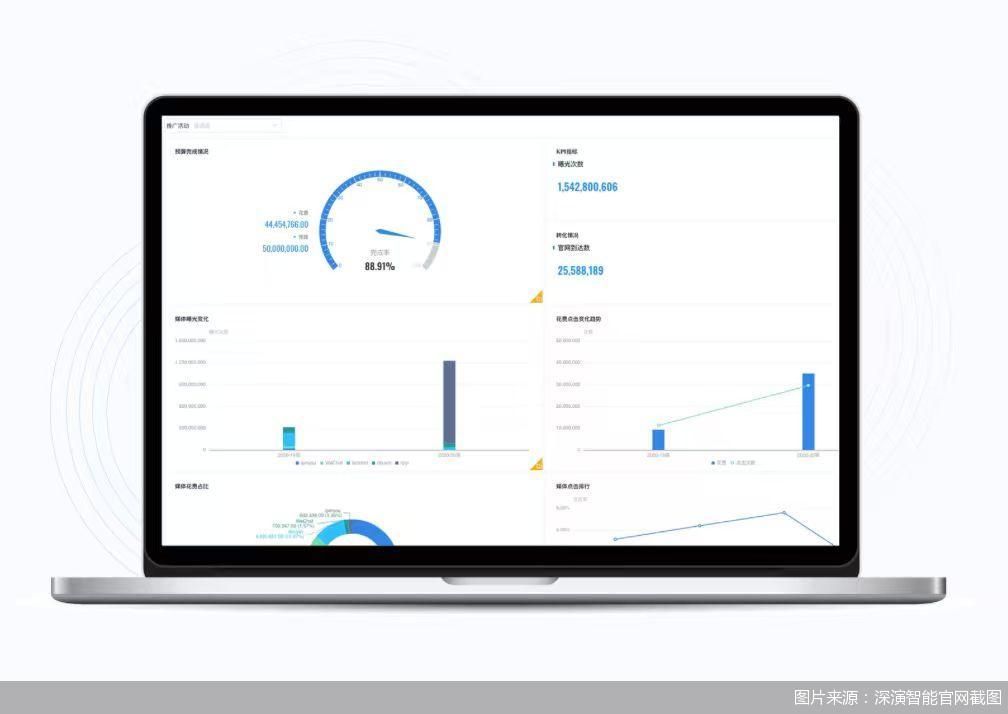
Core Viewpoint - DeepYuan Intelligence, previously known as PinYou Interactive, is transitioning to the Hong Kong Stock Exchange in the first half of 2025, having submitted an updated prospectus. The company is a leader in AI applications for marketing and sales decision-making in China, with projected revenue of 540 million yuan and a market share of 2.6% in 2024 [2][8]. Revenue Structure - The revenue structure of DeepYuan Intelligence remains largely unchanged since its previous application for the ChiNext board, with revenue sources primarily from intelligent advertising and data management. The reliance on intelligent advertising is increasing, with its revenue share rising to 93.3% in the first half of 2025 [2][4]. - Revenue figures for 2022 to 2024 are 543 million yuan, 611 million yuan, and 538 million yuan, with 82.1%, 80.5%, and 85.5% of revenue coming from intelligent advertising, respectively [4]. Profitability and Financial Performance - The gross margin of DeepYuan Intelligence has declined compared to its 2022 application for the ChiNext board. The adjusted net profit is projected to be 13.367 million yuan in the first half of 2025 [2]. - The revenue from intelligent data management decreased from 29.169 million yuan in the first half of 2024 to 18.445 million yuan in the first half of 2025, primarily due to budget cuts from clients, especially in the traditional automotive sector [5]. Client and Supplier Dynamics - DeepYuan Intelligence serves 89 Fortune Global 500 companies across various industries, which enhances its credibility in the capital market. However, there is a complex relationship where some clients are also suppliers, leading to potential conflicts of interest [7]. - The company has reported that 70.2% of its revenue in the first half of 2025 came from its top five clients, indicating a high dependency on a limited client base [10]. Market Position and Competition - In the marketing and sales decision AI application market, DeepYuan Intelligence holds a leading position with a market share of 2.6%, while its closest competitors have shares of 2.4%, 2.1%, 1.9%, and 1.8% [8]. - The competitive landscape includes major players in the industry, with DeepYuan Intelligence focusing on providing services rather than competing directly with larger platforms like Tencent and Alibaba [8][9]. IPO Journey - This marks DeepYuan Intelligence's third attempt at an IPO, having previously applied for listings on the New Third Board and the ChiNext board. The company emphasizes the intense market competition it faces [9].
John Deere(DE) - 2025 Q2 - Earnings Call Transcript
2025-05-15 15:00
Financial Data and Key Metrics Changes - Net sales and revenues decreased by 16% to $12.763 billion, while net sales for equipment operations fell by 18% to $11.171 billion [13] - Net income attributable to Deere and Company was $1.804 billion, or $6.64 per diluted share [13] - Equipment operations margin was 18.8%, demonstrating strong execution despite challenging market dynamics [12] Business Line Data and Key Metrics Changes - Production and Precision Ag segment net sales were down 21% to $5.230 billion, with an operating profit of $1.148 billion and a 22% operating margin [14] - Small Ag and Turf segment net sales decreased by 6% to $2.994 billion, with an operating profit of approximately $574 million and a 19.2% operating margin [15] - Construction and Forestry segment net sales declined by 23% to $2.947 billion, with an operating profit of $379 million and a 12.9% operating margin [24] Market Data and Key Metrics Changes - Large ag equipment industry sales in the U.S. and Canada are expected to decline by approximately 30% due to high interest rates and trade uncertainty [17] - Small ag and turf industry demand in the U.S. and Canada is projected to decrease by 10-15% [18] - European industry sales are expected to decrease by about 5%, while South American sales forecasts remain flat [19][20] Company Strategy and Development Direction - The company remains committed to its Smart Industrial strategy, focusing on innovation and advanced technology integration [10][12] - Plans to invest $20 billion in the U.S. over the next decade to enhance product development and manufacturing capabilities [11] - The company aims to navigate uncertain markets while maintaining investments in value-creating products and solutions [7] Management's Comments on Operating Environment and Future Outlook - Management highlighted the importance of customer relationships and maintaining focus during periods of volatility [5][6] - The outlook for fiscal year 2025 has been broadened due to a fluid tariff environment, with net income guidance now between $4.75 billion and $5.5 billion [30] - Management expressed optimism about future opportunities despite current market challenges [12][68] Other Important Information - The company is actively working on mitigating tariff impacts, with an expected pre-tax tariff impact of over $500 million for fiscal year 2025 [38] - The company has seen stabilization in the North American ag market, which may provide reassurance if uncertainties abate [50] Q&A Session Questions and Answers Question: Can you discuss the SaaS models and the Precision Essential product line? - The company has three main SaaS offerings: precision digital technologies, sense and ag technologies, and forthcoming autonomous solutions [74][75] - The Precision Essentials product line includes core elements of precision agriculture, offered at a lower upfront cost with an annual license [74] Question: What is the implied profitability for the PPA segment in the second half? - The tariff impact and a mix impact from North American large ag being down are significant factors affecting profitability [82] Question: How will the early order program pricing change in 2026? - The structure of early order programs will remain similar, providing price flexibility as tariffs evolve [87] Question: Can you clarify the price-cost conversation and potential pricing strategies for 2026? - The company is reviewing list prices for 2026 to ensure they can continue to push pricing ahead of inflation [99]

石基信息盘中涨停后震荡下跌 此前披露拟购买控股公司股权,标的曾尝试北交所IPO
Mei Ri Jing Ji Xin Wen· 2025-04-25 11:29
Core Viewpoint - The company Shiji Information plans to acquire an additional 13.5% stake in its subsidiary, Sihon Software, through a share issuance at a price of 6.54 yuan per share, aiming to enhance control and operational efficiency in the retail digitalization sector [1][2]. Group 1: Acquisition Details - Shiji Information currently holds 66.23% of Sihon Software and the acquisition will strengthen its control over the subsidiary [2]. - The transaction involves three parties: Shanghai Yunxin Venture Capital, Zhang Yuhong, and Zhang Wei, who will sell their combined 13.5% stake [1]. - The acquisition is expected to improve Shiji Information's profitability and risk resilience [2]. Group 2: Sihon Software's Background - Sihon Software focuses on providing digital solutions for small and medium-sized retail businesses, facilitating their transformation into smart stores [2]. - The company has previously attempted to go public on the Beijing Stock Exchange and the ChiNext but failed both times due to various challenges [3][4]. Group 3: Financial Performance - In the first three quarters of 2024, Sihon Software reported revenues of 242 million yuan, a decrease of 10.79% year-on-year, and a net profit of 81 million yuan, down 9.90% [5]. - Shiji Information's overall revenue for the same period was 2.015 billion yuan, with a net profit of 158,830 yuan [5]. - The company is facing significant losses, with a projected net loss of 140 million to 220 million yuan for 2024, representing an increase in loss compared to the previous year [6]. Group 4: Reasons for Performance Decline - The decline in profitability is attributed to increased R&D expenditures and higher amortization of intangible assets, leading to significant operational losses [7]. - The company is undergoing a critical transformation towards globalization and platformization, which requires substantial investment in product development [7].