Self - learning

Search documents
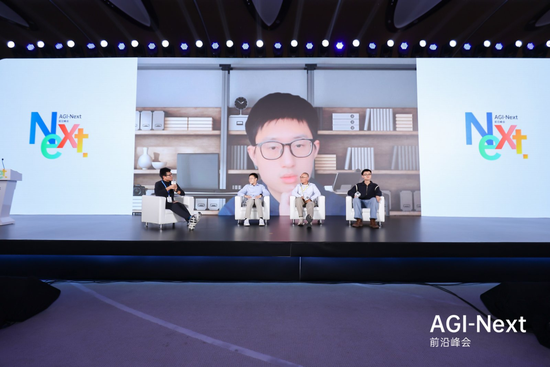
姚顺雨对着唐杰杨植麟林俊旸贴大脸开讲!基模四杰中关村论英雄
Xin Lang Cai Jing· 2026-01-10 14:39
Core Insights - The AGI-Next summit organized by Tsinghua University gathered key figures in the AI industry, showcasing high-density technical discussions and insights into the future of AI development [1][3]. Group 1: AI Development Trends - The evolution of large models has transitioned from simple tasks to complex reasoning and real-world applications, with expectations for significant advancements by 2025 [8][10]. - The current trajectory of AI models reflects a growth pattern similar to human cognitive development, moving from basic tasks to more sophisticated reasoning and real-world problem-solving [9][12]. - The introduction of Reinforcement Learning with Verified Rewards (RLVR) aims to enhance model capabilities by allowing autonomous exploration and feedback acquisition [15][16]. Group 2: Challenges and Opportunities - The challenge of generalization remains a core issue, with models needing to improve their ability to apply learned knowledge to new, unseen problems [11][13]. - The integration of coding and reasoning capabilities into AI models represents a significant shift from conversational AI to task-oriented AI, marking a pivotal change in the industry [19][20]. - The need for a hybrid approach combining API and GUI interactions is emphasized to enhance AI's operational capabilities in real-world environments [25][26]. Group 3: Future Directions - The focus on multi-modal capabilities, memory structures, and self-reflective abilities in AI models is seen as essential for achieving higher levels of intelligence and functionality [31][34][36]. - The exploration of new paradigms for scaling AI capabilities beyond traditional methods is crucial for future advancements in the field [49][50]. - The development of models that can autonomously define their learning tasks and reward functions is highlighted as a potential breakthrough in AI research [49][50]. Group 4: Competitive Landscape - Chinese open-source models are gaining significant traction and influence in the global AI landscape, with expectations for continued growth and leadership in the field [28][73]. - The advancements in AI capabilities, particularly in coding and reasoning, position Chinese models competitively against leading international counterparts [72][73].