Sim-to-Real gap

Search documents
Sim,Real还是World Model?具身智能数据的“困境”与解法
具身智能之心· 2025-10-01 12:48
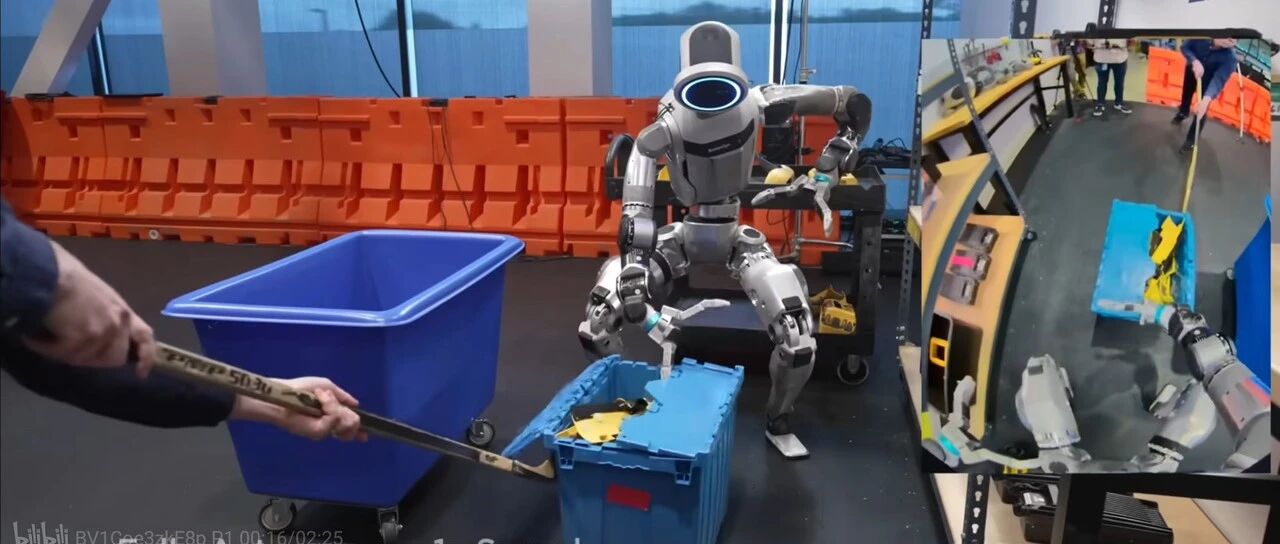
Core Viewpoint - The article discusses the ongoing debate in the field of embodied intelligence regarding the reliance on simulation efficiency versus real-world data, and the potential of world models to bridge the gap between these two approaches [2]. Group 1: Understanding Sim-to-Real Gap - The "Sim-to-Real gap" refers to the discrepancies between simulated environments and real-world scenarios, primarily due to incomplete simulations that fail to accurately replicate visual and physical details [3]. - Key factors contributing to this gap include limited simulation data, which weakens model generalization and restricts adaptability to specific scenarios [3]. - To narrow this gap, optimization around data is essential, including designing virtual and real data ratios based on model requirements and leveraging AIGC to generate diverse and realistic data [3]. Group 2: Data Utilization in Embodied Intelligence - There is a consensus among experts that while real data is ideal for training, simulation data plays a crucial role in the foundational model iteration and testing phases [15][18]. - Real data is often limited in the field of embodied intelligence, making it challenging to meet the high expectations for diverse task performance [15]. - Simulation data is currently seen as a necessary resource, especially for testing algorithms and avoiding potential damages in real-world experiments [15][18]. Group 3: Future Directions and Challenges - The development of world models is viewed as a promising direction for the future of embodied intelligence, with potential applications in autonomous driving and other areas [25]. - Key challenges include the need for automated generation of simulation data and enhancing the diversity of actions within simulation environments [21][23]. - The integration of new modalities, such as force and touch, into world models is suggested as a valuable research direction [23]. Group 4: Reaction to Boston Dynamics Technology - Experts acknowledge the advanced capabilities of Boston Dynamics robots, particularly their smooth execution of complex tasks involving full-body movements [26][30]. - The discussion highlights the importance of hardware and data in achieving high performance in embodied intelligence systems, with Boston Dynamics setting a benchmark in the field [30]. - The need for further exploration in motion control techniques to enhance the fluidity of robotic movements is emphasized [32].