具身智能之心

Search documents
视觉VLA看不到的“那堵墙”,被发现了......
具身智能之心· 2026-01-27 07:24
Core Viewpoint - The article discusses the limitations of current visual perception technologies in robotics, particularly in challenging environments with transparent, reflective, or extreme lighting conditions, and introduces a new model, LingBot-Depth, that enhances spatial perception capabilities without requiring hardware changes [2][3][20]. Group 1: Challenges in Visual Perception - Pure visual solutions struggle in real-world scenarios due to reliance on RGB images for spatial relationships, which fail in many environments [3]. - Transparent materials pose significant challenges for visual perception, as they lack fixed textures and rely on environmental reflections and refractions [6]. - Reflective surfaces and extreme lighting conditions can destroy the texture features that pure visual systems depend on, leading to perception failures [8]. Group 2: Depth Perception Limitations - RGB-D cameras provide depth perception but are limited by hardware constraints, resulting in unclear depth measurements [9][11]. - Traditional stereo matching algorithms can be misled by false textures created by reflections, leading to significant data loss in depth perception [13][15]. - Depth perception failures occur in areas with texture loss, transparent materials, or highly reflective surfaces, resulting in empty or erroneous data outputs [15]. Group 3: Introduction of LingBot-Depth - LingBot-Depth is a high-precision spatial perception model developed by Ant Group's Lingbo Technology, designed to improve depth output quality in complex material scenarios [20][22]. - The model employs "Masked Depth Modeling" to learn spatial information by treating missing depth data as valuable learning signals rather than noise [23][33]. - LingBot-Depth utilizes a large-scale dataset of over 10 million RGB-D samples, combining synthetic and real-world data to enhance model training [26][30]. Group 4: Model Capabilities and Performance - LingBot-Depth excels in depth completion, single-task depth estimation, and stereo matching enhancement, outperforming existing models in various datasets [37][40]. - The model demonstrates robustness in extreme environments, maintaining high accuracy in depth perception for transparent and reflective objects [45][47]. - It provides significant improvements in spatial understanding for various high-level visual tasks, enhancing decision-making and interaction capabilities in complex environments [49]. Group 5: Accessibility and Future Prospects - LingBot-Depth is designed for easy integration with existing RGB-D cameras, requiring no hardware modifications, thus lowering the barrier for adoption [50]. - The model's development represents a significant step towards addressing hardware limitations through algorithmic advancements, with expectations for further innovations in the field [52][53].


分层 RL-MPC 框架:让机器人 “懂几何、善接触” 的灵巧操作新范式
具身智能之心· 2026-01-27 03:00
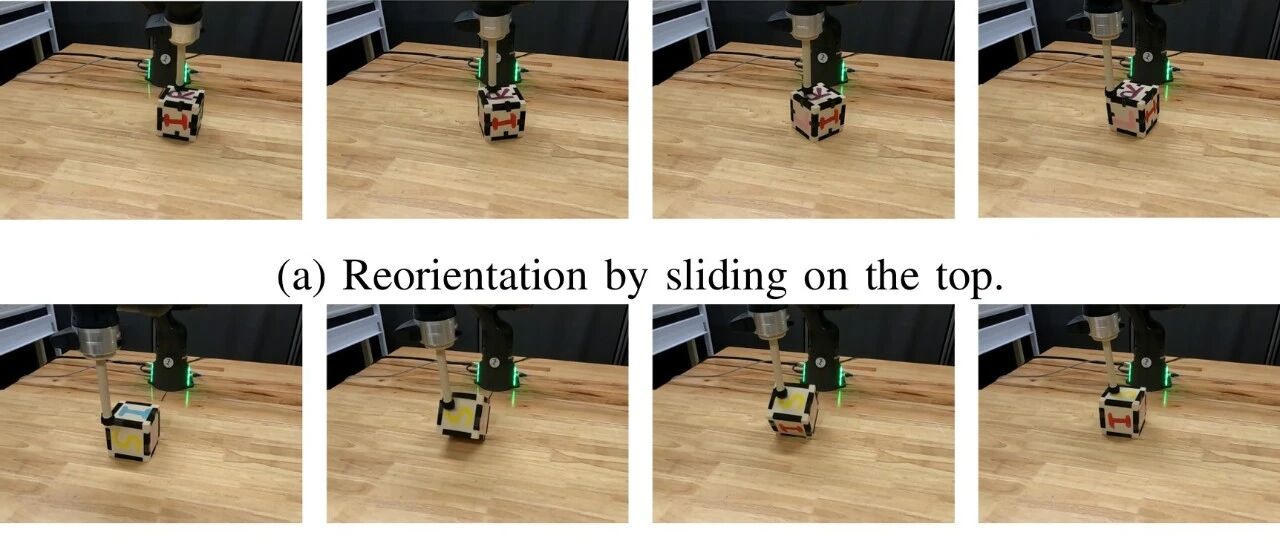
Core Insights - The article discusses the challenges faced by robots in dexterous manipulation, highlighting issues such as high data requirements, difficulties in virtual-to-real transfer, and weak generalization capabilities [2] - A new hierarchical RL-MPC framework inspired by human operation logic is proposed, achieving nearly 100% task success rate, 10 times data efficiency improvement, and zero-shot virtual-to-real transfer [2][4] Challenges in Traditional Dexterous Manipulation - Traditional approaches struggle to balance learning efficiency, robustness, and generalization, with three main issues identified: 1. End-to-end vision methods require massive data for learning non-smooth contact dynamics, leading to low efficiency in long-term tasks [3] 2. Motion strategies face significant gaps in performance across different object geometries and scenes [3] 3. Traditional model control lacks flexibility and adaptability in open environments with diverse object shapes [3] Innovations in the Hierarchical RL-MPC Framework - The framework's core innovation is the "Contact Intention," which serves as an interface connecting high-level decision-making and low-level execution, structured into three layers and two modules [4][6] - High-level RL focuses on predicting contact intentions based on scene observations, while low-level MPC specializes in executing contact dynamics [4][12] High-Level RL Strategy - The high-level RL strategy employs a three-component observation space that includes geometry, target, and collision information, enhancing the strategy's environmental awareness [7] - The framework uses indirect prediction of MPC weights to define sub-goals, improving learning efficiency by allowing flexible switching between sub-goals [8] - A dual-branch network architecture balances local details and global context, optimizing feature extraction for both [9] Low-Level MPC Execution - The low-level MPC utilizes a complementary free model predictive control (ComFree-MPC) to ensure stability and adaptability in contact actions, operating at a high frequency of 100Hz [12][16] - The optimization objectives are designed to strictly adhere to high-level intentions, ensuring quick responses to disturbances [17] Experimental Validation - The framework demonstrated strong performance in two non-prehensile tasks, achieving a success rate of 97.34% for unseen objects in a pushing task and 100% in 3D redirection tasks [20][24] - The data efficiency of the framework significantly outperformed end-to-end strategies, requiring only 15,000 RL decision steps to achieve 100% success rate compared to 600,000 steps for traditional methods [26] Robustness and Virtual-to-Real Transfer - The framework exhibited high robustness against various disturbances, maintaining performance while traditional methods failed under similar conditions [25][29] - The strategy was successfully deployed on real robots without any fine-tuning, achieving high success rates across various objects [30] Limitations and Future Directions - The framework currently relies on accurate pose estimation, which can lead to failures in real-world scenarios, indicating a need for integrated perception-planning-control designs [36] - There are challenges in scalability with multiple end-effectors, suggesting future work should focus on optimizing contact intention representation [36] Conclusion - The hierarchical RL-MPC framework represents a significant advancement in dexterous manipulation, effectively combining decision-making flexibility with execution stability, paving the way for broader applications in robotics [37]
AAAI 2026杰出论文奖 | ReconVLA:具身智能领域首次获得
具身智能之心· 2026-01-27 03:00
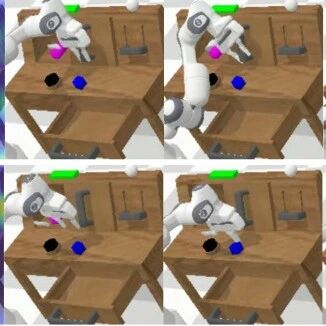
Core Insights - The article emphasizes that embodied intelligence, particularly in the context of Vision-Language-Action (VLA) models, is becoming a central issue in AI research, as evidenced by the recognition of the ReconVLA model at AAAI [3][5]. Group 1: ReconVLA Model Overview - ReconVLA is introduced as a reconstructive Vision-Language-Action model aimed at improving the precision of visual attention in robotic tasks [12][11]. - The model's core idea is to focus on the ability to reconstruct the target area rather than explicitly indicating where to look, thereby enhancing the model's attention to key objects [12][14]. - The model incorporates a dual-branch framework: one for action prediction and another for visual reconstruction, which allows for implicit supervision through reconstruction loss [17][18]. Group 2: Performance and Results - ReconVLA has shown significant improvements in success rates across various tasks, achieving a success rate of 95.6% in the ABC→D task and 98.0% in the ABCD→D long-range task [23][26]. - In challenging long-range tasks like "stack block," ReconVLA achieved a success rate of 79.5%, outperforming baseline models [27]. - The model demonstrated strong generalization capabilities, maintaining over 40% success rates in real robot experiments with unseen objects [27]. Group 3: Training and Data - The training process for ReconVLA involved a large-scale dataset with over 100,000 interaction trajectories and approximately 2 million images, enhancing its visual reconstruction and generalization abilities [25][21]. - The model's pre-training did not rely on action labels, which significantly improved its performance in visual reconstruction and implicit grounding [21][31]. Group 4: Implications for Future Research - The article concludes that the core contribution of ReconVLA is not in introducing complex structures but in addressing the fundamental question of whether robots truly understand the world they are observing [32][34]. - The approach of using reconstructive implicit supervision is expected to advance embodied intelligence from experience-driven system design to a more robust and scalable paradigm for general intelligence research [34].
国内首篇!融合语言模型的多模态触觉传感器
具身智能之心· 2026-01-26 03:42
Core Insights - The article discusses the development of a biomimetic multimodal tactile sensor named SuperTac, inspired by the complex sensory systems of pigeons, which enhances robotic perception to human-like levels [1][2][4] Group 1: Biomimetic Logic - SuperTac's hardware design is inspired by the biological features of pigeons, which possess one of the most complex sensory systems in nature [7] - The sensor integrates a miniaturized multispectral imaging module that covers a wide frequency range from ultraviolet (390 nm) to mid-infrared (5.5–14.0 μm), allowing robots to analyze thermal radiation and fluorescence in a single interaction [10][11] Group 2: Core Mechanism - The core competitive advantage of SuperTac lies in its 1 mm thick light field modulation multi-layer sensing skin, which utilizes a conductive layer made of transparent PEDOT:PSS to achieve high-precision material classification [14] - The sensor's design allows for different electrical feedback when in contact with various materials, enabling accurate material recognition and proximity detection within 15 cm [14][16] Group 3: Tactile Language Model - The DOVE model, with 8.5 billion parameters, employs a hierarchical architecture to align physical signals with natural language, enhancing the system's understanding and reasoning capabilities [19] - DOVE processes complex tactile inputs by integrating pre-trained models to extract deep feature vectors from tactile characteristics such as color, texture, and temperature [19][20] Group 4: Application Scenarios - SuperTac and DOVE enable a transition from basic physical perception to advanced semantic cognition, allowing robots to interact in a more human-like manner [22] - In practical applications, DOVE can convert sensory impressions into human-understandable language, accurately identifying objects and suggesting actions based on tactile feedback [24][26] Group 5: Future Directions - The research outlines promising future directions for robotic tactile sensing, including sensor miniaturization and low-power chip development to enhance operational flexibility and thermal stability [28]
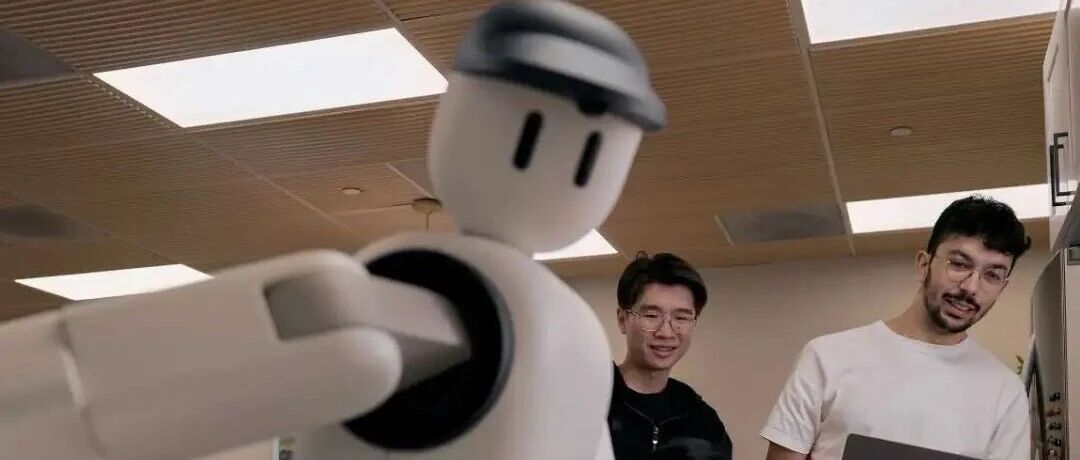
对话智元机器人首席科学家罗剑岚|未来机器人在真实世界大规模部署将会面临哪些挑战?
具身智能之心· 2026-01-26 03:42
Core Insights - The article discusses the advancements in embodied intelligence, particularly focusing on the SOP (Scalable Online Post-training) system developed by Zhiyuan, which allows robots to learn and adapt in real-world environments continuously [2][19]. Group 1: SOP System Architecture - The SOP system utilizes an Actor-Learner architecture, enabling robots to learn from mistakes collectively, with updates processed in the cloud and distributed back to all robots within minutes [6][7]. - The system addresses three core technical challenges: low-latency online feedback, diverse and consistent distributed data, and maintaining the generalization of the model across various tasks [8][9]. Group 2: Impact on Data Collection and Training - The SOP framework shifts the reliance from traditional data collection centers to real-world data generated by deployed robots, enhancing the model's capabilities over time [13][14]. - As the number of deployed robots increases, the data generated will improve the pre-trained models, transitioning the role of data centers to a supportive function rather than the primary source of training data [15][16]. Group 3: Commercial Implications - The deployment of SOP is expected to change the sales model from one-time hardware sales to ongoing service capabilities, similar to software updates in vehicles [20][21]. - The SOP system is anticipated to facilitate the entry of robots into various sectors, including industrial manufacturing and commercial services, with a focus on achieving high performance and adaptability [22][23]. Group 4: Future Developments and Goals - By 2026, the company aims to significantly scale the deployment of robots in real-world settings, with expectations of a substantial increase in operational robots [26][28]. - The SOP system is seen as a critical step towards enabling robots to transition from static capabilities to dynamic, evolving entities, ultimately enhancing human-robot collaboration [32].

别再想靠“demo”糊弄,NVIDIA联合光轮智能正式开启具身评测驱动的时代!
具身智能之心· 2026-01-26 01:04
Core Insights - The rapid development of models like VLA has led to the emergence of various testing benchmarks, but the growth in model capabilities has outpaced existing benchmarks, highlighting a significant issue in the embodied intelligence field: the lack of a standardized measurement system for assessing true model capabilities [2] - The reliance on experience and intuition for R&D decisions has become a systemic risk in the transition from research to engineering in embodied intelligence [2] Group 1: Challenges in the Embodied Intelligence Field - The field is transitioning from storytelling to productivity, showcasing advancements like medical robots and mobile operation robots, but there are underlying industry consensus issues regarding the limitations of models and their ability to generalize across different tasks and environments [3][4] - The need for comprehensive generalization capabilities is emphasized, as robots must perform well in varied scenarios without being overly specialized, which is currently a challenge for many companies in the industry [5][6] Group 2: Testing and Evaluation Issues - The current testing landscape lacks standardized, scalable evaluation methods, leading to a reliance on limited testing scenarios that do not adequately measure model capabilities [10][12] - The industry consensus is that real-world testing cannot be scaled effectively, making simulation the only viable path for evaluation [13][21] Group 3: The Need for Industrial-Grade Evaluation Systems - There is a pressing need for a unified, scalable, and deterministic evaluation infrastructure that can support industrial-level decision-making in embodied intelligence [21][22] - NVIDIA and Lightwheel Intelligence's collaboration to create the Isaac Lab-Arena represents a significant step towards establishing a scalable evaluation framework in the field [23][24] Group 4: Features of the Isaac Lab-Arena - The Arena allows for flexible task creation and evaluation, moving away from rigid scripts to a modular approach that can adapt to various tasks and environments [26][28] - It supports a diverse range of tasks and environments, enabling systematic measurement of model capabilities rather than isolated demonstrations [66][70] Group 5: RoboFinals as an Industrial Benchmark - Lightwheel Intelligence has developed RoboFinals, an industrial-grade evaluation platform with over 250 tasks that systematically expose model failure modes and capability boundaries [63][71] - RoboFinals has been integrated into the workflows of leading model teams, providing continuous evaluation signals rather than just a ranking system [71][73] Group 6: The Importance of Collaboration - The partnership between NVIDIA and Lightwheel Intelligence is notable for its depth, as it combines strengths in simulation technology and real-world application experience to create a comprehensive evaluation system [42][56] - The collaboration aims to ensure that the evaluation infrastructure is not only technically sound but also aligned with the practical needs of model teams and robotic companies [54][56]


快来围观机器人上班!RoCo Challenge @ AAAI 2026 线下赛直播开启!
具身智能之心· 2026-01-25 04:26
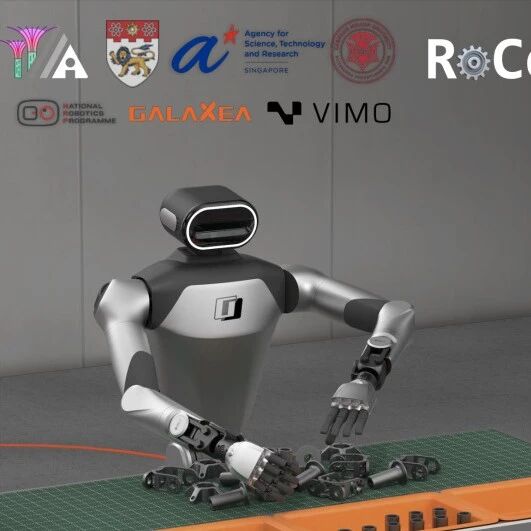
Core Insights - RoCo Challenge @ AAAI 2026 focuses on robotic collaborative assembling for human-centered manufacturing, emphasizing the need for robots to perform high-quality assembly tasks while understanding human progress and recovering from common human errors [2] Group 1: Challenge Overview - The challenge is organized by Nanyang Technological University (NTU) and the Agency for Science, Technology and Research (A*STAR) in Singapore, targeting the industrial manufacturing sector [2] - The core task revolves around gearbox assembly, simulating the evolution of workspaces over time through diverse initial states [2] - The benchmark evaluates key capabilities required in real production environments, including adaptive collaboration, state understanding, and error-aware autonomy [2] Group 2: Competition Format - The competition features three core scenarios: 1. Assembly from Scratch: Completing the assembly process from an empty workspace 2. Resume from Partial State: Continuing assembly from a partially completed state while correctly understanding the current status 3. Error Detection and Recovery: Identifying and correcting human-like errors before proceeding with the assembly task [2] Group 3: Participating Teams - Six teams have advanced to the final stage of the competition: - Real2RealGap from Singapore Institute of Technology - K-Lee-gends from Gwangju Institute of Science and Technology - IIGroup from Tsinghua University - RoboCola from Beihang University - HD-Robo from HiDream.ai - Show Me Robot from National University of Singapore [5] Group 4: Event Details - The offline competition will take place on January 24-25, 2026, with a live broadcast scheduled for January 25 at 13:30 on bilingual platforms [5][7] - The competition homepage and contact information are provided for further details [7]
人形机器人成本相差近3倍,国内的供应链正在吊打海外
具身智能之心· 2026-01-25 03:00
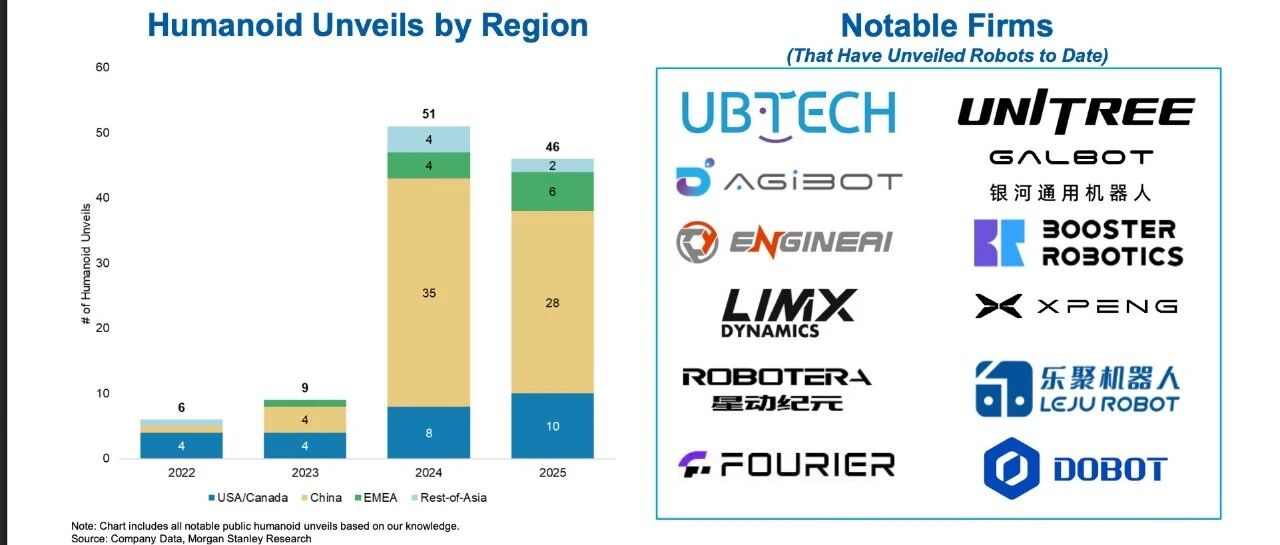
Group 1 - The core viewpoint is that China's supply chain has a significant cost advantage in the humanoid robot sector, with material costs for a single robot projected at $46,000 in 2025, compared to $131,000 if sourced from non-Chinese supply chains, resulting in a nearly threefold difference [2] - Morgan Stanley predicts that by 2034, as global annual sales exceed one million units, the cost of humanoid robots using the Chinese supply chain will further decrease to $16,000, enhancing the cost-performance advantage [2] - A breakdown of core component costs reveals substantial differences, with actuators costing $22,000 in the Chinese supply chain versus $58,000 elsewhere, highlighting the competitive edge in key components [3] Group 2 - China has emerged as a dominant force in the global humanoid robot market, with Chinese companies accounting for a significant share of new robot releases [5] - In 2024, 51 types of humanoid robots were released globally, with 35 originating from Chinese companies; in 2025, 46 robots were released, with 28 from China [9] - Notable Chinese companies in the humanoid robot sector include UBTECH, Yushutech, Galaxy General Robotics, Xiaopeng Robotics, and Leju Robotics, which are leading in technology implementation and supply chain integration [8]
VLA任务的成本已经越来越低了~
具身智能之心· 2026-01-24 01:05
Core Viewpoint - The cost of robotic arms has significantly decreased, with prices now below 5000 yuan, making them more accessible for various VLA tasks [1][2]. Group 1: Cost Trends - Two years ago, the price for a single robotic arm for VLA tasks was over 30,000 yuan, which has now dropped to around 15,000 yuan last year, and currently below 5000 yuan [2]. - This price reduction allows for easier implementation of various VLA tasks such as pi0 and pi0.5 [2]. Group 2: Challenges for Beginners - Many beginners face difficulties in replicating VLA tasks due to high costs and lack of effective data collection methods [3][4]. - A significant amount of time is wasted by beginners on troubleshooting and overcoming obstacles in data collection and model training [4]. Group 3: Educational Initiatives - The company has developed a comprehensive course aimed at addressing the challenges faced by beginners in the VLA field, covering hardware, data collection, algorithms, and practical experiments [9][14]. - The course includes a free SO-100 robotic arm for participants, enhancing hands-on learning [19]. Group 4: Target Audience and Requirements - The course is designed for individuals seeking practical experience in VLA, including students and professionals transitioning from traditional fields [26]. - Participants are expected to have a foundational knowledge of Python and Pytorch, as well as experience with real machines and data collection [26].
Sunday的ACT-1分享!未使用任何机器人本体数据训练的VLA,解决超长时程任务
具身智能之心· 2026-01-24 01:05
Core Viewpoint - The article discusses the advancements in embodied intelligence, particularly focusing on the company Sunday and its developments in robotic technology, emphasizing the importance of data collection and the innovative approaches to overcome existing limitations in the robotics field [1][6][29]. Group 1: Technological Advancements - Sunday has made significant progress in demonstrating ultra-long-range home tasks with its ACT-1 robot, showcasing capabilities in mobile manipulation without relying on remote operation data [5][20]. - The company has developed a "Skill Capture Glove" that aligns the geometric structure and sensor layout of human hands with robotic hands, allowing for effective data transfer and training [11][12]. - The ACT-1 model can perform complex tasks such as folding socks and operating a home espresso machine, highlighting advancements in dexterity and manipulation [26][27]. Group 2: Data Collection and Challenges - The robotics industry faces a critical data bottleneck, lacking a comprehensive real-world operational data corpus comparable to that of large language models [6][7]. - Sunday aims to bridge the "embodiment mismatch" by ensuring that robots can learn from human data, leveraging the vast amount of daily activity data from the global population [7][12]. - The company has accumulated approximately 10 million examples in its data library by the end of 2025, with 2,000 data collection units actively gathering data [8]. Group 3: Innovative Solutions - Sunday has developed a "Skill Transform" system that aligns raw observational data, effectively eliminating human-specific features and generating high-fidelity training sets for robots [12]. - The company emphasizes a full-stack approach to data collection, processing, and model training, significantly enhancing efficiency in data utilization [29]. - The design of the Memo robot incorporates compliant control and passive stability, ensuring safety and adaptability in various environments [32][33].