Space photovoltaic

Search documents
马斯克“点名”!太空光伏概念再度走强!大面积涨停
Sou Hu Cai Jing· 2026-02-03 10:12
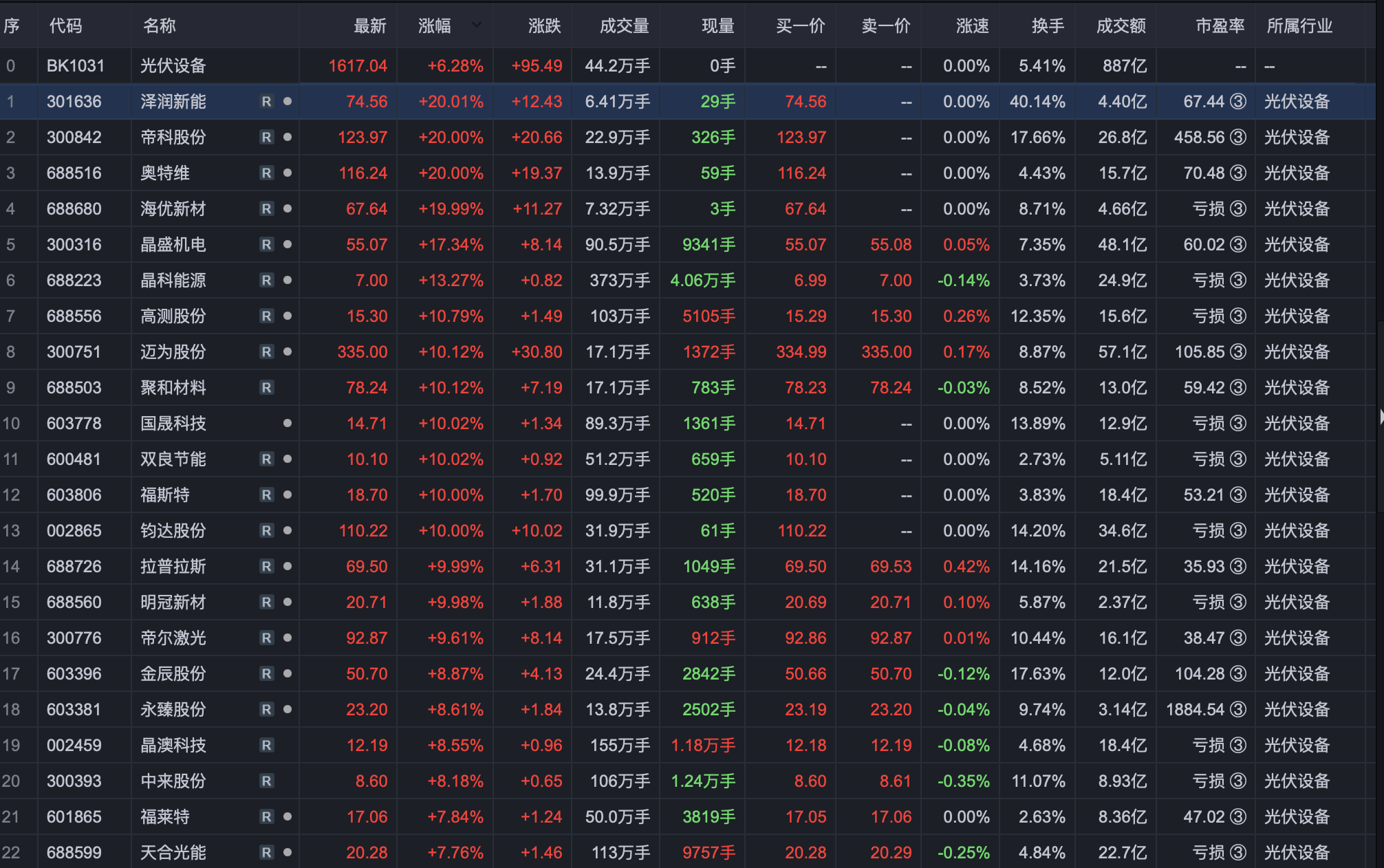
Core Viewpoint - The space photovoltaic sector is gaining momentum, driven by Elon Musk's support and significant developments in the industry, including SpaceX's acquisition of xAI and plans for deploying data centers in space [1][3]. Group 1: Market Performance - As of February 3, the photovoltaic ETF (515790.SH) closed at 1.122, with a remarkable increase of 6.05%. Several stocks, including Maiwei Co. (300751.SZ) and Junda Co. (002865.SZ), hit the daily limit, while Longi Green Energy (601012.SH) and Tongwei Co. (600438.SH) saw gains exceeding 4.5% [1]. - The photovoltaic equipment sector index (BK1031) rose by 6.28%, indicating strong market interest and activity [2]. Group 2: Industry Outlook - Institutions like Guosheng Securities and CICC express optimism about the future of space photovoltaics, predicting it could become a trillion-yuan market within five years due to increasing global demand for space energy and the restructuring of supply chains [3]. - CICC's research highlights that space photovoltaics are central to upgrading power systems in commercial aerospace, with a focus on low-orbit satellite applications, suggesting a new phase of technological advancement and industrial delivery [4]. Group 3: Technological Insights - The main photovoltaic technologies for space applications include silicon solar cells, gallium arsenide solar cells, and perovskite technology. Gallium arsenide offers superior performance but at a higher cost, while perovskite technology is noted for its low material costs and high power-to-weight ratio [5][6]. - Current market trends indicate that gallium arsenide technology dominates, but emerging technologies like HJT silicon and perovskite are expected to gain significant market share, with perovskite potentially achieving over 50% penetration [7]. Group 4: Company Developments - Companies such as Shanghai Port and Junda Co. are actively investing in space photovoltaic technologies, with Shanghai Port focusing on perovskite solar cells and Junda Co. securing contracts for related supplies [7]. - Major players like Trina Solar and JA Solar are also expanding their capabilities in crystalline silicon and perovskite technologies, indicating a robust competitive landscape in the photovoltaic sector [7].






【每日收评】三大指数探底回升集体收红,半导体芯片板块全线爆发,太空光伏概念午后反弹
Xin Lang Cai Jing· 2026-01-27 08:54
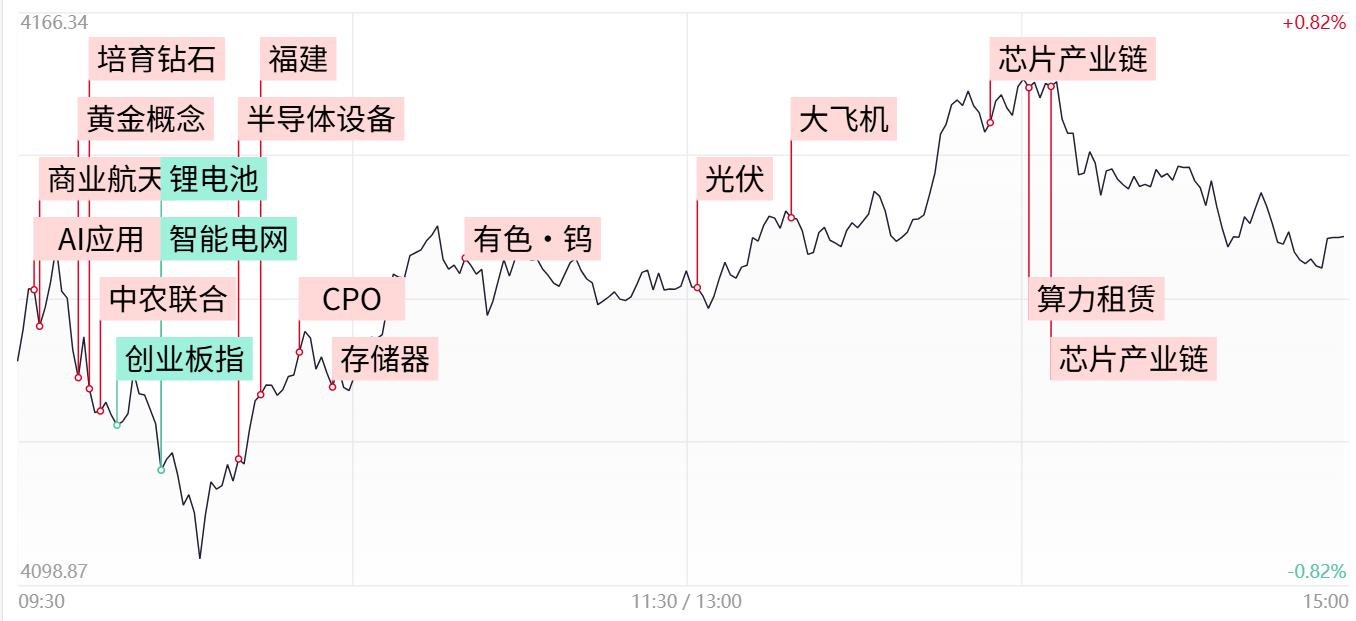
Market Overview - The market showed signs of recovery with all three major indices closing in the green, and the ChiNext Index rising over 1% at one point. The total trading volume in the Shanghai and Shenzhen markets was 2.89 trillion yuan, a decrease of 353.2 billion yuan from the previous trading day. Despite this, over 3,400 stocks declined across the market [1]. Sector Performance - The semiconductor sector experienced significant gains, with companies like Huahong Semiconductor reaching historical highs. Other stocks such as Dongxin Technology and Shengke Communication also hit their daily limits. According to Omdia, the Chinese semiconductor market is expected to grow by 31.26% by Q4 2026, reaching a market size of $546.5 billion. The AI innovation is driving structural changes in the market, particularly in memory chips, which are becoming essential for AI infrastructure [2][3]. CPO Concept - The CPO concept saw active performance, with Yuanjie Technology rising over 10% to reach a historical high. The market for optical modules is projected to exceed $18 billion by 2025, driven by AI-related data center and transmission network construction [3]. Space Photovoltaics - The space photovoltaic sector rebounded in the afternoon, with companies like Yujing Technology and Saiwu Technology achieving multiple consecutive gains. Elon Musk announced plans for significant satellite deployments, which could lead to substantial growth in the space photovoltaic market [4]. Individual Stocks - In individual stock performance, precious metals continued to show strength, with several companies achieving multiple consecutive gains. The commercial aerospace sector also saw some recovery, with stocks like Electric Science and Technology hitting their daily limits. AI applications and computing power leasing sectors were also active, indicating a rotation among previous hot sectors [6]. Future Market Analysis - The market demonstrated strong support above the 20-day moving average, indicating a potential upward trend. However, the market remains in a volatile state, with significant stock declines despite overall index gains. Key sectors to watch include commercial aerospace, AI applications, precious metals, semiconductors, and computing hardware, with a focus on identifying core stocks for potential low-entry opportunities [7]. Industry Insights - Industry experts predict that the memory chip shortage will persist for at least two to three years, primarily due to the high demand from AI infrastructure. Major memory manufacturers are working to increase production, but it will take at least two years to meet the growing demand [10].