TOD城市发展模式

Search documents
轨道交通“第四城” 又有了新目标
Mei Ri Jing Ji Xin Wen· 2025-12-16 06:45
Core Insights - Chengdu is transitioning from a "metro era" to a "city evolution" phase, leveraging its rail transit system to drive industrial upgrades and urban development [1][13] - The opening of Line 30 marks a significant advancement in smart rail technology, enhancing operational efficiency and safety through autonomous systems [2][10] - Chengdu's rail transit industry has evolved into a comprehensive ecosystem, with over 570 related enterprises contributing to a high local supply rate [3][4] Industry Development - Chengdu's rail transit has expanded its operational mileage to 758.245 kilometers, solidifying its position as the fourth-largest rail transit city in China [1] - The city is fostering a "smart" rail environment, with Line 30 being the first in the country to implement "regular full automation + train-to-train communication" technology [2] - The rail transit sector has achieved a local supply rate exceeding 75%, with a focus on self-sufficiency across various core systems [3] Urban Planning and Development - The TOD (Transit-Oriented Development) model is being implemented to optimize urban space and enhance industrial growth, positioning rail stations as new urban hubs [6][8] - Chengdu aims to become a TOD model city, integrating mixed-use developments around transit stations to facilitate population and industry clustering [7][8] - The city is rethinking urban competition by redefining the role of rail stations as multifunctional urban centers, enhancing connectivity and quality of life [7][11] Economic Impact - The rail transit system is seen as a catalyst for economic growth, facilitating the efficient flow of capital, talent, and technology within the Chengdu metropolitan area [10][12] - The integration of rail transit with urban development is expected to create a vibrant, livable city that attracts businesses and residents alike [9][13] - Chengdu's rail network is not just a transportation system but a strategic engine for urban transformation, influencing spatial layouts and economic dynamics [13]
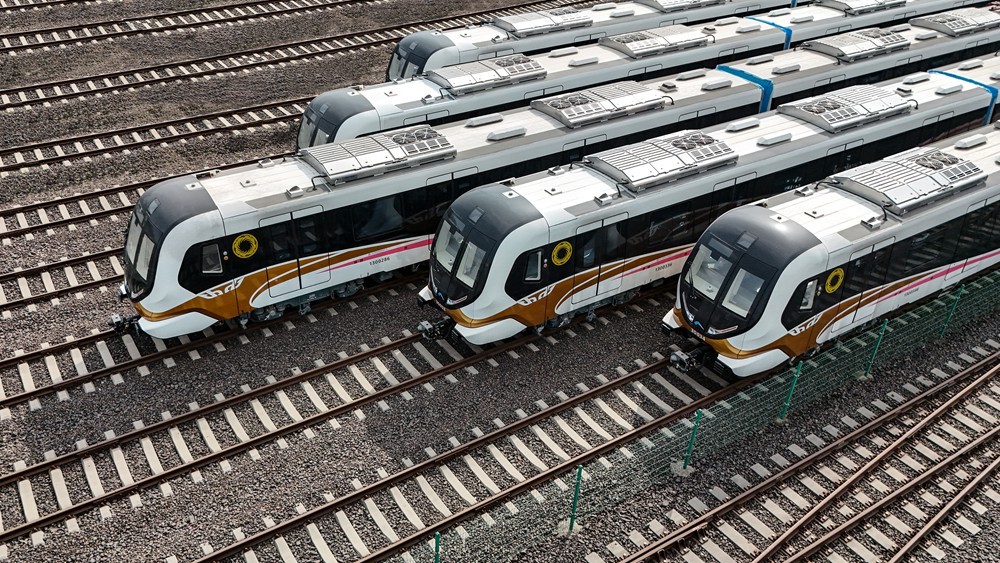
轨道交通“第四城”,又有了新目标
Mei Ri Jing Ji Xin Wen· 2025-12-16 06:38
Core Insights - Chengdu's metro system is evolving from merely transporting people to becoming a catalyst for urban development, industry upgrade, and talent attraction as it approaches a milestone year in 2025 [2] - The city is transitioning from a phase of expansion to one focused on value creation, with a goal to enhance the modern transportation system as part of high-quality urban development [2] Group 1: Metro Expansion and Technology - Chengdu's metro system will add 87.5 kilometers of new lines this year, bringing the total operational length to 758.245 kilometers, solidifying its position as the fourth-largest metro system in China [2] - The newly opened Line 30 is the first in the country to utilize "conventional full automation + train-to-train communication" technology, enhancing operational efficiency and safety [5] - The introduction of train-to-train communication has optimized ground equipment, making the system more integrated and reliable [5] Group 2: Industry Ecosystem and Innovation - Chengdu is becoming a global testing ground for rail transit technology, with over 570 companies in the rail transit supply chain, achieving a local supply rate exceeding 75% [7] - The collaboration model among leading companies like CRRC Chengdu has fostered a robust ecosystem, with 188 local firms acting as stable suppliers [9] - The rail transit industry cluster in Chengdu is projected to exceed 400 billion, driven by a comprehensive approach to manufacturing and innovation [9] Group 3: Urban Development and TOD Model - Chengdu is adopting a Transit-Oriented Development (TOD) model, which integrates urban planning with rail transit to enhance city functionality and attract industries [10][12] - The TOD approach emphasizes high-density station development, mixed-use land, and collaborative transportation and land development, creating a sustainable urban environment [12] - The city aims to optimize urban space through the TOD model, positioning itself as a leading example in urban governance and development [14][16] Group 4: Economic and Social Impact - The metro system is seen as a vital artery for the urban economy, facilitating the efficient flow of capital, talent, and technology [18][20] - Chengdu's rail network is reshaping the spatial layout of industries, promoting a new growth logic that clusters around transit lines [21] - The ongoing development of the metro system is expected to enhance Chengdu's attractiveness as a modern international city, contributing to its evolution into a globally influential urban center [22][25]