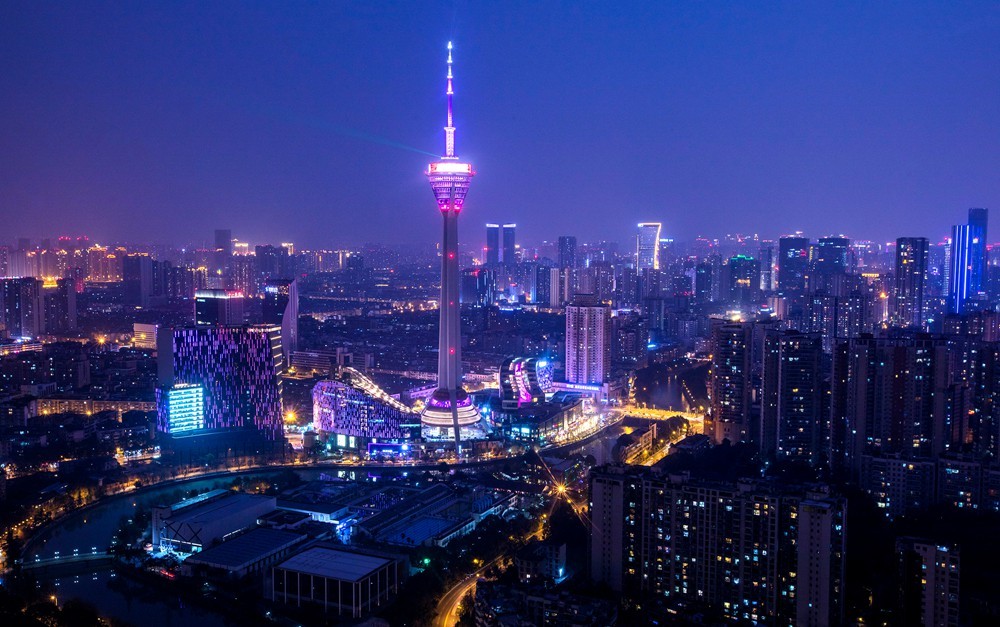
氢能源市域列车

Search documents
轨道交通“第四城” 又有了新目标
Mei Ri Jing Ji Xin Wen· 2025-12-16 06:45
Core Insights - Chengdu is transitioning from a "metro era" to a "city evolution" phase, leveraging its rail transit system to drive industrial upgrades and urban development [1][13] - The opening of Line 30 marks a significant advancement in smart rail technology, enhancing operational efficiency and safety through autonomous systems [2][10] - Chengdu's rail transit industry has evolved into a comprehensive ecosystem, with over 570 related enterprises contributing to a high local supply rate [3][4] Industry Development - Chengdu's rail transit has expanded its operational mileage to 758.245 kilometers, solidifying its position as the fourth-largest rail transit city in China [1] - The city is fostering a "smart" rail environment, with Line 30 being the first in the country to implement "regular full automation + train-to-train communication" technology [2] - The rail transit sector has achieved a local supply rate exceeding 75%, with a focus on self-sufficiency across various core systems [3] Urban Planning and Development - The TOD (Transit-Oriented Development) model is being implemented to optimize urban space and enhance industrial growth, positioning rail stations as new urban hubs [6][8] - Chengdu aims to become a TOD model city, integrating mixed-use developments around transit stations to facilitate population and industry clustering [7][8] - The city is rethinking urban competition by redefining the role of rail stations as multifunctional urban centers, enhancing connectivity and quality of life [7][11] Economic Impact - The rail transit system is seen as a catalyst for economic growth, facilitating the efficient flow of capital, talent, and technology within the Chengdu metropolitan area [10][12] - The integration of rail transit with urban development is expected to create a vibrant, livable city that attracts businesses and residents alike [9][13] - Chengdu's rail network is not just a transportation system but a strategic engine for urban transformation, influencing spatial layouts and economic dynamics [13]
乘势而上 开启奋进“十五五”的序章——写在省委十二届八次全会召开之际
Si Chuan Ri Bao· 2025-11-27 00:27
Group 1 - The article emphasizes the significant progress made in Sichuan's economic development during the "14th Five-Year Plan" period, highlighting its rise to the fifth largest economy in China with a total economic output surpassing 6 trillion yuan [1][5][8] - Sichuan's strategic industries have shown remarkable growth, with the value added of strategic emerging industries accounting for 30% of the industrial output, and the service sector contributing over 60% to economic growth [8][9] - The province has successfully established several major industrial clusters, including three trillion-yuan-level industries in electronic information, food and textiles, and energy and chemicals [8][9] Group 2 - Sichuan has made significant advancements in infrastructure, including the completion of over 2,000 kilometers of new highways and the opening of high-speed rail lines, enhancing connectivity within the region [19][20] - The province's foreign direct investment (FDI) reached $14.61 billion, marking a 28.1% increase compared to the previous five-year period, maintaining its position as the leader in FDI among central and western regions [22][23] - Sichuan's agricultural output remains robust, with grain production consistently exceeding 70 billion jin, and the province being a leading producer of various agricultural products [9][10] Group 3 - The article outlines the importance of technological innovation in driving Sichuan's industrial transformation, with a focus on developing a modern industrial system supported by high-quality manufacturing [11][12][16] - Sichuan has established a comprehensive innovation ecosystem, with numerous research institutions and universities contributing to technological advancements and the commercialization of research outcomes [12][17] - The province is actively promoting the integration of technology and industry, with initiatives aimed at enhancing digital transformation and smart manufacturing across various sectors [16][17] Group 4 - The article highlights Sichuan's commitment to ecological sustainability, with significant improvements in environmental quality and water management practices [10][28] - Sichuan's strategic location and infrastructure developments are positioned to enhance its role in national and international trade, contributing to the broader economic landscape [18][21] - The province's cultural and tourism sectors are being developed to enhance its attractiveness as a destination, with initiatives aimed at preserving cultural heritage and promoting tourism [29][30]
中车长客加快技术研发应用——为轨道交通注入氢动力
Jing Ji Ri Bao· 2025-11-03 22:08
Core Viewpoint - The launch of the "Hydrogen Spring" tourist train marks a significant advancement in clean energy transportation, showcasing hydrogen as a viable power source for rail transit, thus opening a new avenue in the rail transportation equipment industry [1][2]. Group 1: Product Features and Innovations - The "Hydrogen Spring" train utilizes a hydrogen fuel cell power system, achieving zero carbon emissions and operating without overhead lines [1]. - The train features a hydrogen storage system designed to perform reliably in low-temperature environments, employing a metal matrix with carbon fiber winding structure and a three-tier safety protection system [1]. - The train's body measures 15.85 meters per segment and can be flexibly configured from one to six segments, allowing for seamless transitions between commuting and tourism modes [1]. Group 2: Technological Development and Achievements - The development of the "Hydrogen Spring" train is a result of long-term technological accumulation in clean power by the company, aligning with national "dual carbon" goals [2]. - The first hydrogen energy urban train was launched in December 2022, featuring a four-car configuration and achieving a full-load test speed of 160 km/h with an energy consumption of only 5 kWh per kilometer [2]. - The hydrogen energy urban train integrates advanced high-speed rail technology with urban rail operation modes, providing a reliable solution for the green and intelligent development of urban transportation [2]. Group 3: Market Potential and Environmental Impact - Hydrogen energy urban trains offer advantages such as environmental friendliness, simple operation, short construction cycles, and low fixed investment, facilitating interconnectivity within urban areas [2]. - There are currently 40,000 kilometers of non-electrified railways in China relying on diesel locomotives, facing challenges of environmental pollution and unsustainable energy use [2]. - Hydrogen-powered rail vehicles can be directly applied to existing lines without the need for electrification, significantly reducing the costs of new line construction and representing a breakthrough for the green transformation of rail transportation [2]. Group 4: Future Developments - The company is developing a hydrogen-powered train capable of speeds up to 250 km/h, expected to be completed by the end of this year, which will fill a gap in high-speed hydrogen transportation and support future advancements in this area [3].

四川:“十四五”时期工业“家底”更加殷实
Zhong Guo Xin Wen Wang· 2025-10-09 10:51
Core Insights - The Sichuan provincial government has reported significant achievements in building a modern industrial system during the "14th Five-Year Plan" period, highlighting steady growth in industrial scale and quality [1] Industrial Growth - Since the beginning of the "14th Five-Year Plan," the annual growth rate of Sichuan's industrial added value has been 6.6%, increasing from 1.34 trillion yuan to 1.79 trillion yuan, elevating its national ranking to 7th [3] - Research and development (R&D) investment and intensity in large-scale industrial enterprises have increased by 50% and 41%, respectively [3] - Revenue from green and low-carbon industries now accounts for 28.2% of the total industrial revenue, with energy consumption per unit of added value decreasing by 15.4% compared to the end of the "13th Five-Year Plan" [3] Industry Transformation - Sichuan is focusing on upgrading traditional industries while simultaneously developing emerging and future industries, with electronic information, food and textiles, and energy and chemicals each surpassing the trillion-yuan mark [3] - The province is actively developing 17 key industrial chains, including artificial intelligence and aerospace, and is fostering 25 new industrial tracks, such as robotics and quantum technology [3] Innovation and Technology - Sichuan has increased investment in technological innovation, establishing 1,819 national and provincial enterprise technology centers, the highest in Western China [4] - The province has undertaken nearly 30 national major science and technology projects and has launched 62 engineering technology innovation projects [4] - Notable achievements include the mass delivery of the Y-20 and C919 aircraft, the development of the world's first gallium nitride quantum light source chip, and the launch of the first hydrogen-powered regional train [4] Investment and Development - Sichuan has implemented over 15,000 manufacturing projects since the start of the "14th Five-Year Plan," driving manufacturing investment beyond 2 trillion yuan, with both manufacturing and industrial investments maintaining double-digit growth [4] Digital and Green Transformation - The artificial intelligence industry in Sichuan is projected to exceed 120 billion yuan in 2024, with a year-on-year growth of over 30% [5] - The digital transformation coverage among large-scale industrial enterprises has increased by over 20 percentage points, with plans for full coverage by the end of 2027 [5] - Sichuan has cultivated 745 national and provincial green factories and 100 green industrial parks, leading in the number of such facilities in Western China [5] Industrial Landscape - As of now, Sichuan has 19,900 large-scale industrial enterprises, 134 publicly listed industrial companies, and has nurtured 486 national specialized and innovative "little giant" enterprises [5]

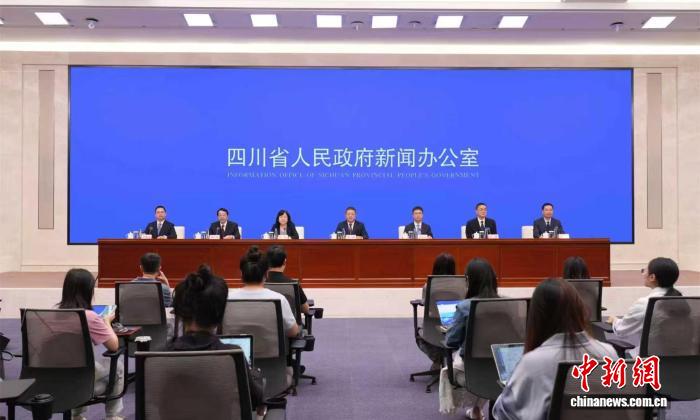
吉林省:追“风”逐“电”激发转型升级新脉动
Xin Hua Wang· 2025-09-14 06:09
Core Insights - Jilin Province is focusing on renewable energy development, with installed capacity exceeding 30 million kilowatts, injecting new momentum into overall revitalization [1][2] - The province's renewable energy industry is leveraging its natural resources, particularly wind and solar power, to enhance energy stability and reduce carbon emissions [2][3] Renewable Energy Development - Jilin Province has seen an average annual growth rate of 29% in renewable energy external transmission over the past three years [2] - The "Jidian into Beijing" project, the province's first ultra-high voltage transmission line, is included in the national "14th Five-Year" power development plan as a reserve project [2] - The province has exceeded its target by adding over 12 million kilowatts of new energy capacity in the Jilin section of the Songliao New Energy Base during the first four years of the "14th Five-Year" plan [2] Green Chemical Products - Low-carbon transformation is accelerating, with green hydrogen, green ammonia, and green methanol becoming key alternative products in shipping and agriculture [3] - The Shanghai Electric wind power and biomass green methanol integration project in Jilin has begun production, with an expected annual output of 50,000 tons of green methanol, facilitating the consumption of approximately 220 million kilowatt-hours of green electricity [3] - Jilin Province has launched five major green energy chemical projects, focusing on the large-scale utilization of green electricity for high-value chemical products [3] Industry Cluster Development - Jilin Province's renewable energy industry chain is expanding across multiple segments, including raw material production, equipment manufacturing, and product application [4] - Jilin Chemical Fiber dominates the domestic wind power sector with a 95% market share in carbon fiber, experiencing a 29% year-on-year increase in sales revenue [4] - Numerous companies, such as SANY Wind Power and Fanrui Heavy Industry, are establishing a presence in the region, supporting a one-stop procurement model for wind power equipment [4] - The province is witnessing the emergence of hydrogen energy vehicles and high-speed hydrogen-powered trains, indicating a shift towards high-quality economic development driven by renewable energy [4]
吉林推动制造业做实做优做强
Ren Min Ri Bao· 2025-09-12 22:16
Core Insights - The article emphasizes the importance of enhancing the manufacturing sector in Jilin Province, focusing on high-end, intelligent, and green development to build a modern industrial system that reflects local characteristics [1][5]. Group 1: Manufacturing Growth - Jilin Province's industrial added value increased by 7.8% year-on-year in the first half of the year, with manufacturing value-added growing by 8.5% [1]. - Jilin Chemical Fiber Group's carbon fiber products achieved a total output value of 880 million yuan, marking a 117% year-on-year increase [2]. Group 2: Industrial Chain Enhancement - Jilin is actively developing joint platforms for upstream and downstream collaboration in the carbon fiber industry, targeting applications in key sectors such as new energy vehicles and rail transportation [2]. - The province is focusing on the automotive industry, enhancing the entire supply chain from complete vehicles to components and aftermarket services [2]. Group 3: New Infrastructure Development - CRRC Changchun Railway Vehicles Co., Ltd. is implementing digital transformation on its production lines, which can save 30,000 tons of water annually and reduce overall operating costs by approximately 20% [3]. - Jilin has accelerated the establishment of over 1,000 key "smart transformation" projects, including the construction of 55,000 5G base stations and 1.76 million IoT terminal users [3]. Group 4: Innovation and Collaboration - The province is building a technology innovation system that emphasizes collaboration between enterprises, markets, and research institutions, facilitating the conversion of scientific achievements into productive forces [4]. - In 2024, Jilin Province transformed 3,609 scientific achievements, with a technical contract transaction value reaching 24.1 billion yuan, both doubling compared to the previous year [5].
吉林:追“风”逐“电”激发转型升级新脉动
Xin Hua She· 2025-09-12 09:50
Core Insights - Jilin Province is focusing on renewable energy development, achieving over 30 million kilowatts of installed capacity, which injects new momentum into its overall revitalization [1][2] - The province's renewable energy sector is benefiting from strong wind and solar resources, with an average annual growth rate of 29% in external electricity delivery over the past three years [2][3] - Jilin's energy transition is accelerating with the production of green chemical products from clean energy, attracting numerous projects and enhancing carbon reduction efforts [3][4] Group 1: Renewable Energy Development - Jilin's renewable energy installed capacity has surpassed 30 million kilowatts, contributing significantly to the province's economic revitalization [1] - The province's first ultra-high voltage transmission line, "Jilin Electricity into Beijing," is part of the national "14th Five-Year" power development plan [2] - The addition of over 12 million kilowatts of new renewable energy capacity in Jilin during the first four years of the "14th Five-Year" plan has exceeded national targets by 33% [2] Group 2: Green Chemical Products - The production of green methanol from renewable energy is underway, with a project in Jilin expected to generate 50,000 tons annually and reduce carbon emissions by approximately 65,000 tons [3] - Jilin has established five major green energy chemical projects, focusing on the large-scale utilization of green electricity for high-value chemical products [3][4] Group 3: Industry Cluster Development - Jilin's renewable energy industry chain is expanding, with significant growth in carbon fiber production for wind energy, achieving a 29% increase in sales revenue [4] - Numerous companies are establishing operations in Jilin, supporting a comprehensive supply chain for wind energy equipment and new energy storage products [4] - The province is becoming a leader in economic development through its renewable energy sector, transforming its wind resources into a continuous driver for high-quality growth [4]

决胜“十四五” 打好收官战|吉林:追“风”逐“电”激发转型升级新脉动
Xin Hua Wang· 2025-09-10 17:37
Group 1 - Jilin Province has achieved over 30 million kilowatts of installed renewable energy capacity, injecting new momentum into its economic revitalization [1] - The average annual growth rate of Jilin's renewable energy external power transmission has reached 29% over the past three years [3] - The "Jidian into Beijing" project, Jilin's first ultra-high voltage transmission line, is included in the national "14th Five-Year" power development plan as a reserve project [3] Group 2 - Jilin's green electricity advantage is attracting numerous projects, including a green methanol project by Shanghai Electric, which is expected to consume about 220 million kilowatt-hours of green electricity and achieve a direct carbon reduction of approximately 65,000 tons [6] - Five major green energy chemical projects have been established in Jilin, focusing on the large-scale utilization of green electricity to produce high-value-added chemical products [6] Group 3 - Jilin's renewable energy industry chain is rapidly expanding, with significant economic benefits observed across various segments, including raw material production, equipment manufacturing, and product application [9] - Jilin Chemical Fiber holds a 95% market share in the domestic wind power sector for carbon fiber, with a 29% year-on-year increase in sales revenue in the first half of the year [9] - New energy storage products, such as all-iron flow and sodium-ion batteries, are being developed in Jilin, supporting the local wind power industry [9] Group 4 - The renewable energy industry is becoming a key driver of economic growth in Jilin, transforming seasonal winds into a continuous source of industrial upgrade and high-quality development [11]
成都先进制造业实力凸显,集群发展与创新突破齐头并进
Mei Ri Jing Ji Xin Wen· 2025-08-14 00:35
Core Insights - Chengdu is designated as a "national advanced manufacturing base" as part of its development goals, with a projected industrial output growth of 4.8% in 2024, an increase of 0.7 percentage points year-on-year [1] - The city has successfully cultivated multiple national-level industrial clusters, ranking seventh among cities nationwide for "specialized and innovative" small enterprises [1] Group 1: Advanced Manufacturing and Industrial Growth - In 2024, Chengdu's industrial investment is expected to grow by 48.7%, surpassing both national and provincial averages [1] - Chengdu has achieved significant milestones in advanced manufacturing, including the launch of China's first Micro-LED production line and the completion of the New Aviation Engine Industrial Park [2] - The city has established five national-level advanced manufacturing clusters and two strategic emerging industry clusters [1][2] Group 2: Emerging Industries and Technological Advancements - Chengdu is actively developing new industries, with a focus on artificial intelligence, having registered five AI industry models with national authorities [2][6] - The city has launched various innovative projects, including the world's first hydrogen-powered regional train and the establishment of a humanoid robot innovation center [2][3] - Chengdu's AI core industry is projected to exceed 70 billion yuan by mid-2025, with several local companies recognized among the top in the nation [6] Group 3: Infrastructure and Industrial Ecosystem - Chengdu has built a robust industrial ecosystem with four national-level public service platforms and 17 provincial-level platforms for industrial technology [3] - The city has developed nine large-scale computing power centers, enhancing its digital economy capabilities [3] - Chengdu's industrial parks are gaining recognition, with the Tianfu Traditional Chinese Medicine City being named one of the most vibrant in the country [4] Group 4: Strategic Initiatives and Government Support - The Sichuan provincial government is committed to supporting Chengdu's development in AI, low-altitude economy, and biomedicine, aligning with the city's strategic focus [5][6] - Chengdu is enhancing its participation in global industrial chains and fostering high-quality development through specialized industrial parks [5] - The city has been recognized as a pilot for several national-level initiatives, including smart manufacturing and 5G applications [4]
成都先进制造业实力凸显,集群发展与创新突破齐头并进 | 万千气象看成都
Mei Ri Jing Ji Xin Wen· 2025-08-14 00:22
Group 1: Economic Growth and Industrial Development - Chengdu aims to become a national advanced manufacturing base, with a projected industrial output growth of 4.8% in 2024, an increase of 0.7 percentage points year-on-year [1] - The city has achieved a remarkable 48.7% growth in industrial investment in 2024, surpassing both national and provincial averages [1] - By May 2025, the industrial output value of Chengdu increased by 8.0% year-on-year [1] Group 2: Advanced Manufacturing and Innovation - Chengdu has successfully established five national-level advanced manufacturing clusters and two strategic emerging industry clusters by 2024 [1] - The city has seen significant breakthroughs in advanced manufacturing projects, including the first Micro-LED production line in mainland China and the completion of the New District Aviation Engine Industrial Park [2] - Chengdu is home to eight companies listed among China's top 500 manufacturing enterprises, ranking seventh among cities nationwide [1] Group 3: Emerging Industries and Technological Advancements - The artificial intelligence industry in Chengdu is projected to exceed 100 billion yuan, with five AI models approved by national authorities in 2024 [4] - Chengdu has established the first humanoid robot innovation center in Central and Western China, with seven types of locally produced humanoid robots released [4] - The city has been approved as a pilot for electric vertical takeoff and landing (eVTOL) aircraft, with the AE200 becoming the first manned eVTOL design guarantee system in China [4][6] Group 4: Industrial Collaboration and Market Expansion - Chengdu has been actively expanding its domestic and international markets, signing procurement contracts worth approximately 12 billion yuan in 2024 [7] - The city has been recognized for its collaborative efforts in the Chengdu-Chongqing economic circle, enhancing the supply chain integration of automotive parts to 80% [7] - Chengdu has been selected for five national-level major pilot projects, including smart manufacturing and 5G applications [7] Group 5: Policy Support and Future Planning - The Sichuan provincial government has issued policies to support Chengdu in becoming a national advanced manufacturing base, focusing on high-quality development in emerging industries [10][12] - Chengdu is prioritizing the development of artificial intelligence, low-altitude economy, and biomedicine as key industry directions [12] - The city is implementing a comprehensive industrial system that integrates AI chips, computing power, algorithms, data, and real-world applications [12]