Tariff concerns

Search documents
Is Best Buy Stock Underperforming the S&P 500?
Yahoo Finance· 2026-03-18 18:12
Company Overview - Best Buy Co., Inc. is a leading multinational retailer specializing in consumer electronics, appliances, and technology services, operating through physical stores and e-commerce platforms [1] - The company has a market cap of $13.3 billion, classifying it as a large-cap stock, which highlights its scale and strong presence in the retail sector [2] Stock Performance - BBY is currently down 25.7% from its 52-week high of $84.99, achieved in October 2025, and has declined 12% over the past three months, underperforming the S&P 500 Index's 1.5% slump during the same period [3] - Year-to-date, shares of the company have fallen 5.5% and 13.5% over the past 52 weeks, underperforming the S&P 500's YTD decline of 2.5% and 18.9% returns over the past year [4] Market Challenges - The decline in BBY's stock is attributed to macroeconomic factors such as persistent inflation and higher interest rates, which have made consumers cautious about spending on big-ticket electronics, leading to softer demand [5] - Ongoing tariff concerns have also raised costs and contributed to a lackluster outlook for the company [5] Competitive Landscape - In the competitive arena, GameStop Corp. has outperformed BBY with a 16.9% uptick this year and marginal gains over the past 52 weeks [6] - Wall Street analysts maintain a moderately bullish outlook on BBY, with a consensus "Moderate Buy" rating from 24 analysts and a mean price target of $74.31, suggesting a potential upside of 18.7% from current price levels [6]

BankUnited price target raised to $56 from $51 at Cantor Fitzgerald
Yahoo Finance· 2026-03-04 13:41
Group 1 - Cantor Fitzgerald analyst Dave Rochester raised the price target on BankUnited (BKU) to $56 from $51, maintaining an Overweight rating on the shares [1] - Bank stocks experienced volatility due to renewed tariff concerns, the collapse of UK-based Market Financial Solutions, ongoing AI-driven job loss worries, and an above-consensus January PPI reading [1] - Despite near-term uncertainties, Cantor Fitzgerald remains bullish on BankUnited for 2026 [1]

Stock market today: S&P 500, Nasdaq poised to add to tech sell-off as Google sinks, Amazon looms, silver tanks
Yahoo Finance· 2026-02-04 23:49
Market Overview - US stock futures declined as investors reacted to a two-day tech sell-off, with S&P 500 futures down approximately 0.6% and Nasdaq 100 futures down about 0.9% [1] - The market is experiencing a significant tech wipeout, with concerns about AI disruption affecting software stocks [2] Corporate Earnings and Forecasts - Alphabet announced a substantial increase in AI investment, projecting capital expenditures of up to $185 billion, which negatively impacted its stock [3] - Amazon's quarterly report is anticipated, with expectations of a 21% increase in sales from its AWS cloud unit [3] - Qualcomm reported a 5% year-over-year revenue increase to $12.3 billion and earnings per share of $2.78, but its outlook for the second quarter is weaker due to a memory chip shortage [28][29] - Nio expects to report its first-ever profit in Q4, projecting an adjusted profit from operations between 200 million yuan (approximately $29 million) and 700 million yuan (approximately $100 million) [6][7] Stock Movements - Estée Lauder shares fell 10% despite beating earnings estimates due to tariff concerns [8] - Snap's stock rose 6% after reporting Q4 revenue of $1.71 billion, exceeding Wall Street estimates [13] - E.l.f. Beauty's stock increased by as much as 8% after raising its full-year sales outlook to between $1.6 billion and $1.61 billion [16][17] - Baidu's US-listed shares rose 5% following the announcement of a dividend and a $5 billion stock buyback program [10] Commodities and Cryptocurrencies - Silver prices plunged by as much as 17%, erasing previous gains, as market sentiment turned negative [4][24] - Bitcoin fell below $70,000 after Treasury Secretary Scott Bessent ruled out a government bailout for cryptocurrencies [5][12] Industry Trends - Broadcom's stock rose 5% following Alphabet's announcement of increased capital expenditures, which is expected to benefit companies involved in AI infrastructure [21][22] - The overall sentiment in the market appears to be dampened, affecting various asset classes including precious metals and equities [25]




中国出口追踪:在关税担忧重现之际出口放缓-China Export Tracker (24)_ Exports Slowdown Amid Renewed Tariff Concerns_
2025-10-19 15:58
Summary of Key Points from the Conference Call Industry Overview - **Industry**: Chinese Exports and Trade Dynamics - **Key Focus**: The impact of renewed tariff concerns on China's export performance, particularly to the US Core Insights and Arguments 1. **Export Performance**: China's exports to the US have declined, with a notable drop of **-14.7% YoY** in containership departures for the US during the 15 days ending October 15, compared to a **-4.2% YoY** decline a week prior [2][13] 2. **US Import Bills**: There has been a significant decrease in US import bills for seaborne imports from China, which fell by **-28.2% YoY** in the week ending October 11, down from **-9.9% YoY** a week earlier [2][9] 3. **Overall Cargo Volume**: China's total cargo throughput decreased by **-2.8% YoY** in the week ending October 12, a decline from **8.8% YoY** growth the previous week [3][14] 4. **Container Export Volume**: The container export volume from China saw a decline of **-10.1% YoY** in the week ending October 10, although this was an improvement from **-15.1% YoY** a week earlier [3][11] 5. **Regional Trade Momentum**: There are signs of softening in regional export momentum, with containership arrivals at ASEAN ports decreasing to **6.4% YoY** in the week ending October 15, down from **8.7% YoY** previously [3][15] 6. **Future Outlook**: There are concerns about downside risks to exports as regional trade momentum weakens and the base effect may negatively impact export growth into Q4 2025 [1][3] Additional Important Information - **Trade Tensions**: The ongoing tariff concerns and trade tensions are expected to persist, particularly as the APEC summit approaches, which could further impact trade dynamics [2] - **Analyst Insights**: Analysts from Citi Research have highlighted the importance of monitoring these trends closely, as they could influence investment decisions and market sentiment [1][4] This summary encapsulates the critical insights from the conference call regarding the current state and future outlook of China's export dynamics amid ongoing trade tensions.

2 Air Freight & Cargo Stocks to Keep An Eye On Amid Demand Woes
ZACKS· 2025-08-13 17:41
Core Viewpoint - The Zacks Transportation—Air Freight and Cargo industry is facing significant challenges due to ongoing supply-chain disruptions, high inflation, and weaker demand, leading to reduced package volumes [1][4]. Industry Overview - The industry comprises companies providing air delivery and freight services, with many offering specialized transportation and logistics solutions. The health of these companies is closely tied to the overall economy, with major players like FedEx transporting millions of packages daily [3]. Key Trends - **Economic Uncertainty & Tariff Concerns**: The industry is affected by market volatility and tariff uncertainties, particularly with China, which may lead to higher costs and dampen consumer spending [4]. - **Demand Slowdown**: A decline in shipping demand, especially in Asia and Europe, is negatively impacting key players like UPS and FedEx, leading to withheld earnings and revenue forecasts [5]. - **Strong Financial Returns for Shareholders**: Companies are increasing dividends and buybacks to reward shareholders, indicating financial strength. UPS raised its quarterly dividend to $1.64 per share, while FedEx increased its dividend by 5.1% to $1.45 [6]. Industry Performance - The Zacks Air Freight and Cargo industry ranks 202, placing it in the bottom 18% of 245 Zacks industries, indicating poor near-term prospects [7][8]. - The industry has underperformed the S&P 500, decreasing by 26.5% over the past year compared to the S&P 500's increase of 17.7% [9]. Current Valuation - The industry is currently trading at an enterprise value-to-EBITDA (EV/EBITDA) ratio of 7.97X, significantly lower than the S&P 500's 17.45X and the sector's 9.37X [12]. Stocks to Watch - **FedEx (FDX)**: The company is focused on rewarding shareholders through dividends and buybacks, with a solid liquidity position and cost-cutting efforts driving its bottom line. FDX has surpassed earnings estimates in two of the last four quarters [16][17]. - **GXO Logistics (GXO)**: The company is enhancing its logistics capabilities, benefiting from increased e-commerce and automation. GXO has consistently surpassed earnings estimates, with shares rising 9.7% over the past year [19].




Cheap For A Reason? Why Investors Are Avoiding Gap
Forbes· 2025-07-15 12:35
Core Viewpoint - Gap Inc. stock is facing investor avoidance despite a strong Q1 performance due to underlying issues such as tariff concerns, stagnant guidance, and declining consumer confidence [2][3][4] Financial Performance - In Q1 2025, Gap reported a revenue increase of 2.2% year-over-year to $3.46 billion and earnings per share of $0.51, surpassing expectations [5] - Gross margin improved to 41.8% and operating margin to 7.7%, resulting in a net income increase of 22% to $193 million [5] - Comparable sales rose by 5% for the Gap brand and 3% for Old Navy, while Banana Republic remained flat and Athleta's sales dropped by about 8% [5] - Online sales accounted for 39% of total revenue, increasing by 6% [5] Tariff and Cost Concerns - Gap disclosed full-year gross tariff costs between $250 million and $300 million, with $100 million to $150 million impacting the bottom line [3] - Recent court decisions reinstating Trump-era tariffs have heightened these concerns [3] Consumer Confidence - The U.S. Consumer Confidence Index fell to 93.0 in June from 98.4 in May, significantly lower than the pre-pandemic level of 132.6 in February 2020 [4] - A decrease in the number of Americans expecting job market improvements (15.4%, down from 18.6%) and business conditions (16.7% vs. 19.9%) indicates a weakening spending environment [4] Valuation Metrics - Gap is trading at a price-to-sales ratio of 0.6, price-to-free cash flow of 9.9, and price-to-earnings of 9.4, all significantly lower than the S&P 500 [6] - These valuation metrics suggest a potential bargain but also reflect investor skepticism regarding the company's fundamentals [6] Growth and Profitability - Over the last three years, Gap's revenue has contracted at an average annual rate of 2.1%, contrasting with the S&P 500's 5.5% increase [7] - The operating margin stands at 7.7% and net margin at 5.8%, both trailing behind industry peers [7] Balance Sheet Analysis - Gap has $5.5 billion in debt against an $8 billion market cap, resulting in a debt-to-equity ratio of 63.4%, which is over three times the S&P 500 average [8] - The company maintains a healthy cash-to-assets ratio of 19.2%, providing a buffer against cost pressures [8] Conclusion - Despite appearing inexpensive, the stock's valuation reflects valid concerns regarding tariff risks, lukewarm guidance, and a deteriorating consumer environment [9]



ZUMZ Trades Near 52-Week Low: Time to Buy, Hold or Sell the Stock?
ZACKS· 2025-05-26 13:36
Core Viewpoint - Zumiez Inc. is facing significant challenges in the market, with its stock price nearing a 52-week low and a notable decline of 15.4% over the past three months, prompting a reassessment by investors [1][2]. Group 1: Performance and Market Position - Zumiez has underperformed compared to the Retail - Apparel and Shoes industry, which saw a growth of 1.9%, and the S&P 500 Index, which declined by 1.2% during the same period [2]. - The company experienced a setback during the holiday season due to an unexpected drop in demand, failing to meet internal sales expectations, which raises concerns about its adaptability to market changes [5]. - Challenges in international markets, particularly in Europe, have hindered consistent profitability, indicating deeper structural issues in Zumiez's global strategy [6]. Group 2: Supply Chain and Operational Challenges - Zumiez is vulnerable to supply-chain risks, especially related to tariffs, as approximately 50% of its North American inventory is sourced from China, exposing it to tariff-related uncertainties [7]. - The company is working on diversifying its sourcing, but this may lead to higher costs or supply disruptions, which could negatively impact profitability [7]. Group 3: Strategic Focus and Future Outlook - Despite challenges, Zumiez has shown resilience through strong comparable sales growth and improved profitability in the fourth quarter of fiscal 2024, with a focus on expanding its private label business [8][9]. - The company is optimizing operations by closing underperforming stores and refining logistics, which has led to meaningful reductions in operating costs relative to sales [10]. - For fiscal 2025, Zumiez projects total sales to increase by 1-3% and comparable sales growth of 3-5%, with a focus on enhancing product margins through private-label offerings [11]. Group 4: Valuation and Investment Appeal - Zumiez is currently trading at a forward 12-month price-to-sales (P/S) multiple of 0.26X, significantly lower than the industry average of 1.75X, suggesting it is attractively priced relative to peers [12]. - The company's Value Score of A indicates its potential appeal as an investment opportunity [12]. Group 5: Summary of Strengths and Weaknesses - Zumiez is executing well on margin expansion, cost control, and private label growth, while trading at an attractive valuation [14]. - However, struggles during the holiday season, ongoing international weaknesses, and exposure to supply-chain risks raise concerns about its near-term stability [15].


Amazon: A Good Quarter but Some Concerns
The Motley Fool· 2025-05-01 21:09
Core Insights - Amazon reported Q1 2025 revenue of $155.7 billion, a 9% increase year-over-year, exceeding analyst expectations [2][3] - Earnings per share for Q1 2025 were $1.59, a 62% increase compared to the previous year, also beating consensus estimates [2][3] - AWS revenue grew by 17% year-over-year to $29.3 billion but fell short of expectations, while advertising revenue surged by 19% to $13.9 billion, surpassing forecasts [2][4] Financial Performance - Revenue for Q1 2024 was $143.3 billion, while Q1 2025 saw an increase to $155.7 billion, marking a 9% growth [2] - Earnings per share rose from $0.98 in Q1 2024 to $1.59 in Q1 2025, reflecting a 62% increase [2] - AWS revenue increased from $25.0 billion to $29.3 billion, a growth of 17%, but did not meet expectations [2][4] - Advertising revenue grew from $11.8 billion to $13.9 billion, a 19% increase, exceeding expectations [2][4] Business Segments - Online sales revenue grew by 6% year-over-year, a slowdown from the previous year's 7% growth [5] - Third-party seller services revenue growth decreased to 7%, down from 16% a year ago [5] - Amazon plans to invest $4 billion by the end of 2026 to enhance its rural delivery capabilities, which is expected to boost order volume [5] Future Outlook - For Q2 2025, Amazon anticipates revenue between $159 billion and $164 billion, which is lower than investor expectations [6] - The initial market reaction to the earnings report was negative, with Amazon's stock down approximately 2.5% due to the AWS revenue miss and light guidance [7] Regulatory Environment - Ongoing tensions between Amazon and the Trump administration regarding tariff issues are noteworthy, with potential implications for the company's operations [8]

汇丰:黄金触及每盎司 3500 美元后下跌,短期内可能回调
汇丰· 2025-04-27 03:56
Investment Rating - The report indicates a bullish outlook for gold, suggesting that it may correct in the near term but remains in a rally phase [5][6][9]. Core Insights - Gold prices surged to a record high of USD3,500/oz, driven by strong demand from China and concerns over tariffs, particularly between the US and China [3][4]. - The report highlights that the gold market appears overstretched and may need to consolidate, favoring lower prices in the immediate term [9]. - Silver's performance is closely tied to gold, with the gold/silver ratio reaching record highs, although silver fundamentals remain sluggish [10]. Market Focus and Emerging Trends - The report notes a significant shift away from the USD towards gold, with a notable increase in domestic demand for gold in China, as indicated by a USD55/oz spread between onshore and offshore prices [3]. - Investor sentiment was influenced by negative comments from the White House regarding the Federal Reserve, which contributed to fluctuations in gold prices [4][7]. - The potential for a de-escalation in US-China trade tensions could impact gold demand, as positive developments in equity markets may reduce the appetite for gold [8]. Price Movements and Speculative Positions - As of April 15, 2025, speculative positions in gold show a long position of 32.112 million ounces and a net position of 23.19 million ounces, indicating bullish sentiment despite recent price corrections [2]. - The report suggests that any major retracement in gold could undermine silver prices, while platinum group metals (PGMs) may rally on positive trade news [10].
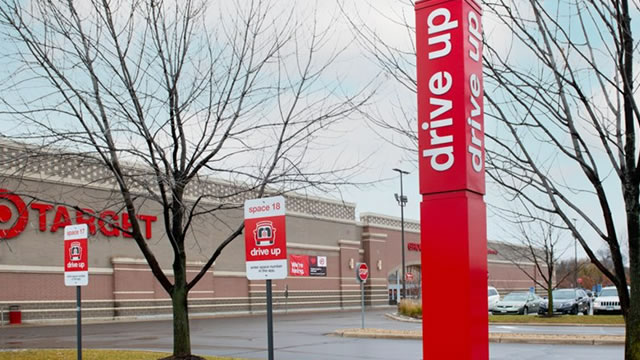
Target Beats on Q4 Earnings, Issues Cautious View on Tariff Concerns
ZACKS· 2025-03-04 17:05
Core Insights - Target Corporation reported fourth-quarter fiscal 2024 results that exceeded the Zacks Consensus Estimate for both revenue and earnings, with notable growth in beauty, apparel, entertainment, sporting goods, and toys [1] - The company issued a cautious outlook for the first quarter of fiscal 2025, anticipating significant year-over-year profit pressure due to consumer uncertainty, a slight decline in February net sales, tariff concerns, and the timing of certain expenses [2] Financial Performance - Adjusted earnings were reported at $2.41 per share, surpassing the Zacks Consensus Estimate of $2.25 but down from $2.98 in the same period last year [4] - Total revenues reached $30,915 million, exceeding the Zacks Consensus Estimate of $30,766 million, but reflecting a 3.1% decline year-over-year; merchandise sales also fell by 3.3% to $30,428 million [5] - Comparable sales increased by 1.5% in the fourth quarter, following a 0.3% increase in the previous quarter, with a decline of 0.5% in comparable store sales but an increase of 8.7% in comparable digital sales [6] Margin Analysis - Gross margin contracted by 40 basis points to 26.2%, attributed to higher digital fulfillment and supply-chain costs, as well as increased promotional markdowns; operating margin decreased to 4.7% from 5.8% year-over-year [7] Financial Health - At the end of the quarter, Target had cash and cash equivalents of $4,762 million, long-term debt of $14,304 million, and shareholders' equity of $14,666 million; dividends paid during the quarter totaled $513 million [8] - The company repurchased 3.7 million shares worth $506 million during the quarter, with approximately $8.7 billion remaining under the repurchase program approved in August 2021 [9] Future Outlook - For fiscal year 2025, Target expects net sales growth of around 1%, driven by flat comparable sales, and anticipates a slight improvement in operating margin compared to fiscal year 2024; GAAP and adjusted earnings per share are projected to be between $8.80 and $9.80 [10]