Tax loss harvesting

Search documents
SCHD ETF dividend yield too low? Top 3 alternatives to consider
Invezz· 2026-03-31 11:36
Core Viewpoint - The Schwab US Dividend Equity ETF (SCHD) has a significant asset base of over $83 billion but is limited by its low dividend yield of 3.5%, prompting investors to consider alternative ETFs with higher yields [1][2][3]. Group 1: SCHD ETF Overview - SCHD ETF has accumulated over $83 billion in assets, making it one of the largest dividend funds in the U.S. [1] - The fund tracks the Dow Jones US Dividend 100 Index, focusing on companies with strong dividend growth [2]. - Despite outperforming the S&P 500 this year, its yield of 3.5% is lower than other funds and short-term government bonds [3]. Group 2: Alternative ETFs - NEOS S&P 500 High Income ETF (SPYI) offers a high dividend yield of 12.8% and has over $7.92 billion in assets [4]. - SPYI employs a covered call strategy, investing in S&P 500 companies and generating returns through call options, but has a higher expense ratio of 0.68% [5][6]. - JPMorgan Nasdaq Equity Premium Income ETF (JEPQ) has a dividend yield of 11.40% and over $33 billion in assets, also using a covered call strategy with a lower expense ratio of 0.35% [7]. - Cohen & Steers Infrastructure Fund (UTF) provides a 10% dividend yield with over $3.7 billion in assets, utilizing leverage as a closed-end fund, but has a high expense ratio of 3.43% [9][10].


I’m a Tax Specialist: The NIIT Rule High Earners Overlook Until It’s Too Late
Yahoo Finance· 2026-03-13 20:31
Core Insights - The Net Investment Income Tax (NIIT) is a 3.8% surtax that applies to certain net investment income for individuals, estates, and trusts with earnings exceeding specific thresholds [1][3] - The thresholds for NIIT are $250,000 for married couples filing jointly and $200,000 for single filers, which have not been adjusted for inflation, leading to more taxpayers being affected over time [3] Understanding the NIIT Rule - The NIIT applies to the lesser of net investment income or the amount by which modified adjusted gross income (MAGI) exceeds the specified thresholds [3] - High earners may face significant tax liabilities, such as an additional $15,200 in tax if their MAGI exceeds $400,000 due to events like selling concentrated stock positions or liquidating real estate [4] Tax Implications - NIIT is not withheld like ordinary income, which means many individuals are unaware of its impact until they file their taxes, potentially leading to underpayment penalties [5] - The tax can erode wealth over time, but it is manageable with proper planning before taxable events occur [6] Strategic Approaches - Tax loss harvesting can offset gains and reduce NIIT exposure, while spreading large sales across multiple tax years or using installment sale structures can help avoid exceeding MAGI thresholds in a single year [7] - Donating appreciated securities to a donor-advised fund (DAF) can eliminate capital gains, thus avoiding NIIT on that appreciation while also providing a full charitable deduction [7]
The 1 Account You May Be Overlooking for Your Retirement
Yahoo Finance· 2026-02-17 16:38
Group 1 - Traditional IRAs and 401(k)s provide tax breaks on contributions and allow tax-deferred growth, but early withdrawals before age 59 and 1/2 incur a 10% penalty [1][2] - Life circumstances, such as layoffs or health issues, may necessitate accessing retirement savings earlier than planned, highlighting the need for a backup plan [3][5] - A taxable brokerage account offers flexibility for accessing savings at any time, despite the lack of tax-free contributions and annual capital gains taxes [4][6] Group 2 - Having a significant amount saved, such as $4 million, may allow for earlier retirement options, especially if the work environment is changing negatively [6] - Taxable brokerage accounts can be beneficial for housing part of retirement savings, providing more options despite the absence of special tax treatment [6][7] - Strategies like tax deductions and tax loss harvesting can help manage capital gains taxes in a taxable brokerage account, making it a viable part of a retirement savings strategy [8]
I Sold Bitcoin and Owed This Much in Taxes — Here’s How To Calculate Yours
Yahoo Finance· 2026-02-17 15:41
Core Insights - Cryptocurrency investors face significant tax obligations on capital gains, similar to other assets, and many are unaware of the complexities involved in tax calculations [2][3] - The IRS has implemented new reporting requirements for cryptocurrency transactions through Form 1099-DA, which brokers and platforms must use to report user activity directly to the IRS [3] Tax Calculation and Implications - Capital gains taxes apply when selling cryptocurrencies for a profit, with the adjusted cost of crypto, including broker commissions and fees, deducted from sales proceeds to determine gains or losses [2] - Short-term capital gains tax applies to cryptocurrencies held for less than a year, taxed at the investor's regular income tax rate, while long-term holdings exceeding one year benefit from lower tax rates [4] Tax Strategies for Investors - Investors can offset capital gains with losses, allowing a net loss of up to $3,000 to be deducted from ordinary income, with any excess loss carried forward to the next tax year [5] - Cryptocurrency wash sales are permitted, enabling investors to sell at a loss and immediately repurchase the same asset to claim the loss on their tax returns [5] - Strategic accounting methods, such as HIFO (highest-in, first out) or Spec-ID (specific identification), can be employed to minimize tax liabilities [6]
NEOS Brings Options Income Prowess to Long/Short ETF NLSI
Etftrends· 2025-12-11 19:14
Core Viewpoint - NEOS Investments has launched the NEOS Long/Short Equity Income ETF (NLSI), which aims to provide income through a unique approach to long/short investing rooted in options [1][2]. Group 1: ETF Overview - NLSI utilizes a proprietary model to construct its long/short equity portfolio, seeking both equity appreciation and income generation [2]. - The ETF aims to leverage tax loss harvesting opportunities and employs SPX Index options classified as section 1256 contracts, benefiting from lower 60/40 tax rates [2]. Group 2: Investment Strategy - Long/short equity strategies involve making both long and short investments in publicly traded stocks and equity-related derivatives, exhibiting reduced beta, volatility, and drawdown sensitivity compared to long-only strategies [3]. - NLSI is designed to be market neutral, meaning it does not take overtly bullish or bearish positions, thus avoiding futile market-timing efforts [4]. - The fund aims to generate returns by profiting from price movements of both undervalued and overvalued stocks while minimizing overall market exposure [5]. Group 3: Fund Composition and Income Potential - NLSI will typically consist of 30 long positions and 30 short holdings, maintaining its market-neutral stance [6]. - The ETF has the potential to generate income that is less correlated to traditional asset classes, providing a way to seek high monthly income alongside equity appreciation [7].

Stock Market Today: Intel, Ford, Newmont Gold Round Out Solid Day for U.S. Markets
Yahoo Finance· 2025-10-23 15:29
Market Overview - U.S. equity markets opened with slight gains, with the Dow up 0.07%, S&P 500 up 0.06%, and Nasdaq Composite up 0.01%. The Russell 2000, focused on small caps, showed a stronger increase of 0.39% [2]. Earnings Reports - Key earnings reports today include T-Mobile, Blackstone, and Union Pacific, all of which are showing fairly positive results [5]. - Additional earnings reports expected later include Newmont Mining, Norfolk Southern, and Ford Motor [6]. Market Reactions - The market is experiencing mixed reactions to earnings reports, with some companies like Tesla reporting weaker-than-expected results, contributing to a cautious market sentiment [4]. - Premarket movers include Medpace Holdings, which saw a significant increase of 18.2% following strong earnings, along with other companies like QuantumScape (+8.8%) and West Pharmaceutical Services (+6.86%) also showing positive movements [7].
Final Trades: ServiceNow, Vertex Pharmaceuticals and the IJR
Youtube· 2025-10-02 17:31
Group 1 - ServiceNow stock has decreased by 14% year-to-date, indicating a potential investment opportunity as the company begins to monetize its AI tools [1] - Vertex has a strong drug profile and has recently entered positive territory for the year, which is significant as it removes the company from the tax loss harvesting category [2]

Tax Loss Harvesting? Why Active ETFs Can Help
Etftrends· 2025-09-24 19:26
Core Insights - The approaching end of the year signals the start of tax loss harvesting season, which can significantly benefit portfolios in a complex year like 2025 [1][2] - Tax loss harvesting allows investors to sell underperforming assets to lower their overall tax bill, provided they avoid the wash sale rule by reinvesting in substantially different assets [2][3] Group 1: Tax Loss Harvesting - Tax loss harvesting is a strategy that can help investors manage their tax liabilities by selling assets at a loss [2] - The wash sale rule necessitates that investors reinvest in different assets to avoid tax complications, creating opportunities for active investment strategies [2][3] Group 2: Active ETFs - Active ETFs are gaining popularity as they offer a tax-efficient wrapper and the flexibility of active management, making them suitable for tax loss harvesting [3][4] - The creation and redemption mechanism of ETFs results in fewer taxable events compared to mutual funds, enhancing their appeal for investors [4] Group 3: Example Fund - The T. Rowe Price Capital Appreciation Equity ETF (TCAF) is highlighted as a potential option for investors looking to refresh their portfolios, managed by David Giroux with a focus on fundamental research [5]

With 2026 Coming Fast, Here’s What You’ll Want To Do With Your Money Before Year-End
Yahoo Finance· 2025-09-19 16:19
Financial Strategies for Year-End Preparation - The article emphasizes the importance of taking financial actions before the end of the year to alleviate stress during the holiday season and prepare for 2026 [1][2]. Tax Strategies - Harvesting tax losses is recommended, especially in September, which is typically a weaker month for stock performance. Losses can offset capital gains and reduce overall tax bills, with up to $3,000 in excess losses applicable to ordinary income [3]. - It is crucial to avoid wash sales when harvesting tax losses, which occur if a substantially identical security is purchased within 30 days before or after the tax loss is taken [3]. Retirement Contributions - Maximizing contributions to retirement accounts, such as 401(k) plans, is advised before year-end. Contributions made before the end of the year count for the 2025 tax year [4]. - For individuals aged 60 to 63, the catch-up contribution limit increases to $11,250 for 2025, allowing for significant boosts to long-term account balances if spread out over the remaining months [5]. Portfolio Management - Portfolio rebalancing is suggested as a proactive measure, even before year-end. A review of the portfolio can help ensure alignment with investment goals, especially after significant market gains [6][7]. - Given the stock market's performance, with gains exceeding 20% in the past two years and a year-to-date return over 13% as of mid-September, reallocation may be beneficial to mitigate risks from potential market corrections [7]. Income and Capital Gains Monitoring - Monitoring income levels is important, particularly in low-income years, as this may present opportunities to realize capital gains at a lower tax rate. Some taxpayers may qualify for a 0% rate on long-term capital gains depending on their taxable income [8].
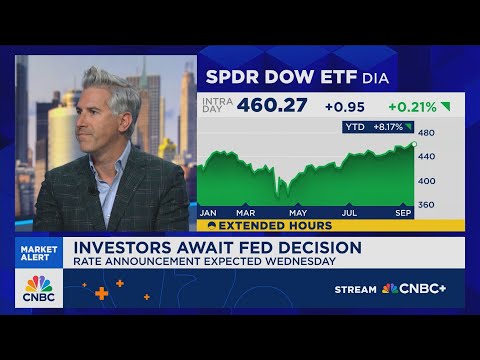
Boneparth: It pays to be proactive with your investing strategy
CNBC Television· 2025-09-15 12:03
Market Trends & Investment Opportunities - Nvidia faces pressure from both retail and institutional investors [1] - US-China trade talks' market impact is uncertain, with potential for being shrugged off or causing market volatility [2] - The market anticipates a Federal Reserve interest rate cut, with expectations of either 25 or a smaller chance of 50 basis points [3] - Proactive portfolio management is crucial, especially during all-time highs, to prepare for potential volatility [4] - Direct indexing represents an evolution of passive investing, offering better tax advantages for taxable accounts [5] Tax Optimization & Investment Strategies - Direct indexing allows for customized investment strategies and daily tax loss harvesting [6] - Direct indexing tracks indices like the S&P 500, enabling customization of components and daily harvesting of losses for tax planning [8] - Factor ETFs offer screens for tax benefits, momentum, and dividend strategies, blending active and passive management [7] - Investors should focus on fundamentals to withstand volatility and capitalize on opportunities [4] - Saving money on taxes is a primary concern for clients, and direct indexing offers a solution [6]