
Value investment

Search documents
SCHD ETF reconstitution is here: what next for the dividend fund?
Invezz· 2026-03-23 12:14
Core Viewpoint - The Schwab US Dividend Equity ETF (SCHD) is undergoing significant reconstitution, with major companies exiting and new ones entering, reflecting a strategic shift in the fund's composition amid market fluctuations. Group 1: Changes in Fund Composition - Cisco Systems, a leading technology company, will exit the SCHD ETF, with the fund holding over 46 million shares valued at over $3.6 billion [2] - AbbVie, a major player in healthcare, will also be removed, with shares worth over $3.2 billion [3] - Other companies being removed include Valero Energy, Halliburton, and Janus Henderson, which is being acquired in a deal valued at over $7.4 billion [3][4] - Approximately 26 new companies will enter the fund, including Ares Management and Blackstone, which are significant players in alternative assets [4][7] Group 2: Performance and Market Context - The SCHD ETF has outperformed the broader market, increasing by 10% this year, while the S&P 500 Index has decreased by nearly 5% [8] - The fund has attracted over $19 billion in inflows as investors shift from growth to value stocks, particularly in the last week [8] - The ETF's performance is bolstered by its substantial allocation to energy, which constitutes 20% of the fund, benefiting from rising crude oil and natural gas prices [10] Group 3: Valuation Metrics - SCHD is considered a bargain with a price-to-earnings (PE) ratio of 20, lower than the S&P 500 Index's ratio of 23 [11]


Does This $25 Million Bet on a Stock Down 61% Signal Turnaround Potential at $6?
The Motley Fool· 2026-03-20 21:22
Core Insights - Sio Capital Management has established a new position in Organon, acquiring 3,421,765 shares valued at $24.53 million as of the quarter's end on February 17, 2026 [1][2]. Company Overview - Organon operates as a global healthcare company with a focus on women's health and biosimilar pharmaceuticals, leveraging a diverse portfolio to meet various medical needs [5][8]. - The company reported a total revenue of $6.22 billion and a net income of $187 million for the trailing twelve months (TTM) [4]. Financial Performance - Organon's revenue decreased by 3% year-over-year, and net income fell by 78%, indicating significant pressure on profitability [6]. - The company's shares have declined approximately 61% over the past year, underperforming the S&P 500, which gained around 16% in the same period [7]. Market Position and Strategy - The company is guiding for flat performance in 2026, indicating a focus on stabilizing operations rather than pursuing aggressive growth [6][9]. - Organon generates revenue through the development and sale of both branded and biosimilar pharmaceuticals, serving various healthcare providers [8]. Investment Perspective - The new position by Sio Capital represents about 4% of the fund's reportable assets under management as of December 31, 2025, suggesting a strategic investment approach [7]. - The company is managing a heavy debt load exceeding $8.5 billion, but still generates approximately $1.9 billion in adjusted EBITDA, which is crucial for cash flow [9][10].


Can value stocks like Micron, Exonn hedge Middle East conflict risk?
Invezz· 2026-03-20 11:56
Core Viewpoint - The ongoing Middle Eastern conflict has negatively impacted global stock markets, leading to a selloff and prompting investors to reconsider their portfolio strategies. Value stocks, particularly those like Micron and ExxonMobil, have emerged as outperformers during this period of geopolitical stress [1][3][16]. Group 1: Performance of Value Stocks - Value investment strategies have outperformed traditional growth, quality, and momentum strategies in 2026, with the MSCI US Value ETF gaining approximately 5% while the S&P 500 fell by 3.41% and the MSCI US Growth index dropped by 7.3% [2][3]. - Key contributors to the value index's performance include Micron (46% gain), ExxonMobil (28% uptick), and Johnson & Johnson (14% surge) [3][10]. - The rotation into value stocks began prior to the recent geopolitical tensions, driven by a shift from high-valued tech stocks to cheaper non-tech and non-US market segments [4][5]. Group 2: Market Dynamics and Sector Contributions - Financials, energy, and cyclicals have been significant drivers of value stock gains, with financials benefiting from improving net interest margins and strong returns on equity [6][9]. - Analysts note that the current macro environment, characterized by tighter financial conditions and rising energy prices, may support value stocks in the near term, although this trend may not be permanent [11][12]. - The performance of value stocks reflects a broader market rotation away from concentrated growth trades, with investors seeking more attractively valued segments [7][8]. Group 3: Future Outlook and Investment Strategy - While value stocks may continue to lead in the near term due to current market conditions, there is a possibility that growth and quality stocks, particularly those linked to AI, could regain leadership in the long run [16]. - A diversified investment approach that blends both value and quality exposures is recommended for resilience in an uncertain market environment [15][16].

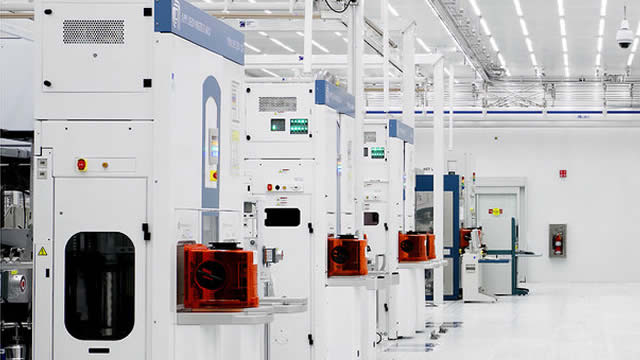
Is Crocs, Inc. (CROX) A Good Stock To Buy Now?
Yahoo Finance· 2026-03-19 17:12
Core Thesis - Crocs, Inc. is viewed as a misunderstood value opportunity, trading at approximately 6 times LTM free cash flow while generating over 20% margins and historically strong returns on invested capital [3][6] Company Overview - Crocs, Inc. designs, develops, manufactures, markets, distributes, and sells casual lifestyle footwear and accessories under the Crocs and HEYDUDE brands, both domestically and internationally [3] - The company operates a high-margin, asset-light model with around 60% gross margins, and a growing direct-to-consumer channel that accounts for roughly half of its sales [4] Recent Developments - The acquisition of HeyDude in 2022 led to operational challenges, including wholesale channel disruption and excess inventory, resulting in a $730 million write-down [5] - Management is restructuring the HeyDude brand, targeting $100 million in cost savings and stabilizing operations, with recovery expected by 2026 [5] Financial Performance - As of March 17th, Crocs' shares were trading at $79.43, with trailing and forward P/E ratios of 34.19 and 7.20 respectively [1] - The company continues to generate strong cash flow, allowing for aggressive share repurchases, retiring approximately 13% of shares annually, and maintaining manageable debt servicing at low fixed rates [5] Market Position - Despite facing near-term revenue headwinds due to softer consumer demand, Crocs has significant growth potential through international expansion and scaling its direct-to-consumer channel [6] - Compared to peers like Deckers Outdoor Corporation and On Holding AG, which trade at higher multiples, Crocs appears deeply discounted [6] Investment Outlook - The company's durable brand, proven management execution, and strong free cash flow profile position it as an attractive long-term investment with asymmetric upside potential [7]



KMX or CVNA: Is the Value Play Better Than the Growth Stock Now?
ZACKS· 2026-03-11 15:40
Industry Overview - Rising affordability pressures are reshaping the U.S. auto market, leading to a decline in new-vehicle sales year over year due to higher prices and borrowing costs [1] - Consumers are expected to shift towards the used-vehicle market for more affordable options, creating opportunities for companies in this sector [1] Company Comparisons - CarMax (KMX) and Carvana (CVNA) are two prominent players in the used vehicle industry, with differing business models; CarMax operates a nationwide store network with both physical and digital sales, while Carvana is a pure online player known for its digital-first experience [2] - Over the past year, CarMax shares have fallen approximately 42%, while Carvana's stock has surged around 78%, indicating contrasting market rewards [3][8] - Valuations differ significantly, with Carvana trading at a forward sales multiple of about 2.46x compared to CarMax's 0.23x [4][8] CarMax Analysis - CarMax is the largest retailer of used vehicles in the U.S., generating additional revenue through financing and services, which allows it to capture value across multiple transaction stages [10] - The company's third-quarter fiscal 2026 results showed mixed performance; while earnings and revenues exceeded expectations, both declined year over year due to softened used-vehicle demand [11] - CarMax's financing segment generated $174.7 million in income, up over 9% year over year, contributing to overall profitability [11] - The company benefits from a nationwide footprint and logistics network, which enhances vehicle sourcing and distribution efficiency [12] - CarMax is strengthening its ecosystem through acquisitions, such as the purchase of Edmunds, and partnerships that enhance its digital capabilities and insights into used electric vehicles [13] - Management is targeting at least $150 million in SG&A run-rate savings by fiscal 2027, with significant capital returned to shareholders through stock buybacks [14] Carvana Analysis - Carvana is the second-largest used car retailer in the U.S., holding about 1.6% of the fragmented automotive retail market, indicating room for expansion [15] - In 2025, Carvana's retail sales units rose 43% year over year to approximately 596,000 vehicles, with revenues increasing 49% to over $20 billion [16] - Profitability improved, with adjusted EBITDA climbing over 60% to $2.2 billion, and margins expanding from 10.1% to 11% [16] - However, rapid expansion has led to operational pressures, with increased reconditioning costs affecting profit per vehicle [17] - Carvana's outlook for 2026 is somewhat vague, although management anticipates significant growth in retail units sold and adjusted EBITDA [18] - The company believes it can support annual sales of 3 million vehicles, backed by real estate and facilities capable of processing 1.5 million vehicles per year [19] Investment Perspective - CarMax represents a more stable and value-oriented opportunity, benefiting from a well-established network and diversified revenue model, even amid soft sales trends [22] - Ongoing cost-cutting initiatives and logistics improvements could strengthen margins and shareholder returns over time [22] - In contrast, Carvana's growth story comes with operational volatility and a premium valuation, suggesting that much of the growth optimism may already be priced in [21] - CarMax's lower valuation compared to Carvana makes it a more attractive investment choice, with a Zacks Rank of 2 (Buy) versus Carvana's 3 (Hold) [24]



Eastern Company (NASDAQ: EML) Earnings Preview: Key Financial Insights
Financial Modeling Prep· 2026-03-03 18:00
Core Viewpoint - Eastern Company (EML) is set to release its fourth-quarter 2025 earnings results on March 3, 2026, with analysts projecting earnings per share of $0.36 and revenue of $68.68 million, indicating a focus on innovation and efficiency in the industrial sector [1]. Financial Performance - EML's stock opened at $18.57, with a 50-day moving average of $18.68 and a 200-day moving average of $20.75, reflecting recent price fluctuations [2]. - The company's market capitalization is approximately $112.72 million, with a price-to-earnings ratio of 14.98, suggesting a moderate valuation relative to its earnings [2]. - EML's debt-to-equity ratio stands at 0.27, indicating a conservative approach to leveraging debt, while a current ratio of 2.99 and a quick ratio of 1.30 demonstrate strong liquidity [3]. - The price-to-sales ratio is 0.44 and the enterprise value to sales ratio is 0.62, suggesting a relatively low market valuation compared to sales, which may present a value investment opportunity [4]. Dividend and Returns - EML has declared a quarterly dividend to be distributed on Friday, reflecting its commitment to returning value to shareholders [5]. - The company offers an earnings yield of 6.42%, appealing to income-focused investors [5].


Ultrapar Participacoes S.A. (NYSE:UGP) Earnings Preview and Financial Health Analysis
Financial Modeling Prep· 2026-02-25 07:00
Core Insights - Ultrapar Participacoes S.A. (NYSE:UGP) is a Brazilian company involved in the distribution of liquefied petroleum gas (LPG), fuel, and chemicals, operating through various segments including fuel distribution, chemicals, and storage [1] - The company is set to release its quarterly earnings on March 4, 2026, with Wall Street expecting an earnings per share (EPS) of $0.06 and projected revenue of approximately $6.65 billion, which are critical indicators of its financial health and operational efficiency [2][6] - Zacks Investment Research highlights UGP as a strong candidate for value investors, noting its favorable position in the "Value" category and strong potential based on earnings estimates and revisions [3][6] Financial Metrics - UGP's price-to-earnings (P/E) ratio is around 10.10, indicating favorable market valuation of its earnings, while its price-to-sales ratio is approximately 0.21, suggesting potential undervaluation compared to sales [4][6] - The enterprise value to sales ratio stands at about 0.33, and the enterprise value to operating cash flow ratio is approximately 13.07, reflecting efficient cash flow management [4] - The company's earnings yield is about 9.90%, providing a solid return on investment for shareholders, with a debt-to-equity ratio of approximately 1.13 indicating moderate financial leverage and a current ratio of about 1.83 suggesting strong liquidity [5][6]

Sensata Technologies (NYSE:ST): A Value Stock with Growth Potential
Financial Modeling Prep· 2026-02-20 21:13
Core Viewpoint - Sensata Technologies is recognized for its innovative sensor and electrical protection solutions, serving multiple industries and showing potential for value-focused investors [1][2]. Group 1: Price Target and Stock Performance - Truist Financial has set a new price target of $38 for Sensata Technologies, indicating a modest increase of 1.33% from its current trading price of $37.50 [1][5]. - The current stock price of Sensata is $37.43, reflecting a $1.27 increase or a 3.51% rise, with a year-high of $38.18 and a year-low of $17.32, showcasing significant growth potential [3][5]. Group 2: Market Capitalization and Investor Interest - Sensata's market capitalization is approximately $5.45 billion, with a trading volume of 1,376,911 shares, indicating strong investor interest and confidence in the company's future prospects [4]. - The stock's performance and market position make it an attractive option for investors seeking value investments [4]. Group 3: Investment Recognition - Zacks Investment Research has highlighted Sensata as a top value stock for long-term investment, suggesting it holds significant potential for value-focused investors [2][5].


Why BellRing Brands Stock Is Plummeting Today
Yahoo Finance· 2026-02-03 19:25
Core Viewpoint - BellRing Brands' shares have declined by 17% following mixed Q1 earnings and the announcement of CEO retirement, raising concerns about future growth and leadership [1]. Group 1: Financial Performance - In Q1, BellRing Brands reported a 1% increase in sales, while adjusted EBITDA fell from $125 million to $90 million year over year [1]. - The company anticipates sales growth of approximately 5% in 2026, which is significantly lower than its historical double-digit growth guidance [1]. Group 2: Market Position and Competition - BellRing Brands holds a 22% market share in the RTD protein shake niche, but its Q1 sales growth lagged behind the broader wellness and RTD industry, which grew by 7% [2]. - CEO Darcy Horn Davenport indicated that increased promotional spending is expected due to fierce competition from insurgent brands trying to establish themselves in the market [2]. Group 3: Leadership Transition - The departure of CEO Davenport, who significantly contributed to tripling the company's sales since 2019, raises concerns about the leadership transition during challenging market conditions [4]. - The company is currently in search of a successor, which adds uncertainty to its future performance [4].

公募基金信披标准将迎来重要修订 更加突出“以投资者为本”
Jin Rong Shi Bao· 2026-02-03 01:56
Core Viewpoint - The public fund industry in China is set to undergo significant institutional changes aimed at promoting high-quality development through revised information disclosure standards [1][2][7] Group 1: Key Revisions in Disclosure Standards - The China Securities Regulatory Commission (CSRC) has released a draft for public consultation regarding the revised "Guidelines for Information Disclosure of Publicly Offered Securities Investment Funds" [1][2] - The new guidelines consolidate existing disclosure requirements for annual, semi-annual, and quarterly reports into a single normative document, enhancing clarity and reducing redundancy [2][3] - The revisions aim to simplify and adjust certain disclosure requirements based on higher regulations and industry practices, drawing from experiences in mature foreign markets [1][2][3] Group 2: Focus on Investor-Centric Disclosure - The revised standards emphasize an "investor-centric" approach, requiring funds to disclose long-term performance metrics over 7 and 10 years, while eliminating short-term performance data from the past month [4][5] - This shift encourages a focus on long-term investment and value investment principles, aiming to cultivate a more rational investment culture among investors [5][6] Group 3: Enhancing Stability in Investment Behavior - The new guidelines mandate the disclosure of stock turnover rates in annual reports, addressing concerns over high turnover rates that contradict long-term investment principles [6][7] - This requirement is intended to promote more prudent investment practices among fund managers and enhance the stability of investment behaviors within the industry [6][7] Group 4: Overall Impact on the Industry - The integration and revision of disclosure rules are seen as a crucial step towards high-quality development in the public fund sector, reducing the complexity and execution friction associated with fragmented regulations [7] - By establishing targeted and tiered disclosure requirements based on the different functions of various reports, the revisions aim to improve the relevance and readability of disclosed information [7]
