Water Conservation

Search documents
Johnson Controls previews YORK YK-HT two-stage economized centrifugal chiller at AHR Expo, delivering energy, water and space savings
Prnewswire· 2026-02-02 13:30
Core Insights - Johnson Controls is showcasing the YORK YK-HT two-stage economized centrifugal chiller, designed for data centers and large industrial applications, at AHR Expo 2026 in Las Vegas [1] Group 1: Product Features - The YK-HT chiller operates with condenser leaving fluid temperatures up to 165°F and can achieve up to 110°F of lift, supporting efficient closed-loop heat rejection and enabling heat pump and heat recovery applications [2][7] - The system can offset more than 35 MMBtu per hour, equivalent to the heating demand of approximately 350 single-family homes per hour, while reducing carbon emissions and energy costs [2] - The chiller can produce 44°F chilled water and 140°F hot water simultaneously, exceeding ASHRAE efficiency requirements and eliminating the need for cascaded systems [4] Group 2: Environmental Impact - The YK-HT eliminates the annual cooling tower water consumption of approximately 8 to 9 million gallons for a typical 2,000-ton chiller, making it suitable for water-constrained environments [3] - The enhanced lift capability allows for a 60% reduction in dry coolers and a noise reduction of up to 20 dBA, addressing noise limits in large data centers [3] Group 3: Design and Installation Benefits - The compact single driveline design reduces failure points by 50% and has a footprint nearly 30% smaller than most alternatives, facilitating easier retrofits into existing spaces [4][7] - The chiller is designed to simplify installation and service, which is critical amid skilled labor shortages [4] Group 4: Manufacturing and Distribution - The YK-HT chillers will be manufactured in San Antonio, Texas, and Wuxi, China, with plans for global distribution supported by dedicated service teams [5]




我市一人获评中国节水奖先进
Xin Lang Cai Jing· 2026-01-02 23:43
Core Viewpoint - The first China Water Saving Award ceremony was held in Beijing, recognizing outstanding contributions in water conservation across various sectors [1] Group 1: Award Recognition - The China Water Saving Award is the highest honor in the field of water conservation in China, aimed at acknowledging significant achievements in agricultural, industrial, and urban water-saving efforts [1] - A total of 149 units were awarded the title of "Advanced Collective" and 199 individuals received the title of "Advanced Individual" at the inaugural ceremony [1] Group 2: Individual Achievement - Zhang Aimin, the Deputy Chief Engineer of Zhejiang Zheneng Changxing Power Generation Co., was awarded the "Advanced Individual" title for his leadership in overcoming water usage challenges in the power generation industry [1] - Under Zhang's leadership, the team implemented a significant reclaimed water utilization project, achieving over 180 million cubic meters of reclaimed water usage, which has become a stable and reliable "second water source" for the company [1] Group 3: Impact on the Company - The reclaimed water project has substantially reduced the company's water intake costs and pollution discharge pressure, earning recognition as one of the "Top Ten Innovative Water Saving Practices in the Yangtze River Delta" and "Top Ten Water Saving Action Practices in Zhejiang Province" [1] - Zhang has also established a long-term water-saving mechanism through digitalization and standardization, enhancing the company's management level and contributing to its recognition as a "Benchmark Water Saving Enterprise in Zhejiang Province" and a "Top Ten Green Low-Carbon Development Demonstration Unit in Beautiful Zhejiang" [1]

India’s Land Restoration Opportunity | Madhav Pai | TEDxIITDelhi
TEDx Talks· 2025-12-12 17:58
Land Degradation & Restoration Opportunity - 50% of the land in Badwani district is unproductive due to water erosion, reflecting a widespread issue across India [1] - India has 100 million hectares (247 million acres) of land suitable for restoration through forest protection and landscape restoration [3] - Restoration has the potential to improve incomes for 700 million people in India who depend on the land [3][17] - Restoration could sequester 3 to 42 billion tons of above-ground carbon by 2040, aiding India in meeting its NDC commitments [3][17] Restoration Approach & Implementation - Restoration involves landscape principles, topography, and geology, considering both development and conservation [4] - Interventions should be community-driven and locally led, adapting to each village's unique challenges and ecology [6][5] - An integrated approach to restoration includes soil moisture conservation, water holding structures, tree-based interventions, and sustainable agriculture [7] - The "right place, right use, right species" mantra guides the selection of forestry plantations (slopes > 25%), horticulture (slopes 10-15%), riparian restoration, open grasslands, and agroforestry [8] - Local wisdom, knowledge, leaders, self-help groups, and farmer producer organizations are crucial for driving implementation [9] Scaling Restoration Efforts - Simplifying landscape restoration plans, codifying them, and making them accessible to local institutions is necessary [13] - Leveraging technology, including geospatial technologies and citizen science tools, is essential for measuring improvements in biodiversity, soil health, and carbon capture [14] - Unlocking working capital and low-interest debt for small enterprises can spur local economies [15]

Sanitation and dignity rise and fall together | Jen van den Bussche | TEDxJohannesburg
TEDx Talks· 2025-12-11 17:59
Sanitation & Human Dignity - Access to proper sanitation, including toilets, is a fundamental human right, essential for maintaining dignity and health [3][4][5] - South Africa's history of inequality has resulted in unequal access to basic sanitation facilities in many communities [6] - Communities are taking charge, transforming sanitation into a space of dignity, action, and change [9] Infrastructure & Urban Planning - Toilets are a critical part of urban infrastructure, essential for healthy, livable, and functional cities [13] - High-density cities require safe and effective waste removal systems [12] - Plumbers play a vital role in maintaining the health of cities by ensuring proper sanitation [9][21] Community-Based Solutions - Community-based solutions, like those implemented by WSAP in Dipsoot, can effectively address sanitation challenges, even without consistent government support [15] - Active citizenship and community involvement are key to improving sanitation and bringing dignity to residents [21][25] - WSAP has demonstrated that cyclical maintenance reduces costs and using quality products leads to long-term savings [15] Water Conservation & Cost Savings - Regular maintenance of toilets can save significant amounts of water, with WSAP saving 4,000 liters per day per toilet [20] - In Dips extension one, WSAP saved 2 million liters of water annually through toilet maintenance [20] - Lack of access to water and sanitation costs 18 African countries $55 billion (550 亿) annually due to health costs, time loss, and productivity costs [17] Global Collaboration & Innovation - International collaborations, such as the International Community Plumbing Challenge, promote innovation and improve sanitation in communities [23] - Plumbing trade competitions, like World Skills, support trades and highlight their importance to economies and city health [22][23] - Plumbers worldwide are actively involved in projects that improve sanitation and promote healthy cities [21] Data & Quantification - In Dips extension one, there are 642 toilets for 25,000 registered residents, equating to 39 households per toilet [10] - Housing for Health, an Australian program, reduced hospital intake by 40% for environmental-related health issues by repairing household environments, including bathrooms and sanitation [17]
How ITRI's AMI Essentials is Driving Tucson's Water Conservation
ZACKS· 2025-12-11 15:21
Core Insights - Itron, Inc. (ITRI) has deployed its Advanced Metering Infrastructure (AMI) Essentials for water in Tucson, Arizona, aimed at modernizing the city's water infrastructure and supporting long-term sustainability goals [1][9] - The AMI Essentials solution includes 250,000 smart water communication modules, cellular Network-as-a-Service (NaaS), and the Temetra meter data management system, enhancing operational efficiency and community engagement [2][9] Technology and Implementation - The AMI Essentials for water is tailored for small- and medium-sized water utilities, providing a comprehensive solution that integrates smart meters, advanced connectivity, and data management tools [2] - Tucson's water supply challenges, particularly its reliance on Colorado River water, are addressed through the One Water 2100 Plan, which emphasizes water resiliency and sustainability [3] - The system allows for real-time data collection, enabling Tucson Water to detect leaks quickly and provide consumers with access to their usage data, thereby promoting water conservation [4][9] Operational Benefits - Automated data collection eliminates the need for manual meter readings, resulting in significant time and resource savings [5] - The deployment of Itron Cellular 500W modules will convert existing meters into smart meters, capturing and transmitting consumption data every 15 minutes [6] - Temetra, the cloud-based meter data management platform, will unify readings from various meter types and provide insights into water usage and non-revenue water loss [7] Market Challenges - Itron faces margin pressure due to increasing competition in the AMI sector, particularly in North America, which may lead to lower meter prices [8] - In Europe, the presence of numerous service providers offering complete deployments poses a challenge for Itron to maintain a pricing premium as a comprehensive solution provider [8]

Itron and the City of Tucson Collaborate on New AMI Project to Enhance Water Conservation
Globenewswire· 2025-12-09 13:45
Core Insights - Tucson Water is partnering with Itron, Inc. to implement Advanced Metering Infrastructure (AMI) Essentials for water, aimed at enhancing water conservation efforts and improving operational efficiency [1][2][5] Group 1: Project Overview - The AMI project began in Q3 2025 and is expected to be fully completed by the end of 2029, aligning with Tucson's One Water 2100 Plan for sustainable water management [2][6] - Itron's solution includes 250,000 smart water communication modules, cellular Network-as-a-Service (NaaS), and Temetra meter data management, facilitating a comprehensive transformation of Tucson's water utility operations [2][4] Group 2: Key Benefits - Water Conservation: The AMI solution will help identify potential leaks and provide detailed consumption data, empowering customers to make informed water usage decisions [4][5] - Enhanced Customer Service: The system will proactively alert the city of unusual spikes in water usage, enabling swift responses to reduce water loss [4][5] - Improved Operational Efficiency: The modules will automatically collect and transmit data, optimizing resource use and saving time for the utility [4][6] Group 3: Technological Components - Itron Cellular 500W Modules will transform existing water meters into smart meters, collecting data every 15 minutes [4] - Itron's Cellular NaaS will manage the network and software, ensuring secure data collection and management [4] - Temetra, Itron's cloud-based platform, will unify meter readings and support proactive infrastructure management [4][6] Group 4: Strategic Importance - The deployment of AMI is seen as a crucial investment for Tucson Water, enhancing reliability and resilience in water management [5][6] - The initiative reflects Tucson's commitment to responsible water stewardship and community-driven conservation strategies [2][5]

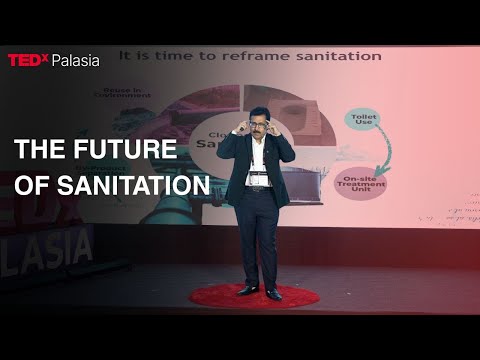
The Secret to Circular Sanitation Is Hidden in Your Commode | V. Srinivas Chary | TEDxPalasia
TEDx Talks· 2025-11-21 16:54
Problem Statement & Current Situation - Each person produces human waste daily, often flushed away and forgotten, initiating a cycle with significant environmental and health consequences [1][2] - Cities face water stress, yet 6-10 liters of fresh water are used per flush [3][4] - Every gram of feces contains approximately 100 billion bacteria, contributing to the spread of diseases like cholera, typhoid, and diarrhea [4][5] - In the country, about 70% of waste goes into the environment without treatment [6] - Only 30% of urban India is connected to sewer systems, and only 28% of the waste gets treated [13] - Septic tanks, while intended as a solution, often lead to untreated waste contaminating water bodies and land [14][15] Proposed Solutions & Innovations - The industry proposes a circular sanitation solution involving on-site treatment to eliminate pathogens, recycle water for agriculture, and use solid waste for soil conditioning [16][17] - Fecal sludge treatment parks utilize pyrolysis to treat waste in under an hour, producing pathogen-free biochar for agriculture and recycling liquid [18][19] - An alternative solution involves a commode-based treatment system using only 1 liter of water, recycling the water for flushing, and using urine to compensate for evaporation [22] - The industry is shifting from a network-based sanitation system to a non-network system, similar to the evolution of mobile phones [25][26] Call to Action & Future Vision - The industry advocates for abandoning the "flush and forget" model in favor of a "flush, treat, and reflush" approach [27] - Collaboration between parliamentarians, governments, and the public is crucial for adopting circular sanitation solutions [27][28] - The industry envisions a future with off-grid toilets, eliminating sewer pipelines, wastewater, and polluted rivers [29][30]
A call for technology to guard groundwater | Lauren Mason Carris | TEDxSaltLakeCity
TEDx Talks· 2025-11-19 17:37
Groundwater Importance & Challenges - Groundwater constitutes 97% of the world's usable fresh water, exceeding the volume in lakes and rivers by 60 times [2] - Over 80% of Utah's monitored aquifers are declining due to human use, with some areas experiencing declines at twice the historical average [4] - Excessive groundwater pumping can lead to land subsidence, permanently damaging aquifers and reducing their water storage capacity; California's Central Valley has seen some areas drop nearly 30 feet in the last century [5] - Groundwater remains largely invisible and unprotected, lacking visible warning signs like receding shorelines in lakes or rivers [7] Monitoring & Innovation - Emerging technologies, including electromagnetic surveys (like an MRI for the Earth), satellite tracking, and real-time data from well sensors, are being used to monitor groundwater [8] - Digital tools are being developed to collect, share, and map groundwater data, showing its location, usage, and changing levels [9] Investment & Solutions - In 2024, less than 1% of the total water budget was allocated to groundwater solutions, highlighting the need for increased investment [10] - Education and behavior change are crucial, with cities providing tools like smart irrigation and leak alerts; innovative approaches, such as visualizing water usage and its impact, can promote community engagement [10][11][12] - Technology has the potential to connect complex data to simple stories, sparking curiosity and action to protect groundwater [13][14][15]

Lindsay(LNN) - 2025 Q4 - Earnings Call Presentation
2025-10-23 15:00
Fiscal Year 2025 Performance - Revenue increased by $69.3 million, or 11 percent, compared to the prior year[13] - Operating income increased by $11.5 million, or 15 percent, compared to the prior year[13] - Diluted earnings per share increased by $0.77 per share, or 13 percent, compared to the prior year[13] - Free cash flow generation reached 122 percent of net earnings[7] - International irrigation revenues exceeded North America irrigation revenues for the first time in Company history[7] Fourth Quarter Performance - Revenues decreased $1.4 million, or 1 percent, compared to the prior year[10] - Operating income decreased $2.2 million, or 16 percent, compared to the prior year[10] - Diluted earnings per share decreased $0.18 per share, or 15 percent, compared to the prior year[10] Irrigation Segment - North America revenue decreased 19 percent[18] - International revenue increased 23 percent due to higher unit sales volume in South America and Australia, and higher project sales in the MENA region[20] - Operating income increased 4 percent primarily from higher revenues and positive leverage of fixed operating expenses[19] Infrastructure Segment - Revenue decreased 16 percent to $24.5 million[27, 28] - Operating income decreased 37 percent to $3.5 million due to lower revenue and a less favorable margin mix with lower Road Zipper revenues[27, 29]

Bangalore’s Water Story : From Scarcity to Sustainability | Dr.Ram Prasath Manohar V IAS | TEDxABBS
TEDx Talks· 2025-09-19 14:54
Water Crisis in Bangalore - Bangalore, India's $130 billion tech capital, faced a hydrological bankruptcy leading to a summer crisis in 2024 [4] - The crisis was caused by climate change, resulting in two consecutive years of monsoon failure, and human-induced aggravation by overexploitation of borewells [6] - During the crisis, the city faced a shortage of 500 million liters per day, equivalent to fulfilling the daily needs of 16 American average size cities with 100,000 residents [7] Solutions and Strategies - The Bangalore Water Supply Board (BWSB) devised five strategic actions to address the water crisis [8] - The BWSB installed 400 mini water distribution points initially, later expanding to 800, to provide water to urban slums [10][11] - The BWSB implemented 1 million aerators in apartments within two weeks, saving 50 million liters per day (MLD), and later expanded to 2 million aerators, saving 100 MLD in one month [14] - The BWSB convinced the construction sector and industries to use secondary and tertiary treated water instead of fresh water [15][16] - The BWSB collaborated with the Indian Institute of Science to innovate gurobacteria technology, producing 300,000 liters of gurobacteria water for cooling towers in IT parks [18] - The BWSB involved a startup company to fit IoT sensors in borewells to monitor data and sustain them for a longer time [19] Community Engagement - 9,000 volunteers enrolled as "Jal Mitras" (water friends) to spread the message of water conservation in the city [20] - More than half a million people took the water conservation pledge, marking the largest such commitment in human history [22]