XR(AR/VR)

Search documents
Counterpoint Research:XR显示市场将同比增长6% AR智能眼镜发展势头强劲
智通财经网· 2025-05-08 09:15
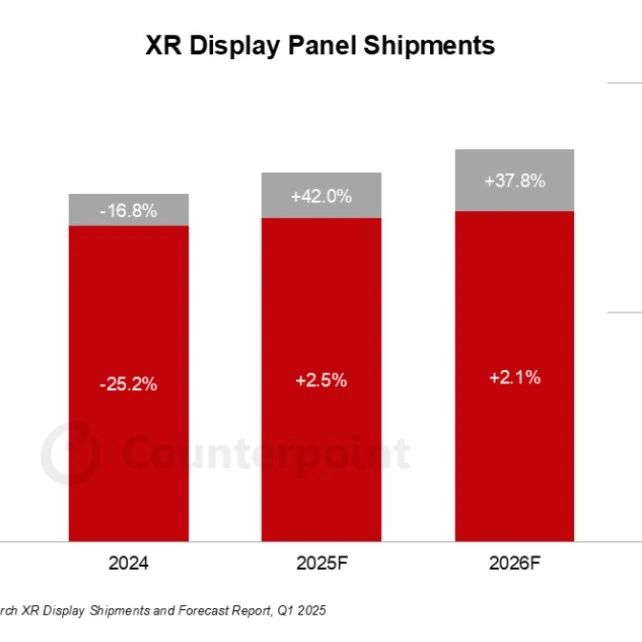
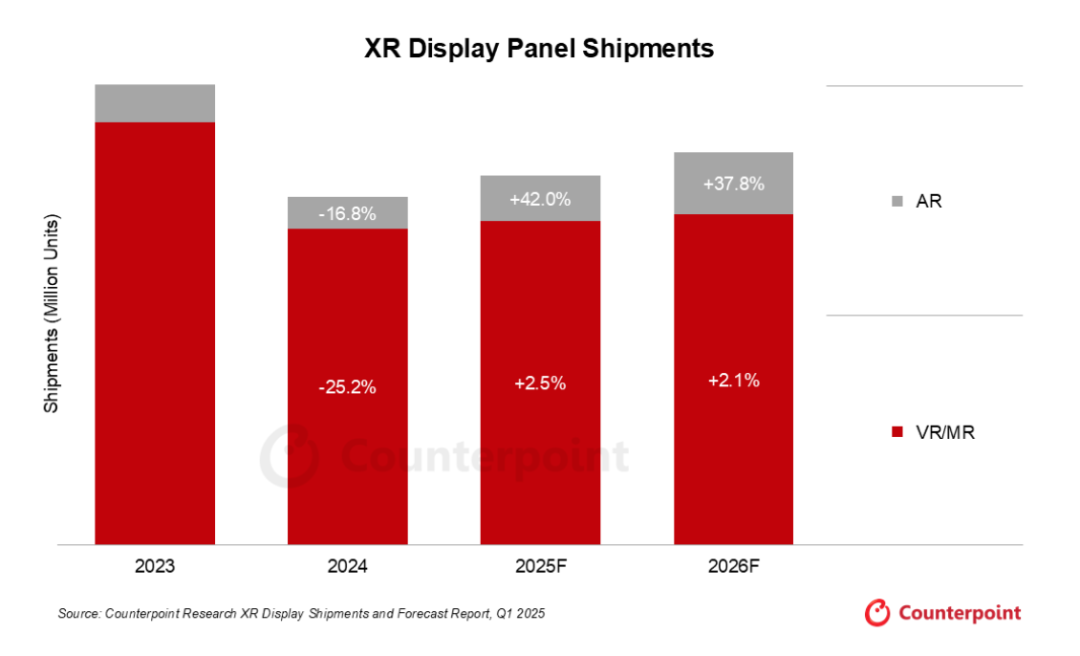
Group 1 - The core viewpoint of the article indicates that global XR (AR/VR) display shipments are expected to grow by 6% year-on-year by 2025, with AR showing a significant growth rate of 42%, compared to VR's modest 2.5% increase [1][5] - The growth in AR is driven by the launch of new AR smart glasses that utilize displays for AI-supported applications rather than just media consumption [1] - LCD technology is projected to dominate VR display technology, accounting for 87% of shipments in 2025, while AR's silicon-based OLED share is expected to decrease to 75% [5] Group 2 - The decline in XR display panel shipments in the previous year was attributed to manufacturers clearing inventory and adjusting business plans, along with the release of Meta Quest 3S, which uses a single LCD panel [5] - A similar recovery trend is anticipated for 2026, with AR display panel shipments expected to grow by 38% and VR by 2.1% [6] - The impact of U.S. tariffs on Chinese imports and its effect on XR device demand remains highly uncertain, with potential downward adjustments to future forecasts if trade tensions do not ease [6]

XR显示市场将同比增长6%,AR智能眼镜发展势头强劲
Counterpoint Research· 2025-05-08 08:06
Core Insights - The global XR (AR/VR) display shipments are expected to grow by 6% year-on-year in 2025, with AR glasses projected to see a significant increase of 42%, while VR growth is limited to 2.5% [1][3] - The anticipated growth in 2025 is seen as a partial recovery following a substantial decline in display shipments in 2024, driven by inventory clearance and adjustments in business plans by XR device manufacturers [3][4] - LCD technology is expected to dominate VR display shipments, accounting for 87% of the total, while silicon-based OLED (OLED-on-Silicon) is projected to hold a 75% share in the AR segment, allowing more room for MicroLED and LCoS technologies [3][4] Market Dynamics - The release of the Meta Quest 3S, which utilizes a single LCD panel instead of a dual-panel design, contributed to the decline in display panel shipments [3] - Despite recent demonstrations of MicroLED smart glasses by companies like Meta and Google, commercial plans have not yet been disclosed, while several Chinese brands, including Even Realities, have begun selling lightweight AR glasses using MicroLED and waveguide technologies [4] - The recovery trend is expected to continue into 2026, with AR display panel shipments projected to grow by 38% and VR by 2.1%, although uncertainties surrounding U.S. tariffs on Chinese imports may impact XR device demand [4]