Counterpoint Research

Search documents
存储价格飙升引发智能手机BOM结构转变
Counterpoint Research· 2026-03-19 04:45
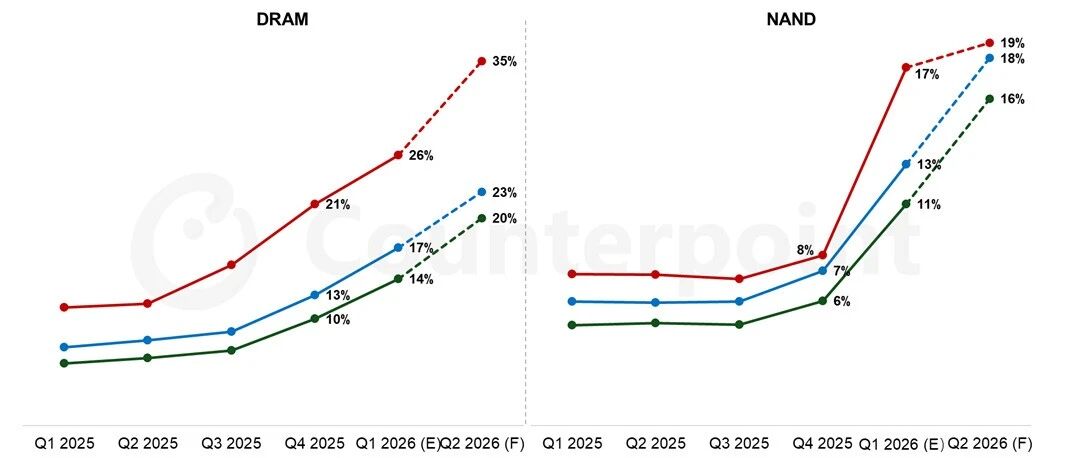
Core Insights - The article discusses the significant impact of rising memory prices on the cost structure of smartphone bill of materials (BOM) [4][5][9] - It highlights that by Q1 2026, DRAM prices are expected to increase by over 50% and NAND prices by over 90% [5] - The article emphasizes the challenges smartphone manufacturers will face in balancing costs, gross margins, and shipment targets due to these rising costs [7] Cost Structure Changes - In the low-end segment (wholesale price below $200), the BOM cost is projected to increase by 25% due to rising storage prices, with storage devices accounting for 43% of the total BOM [5] - For the mid-range segment (wholesale price between $400 and $600), the cost share of DRAM and NAND is expected to rise to 20% and 16% respectively by Q2 2026 [5] - In the flagship segment (wholesale price above $800), BOM costs are anticipated to increase by $100 to $150, with DRAM and NAND making up 23% and 18% of total costs by Q2 2026 [6] Manufacturer Strategies - To mitigate cost pressures, smartphone manufacturers are simplifying product lines and lowering shipment expectations for low-end models [7][9] - Manufacturers are also optimizing specifications by controlling hardware configurations and reducing non-core specifications to offset rising costs [7] - The article predicts that retail prices for smartphones will inevitably rise, with low-end models increasing by approximately $30 and high-end flagship models by $150 to $200 [7]

重要通知|内容更新转至订阅号,欢迎关注
Counterpoint Research· 2026-03-19 04:45
Company Overview - Counterpoint Research is a global market research firm focused on the technology ecosystem, providing services to clients ranging from smartphone OEMs to chip manufacturers and large tech companies [2] - The company has offices in major global innovation hubs, manufacturing centers, and business cities, with a team of experienced analysts covering various roles [2] - Core research areas include AI, automotive electronics, consumer electronics, displays, eSIM, IoT, positioning platforms, macroeconomics, manufacturing, networking and infrastructure, semiconductors, smartphones, and wearables [2] Business Consultation - Contact information for business inquiries includes Arron Zhu, Sales Manager, reachable at +86 18565629175 or via email at arron.zhu@counterpointresearch.com [3] - For media interviews, Nianhang Wei, Marketing Manager, can be contacted at +86 18684912207 or via email at nianhang@counterpointresearch.com [3]

苹果将挑战三星折叠屏领先地位:2026年市场预计增长20%
Counterpoint Research· 2026-03-19 04:45
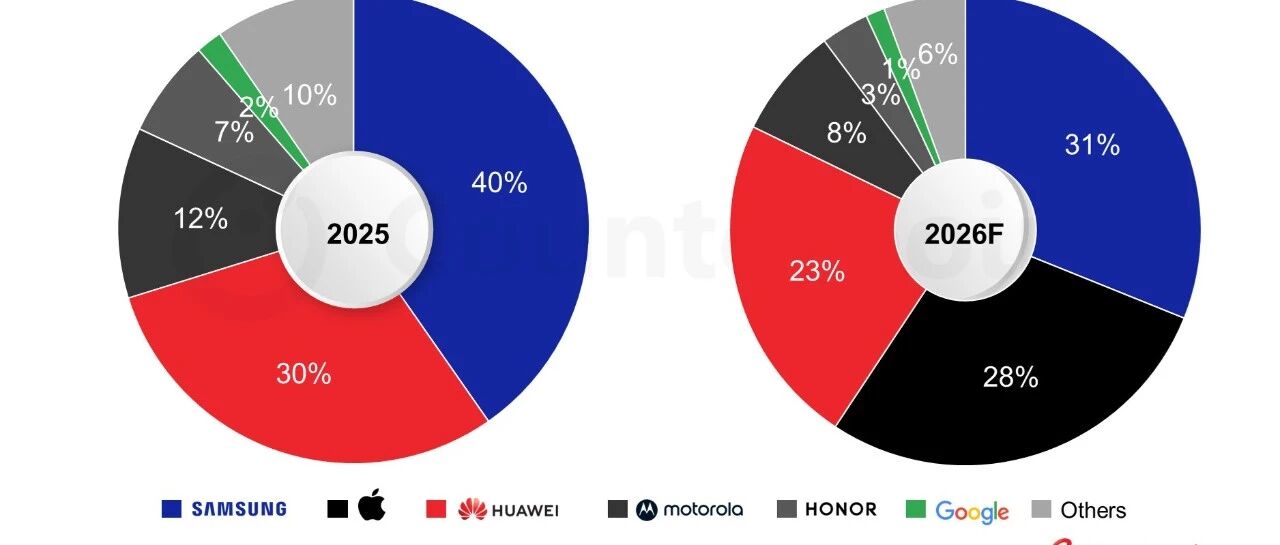
Core Insights - The global foldable smartphone market is expected to grow by 20% in 2026, driven by Apple's anticipated entry, the ongoing premiumization of the smartphone market, and increased OEM participation [4][8] - Apple's first foldable iPhone is projected to capture 28% market share by 2026, significantly reshaping the competitive landscape [4][8] - The competition in the foldable smartphone market is expected to intensify, particularly with a focus on book-type devices that offer larger displays suitable for multitasking and media consumption [5][9] Market Dynamics - The foldable smartphone segment currently represents only 1.6% of the overall smartphone market in 2025, but its importance is rising as manufacturers seek high-margin models to counteract pricing pressures in the entry and mid-range markets [9] - Major Android OEMs are accelerating updates to their foldable product lines to solidify their positions in the premium market, with new book-type devices expected to launch throughout the year [8][12] Competitive Landscape - Samsung is preparing to update its foldable product line with the new Galaxy Z Fold and Z Flip series expected to launch in Q3 2026, adjusting its lineup to directly compete with Apple's anticipated book-type device [12] - Motorola is adopting an aggressive pricing strategy with its Razr series in the clamshell foldable segment and plans to release its first book-type device, Razr Fold, in Q2 2026 [12] - Google is expected to refresh its foldable product line with a new generation Pixel Fold in Q4 2026, targeting the ultra-premium price segment with improved design features [12]

2025 年下半年全球智能眼镜出货量同比增长 139%;Meta 市场份额扩大至 82%
Counterpoint Research· 2026-03-19 04:45
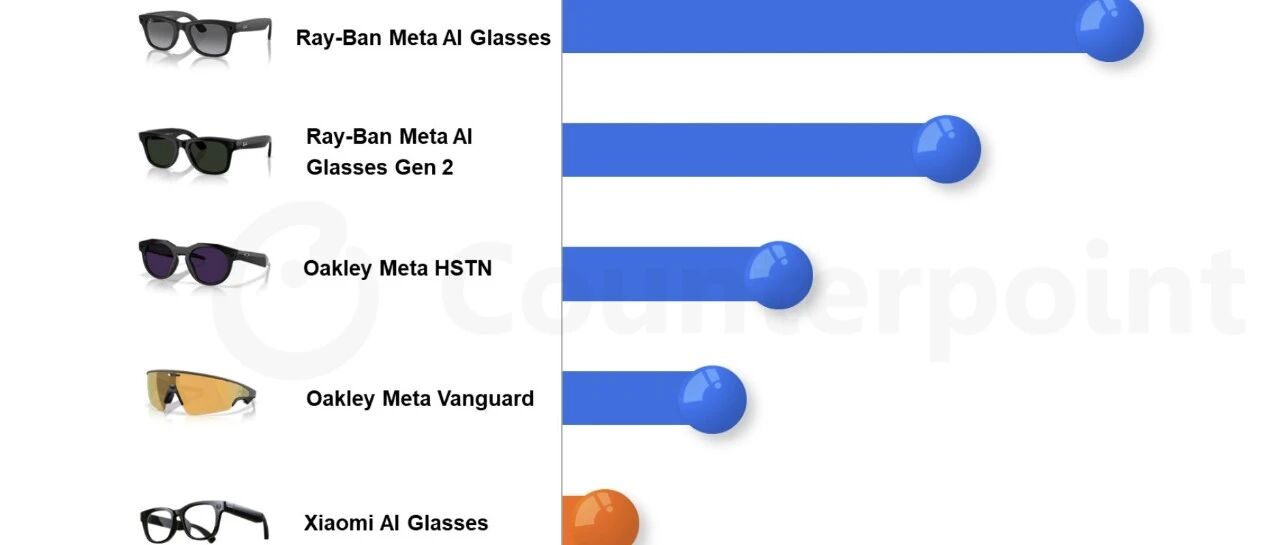
Core Insights - The global smart glasses market is expected to see a year-on-year growth of 139% in the second half of 2025, driven primarily by AI smart glasses, which will account for 88% of total shipments [4][5][10] - Meta has solidified its market leadership with an 82% share in the smart glasses market, largely due to its expanded product line and new product launches [5][7][10] - The average retail selling price (ASP) of AI smart glasses is projected to rise from $347 in the first half of 2025 to approximately $360 in the second half, influenced by Meta's pricing strategies [4][5] Market Dynamics - The demand for basic smart audio glasses has weakened, leading to a significant drop in their ASP to around $63, primarily due to reduced shipments from high-end manufacturers like Huawei and Amazon [4][5] - North America leads the market with a 37% share of total shipments in the second half of 2025, while China's market share has decreased to 6% despite numerous new product launches [5][11] - The Indian market has shown remarkable growth, with a 15-fold increase in shipments after Meta's entry, although it still only accounts for 2% of the global total [11][13] Competitive Landscape - Meta's new product, Ray-Ban Meta AI Glasses (second generation), has received positive feedback for its video capabilities, indicating a successful enhancement in user experience [10] - Xiaomi has emerged as a significant player in the Chinese market, ranking second after Meta, with its AI glasses shipments increasing by over 200% following a new product launch [10][11] - The overall market for other OEM manufacturers remains relatively small compared to Meta, which dominates the best-selling smart glasses rankings [7][10] Future Outlook - The smart glasses market is expected to maintain strong growth into 2026 and beyond, driven by aggressive expansion plans from leading manufacturers and the introduction of new brands [5][13] - Rising memory prices may pose challenges, but the overall impact is expected to be limited due to the high gross margins of AI glasses [13]

欢迎报名参加Counterpoint 2026 科技生态与半导体产业洞察上海线下研讨会
Counterpoint Research· 2026-03-19 04:45
Core Insights - The article emphasizes the accelerating transition of AI towards "agentic AI" and "physical AI" by 2026, significantly impacting global storage and semiconductor manufacturing, altering supply-demand structures, capacity layouts, pricing, and competitive strategies [5]. Event Information - The Counterpoint Research seminar will provide insights into the AI ecosystem and its implications for various industries, focusing on the critical inflection points in 2026 [7][9]. - The event is scheduled for March 24, 2026, at the Grand Hyatt Shanghai, featuring discussions on key drivers such as smart cities, humanoid robots, and autonomous driving [8]. Agenda Highlights - The seminar will cover six main topics: 1. AI ecosystem and its transformative impact [7]. 2. The rhythm of embodied intelligence and key driving factors [8]. 3. Trends in manufacturing and market dynamics, including wafer foundry capacity and pricing [8]. 4. New cycles in storage, including price outlook and vendor strategies [8]. 5. The evolving landscape of edge AI, with mobile devices remaining central [8]. 6. The role of generative AI in advancing robotic intelligence and its implications for computational needs [14]. Speaker Profiles - Marc Einstein, Director of AI Research, will discuss the implications of agentic AI on the industry [8]. - Ethan Qi, Deputy Director of Robotics Research, will focus on the evolution of "robot brains" and their computational demands [14]. - Kevin Li, Deputy Director of Automotive Research, will analyze the progress of domestic automotive chips and overall vehicle intelligence [14]. - Jake Lai, Head of Foundry Services, will provide insights into the 2026 foundry market and the structural impacts of AI [14]. - MS Hwang, Director of Storage Research, will discuss storage price trends and their downstream effects [14]. - Shiwen Ma, Analyst in Mobile Research, will explore how AI is reshaping consumer electronics and growth opportunities [14].

Counterpoint 研讨会2026年具身智能和半导体产业洞察
Counterpoint Research· 2026-03-05 11:25
Core Insights - The article emphasizes the transition of embodied intelligence from concept to commercial application by 2026, focusing on key areas such as smart cities, humanoid robots, and autonomous driving, while identifying growth opportunities within these sectors [5][7]. Group 1: Event Overview - The Counterpoint seminar will take place on March 24, 2026, from 13:30 to 18:00 at the Grand Hyatt Shanghai, aimed at exploring the commercial milestones of embodied intelligence [6]. - The seminar will cover the evolution of AI from generative models to agentic and physical AI, highlighting the shift in industry focus towards computational infrastructure, key chips, advanced manufacturing, and diverse edge devices [5][11]. Group 2: Target Audience - The event is designed for professionals in semiconductor, cloud data centers, automotive electronics/intelligent driving, robotics/intelligent hardware, consumer electronics OEM/ODM, and investment and research sectors [7]. Group 3: Agenda Highlights - The agenda includes various presentations on topics such as the AI ecosystem, humanoid robot brain and computational needs, automotive chip localization, and the impact of AI on consumer electronics, providing insights into market dynamics and strategic opportunities [8]. - Key speakers will discuss the structural impacts of the AI wave on the foundry market, storage industry, and consumer electronics, offering actionable market and strategic insights for 2026 [11]. Group 4: Pricing Information - Ticket prices for the seminar are set at 800 RMB for regular tickets and 500 RMB for early bird tickets until March 17 [12].

Counterpoint Research 中国系列公开线上研讨会 | 新际遇 新技术 新政策
Counterpoint Research· 2026-01-12 02:45
Core Insights - Counterpoint Research is hosting a series of webinars in January 2026 focusing on memory price trends, humanoid robots, and the automotive market dynamics, aimed at helping businesses anticipate industry changes and seize emerging opportunities [4][18]. Group 1: Memory Price Trends - The global memory market has experienced unprecedented fluctuations, with a projected price increase of 40%-50% by Q4 2025, driven by a significant shift in supply and demand dynamics due to strong demand for high-end memory from AI data centers and high-performance computing [10]. - Traditional memory types like LPDDR4 and DDR4 are facing supply shortages, leading to price inversion in the market [10]. - The webinar will explore supply-demand dynamics, pricing drivers, and their impact on OEMs and the broader technology ecosystem [10]. Group 2: Humanoid Robots - The humanoid robot market is expected to see significant growth, with a projected compound annual growth rate (CAGR) of 69.7% from 2025 to 2030, driven by expanded application scenarios, enhanced AI capabilities, and reduced hardware costs [13]. - The upcoming webinar will delve into the core technologies and definitions of humanoid robots, future application scenarios, market potential, and supply chain opportunities [17]. Group 3: Automotive Market Insights - The Chinese automotive market is undergoing a critical transformation driven by both policy and technology, with opportunities and challenges expected in 2026 [18]. - The webinar will feature insights from industry experts on market structure and sales trends, providing a unique macro perspective on the automotive landscape [16].

CES 2026 —— 万众期待
Counterpoint Research· 2026-01-12 02:45
Core Insights - CES 2026 will showcase the rise of high-performance computing, the automotive industry's shift towards a "software-first" development model, and the continued integration of embedded AI in various devices [4][5][9] Group 1: Major Players and Their Focus - NVIDIA, AMD, and Qualcomm are leading the charge towards AI-first computing, with a focus on upgrading existing chip architectures rather than launching entirely new ones [5][6][8] - NVIDIA's CEO Jensen Huang will emphasize AI's core value, showcasing advancements in data centers, AI PCs, and automotive platforms during his keynote [6][9] - AMD aims to position itself as a leader in AI solutions across cloud, edge, and personal computing, focusing on gradual enhancements rather than single blockbuster products [7][8] - Qualcomm will highlight its advancements in AI-intensive mobile platforms and its growing influence in the automotive sector, showcasing the Snapdragon 8 Elite Gen 5 chip [8][9] Group 2: Automotive Technology Trends - CES 2026 will focus on three key battles in automotive technology: the shift from hardware to software, the competitive pressure from Chinese automakers, and the acceleration of fully autonomous vehicles [10][11][12] - The event will showcase how traditional automakers and suppliers are navigating a costly and complex transition to software-defined vehicles (SDVs) [11][13] - Chinese automakers like BYD and Geely are rapidly expanding, posing significant competition to Western manufacturers, who must demonstrate their ability to bridge the software gap [11][13] Group 3: AI and Robotics - AI-driven advancements in client computing will be a recurring theme, with a focus on the integration of high-performance computing in various applications [9][14] - Robotics technology is becoming a rapidly growing vertical for semiconductor and AI platform companies, with applications spanning consumer electronics and industrial scenarios [14] - The development of lightweight, task-specific AI solutions will continue to dominate, particularly in the context of memory constraints and security considerations [14] Group 4: Consumer Technology Innovations - The CES 2026 will see the rise of AI PCs transitioning from early adoption to mainstream applications, with a focus on productivity and workflow enhancements [15][20] - OLED technology is expected to expand significantly in laptops, monitors, and high-end tablets, particularly in gaming and creative fields [23][26] - New health tech innovations, such as in-ear brainwave sensors and hormone detection devices, will be showcased, highlighting the integration of AI in health monitoring [19][22]



豆包 AI 手机的崛起正挑战既有 App 生态体系
Counterpoint Research· 2026-01-12 02:45
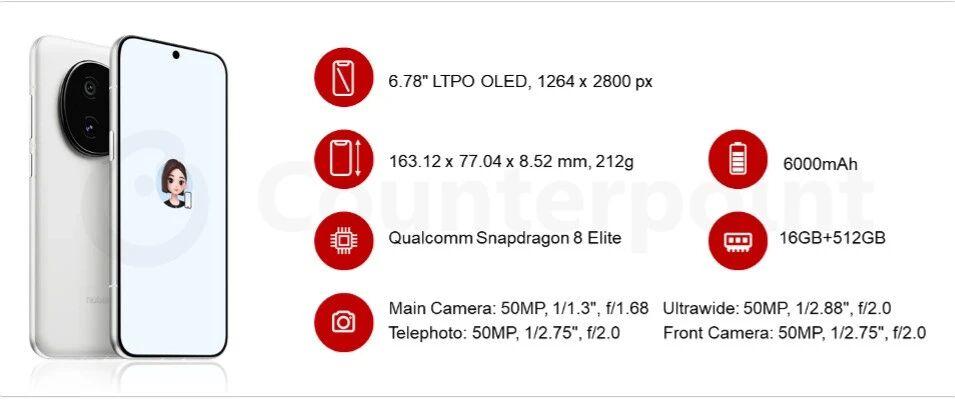
Core Insights - The article discusses the launch of the Nubia M153, the first native AI smartphone developed by ByteDance and ZTE, which was released as a "technology preview" on December 1, 2025, and sold out quickly, indicating strong market interest [4] - According to Counterpoint's "AI 360" report, the global smartphone shipment share supporting GenAI is expected to exceed 30% in 2025, up from 20% in 2024, and reach 57% by 2029, highlighting the growing importance of AI in high-end smartphones [5] - The article emphasizes the competitive landscape between smartphone brands and internet giants, focusing on user engagement, service entry control, and high-value data acquisition [8][10] Market Trends - The Nubia M153 is equipped with a Snapdragon 8 Elite platform, and future iterations are expected to enhance NPU performance to 80-100 TOPS, raising hardware requirements for smartphones [5] - AI functionalities are increasing the demand for RAM and ROM, as well as high-bandwidth memory, while also raising power consumption by approximately 8%-12%, posing challenges for battery technology [5] AI Capabilities - The core advantage of the Doubao AI smartphone lies in its ability to understand user intent and execute tasks across multiple apps, although it still faces challenges in complex, multi-app scenarios [6][8] - The high-privilege simulation operations of Doubao AI are causing friction with existing app ecosystems, triggering security mechanisms in major applications like WeChat and Alipay [6][8] Strategic Partnerships - The collaboration between ByteDance and ZTE mirrors the division of labor seen in other tech partnerships, with Doubao providing AI capabilities and Nubia handling hardware design [10] - The article suggests that smartphone brands with established ecosystems may not adopt the same division of labor, instead exploring open and collaborative app frameworks [10] Future Outlook - The article anticipates that smartphone brands and leading apps will gradually reach a consensus on standardized ecological interfaces, allowing system-level AI to act as a unified scheduling hub [10] - The control of high-value data and data security will remain central issues in ongoing negotiations between smartphone manufacturers and app developers [10]

HERE 与 TomTom 在 2026 年定位平台竞争力评估指数中脱颖而出,成为先锋
Counterpoint Research· 2026-01-12 02:45
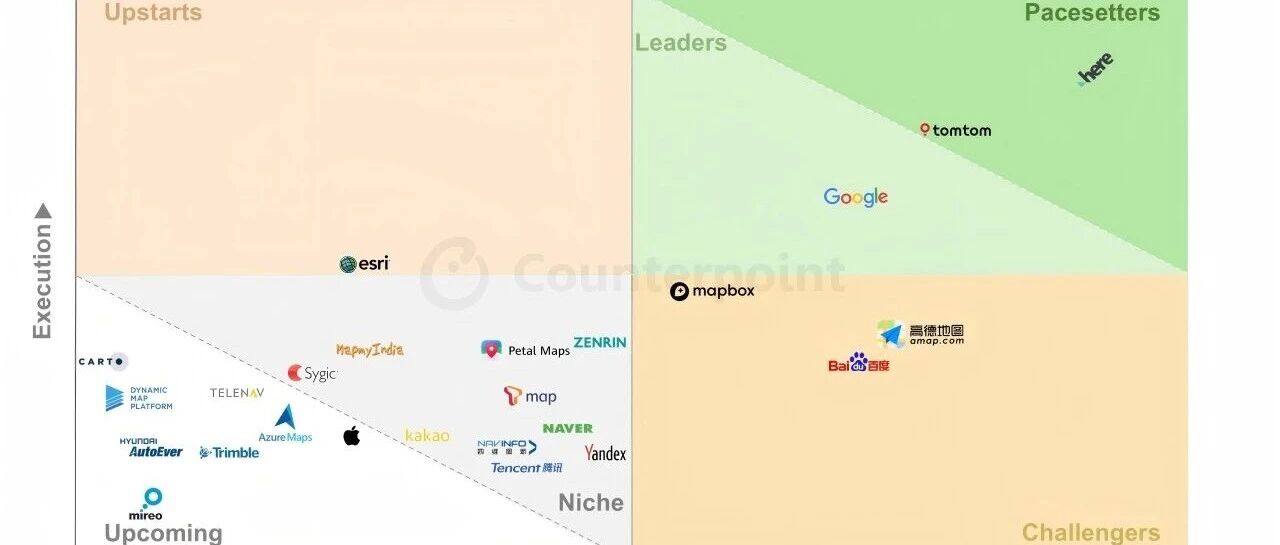
Core Insights - The article discusses the findings of the "2026 Positioning Platform Competitiveness Assessment Report" by Counterpoint Research, highlighting HERE and TomTom as "Pacesetters" in the positioning platform competitiveness index [4][7] - The report emphasizes the transformation of positioning platforms from traditional mapping solutions to AI-driven data platforms, enhancing user experience through real-time intelligence and personalized services [4][5] Group 1: Positioning Platform Competitiveness - HERE and TomTom are recognized as "Pacesetters" in the positioning platform competitiveness index, while Google is categorized as a "Leader" [4][7] - Baidu, Gaode, and Mapbox are classified as "Challengers" due to their strong platform capabilities but limited market coverage [4][8] - ESRI is noted as an "Upstart" for its execution capabilities, although it still lags behind leading companies in certain dimensions [4] Group 2: HERE's Performance - HERE excels in both platform capability and execution, supported by a comprehensive service product portfolio and a robust partner ecosystem across various verticals like automotive and logistics [5] - The company is leading the transition towards software-defined vehicles (SDVs) and collaborates closely with automakers to guide their transformation [5] - HERE is increasing its R&D investment in product technology and innovation, particularly in AI solutions for the automotive and logistics sectors [5] Group 3: TomTom's Innovations - TomTom has made significant strides with its Orbis map in 3D visualization and traffic analysis, earning its place alongside HERE as a "Pacesetter" [5] - The company is the second global entity, after Google, to launch a Model Context Protocol (MCP) server, facilitating rapid deployment of navigation systems for automakers [5] Group 4: Market Dynamics - The proliferation of location-aware AI features like "search" and "nearby" is leading to hyper-localized and highly personalized user experiences becoming mainstream [7] - Google Maps benefits from its strong core mapping capabilities and vast crowdsourced data from billions of monthly active users, solidifying its "Leader" status [8] - Baidu and Gaode are recognized as regional leaders in China, while Mapbox stands out for its developer-centric approach, offering customizable SDKs for users focused on personalization and visualization [8]