safe havens

Search documents
Why you keep hearing about a 'K-shaped economy' and 'stagflation'
Yahoo Finance· 2026-03-25 09:07
Economic Conditions - Stagflation is characterized by rising inflation, rising unemployment, and stagnant economic growth, with current fears emerging due to rising oil prices linked to geopolitical tensions [1][4] - The U.S. economy is currently not in stagflation, but there are warning signs, including a rising unemployment rate of 4.4% and CPI inflation at 2.4% year-over-year, which may increase due to oil price spikes [6][5] Income Disparity - The concept of a "K-shaped economy" describes a scenario where high-income earners are financially advancing while low-income earners are falling behind, particularly highlighted during the post-pandemic recovery [2][5] - Household wealth is increasingly concentrated at the top, with high-income households driving a larger share of consumer spending, while lower-income households struggle to keep pace with rising prices [1][2] Labor Market Dynamics - The U.S. labor market is described as a "low-hire, low-fire" environment, where companies are hesitant to hire new employees or let go of existing ones due to uncertainty about future needs [10][11] - Job growth has been concentrated in specific sectors like healthcare and education, making it challenging for job seekers in other industries [11] Economic Uncertainty - Economic uncertainty is prevalent due to various factors, including evolving tariff policies, geopolitical tensions, stock market volatility, and the impact of AI on employment [12][13] - The Federal Reserve is maintaining a cautious approach to interest rates, currently holding the federal funds rate steady at 3.5% to 3.75% while considering the economic impact of ongoing conflicts [20] Consumer Sentiment - The University of Michigan's consumer sentiment index has shown significant fluctuations, indicating a perception of affordability issues as prices for essentials like groceries and housing continue to rise [15][16] - The affordability crisis has become a central theme in political discourse as Americans face challenges in meeting basic needs [15] Investment Trends - Investors are seeking safe havens such as U.S. Treasury bonds, physical gold, and defensive stocks amid persistent economic uncertainty [14] - High-yield savings accounts and certificates of deposit are also being considered as safe investment options for consumers looking for stability [14]
X @Bloomberg
Bloomberg· 2026-03-06 00:01
Traditional safe havens — Treasuries, the yen, the Swiss franc, and gold — have offered investors no refuge this week https://t.co/1jtwDBXSFk ...
Why all eyes are on the price of gold#shorts #gold #markets
Bloomberg Television· 2026-02-06 21:12
So this move in gold started after Jackson Hole on August 22nd last year. Basically what's going on is there is this fear that fiscal policy has been out of control for so long we are running deficits in noncrisis peaceful times of five 6% of GDP. We've never really done that before.And so there is a fear in markets that fiscal policy is just out of control and the only way to get debt uh to sustainable levels is to print money and to inflate our way out of overindness. And so my view is that this gold rall ...


Trump's Kevin Warsh Nomination Changes Nothing: Economist Says Debt Monetization Has 'Further To Run,' Debasement Trade Is 'Very Much Intact'
Yahoo Finance· 2026-02-03 18:31
Core Viewpoint - The nomination of Kevin Warsh to lead the Federal Reserve will not alter the ongoing "debasement trade," as increasing public debt necessitates the monetization of U.S. fiscal deficits [1] Fiscal Reality - The recent significant drop in precious metals prices, with silver falling 26% and gold 9%, does not undermine the fundamental drivers behind their rally [2] - The market's pursuit of safe havens is driven by a fiscal trajectory that cannot be resolved by a single personnel change [2] Market Expectations - The nomination of Warsh is not expected to change the current fiscal policy path, which is characterized as "reckless" [3] - Rising public debt is leading to increased long-term yields, which will intensify political pressure on the Fed to lower interest rates [3] - Following Warsh's nomination, Treasury yields decreased, indicating market expectations for additional rate cuts, suggesting a "dovish" stance on interest rates [3] Political Influence - The political dynamics of the incoming administration are likely to have a greater impact on Fed policy than individual ideologies [4] - There is concern that Warsh could face political backlash similar to that experienced by Powell if he does not act decisively before midterm elections [4] Temporary Correction - The recent volatility in silver and gold is viewed as a "modest" correction rather than a reversal of the upward trend [5] - The price drop has merely returned precious metals to levels seen a few weeks prior, following an aggressive run-up in January [5] Debasement Trade Continuation - The "debasement trade," characterized by the search for safe havens from debt monetization, is expected to persist regardless of who leads the Fed [6] - Despite recent price corrections, the fundamentals supporting the debasement trade remain intact [6] Market Performance - The top U.S. indices exhibited mixed performance, with the S&P 500 rising 0.23% while the Nasdaq Composite and Dow Jones fell by 0.29% and 0.50%, respectively [6]
Trump's Kevin Warsh Nomination Changes Nothing: Economist Says Debt Monetization Has 'Further To Run,' Debasement Trade Is 'Very Much Intact' - State Street SPDR S&P 500 ETF Trust (ARCA:SPY)
Benzinga· 2026-02-02 07:11
Core Viewpoint - The nomination of Kevin Warsh to lead the Federal Reserve will not alter the ongoing global "debasement trade," as increasing public debt necessitates the monetization of U.S. fiscal deficits [1] Fiscal Reality - Despite a significant drop in precious metals prices, the fundamental drivers for their rally remain intact, with the market's search for safe havens being influenced by an unsustainable fiscal trajectory [2] - The nomination of Warsh does not change the underlying fiscal issues, which are characterized as a "reckless path" of fiscal policy [2] Public Debt and Market Signals - Rising public debt is leading to increased long-term yields, which will intensify political pressure on the Fed to lower interest rates and cap these yields [3] - Following Warsh's nomination, Treasury yields decreased, and futures prices indicated expectations for additional rate cuts, suggesting a market belief that Warsh will adopt a dovish stance on interest rates, benefiting hard assets [3] Political Influence on Fed Policy - The political dynamics of the incoming administration are expected to have a greater impact on Fed policy than individual ideologies, with potential risks for Warsh if he does not align with political expectations [4] Temporary Correction in Precious Metals - The recent volatility in silver and gold is viewed as a minor correction rather than a reversal of trends, as the price drop merely returns metals to levels seen weeks prior [4] - The "debasement trade," which reflects market behavior seeking safe havens from debt monetization, is expected to continue regardless of who leads the Fed [5] Benchmark Indices Performance - The top U.S. indices experienced mixed results, with the S&P 500 rising by 0.23% over the past week, while the Nasdaq Composite and Dow Jones indices fell by 0.29% and 0.50%, respectively [5]
X @Bloomberg
Bloomberg· 2026-01-26 02:50
Bitcoin suffered a sharp fall Sunday to start the week on shaky ground, even as it staged a minor rebound in early Asia, as global geopolitical tensions prompted a move away from risk assets and into safe havens such as gold https://t.co/Cz4c3l6eTI ...
Gold Falls After Trump Backs Down on Greenland. How Other Havens Are Trading.
Barrons· 2026-01-22 12:11
Core Viewpoint - The price of gold and other safe havens is declining as President Trump has retracted his proposal for additional tariffs on eight European countries, leading to a reversal of recent price rallies [1] Group 1 - The recent rally in gold prices has been halted due to geopolitical developments [1] - Safe haven assets, including gold, are experiencing a price drop following the news of tariff proposals being withdrawn [1]
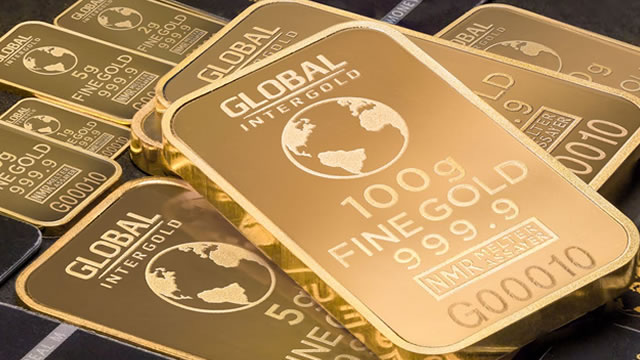
Gold's climbs above $4,100, but is there more room to run?
Yahoo Finance· 2025-10-13 22:32
Market Trends & Drivers - Gold prices are hitting record highs, exceeding $4,100 per ounce, driven by investors seeking safe havens amid potential tariffs and geopolitical tensions [1][20] - Central bank buying, particularly from BRICS nations, is a significant factor driving gold prices higher, as countries seek to diversify away from the US dollar [4][5] - US-China trade tensions and the weaponization of Swift have accelerated the move away from the dollar and towards gold as a reserve asset [5][6] - Gold ETF flows have increased significantly year-to-date, indicating growing investor interest [13] - Silver is catching up to gold in performance, driven by industrial and precious metal demand, as well as its perception as a more affordable alternative [21][22][23][24][25] Price Targets & Predictions - One expert predicts gold could reach $4,500 by the end of the year and potentially exceed $5,000 in a year, depending on fundamental shifts [7] - Another expert sets a gold price target of $5,200 by 2026, contingent on a correction to $3,500-$3,600 [30][34][35] Risks & Catalysts - Near-term risks for gold investors include the potential for price retracement after a significant move [8] - Potential positive catalysts for gold include the Federal Reserve loosening monetary policy and cutting interest rates more aggressively than anticipated [11] - Factors that could weaken the constructive view on gold include the government cutting deficit spending, dropping tariffs, or the Federal Reserve hiking interest rates [17][18] Investment Strategies - Exposure to gold can be gained through physical gold, ETFs, or gold mining stocks [13] - Gold mining stocks have become more attractive as their margins have widened due to the significant gold rally outpacing mining costs [15][16] - One ETF, the GY ETF, buys gold futures and invests the remaining funds in investment-grade corporate bonds to generate a 5% yield [13]