
水利灌溉

Search documents
陕西省水利厅召开大型灌区巩固深化农业水价改革座谈会
Shui Li Bu Wang Zhan· 2026-01-15 03:01
Core Insights - The meeting reviewed the achievements of the agricultural water price reform over the past decade, highlighting the establishment of a pricing mechanism that combines price increases with subsidies, resulting in a significant reduction in irrigation costs and improved water usage efficiency [1][2] Group 1: Achievements of the Reform - The reform has covered an area of 20.04 million mu, exceeding the target of 18.77 million mu by 106% [1] - The average annual water savings achieved is 96 million cubic meters, with the effective utilization coefficient of irrigation water reaching 0.586 [1] Group 2: Pilot Experiences - The Jiaokou Chao Wei Irrigation District implemented a water rights system and a tiered pricing model, which increased maintenance funding for state-owned infrastructure [2] - The Donglei Chao Huang Irrigation District utilized the "Nong Shui Bao" app to optimize payment services, achieving over 10 million cubic meters in annual water savings [2] Group 3: Future Directions - The meeting emphasized the need to improve the four mechanisms of water price reform, optimize pricing for economic crops, and promote seasonal pricing strategies [2] - There is a focus on enhancing the management system of irrigation districts and securing financial support from the provincial government to address subsidy gaps [2]
【省水利厅】宝鸡峡引渭灌区进入冬灌高峰期
Shan Xi Ri Bao· 2026-01-06 23:02
Core Insights - The Shaanxi Province's Baoji Gorge Irrigation District has commenced its winter irrigation for the 2026 season, with a daily water intake of 24 cubic meters per second and an irrigated area exceeding 22,000 acres, indicating a peak period for winter irrigation [1][2] Group 1: Water Resource Management - The irrigation center is focusing on water source security, facility maintenance, and optimized scheduling to ensure stable grain production [1] - Early planning has been implemented, including soil moisture assessment and water situation forecasting, with reservoir storage completed before irrigation [1] - A detailed water distribution plan has been developed to maximize water resource utilization efficiency, addressing the gradual decrease in river water supply [1] Group 2: Infrastructure and Maintenance - The center is undertaking comprehensive repairs and maintenance of irrigation facilities, including channels, hydraulic structures, and electromechanical equipment, to ensure stable operation [1] - The focus is on a systematic approach to repair and maintenance during the optimal construction period before irrigation [1] Group 3: Irrigation Service Optimization - The irrigation district is advancing agricultural water pricing reforms, implementing policies such as progressive pricing for excess usage and promoting QR code metering for transparent billing [2] - A professional irrigation service team has been established to assist farmers lacking labor, enhancing service efficiency [2] - Continuous monitoring and increased inspection frequency are being enforced to address safety hazards and ensure the security of winter irrigation [2]
古渠藏巧思 一水贯千年
Bei Jing Wan Bao· 2025-12-30 08:02
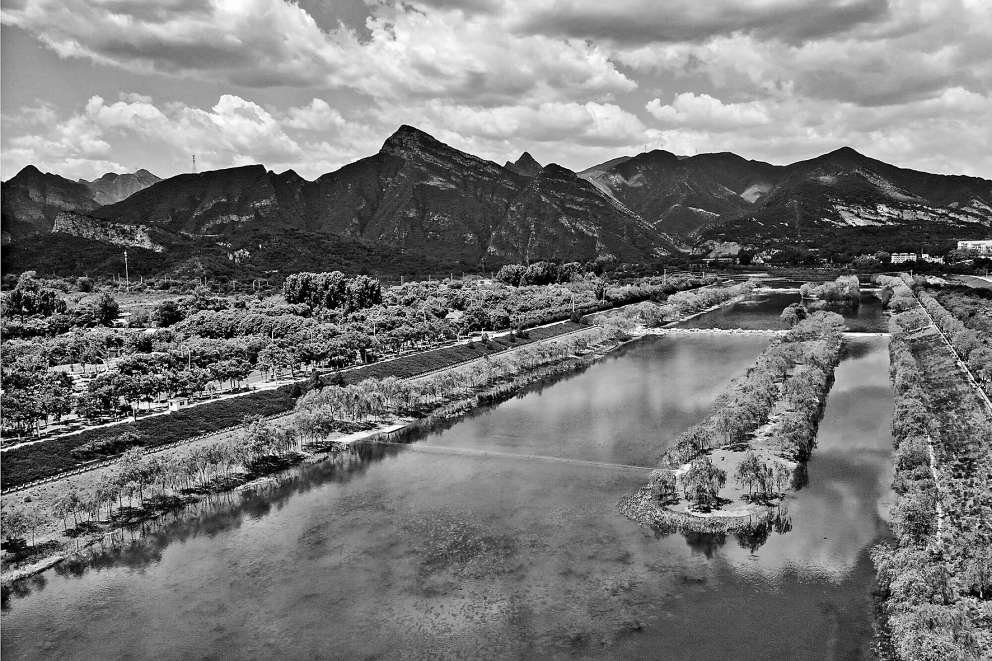
Core Viewpoint - The announcement of four irrigation engineering heritage sites from China, including the Yongding River Ancient Canal Irrigation Project, marks a significant recognition of historical water management systems and their cultural importance [1]. Group 1: Heritage Recognition - The Yongding River Ancient Canal Irrigation Project is recognized as the first irrigation system in the Beijing-Tianjin-Hebei region to be included in the World Irrigation Heritage List [1]. - The four recognized sites are: Beijing Mentougou Yongding River Ancient Canal Irrigation Project, Yunnan Yuanyang Hani Terraces, Jiangsu Chishan Lake Irrigation Project, and Sichuan Qianjiang Weir [1]. Group 2: Historical Significance - The Yongding River Ancient Canal Irrigation Project consists of five ancient canals and surrounding ancient springs, serving as a vital link for nourishing Beijing [3]. - The construction of the Pujia Tai Canal began in 1903 and was completed in 1925, taking 23 years to finish [3]. - The canal system allowed villagers to cultivate two crops annually, transforming the area into a prosperous agricultural hub [4]. Group 3: Cultural and Engineering Aspects - The irrigation system reflects the historical efforts of local villagers and government initiatives to manage water resources effectively [6][7]. - The Dingjiatan Canal, built during the Guangxu era, showcases the imperial efforts in water management, initiated by officials like Zuo Zongtang [6]. - The Sanjiadian Canal has a history dating back to the Liao Dynasty, indicating the long-standing importance of irrigation in the region [8]. Group 4: Modern Implications - The ancient irrigation systems, including canals, wells, and springs, have formed a complex water network that supports local agriculture and community life [11]. - The management practices and cultural traditions surrounding these irrigation systems contribute to the rich water culture of the Yongding River area [11].

超10.9亿亩
Xin Lang Cai Jing· 2025-12-25 22:29
Core Insights - The total irrigated area of arable land in China has exceeded 10.9 million acres, an increase of over 5.3 million acres since the end of 2020 [1] Group 1: Irrigation and Agricultural Production - By 2025, the irrigated area is expected to contribute to 80.76% of the national grain output, an increase of 0.41 percentage points from last year [1] - Large and medium-sized irrigation areas account for 38.89% of the grain sowing area and 50.9% of the total grain output in the country [1] Group 2: Infrastructure Development - The Ministry of Water Resources is enhancing the modernization and renovation of large and medium-sized irrigation areas, leveraging the "Two Heavy" construction initiative [1] - Seven new large irrigation areas are set to commence construction, with a designed irrigation area exceeding 5.6 million acres; 15 ongoing large irrigation projects will have a designed irrigation area of 11.3 million acres [1] Group 3: Investment Strategy - The water resources department is promoting both "hard investment" and "soft construction," with a dual approach from government and market forces to advance the modernization of large and medium-sized irrigation areas [1]
全国耕地灌溉面积已超10.9亿亩 较2020年底增加5300万亩以上
Jing Ji Ri Bao· 2025-12-25 22:03
Core Insights - The total irrigated area of arable land in China has exceeded 10.9 million acres, an increase of over 5.3 million acres since the end of 2020 [1] - By 2025, the irrigated area is expected to contribute to 80.76% of the national grain output, up from 80.35% last year, indicating a 0.41 percentage point increase [1] - Large and medium-sized irrigation areas account for 38.89% of the national grain sowing area and 50.9% of the total grain output [1] Summary by Sections Irrigation Area Expansion - The Ministry of Water Resources has strengthened the modernization and renovation of large and medium-sized irrigation areas, with plans to start construction on 7 large irrigation areas by 2025, covering over 5.6 million acres [1] - Ongoing construction of 15 large irrigation areas is expected to cover 11.3 million acres, along with 157 modernization projects for large and medium-sized irrigation areas, which will add nearly 20 million acres of restored and improved irrigation area upon completion [1] Water Efficiency Policies - The Ministry of Water Resources, along with four other departments, has issued opinions on establishing a comprehensive water-saving policy framework to enhance agricultural water efficiency and effectiveness [1] - By the end of 2025, the effective utilization coefficient of irrigation water in farmland is projected to increase to 0.583 [1]
“以电折水”促农业灌溉节水增效
Liao Ning Ri Bao· 2025-12-22 01:04
Core Insights - The project "Electricity to Water" has been recognized as a typical case for data circulation security governance by the National Data Bureau, highlighting its significance in agricultural water management [1] Group 1: Project Overview - The initiative involves linking agricultural irrigation wells' water usage with electricity consumption, addressing the challenge of water resource management in a water-scarce province [1] - The province has completed the registration of nearly 60,000 agricultural irrigation wells, contributing positively to the establishment of a water measurement system [1] Group 2: Implementation Details - Since 2022, the province has constructed 2,639 sample wells for online water measurement, taking into account crop types and irrigation methods to calculate water quotas [2] - The use of sample wells allows for significant cost savings in facility construction and maintenance while achieving efficient water management [2] Group 3: Data Sharing and Future Applications - A data sharing mechanism has been established between water and electricity departments, enabling cross-industry data exchange [2] - The data resources have potential applications in various agricultural projects, such as transforming dry fields into irrigated ones and optimizing irrigation network designs [2]
“岷江水”首次流进川南经济区 都江堰灌区范围扩大至8市41县
Si Chuan Ri Bao· 2025-10-21 02:09
Core Points - The "Minjiang Water" from the Sancha Reservoir in Chengdu has successfully reached the Dongfeng Reservoir in Zizhong County, marking the first time this water has flowed into the southern Sichuan economic zone [1] - The coverage area of the Dujiangyan irrigation district has expanded from 7 cities and 40 counties to 8 cities and 41 counties, with an irrigated area of 11.647 million acres, impacting most of the Chengdu Plain economic zone and parts of the southern Sichuan economic zone [1] Summary by Sections - **Water Supply and Infrastructure** - The water from the Sancha Reservoir traveled over 70 kilometers through various channels to reach the Dongfeng Reservoir, which serves as the endpoint for this water transfer [1] - The water first flowed into the Huangbanqiao Reservoir and then the Shengli Reservoir before reaching the Dongfeng Reservoir [1] - **Agricultural Impact** - Zizhong County, known for its agriculture, has faced challenges due to uneven distribution of water resources, which has limited the development of its specialty industries [1] - The introduction of "Minjiang Water" is expected to alleviate water shortages during the winter and spring seasons, ensuring sufficient irrigation for the agricultural sector [1] - **Operational Efforts** - The operational team at the Huangbanqiao Reservoir worked overnight to monitor and manage the water flow, reflecting the importance of this water supply for local agriculture [1]
我省深化农业水价综合改革两试点通过验收
Xin Hua Ri Bao· 2025-10-10 21:34
Core Insights - Jiangsu Province has become the first in China to complete the provincial-level acceptance of pilot projects for comprehensive agricultural water price reform and modern irrigation district construction [1][2] - The Nanjing Liuhe District Xinyu River Irrigation Area and the Taizhou Jiangyan District have developed replicable and promotable pilot experiences in modern irrigation district construction [2] Group 1: Nanjing Liuhe District Xinyu River Irrigation Area - The irrigation area is characterized by a focus on large-scale planting in a southern abundant water region, integrating project construction, management, and financing through a three-dimensional model [1] - The water management system includes digital perception, precise measurement, and intelligent scheduling, forming a comprehensive management approach [1] - The reform model emphasizes market-oriented water rights trading, differentiated water pricing adjustments, and a long-term incentive system [1] Group 2: Taizhou Jiangyan District - The district has established a "four main" work framework that enhances government leadership, stimulates company initiative, utilizes association advantages, and enforces farm responsibilities [2] - The "four precise" reform measures focus on accurate pricing, water distribution, measurement, and incentives [2] - The governance model integrates production, ecology, lifestyle, and culture, leading to a modern irrigation district construction path [2]
水利部:近5年新增恢复和改善耕地灌溉面积超2亿亩
Zhong Guo Xin Wen Wang· 2025-09-29 03:50
Core Points - The Ministry of Water Resources reported significant achievements in high-quality water management during the "14th Five-Year Plan" period, including the modernization of irrigation systems and increased irrigated land area [1][2] Group 1: Achievements in Irrigation - Over the past five years, 1,959 large and medium-sized irrigation areas have been modernized, resulting in the addition and restoration of over 20 million acres of irrigated land [1] - By the end of 2024, the total irrigated area of arable land is expected to increase by 4.9 million acres compared to the end of the "13th Five-Year Plan," with over 80% of the grain production coming from irrigated areas [1] Group 2: Measures for Food Security - The Ministry has implemented three key strategies to enhance water security for food production: developing modern irrigation areas, precise disaster response, and improving agricultural water efficiency [2] - In response to severe droughts, targeted actions were taken, including the coordinated management of 75 large and medium-sized reservoirs, which supplied 6.2 billion cubic meters of water to ensure irrigation for 18.3 million acres of autumn crops [2] - The establishment of a comprehensive agricultural water-saving policy framework has led to a 12.5% increase in water-saving irrigation areas, reaching 63.8 million acres by the end of 2024, while reducing average water usage per acre by 4% [2]
大中型灌区筑牢我国粮食安全的“压舱石”
Zhong Guo Jing Ji Wang· 2025-09-24 06:10
Core Insights - The eighth "Chinese Farmers' Harvest Festival" highlights the importance of large and medium-sized irrigation areas as a cornerstone for national food security, with significant investments in modernization and construction projects to enhance irrigation capacity [1][2] Group 1: Agricultural Production and Irrigation - In 2025, national summer grain production is expected to achieve stable yields, with early rice production showing increases in both total output and yield [1] - Large and medium-sized irrigation areas account for 56% of the country's arable land, producing over 80% of the national grain output, with average yields 1.5 to 2 times higher than the national average [1] - In drought-affected regions, timely and precise irrigation in large and medium-sized irrigation areas has led to increased yields, with specific examples showing significant year-on-year increases in wheat production [2] Group 2: Water Resource Management - The Ministry of Water Resources emphasizes the need for a comprehensive water-saving policy to address the mismatch between water and land resources in agriculture, advocating for a "water-saving first" approach [3] - As of now, the area of water-saving irrigation projects has reached 6.38 million acres, a 12.5% increase compared to the end of the 13th Five-Year Plan, with significant advancements in drip and micro-spray irrigation [3] - The average water usage per acre for irrigated land has decreased to 342 cubic meters, a reduction of 4% from the end of the 13th Five-Year Plan, contributing to stable increases in irrigation area and grain production [3]