农业水价综合改革

Search documents
陕西省水利厅召开大型灌区巩固深化农业水价改革座谈会
Shui Li Bu Wang Zhan· 2026-01-15 03:01
Core Insights - The meeting reviewed the achievements of the agricultural water price reform over the past decade, highlighting the establishment of a pricing mechanism that combines price increases with subsidies, resulting in a significant reduction in irrigation costs and improved water usage efficiency [1][2] Group 1: Achievements of the Reform - The reform has covered an area of 20.04 million mu, exceeding the target of 18.77 million mu by 106% [1] - The average annual water savings achieved is 96 million cubic meters, with the effective utilization coefficient of irrigation water reaching 0.586 [1] Group 2: Pilot Experiences - The Jiaokou Chao Wei Irrigation District implemented a water rights system and a tiered pricing model, which increased maintenance funding for state-owned infrastructure [2] - The Donglei Chao Huang Irrigation District utilized the "Nong Shui Bao" app to optimize payment services, achieving over 10 million cubic meters in annual water savings [2] Group 3: Future Directions - The meeting emphasized the need to improve the four mechanisms of water price reform, optimize pricing for economic crops, and promote seasonal pricing strategies [2] - There is a focus on enhancing the management system of irrigation districts and securing financial support from the provincial government to address subsidy gaps [2]
【省水利厅】陕西持续深化灌区现代化建设
Shan Xi Ri Bao· 2026-01-09 00:14
Core Insights - The provincial water resources department has focused on ensuring food security, water supply security, and ecological safety through the modernization of irrigation districts [1] Group 1: Investment and Infrastructure Development - The department has completed investments totaling 532 million yuan, achieving an investment completion rate of 92.2% [1] - Water source modifications included the completion of 2 projects, lining of 78.14 kilometers of channels, and construction of 604 channel structures, 21 pump stations, and 43 water measurement facilities, which will add or restore irrigation over an area of 1.027 million acres [1] Group 2: Project Management and Future Plans - The department has organized 29 project reviews to expedite preliminary work on irrigation projects and has secured 91.16 million yuan in early central funding for 6 medium-sized irrigation districts to be included in the 2026 central plan [1] - Future plans include advancing the modernization of large and medium-sized irrigation districts, enhancing agricultural water-saving practices, and improving the quality and speed of irrigation and drainage engineering construction [2]
用水有“数” 节水有“奖”(厉行节约 反对浪费)
Ren Min Ri Bao· 2025-12-03 22:29
Core Insights - The article discusses the water scarcity issues in Changsha County, Hunan Province, and the innovative water rights and pricing reforms implemented to address these challenges [1][2][3] Group 1: Water Scarcity and Management - Changsha County faces significant water scarcity, with per capita water resources at only 36.6% of the provincial average, exacerbated by rapid local development [1] - The local population has developed an awareness of "water rights," leading to the establishment of water user associations to manage water distribution effectively [1] Group 2: Water Rights and Pricing Reforms - In 2013, comprehensive agricultural water pricing reforms were initiated in the Qiaojin Bridge irrigation area, establishing initial water rights indicators based on historical usage data [2] - A water rights trading market has been created, allowing for transactions between the Qiaojin Bridge Water Management Office and local villages, with a notable transaction amounting to 40,196 yuan [2] Group 3: Achievements and Future Plans - The water rights trading initiative in Qiaojin Bridge has been recognized as one of China's top ten classic water-saving cases in 2023, with 174 water rights buyback transactions completed, saving 2,239,600 cubic meters of water [3] - In 2024, Changsha County has been approved for further pilot projects to deepen agricultural water rights reforms and modernize irrigation infrastructure [3]
湖南长沙县推进农业水价综合改革 用水有“数” 节水有“奖”(厉行节约 反对浪费)
Ren Min Ri Bao· 2025-12-03 22:25
Core Viewpoint - The article discusses the water resource challenges faced by Changsha County, Hunan Province, and highlights the implementation of water rights and pricing reforms to address water scarcity and improve resource management [1][2][3]. Group 1: Water Resource Challenges - Changsha County has a low water level compared to previous years, prompting the introduction of water from the Jinjiang River to ensure water supply for residents and irrigation for crops [1]. - The county's per capita water resource availability is only 36.6% of the average level in Hunan Province, exacerbated by rapid local development and increasing water demand [1]. Group 2: Water Rights and Pricing Reforms - In 2013, Changsha County initiated comprehensive agricultural water pricing reforms in the Qiaojin Bridge irrigation area, establishing initial water rights indicators based on historical usage data [2]. - Water rights are traded in a market, with the Qiaojin Bridge Water Management Office as the buyer and local associations as sellers, facilitating a structured approach to water distribution [2]. Group 3: Achievements and Future Plans - The water rights trading initiative in the Qiaojin Bridge irrigation area has been recognized as one of China's top ten classic water-saving cases in 2023, with 174 transactions completed, saving 2,239,600 cubic meters of water [3]. - In 2024, Changsha County has been approved for further pilot projects to deepen agricultural water rights reform and modernize irrigation infrastructure [3].
绿色蝶变“水密码”——山东省水利赋能盐碱地改良纪实
Zhong Guo Jing Ji Wang· 2025-11-21 06:53
Core Viewpoint - Shandong Province is implementing a comprehensive approach to manage saline-alkali land, focusing on water management, technological innovation, and reform to ensure food security and improve agricultural productivity [1][4][5]. Group 1: Water Management - The saline-alkali land in Shandong covers over 8.9 million acres, primarily in coastal areas, which has historically hindered agricultural production [1]. - In the Binzhou and Dongying regions, saline-alkali land constitutes 70.33% and 80% of arable land, respectively, making water management critical for agricultural success [4][5]. - Shandong is enhancing water infrastructure to support saline-alkali land management, with projects like the West Water East Transfer project capable of transferring 25 million cubic meters of water annually [6][7]. Group 2: Technological Innovation - Technological improvements have significantly reduced soil salinity levels in demonstration areas, with soil salinity dropping from 16‰ to 3‰ and pH levels optimized to 7.95, leading to increased crop yields [8][9]. - The implementation of digital twin irrigation systems allows for real-time monitoring and data-driven irrigation management, improving water use efficiency by over 10% [12][13]. Group 3: Reform and Investment - Shandong is reforming agricultural water pricing and rights allocation to enhance water resource management, providing double water rights for trial areas to stimulate saline-alkali land development [13][14]. - The introduction of social capital into saline-alkali land management has led to significant investments, with land rental prices increasing from 200-300 yuan to over 760 yuan per acre after improvement [14][15]. - The provincial government aims to create a modern water network and continue the modernization of irrigation systems to support sustainable agricultural practices [15].

姜堰区农业水价综合改革领跑江苏
Zhong Guo Fa Zhan Wang· 2025-10-14 09:30
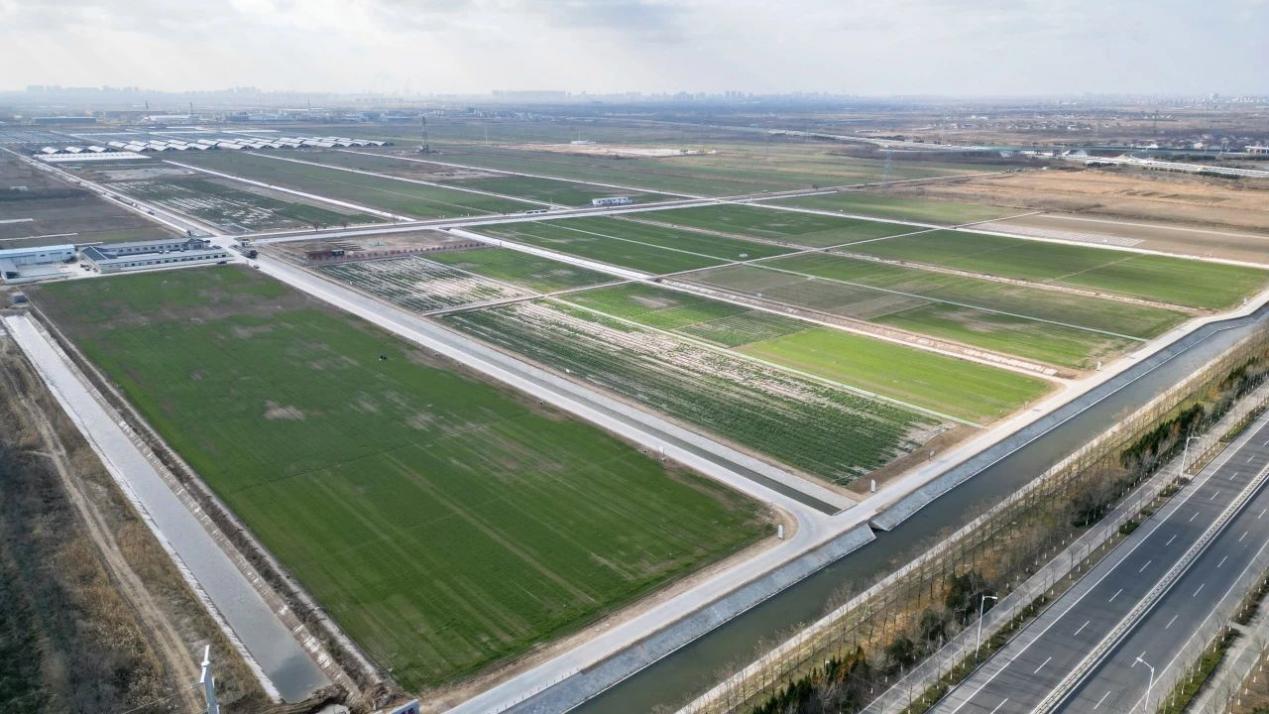
Core Insights - Jiangyan District in Taizhou, Jiangsu Province, has successfully completed a comprehensive agricultural water price reform, becoming the first in the province to do so after a decade of efforts [1][2] - The reform has led to significant water savings and improved efficiency in agricultural water usage, with an annual average water saving of 64 cubic meters per mu and a water-saving rate of 12% [1] - The district has also seen a reduction in fertilizer usage, from 37,500 tons in 2015 to 25,600 tons in 2024, contributing to ecological benefits [1] Group 1: Agricultural Water Price Reform - The comprehensive agricultural water price reform in Jiangyan District began in 2016 and was recognized as a national pilot in 2023, being the only pilot county in Jiangsu Province [1] - The reform model emphasizes "goal orientation, reform promotion, digital empowerment, and integrated development," which has been acknowledged by the Ministry of Water Resources and is being promoted throughout the province [1] Group 2: Water Usage Efficiency - The effective utilization coefficient of irrigation water has improved from 0.609 in 2015 to 0.645 in 2024, indicating enhanced efficiency in water use for agriculture [1] - The integration of irrigation district construction with high-standard farmland development has improved farmland drainage conditions, ensuring stable and high yields [1] Group 3: Ecological Impact - The promotion of precise irrigation technology has increased water resource utilization efficiency and reduced the loss of fertilizers and pesticides due to excessive irrigation [1] - By the end of 2024, Jiangyan District is expected to have constructed 491 kilometers of rural ecological waterways, achieving a coverage rate of 67.9% [1] Group 4: Water Rights Trading - Jiangyan District has become a pilot for deepening agricultural water rights reform, completing 289 agricultural water rights transactions with a total water volume of 5.27 million cubic meters and a transaction value of 182,400 yuan [2] - The district has facilitated the first cross-industry agricultural water rights transaction in the province, with three non-agricultural water users purchasing 1.1 million cubic meters of water rights for 99,000 yuan [2]
姜堰打造“四位一体”粮食安全灌区
Xin Hua Ri Bao· 2025-10-13 07:28
Core Viewpoint - The Jiangyan District in Taizhou is implementing a comprehensive reform of agricultural water pricing and modern irrigation district construction, focusing on water conservation, ecological sustainability, precision management, digital empowerment, and enhancing the quality of life for farmers [1]. Group 1: Engineering Construction - Jiangyan District is enhancing the irrigation infrastructure by focusing on the main water supply channels, with a core strategy of "continuation of construction and water-saving renovation" [2]. - Since the pilot program began, 18.61 kilometers of four main and branch channels have been dredged, with plans for further renovations in 2024 and 2025 [2]. - Comprehensive upgrades are being made to 90 electric irrigation stations, with standardized metering facilities installed in all 2,418 electric irrigation stations across the district [2]. Group 2: Digital Empowerment - The district is transitioning from traditional irrigation to "smart precision management" through digital empowerment, integrating engineering information, water usage data, and meteorological information into a unified management system [3]. - A platform combining "online water bank and offline trading center" has been established, facilitating water rights allocation and transactions, with 300 water rights stored and 289 transactions completed by the end of 2024, totaling 5.27 million cubic meters of water traded [3]. Group 3: Mechanism Innovation - Jiangyan District is focusing on long-term development through mechanism innovation, establishing a "four main" work structure to address funding and responsibility challenges in irrigation construction and management [4]. - The agricultural water company is utilizing a "resource for capital" model, with the government granting operational rights to ensure revenue, creating a positive cycle of investment, construction, operation, and reinvestment [4]. - More than ten regulations have been introduced to ensure effective management of small-scale agricultural water projects, establishing a tiered management system [4]. Group 4: Ecological Protection - The district emphasizes ecological protection alongside water supply, promoting water-saving technologies and reducing agricultural non-point source pollution [5]. - The use of fertilizers and pesticides has decreased by over 0.5% annually due to precision irrigation, and treated agricultural runoff has consistently met water quality standards for several years [5]. - Looking ahead to the "14th Five-Year Plan," Jiangyan aims to deepen the integrated governance of irrigation systems, ensuring stable yields for 560,000 acres of permanent basic farmland and establishing itself as a key grain production area in Central Jiangsu [5].
江苏深化农业水价综合改革两试点通过验收
Xin Hua Ri Bao· 2025-10-10 23:24
Core Insights - Jiangsu Province has become the first in China to complete the provincial-level acceptance of pilot projects for comprehensive agricultural water price reform and modern irrigation district construction [1][2] - The Nanjing Liuhe District Xinyu River Irrigation Area and the Taizhou Jiangyan District have developed replicable and promotable pilot experiences in modern irrigation district construction [2] Group 1: Pilot Projects and Innovations - The Nanjing Liuhe District Xinyu River Irrigation Area is one of the two national pilot areas focusing on comprehensive agricultural water price reform [1] - The irrigation area has established an integrated project construction model, a diversified financing mechanism, and a collaborative water management system [1] - The Taizhou Jiangyan District has created a governance model that emphasizes government leadership, company initiative, and farmer responsibility [2] Group 2: Reform Measures and Development Models - The Jiangyan model incorporates precise pricing, water allocation, measurement, and compensation systems [2] - The reforms aim to achieve high-quality development in irrigation districts through a combination of digital empowerment and integrated development [2] - Both pilot areas have successfully passed provincial acceptance, marking significant progress in Jiangsu's agricultural water price reform [2]
我省深化农业水价综合改革两试点通过验收
Xin Hua Ri Bao· 2025-10-10 21:34
Core Insights - Jiangsu Province has become the first in China to complete the provincial-level acceptance of pilot projects for comprehensive agricultural water price reform and modern irrigation district construction [1][2] - The Nanjing Liuhe District Xinyu River Irrigation Area and the Taizhou Jiangyan District have developed replicable and promotable pilot experiences in modern irrigation district construction [2] Group 1: Nanjing Liuhe District Xinyu River Irrigation Area - The irrigation area is characterized by a focus on large-scale planting in a southern abundant water region, integrating project construction, management, and financing through a three-dimensional model [1] - The water management system includes digital perception, precise measurement, and intelligent scheduling, forming a comprehensive management approach [1] - The reform model emphasizes market-oriented water rights trading, differentiated water pricing adjustments, and a long-term incentive system [1] Group 2: Taizhou Jiangyan District - The district has established a "four main" work framework that enhances government leadership, stimulates company initiative, utilizes association advantages, and enforces farm responsibilities [2] - The "four precise" reform measures focus on accurate pricing, water distribution, measurement, and incentives [2] - The governance model integrates production, ecology, lifestyle, and culture, leading to a modern irrigation district construction path [2]
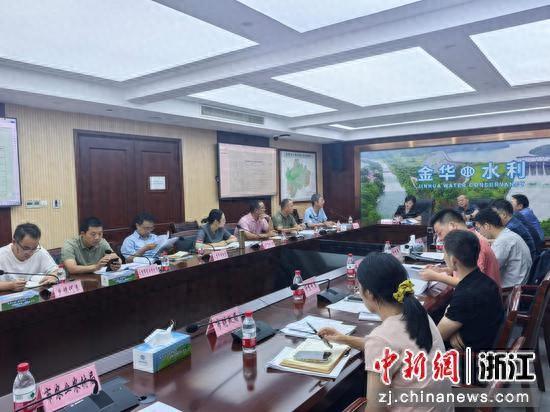
浙江永康:新增灌溉面积农业水价综合改革通过验收
Zhong Guo Xin Wen Wang· 2025-08-20 08:41
Core Viewpoint - The agricultural water price reform in Yongkang City, Zhejiang Province, has successfully passed inspection, becoming the first among 41 county-level units in the province to achieve this milestone [1][3]. Group 1: Reform Implementation - The agricultural water price reform was initiated in 2018, establishing four key mechanisms: water price formation, precise subsidies and rewards, engineering management, and water usage management [3]. - The reform has led to the enhancement of 176 pump stations, significantly improving irrigation infrastructure and encouraging village collective participation [3]. Group 2: Impact on Agricultural Land - The reform has benefited an agricultural area of 254,300 acres, a 6.6-fold increase from 38,600 acres in 2018, contributing significantly to food security [3][5]. Group 3: Water Conservation and Efficiency - The overall water-saving rate in Yongkang City has exceeded 10%, with an annual total water savings of over 5.5 million cubic meters [5]. - The irrigation cycle for the Yangxi Reservoir irrigation area has been reduced from 7 days to 4 days, saving over 1.5 million cubic meters of water, which can be redirected for urban and ecological use [5]. Group 4: Agricultural Production Benefits - The reform has led to a 5% increase in rice yield per acre and improved the quality of vegetables and fruits [5]. - The reduction in irrigation water usage has decreased costs for farmers, with irrigation expenses dropping by approximately 10% [5].