科研仪器制造

Search documents
1.13亿元!中国科学院高能物理研究所近期大批仪器采购意向
仪器信息网· 2026-03-07 09:02
Core Viewpoint - The Chinese Academy of Sciences High Energy Physics Institute has announced procurement intentions for 13 types of instruments and equipment, with a total budget of 113 million yuan, expected to be procured between January and March 2026 [1][3]. Procurement Overview - The procurement includes various critical instruments such as PFA motion mechanisms, high-speed rotating test benches, and high-temperature vacuum in-situ loading systems for engineering materials neutron diffraction spectrometers [3][5]. - The total budget for the procurement is 113 million yuan, indicating significant investment in advanced scientific research equipment [1][3]. Detailed Procurement List - **PFA Motion Mechanism and Controller**: Budget of 13 million yuan, aimed at reducing ground calibration time for PFA cameras [5]. - **CSNS Target Body Plugin**: Budget of 1.75 million yuan, essential for neutron production in the spallation neutron source [5]. - **High-Speed Rotating Test Bench**: Budget of 3 million yuan, critical for validating the limits of pulse choppers [5]. - **High-Temperature Vacuum In-Situ Loading System**: Budget of 1.1 million yuan, designed to study the temperature-dependent performance of materials [6]. - **Elastic Scattering Spectrometer Vacuum Chamber**: Budget of 9 million yuan, provides a vacuum environment for neutron scattering [6]. - **Silicon Yttrium Aluminum (LYSO:Ce) Crystals**: Budget of 70 million yuan for the development of calorimeters [6]. - **GM Cryocoolers**: Budget of 1.65 million yuan for low-temperature cooling of superconducting magnets, with specific cooling capacities [7]. Expected Impact - The procurement is expected to enhance the capabilities of the Chinese Academy of Sciences in conducting advanced research in high-energy physics and materials science, thereby contributing to the development of cutting-edge technologies in these fields [1][3].


国产原位红外表征系统的开发与应用
仪器信息网· 2026-02-15 09:02
Core Viewpoint - The article discusses the development and application of a domestic in-situ infrared characterization system by Beifen Ruili, addressing the "bottleneck" issues faced by high-end domestic scientific instruments and promoting the advancement of domestic instruments in high-end research applications [1]. Group 1: Introduction - In-situ infrared spectroscopy (in situ IR) is a characterization technique that monitors the reaction process of samples by utilizing their infrared light absorption properties, widely applied in catalytic research [2]. - The Tianjin University Chemical Engineering College's large instrument testing platform introduced the domestic Fourier Transform Infrared Spectrometer (Model: WQF-530A) in September 2024, equipped with two in-situ detection systems for electrochemical, thermal, and photocatalytic reaction mechanism studies [2]. Group 2: Issues and Solutions During Testing - The in-situ infrared standard system faced several significant issues during initial use, including liquid nitrogen overflow affecting signal strength and internal condensation leading to contamination [3][4]. - The design of the infrared main unit was not fixed for in-situ testing, causing misalignment during frequent assembly and disassembly, which required realignment of the optical path [5]. - The software developed by Beifen Ruili had limitations, such as only displaying a single window with a maximum of 18 test spectra, which was not user-friendly for in-situ testing [6]. Group 3: Performance Verification of Domestic Instruments - The platform conducted comparative tests between domestic and imported instruments using Ru/CeZrO2 catalysts for CO2 methanation, finding that the domestic infrared system's detection signals were consistent with those of imported devices [14]. - The domestic infrared instrument demonstrated stability and reliability through various in-situ tests, including electrochemical CO2 reduction and photocatalytic CO2 conversion, yielding satisfactory results [15][18]. Group 4: Specific Application Cases - Case 1: The in-situ infrared system was used to explore the spatial regulation mechanism of organic cations in the CO2 reduction process, revealing significant changes in infrared absorption peaks with the addition of organic cations [21][23]. - Case 2: The ATR-SEIRAS characterization revealed the reaction pathway of Co3O4-modified Cu2+1O nanowires in the electrochemical reduction of nitrate to ammonia, providing evidence for the formation of intermediates [26][27]. - Case 3: The in-situ monitoring of P-doped In2O3 enhanced the photocatalytic reduction of CO2 to CH4, demonstrating the reaction pathway and the role of surface species [28][30]. Group 5: Conclusion - High-end scientific instruments require deep integration with specific research scenarios, and domestic high-end instruments are crucial for driving technological innovation in research institutions [31]. - The article emphasizes the importance of feedback from real research applications to promote iterative development and innovation in domestic scientific instruments [9].

打破世界纪录 中国全超导用户磁体中心磁场达35.6特斯拉
Xin Lang Cai Jing· 2026-01-27 03:20
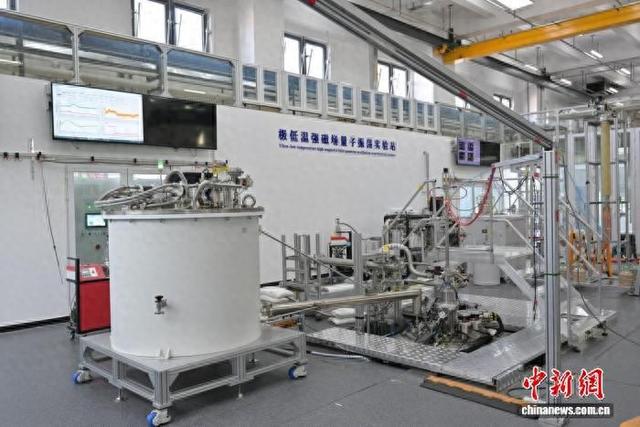
Core Viewpoint - The Chinese Academy of Sciences has achieved a new world record with a 35.6 Tesla superconducting user magnet, surpassing the previous record of 32.0 Tesla set by the U.S. National High Magnetic Field Laboratory, establishing China's leading position in the field of superconducting user magnets [1][2]. Group 1: Technological Breakthrough - The newly developed superconducting user magnet has increased the maximum magnetic field by 3.6 Tesla, marking a significant upgrade from previous technologies [1]. - The superconducting magnet system was designed and manufactured by the Institute of Electrical Engineering, while the Institute of Physics overcame challenges related to health monitoring and precise measurement of high-temperature superconducting magnets [1][5]. - The new magnet's center magnetic field reaches 35.6 Tesla with a usable aperture of 35 mm, which meets the requirements for various experiments such as nuclear magnetic resonance and specific heat measurements [2][4]. Group 2: Applications and Future Prospects - This record-breaking achievement is considered a major breakthrough in China's strong magnetic field technology, positioning the comprehensive extreme condition experimental facility as one of the world's leading experimental setups [2][4]. - The superconducting magnet operates with zero resistance, resulting in extremely low operational costs compared to non-superconducting magnetic systems, making it a core equipment in modern technology [4]. - Future plans include further enhancing the magnet's performance to achieve 40 Tesla and higher, while also focusing on protecting intellectual property through patents [7].
中科仪IPO,关于董事任职信息,有一处细节出现了纰漏
Xin Lang Cai Jing· 2026-01-14 03:58
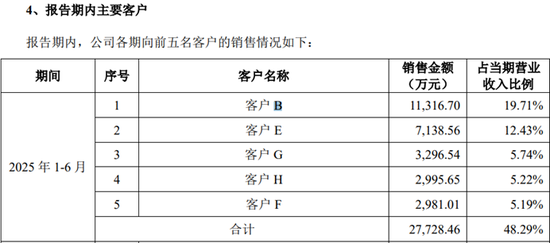
Core Viewpoint - China Academy of Sciences Shenyang Instrument Co., Ltd. (referred to as Zhongke Instrument) is applying for an IPO on the Beijing Stock Exchange, backed by China Merchants Securities, indicating its strong position in the semiconductor equipment industry and consistent revenue growth. Group 1: Company Background - Zhongke Instrument originated from a research unit established in the 1950s under the Chinese Academy of Sciences, specializing in vacuum scientific instruments [1][6] - The company has undertaken significant national technology projects, enhancing the domestic supply chain's self-sufficiency in the semiconductor industry [1][6] - Recent years have seen Zhongke Instrument's revenue growth rate consistently between 20% and 30%, reflecting a robust growth trajectory [1][6] Group 2: Client Structure and Disclosure - The company's major clients from 2022 to 2024 include prominent names such as Yangtze Memory Technologies and North Huachuang, but the client names will be concealed in the first half of 2025 due to confidentiality reasons [2][7] - In the first half of 2025, the top five clients' sales figures indicate a total revenue contribution of 48.29%, with the largest client contributing 19.71% [8] Group 3: Governance and Compliance Issues - A discrepancy was noted regarding the board member Zhang Lei, who was listed as a director of Hangzhou Changchuan Technology in the IPO prospectus, despite having resigned from that position in September 2025 [9][10] - Zhang Lei had previously received a warning from the Zhejiang Securities Regulatory Bureau for regulatory violations related to insider trading by a family member, which raises concerns about governance practices [10]
我国首台高能非弹性中子散射谱仪完成验收“超级相机” 为微观世界拍高清“纪录片”
Ren Min Ri Bao· 2025-12-05 22:15
Core Viewpoint - The first high-energy direct geometry inelastic neutron scattering time-of-flight spectrometer in China has been successfully accepted and put into use, marking a significant advancement in the observation of the microscopic structure and dynamic properties of materials [1][2]. Group 1: Instrument Overview - The spectrometer, developed by Sun Yat-sen University and the China Spallation Neutron Source, fills a gap in inelastic neutron scattering above 100 meV in China [1]. - It functions as a "super camera" that captures the dynamics of atomic and molecular vibrations and rotations on a picosecond timescale, providing detailed insights into the microscopic world [1]. Group 2: Scientific Applications - The instrument can measure the spatial distribution and energy changes of scattered neutrons, aiding in the study of the dynamic behavior of material microstructures and the strength of magnetic atomic correlations [2]. - In high-temperature superconductivity research, it can accurately measure spin fluctuations and phonon density of states in superconductors, providing critical experimental evidence for understanding high-temperature superconducting mechanisms [2]. - In the field of energy materials, it can measure the spatial distribution of phonon spectra in thermoelectric materials, guiding the design of higher-performance thermoelectric materials [2]. - In biomedicine, neutron scattering technology allows scientists to study the motion of biomolecules under conditions closer to physiological environments, opening new avenues for drug development [2]. Group 3: Development Process - The construction of the spectrometer began in 2019 after a strategic cooperation agreement was signed in 2017, following two years of verification and preliminary research [3]. - The development involved collaboration among multiple technical teams to overcome challenges in key components such as the neutron chopper and large vacuum scattering chamber [3]. - After more than two years of debugging, the spectrometer has achieved internationally leading performance levels and will be open for use by domestic and international researchers [3].
“超级相机”,为微观世界拍高清“纪录片”
Ren Min Ri Bao· 2025-12-05 22:03
Core Viewpoint - The successful completion and delivery of China's first high-energy direct geometry inelastic neutron scattering time-of-flight spectrometer marks a significant advancement in the observation of the microscopic structure and dynamic properties of materials, filling a gap in inelastic neutron scattering above 100 meV in China [1][2]. Group 1: Instrument Overview - The spectrometer, developed by Sun Yat-sen University and the China Spallation Neutron Source, is likened to a "super camera" that captures dynamic processes of atomic and molecular vibrations and rotations on a picosecond timescale [1]. - It operates by measuring the spin waves and phonon spectra of materials, utilizing the non-charged and penetrating nature of neutrons to probe microscopic movements within materials [1][2]. Group 2: Applications and Research Support - The instrument can provide spatial distribution and energy change information of scattered neutrons, aiding in the study of magnetic atomic correlations within materials, thus supporting foundational research across physics, chemistry, biology, and materials science [2]. - In high-temperature superconductivity research, the spectrometer can accurately measure spin fluctuations and phonon density of states in superconductors, providing critical experimental evidence for understanding high-temperature superconducting mechanisms [2]. - In the field of energy materials, it can measure the spatial distribution of phonon spectra in thermoelectric materials, guiding the design of higher-performance thermoelectric materials [2]. - In biomedicine, neutron scattering technology allows scientists to study the motion of biomolecules under conditions closer to physiological environments, opening new avenues for drug development [2]. Group 3: Development Process - The construction of the spectrometer began in 2019 after a strategic cooperation agreement was signed in 2017, following two years of feasibility studies and research [3]. - The development involved collaboration among multiple technical teams to overcome challenges in key components such as the neutron chopper and large vacuum scattering chamber [3]. - After two years of debugging, the spectrometer has achieved internationally leading performance levels, capable of rapid switching between multi-wavelength and single-wavelength modes, and providing environments for a wide range of inelastic neutron scattering experiments [3]. - The "super camera" will be open for use by domestic and international researchers, serving national strategic needs and fostering the development of top-tier professionals [3].
突破壁垒!国产新势力强势入局质谱成像仪器赛道
仪器信息网· 2025-09-23 03:58
Core Viewpoint - The article highlights the strong launch of three new mass spectrometry imaging products by Qiansimeite, promoting the application of domestic instruments in life sciences [1][2]. Group 1: Product Launch and Innovation - Qiansimeite introduced three new devices in the TrySmet mass spectrometry imaging product line during the China Mass Spectrometry Academic Conference on September 20, 2025, aimed at providing higher spatial resolution and ionization efficiency solutions [2][3]. - The new products include the Zenith X AP MALDI ion source, HighSens 10 Nano-DESI ion source, and Atomi zer matrix spray instrument, showcasing advancements in domestic mass spectrometry imaging technology [4][9]. - The Zenith X AP MALDI achieves high-resolution imaging at 10μm in ambient conditions, enhancing sample stability and reducing matrix volatility [11][12]. - The HighSens 10 Nano-DESI overcomes conventional resolution limitations, also achieving 10μm spatial resolution while ensuring detection sensitivity through innovative photolithography technology [13][15]. - The Atomi zer matrix spray instrument integrates automated matrix spraying and a unique "laser transfer" function, which is a first in the industry, improving ionization efficiency and sensitivity [16][19]. Group 2: Market Position and Strategy - Qiansimeite's entry into the mass spectrometry imaging sector is a strategic move driven by market trends and the need for self-reliance in technology, especially amid global supply chain uncertainties [7][21]. - The company has transitioned from collaborative development to fully independent research and development, emphasizing a culture of efficiency and accountability with a "one project per year" approach [8][23]. - Qiansimeite is the only domestic company developing AP MALDI technology, with key components like lenses and ion transmission tubes now produced in-house, despite some reliance on imported lasers [21][22]. Group 3: Application and Future Outlook - The applications of mass spectrometry imaging are expanding beyond drug metabolism and cancer research to include plant science, environmental pollution detection, new materials, and semiconductor analysis [20][24]. - The company is actively pursuing international markets, having participated in exhibitions in Russia and Dubai, and has achieved CE and UL certifications, indicating high product standards [22][24]. - Qiansimeite plans to maintain high R&D investment, with nearly 18 million yuan allocated for 2024, and aims to enhance its competitive edge in the global scientific instrument market [23][24].

8412万元!西安交通大学采购大批仪器
仪器信息网· 2025-08-25 04:07
Core Viewpoint - Xi'an Jiaotong University recently announced multiple government procurement intentions for laboratory instruments, with a total budget of 84.12 million yuan, covering 22 items of equipment expected to be procured between April and December 2025 [2][3]. Procurement Summary - The procurement includes various advanced instruments such as microwave vector signal generators, signal/spectrum analyzers, soft matter scanning probe microscopes, glow discharge mass spectrometry ion sources, and low-temperature continuous ultrathin slicing machines [3][4][5][6]. - The total budget for these instruments is 84.12 million yuan, indicating significant investment in research capabilities [2][3]. Instrument Details - **Signal/Spectrum Analyzer**: A core instrument in electronic measurement, used for analyzing electrical signals in the frequency domain, applicable in communication, radar, aerospace, and industrial testing [4]. - **Soft Matter Scanning Probe Microscope**: Optimized for soft materials, this microscope is crucial for studying surface morphology and mechanical properties at the nanoscale, particularly in life sciences and polymer physics [5]. - **Low-Temperature Continuous Ultrathin Slicing Machine**: Designed for preparing ultrathin slices of biological or material samples at low temperatures, widely used in electron microscopy and biological tissue structure research [6]. Detailed Procurement List - The procurement list includes specific quantities and functionalities for each instrument, with delivery expected within 180 days post-contract signing. For example: - Microwave vector signal generator: 1 unit, for generating high-frequency vector signals [8]. - Signal/spectrum analyzer: 1 unit, for signal spectrum analysis and noise performance evaluation [8]. - Soft matter scanning probe microscope: 1 unit, for observing 2D and 3D surface morphology of soft materials [8]. - Glow discharge mass spectrometry ion source: 1 unit, for trace impurity detection in materials [8]. - Low-temperature continuous ultrathin slicing machine: 1 unit, for preparing ultrathin slices of biological samples [8].

用自主研制的科学利器抵近追踪、持续探测 去揭开台风的“秘密”(科技视点·一线探创新)
Ren Min Ri Bao· 2025-08-24 22:05
Core Insights - The article discusses the development of a new typhoon tracking detection instrument by researchers at Beijing Institute of Technology, which is set to undergo field testing in the coming months [1][6] - The research aims to enhance the understanding and forecasting of typhoons through innovative technology that overcomes the limitations of existing detection methods [2][7] Group 1: Instrument Development - The team has created a sensor, the size of a fingernail, designed to collect critical data on typhoons, which is a key component of the detection instrument [1][5] - The detection instruments are categorized into four core components responsible for precise detection, information transmission, flight control, and data assimilation [2] - The instruments will be deployed via a large airship, which can remain at high altitudes for extended periods, allowing for close-range and direct measurements of typhoons [2][8] Group 2: Research Challenges - The development process faced challenges due to extreme environmental conditions, requiring innovative solutions such as a heating control system to maintain sensor functionality [5][6] - The team has conducted multiple rounds of testing and system integration, validating the feasibility of the airship for high-altitude operations [6][9] - Collaboration among various institutions and companies has been crucial for the successful development of the typhoon detection instruments [8][9] Group 3: Future Implications - The research is expected to significantly improve the understanding of typhoon formation, evolution, and sudden changes, advancing China's capabilities in precise typhoon detection and forecasting [7][10] - Understanding the near-space environment is also valuable for optimizing the design of spacecraft, contributing to the development of China's aerospace industry [10]
1.11亿元!南开大学采购大批仪器(含设备更新)
仪器信息网· 2025-08-21 03:56
Core Viewpoint - Nankai University has announced procurement intentions for 49 items of scientific instruments and equipment, with a total budget of 111 million yuan, expected to be purchased between December 2024 and October 2025 [2][3]. Instrument Procurement Summary - The procurement includes various advanced instruments such as Micro Focus X-ray Imaging Systems, Desktop Near-Infrared Systems, Steady/Transient Spectrometers, and Multifunctional Composite Quantum Film Material Preparation Systems [3][4][5][6]. - The total budget for these instruments is 111 million yuan, indicating significant investment in research capabilities [2][3]. Detailed Procurement List - **Micro Focus X-ray Imaging System**: A high-resolution X-ray detection device for non-destructive imaging of materials, with a budget of 1.1 million yuan, expected procurement in December 2024 [9]. - **Desktop Near-Infrared System**: Used for interdisciplinary research in cognitive science and decision-making, with a budget of 5.09 million yuan, expected procurement in December 2024 [9]. - **AI Server for Digital Twin Laboratory**: To enhance teaching effectiveness and research capabilities, with a budget of 5.4 million yuan, expected procurement in December 2024 [9]. - **Behavioral Decision and Cognitive Neuroscience Eye-Tracking System**: For experimental teaching and research, with a budget of 7.91 million yuan, expected procurement in December 2024 [9]. - **Fourier Spectroscopy System**: For molecular structure analysis, with a budget of 1.05 million yuan, expected procurement in December 2024 [13]. - **Quantum Key Distribution Teaching System**: For teaching quantum communication principles, with a budget of 1.06 million yuan, expected procurement in December 2024 [9]. - **Various other instruments**: Including systems for crystal growth, atomic force microscopy upgrades, and phase noise analyzers, with budgets ranging from 118,000 to 320,000 yuan, all expected to be procured by December 2025 [17][18][21][22]. Implications for Research and Development - The procurement of these advanced instruments is expected to significantly enhance the research capabilities of Nankai University, particularly in fields such as quantum technology, cognitive science, and materials science [2][3][9]. - The investment reflects a strategic focus on interdisciplinary research and innovation, aiming to foster high-level academic output and technological advancements [2][3].