
Autonomous Delivery

Search documents
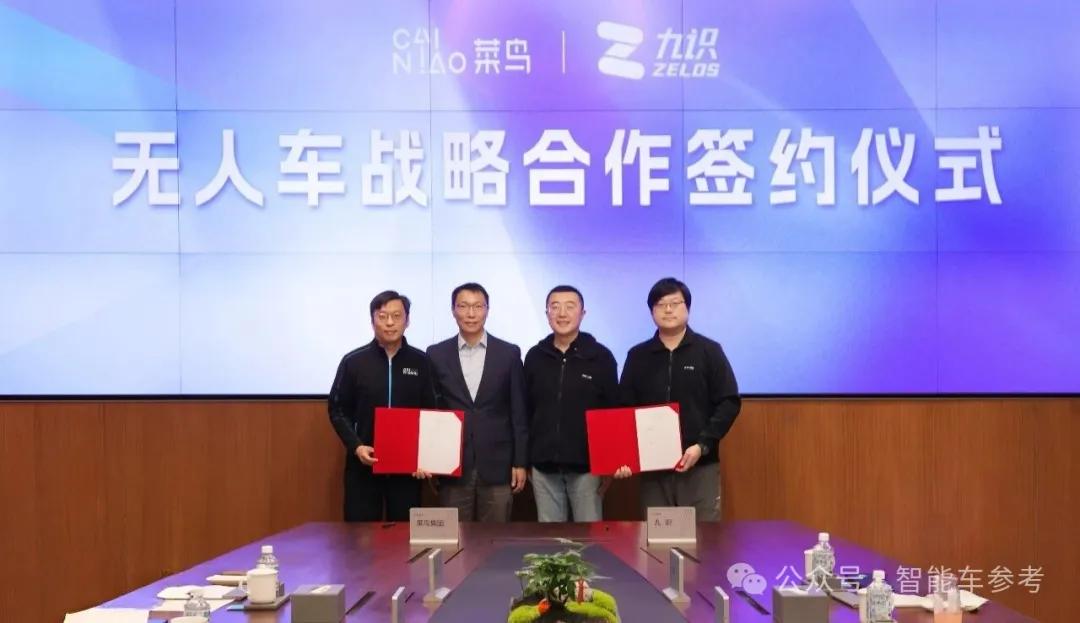
苏州跑出百亿无人车独角兽,中国无人配送南北双雄格局初现
3 6 Ke· 2026-02-25 12:11
苏州无人配送头号玩家,估值破百亿了。 据悉,九识智能刚刚完成新一轮融资,规模超21亿元,估值超百亿。 其中微妙之处在于,这笔融资的完成时间,正是在与菜鸟无人车队合并之后仅仅数周之后……九识成立五年间,已累计斩获六轮融资,累计融资超55亿 元。 九识智能完成超3亿美元融资 据36氪获悉,来自苏州的九识智能,近期完成了新一轮超3亿美元(约20.6亿元)融资。 本轮融资的投资方阵容,涵盖大型产业方、多个一线城市政府基金,以及市场化美元和人民币投资机构。 这是九识成立以来的第六轮融资,也是2026年开年以来,L4无人配送赛道的首笔公开大额融资。 时间点颇为巧妙——此时距离九识与菜鸟无人车的战略合作不过几周。 整合完成后,九识智能的车队总规模已超过2万台,成为当时国内规模最大的无人配送车队,覆盖全球10余个国家超300座城市。 自2021年8月成立以来,九识保持着每年至少完成一轮重要融资的步伐,且六轮融资中,至少有四轮都超过1亿美元。 | 序号 | 融资时间 | 融资轮次 | 融资金额 | 投资方 | | --- | --- | --- | --- | --- | | 1 | 2022年8月 | 成格哥伦 | 约300 ...

Is Serve Robotics' Urban Expansion Supporting Long-Term Demand?
ZACKS· 2026-02-17 14:10
Key Takeaways Serve Robotics expanded into major U.S. cities, building the largest sidewalk delivery fleet.SERV widened service zones and added dense neighborhoods suited for short, frequent deliveries.Serve Robotics kept reliability near full levels as daily operating hours per robot improved.Serve Robotics Inc. (SERV) is expanding its presence across U.S. cities as autonomous sidewalk delivery becomes more common in urban areas. The company’s wider footprint reflects a move beyond limited deployments towa ...

Arrive AI Showcases Autonomous Delivery Infrastructure Powered by Arrive Points(TM) at India AI Impact Summit 2026
Accessnewswire· 2026-02-17 00:28
Core Insights - Arrive AI announced the global expansion of its AI-powered autonomous logistics ecosystem at the India AI Impact Summit 2026 [1] - The company's system is built around patented smart receptacles, known as Arrive Points™, facilitating secure and fully asynchronous handoffs [1] Company Overview - Arrive AI operates in the autonomous delivery infrastructure sector, focusing on logistics solutions powered by artificial intelligence [1] - The company targets various environments including healthcare, industrial, and smart city applications [1] Technology and Innovation - The Arrive Points™ technology enables interactions between ground robots, drones, couriers, and end users, enhancing the efficiency of delivery processes [1] - The system's design emphasizes security and asynchronous operations, which are critical for modern logistics [1]


Arrive AI to Demonstrate End-to-End Ground-Based Robot and Drone Autonomous Package Delivery at Curiosity Lab's Innovation Center
Accessnewswire· 2026-02-09 16:30
Core Viewpoint - Arrive AI, an autonomous delivery network company, is set to demonstrate its latest advancements in end-to-end autonomous package delivery on February 10, 2026 [1] Group 1: Company Overview - Arrive AI operates on a patented, AI-powered system known as Arrive Points™ [1] - The company focuses on developing autonomous delivery solutions [1] Group 2: Event Details - A live demonstration will take place at Curiosity Lab in Peachtree Corners [1] - The event is scheduled for February 10, 2026, from 1:00-2:00 p.m. ET [1]

Is Delivery Volume Growth Showing Strong Adoption for Serve Robotics?
ZACKS· 2026-02-03 14:46
Core Insights - Serve Robotics Inc. (SERV) is experiencing increased delivery activity as autonomous sidewalk delivery becomes more accepted in urban markets, indicating a shift from early testing to regular use [1][5] Delivery Performance - In Q3 2025, delivery reliability remained near 100% while delivery volume surged by 66% compared to the previous quarter, demonstrating the reliability of autonomous delivery in live environments [2][8] - The company delivered to over 3,600 restaurants in Q3 2025, reflecting a 45% sequential increase and a more than ninefold increase year-over-year, indicating stronger platform engagement [3][8] Fleet Expansion - The expansion of the robot fleet contributed to higher delivery volumes, allowing the company to serve more neighborhoods without compromising service reliability [4][8] Industry Conditions - The on-demand food delivery market continues to grow, with cities favoring smaller electric delivery options to alleviate congestion and emissions, suggesting a supportive environment for Serve Robotics [5] Stock Performance and Valuation - SERV shares have declined by 11.6% over the past three months, compared to a 9.6% decline in the industry, while other competitors have shown varied performance [6] - The stock is currently trading at a forward 12-month price-to-sales (P/S) ratio of 28.37, significantly higher than the industry average of 14.72, indicating a premium valuation [10] Earnings Estimates - The Zacks Consensus Estimate for SERV's 2026 loss per share has widened, with projections indicating a 15% decline in earnings, contrasting with expected growth for other industry players [12][13]

Arrive AI Appoints Ian Geise as Head of Commercialization
Accessnewswire· 2026-01-22 12:28
Core Insights - Arrive AI has appointed Ian Geise as Head of Commercialization to lead the company's transition from product innovation to market adoption [1] - The new role aims to accelerate revenue scalability and unify Sales and Marketing into a cohesive commercial engine [1] Company Developments - The appointment of Ian Geise is effective as of January 21, 2026 [1] - Arrive AI focuses on an autonomous delivery network utilizing patented, AI-powered Arrive Points™ [1]

Indiana's National Drone Site Puts Arrive AI (NASDAQ: ARAI) at the Center of Autonomous Delivery Scale
Accessnewswire· 2026-01-15 12:28
Core Insights - Arrive AI emphasizes the strategic significance of Indiana being designated as a federal Unmanned Aircraft System (UAS) testing site, marking the first such designation in over a decade [1][2] Group 1: Strategic Importance - The UAS testing site designation positions Indiana as a hub for next-generation autonomy development, testing, and regulatory validation, aligning with the Indiana Initiative for Drone Dominance [2] - The recognition allows Arrive AI to build autonomous delivery infrastructure in Indiana, enhancing learning, execution, and long-term impact [3][4] Group 2: Infrastructure and Investment - Global investment in autonomous and drone-enabled logistics is projected to reach tens of billions of dollars over the next decade, with a critical bottleneck in secure, compliant delivery at the final destination [4][5] - Arrive AI focuses on developing an AI-powered autonomous delivery network that addresses the last-mile delivery challenge, particularly in healthcare and regulated environments [5][6] Group 3: Regulatory Environment - The establishment of the UAS testing site indicates a shift from experimentation to national deployment frameworks, providing Arrive AI with early exposure to FAA standards and real-world testing [6][7] - This strategic milestone positions Arrive AI as essential infrastructure as autonomy scales, benefiting from reduced capital intensity and liability associated with operating aircraft [7][8] Group 4: Ecosystem and Partnerships - Indiana's ecosystem, supported by military assets and top-tier research institutions, is expected to attract advanced manufacturing investment and next-generation logistics innovation [8][9] - Arrive AI's development aligns with the state's efforts to shape national policy and deployment pathways for autonomous systems, reinforcing its long-term infrastructure goals [9]

How Transformative Is DoorDash's Partnership for SERV's Growth?
ZACKS· 2026-01-09 14:20
Core Insights - Serve Robotics Inc.'s partnership with DoorDash represents a significant turning point in its growth strategy, transitioning from pilot programs to a scalable delivery platform [2] - The collaboration is expected to enhance fleet utilization and improve unit economics, positioning it as a key catalyst for growth [2][6] Demand Expansion - The partnership with DoorDash significantly broadens Serve's addressable market, as DoorDash and Uber together dominate over 80% of the U.S. food delivery sector, allowing Serve to access more restaurants and consumers without incurring additional customer acquisition costs [3] - With over 1,000 robots currently deployed and a target of 2,000 by year-end, Serve can efficiently integrate DoorDash orders into its existing operations [3] Operational Efficiency - Serve's robots can operate on both DoorDash and Uber platforms within the same delivery cycle, which enhances utilization rates and reduces delivery costs [4] - This flexibility is crucial for improving margins and making the service more appealing to partners through increased efficiency and reliability [4] Data and Learning - The partnership is expected to generate more real-world delivery data, which will enhance the operational capabilities of Serve's fleet, leading to improvements in autonomy, speed, and safety [5] - These operational advancements are anticipated to support a significant revenue increase in 2026 as fleet economics become more favorable [5] Financial Performance - Serve Robotics' stock has increased by 3.4% over the past three months, outperforming the industry average decline of 2.2% [7] - The company's current forward price-to-sales (P/S) ratio stands at 49.87, significantly higher than the industry average of 16.14, indicating a premium valuation [10] - The Zacks Consensus Estimate for Serve's loss per share for 2026 has widened from $1.76 to $1.83 over the past month [14]

Can Serve Robotics Expand Sidewalk Autonomy at Urban Scale in 2026?
ZACKS· 2026-01-02 17:05
Core Insights - Autonomous delivery is experiencing significant growth as advanced robotics meet urban demand, with Serve Robotics Inc. (SERV) aiming to establish a comprehensive sidewalk delivery network in major U.S. cities [1] Operational Performance - In Q3 2025, Serve Robotics reported a substantial increase in delivery volume, maintaining high reliability and a solid safety record [2] - The company expanded its operations into multiple large metropolitan areas, enhancing utilization and operational efficiency through integration with major delivery platforms [2][9] - Serve Robotics achieved its 2025 operational target by deploying over 2,000 autonomous robots, making it the largest sidewalk delivery fleet in the U.S. [3][9] Competitive Landscape - Serve Robotics is competing in the autonomous last-mile delivery sector, which is increasingly influenced by larger players like Uber Technologies (UBER) and DoorDash (DASH) [5] - Uber and DoorDash are investing heavily in automation and robotic delivery, creating competitive pressure for Serve Robotics [6] - The ability of Serve Robotics to compete on speed, reliability, and market coverage against these larger platforms remains a critical question [7] Stock Performance - SERV shares have declined by 45.4% over the past year, contrasting with gains of 26.5% and 29.5% for Uber and DoorDash, respectively [8] Earnings Estimates - The Zacks Consensus Estimate for SERV's 2026 loss per share has widened to $1.83, indicating a larger loss compared to the previous year's estimate of $1.59 [11]
Why Serve Robotics Stock Is Soaring Today
Yahoo Finance· 2026-01-02 17:01
Group 1 - Serve Robotics shares have started strong in 2026, with a 9.7% increase as of 11:11 a.m. ET, driven by a positive outlook on autonomous delivery stocks and continued investor interest in AI [1][4] - Analyst Michael Latimore from Northland has characterized Serve stock as "one of the best investments in physical AI," citing multiple catalysts for strong performance in 2026 [3] - Latimore has set an "outperform" rating with a price target of $26, suggesting an upside of over 150% from the closing price of $10.38 at the end of 2025 [4] Group 2 - Serve Robotics is focused on developing technology for autonomous package delivery and has successfully deployed over 2,000 delivery robots, achieving its 2025 goal [4] - Despite the optimistic outlook, Serve remains unprofitable and lacks organic cash flow, indicating that only investors with high risk tolerance should consider investing [5][7] - The Motley Fool Stock Advisor has identified ten stocks they believe are better investment options than Serve Robotics, suggesting caution for potential investors [8]