
Rare Earths

Search documents
12 Assets To Buy in 2026 To Profit From a Trump Presidency, According to Jaspreet Singh
Yahoo Finance· 2025-12-09 22:07
Investment Opportunities - The Trump administration is expected to alter approximately $7 trillion in government spending, creating new investment opportunities [2] - The U.S. government is committed to investing heavily in artificial intelligence (AI), as indicated by the document "Winning the Race: America's AI Action Plan" [3] - Singh identifies AI-related asset classes, including data centers, semiconductors, and infrastructure, as key areas for investment [4] Recommended ETFs - First Trust Cloud Computing ETF (SKYY) is recommended for exposure to cloud computing infrastructure [4] - Global X's Data Center and Digital Infrastructure ETF (DTCR) is suggested for those interested in U.S. data centers [4] - iShares Semiconductor ETF (SOXX) provides broad access to semiconductor investments [4] - Additional AI application ETFs include Global X's Robotics and Artificial Intelligence ETF (BOTZ) and Roundhill's Generative AI and Technology ETF (CHAT) [5] Rare Earths Investment - The U.S. government is showing significant interest in rare earths due to China's export restrictions [6] - Recommended ETFs for rare earth investments include VanEck Rare Earth and Strategic Metal ETF (REMX) and iShares MSCI Global Metals & Mining Producers ETF (PICK) [6] - Specific companies highlighted for investment in rare earths are Lynas Rare Earths Limited (LYSDY) and MP Materials Corp. (MP) [7] American Industry and Defense - Investment picks in American industry include SPDR's Industrial Select Sector SPDR FUND (XLI), which focuses on aerospace and defense [8] - Global X U.S. Infrastructure Development ETF (PAVE) specializes in infrastructure and development companies [8] - Vanguard Energy ETF (VDE) is noted as a conservative investment option in the energy sector [8]
USA Rare Earth: An Intriguing Portfolio Addition (Or Alternative) For MP Materials Bulls
Seeking Alpha· 2025-12-08 06:57
Core Insights - The individual has retired after over 43 years in investment research, now operating independently to provide actionable investment insights [1] - The focus is on rules and factor-based equity investing strategies, emphasizing the use of numbers to inspire human intelligence-driven investment stories rather than serving the numbers themselves [1] - The approach combines quantitative analysis with classic fundamental analysis to uncover the true story of companies and their stocks, highlighting the importance of future potential over past data [1] Investment Strategy - The individual has extensive experience covering a wide range of stocks, including large cap, small cap, micro cap, value, growth, and income [1] - Previous roles included managing a high-yield fixed-income fund and conducting research on quantitative asset allocation strategies, which are foundational to modern Robo Advising [1] - The individual has authored two books on stock selection and analysis, showcasing a commitment to investor education [1] Future Outlook - The individual expresses enthusiasm for the new role on Seeking Alpha, inviting feedback and criticism from the audience to improve the content offered [1]



Here's Why USA Rare Earth Stock Crashed in November
The Motley Fool· 2025-12-07 10:05
Core Viewpoint - The performance of USA Rare Earth (USAR) highlights the speculative nature of investing in rare-earth companies, particularly due to their sensitivity to political developments and trade negotiations [1][3]. Group 1: Market Dynamics - China dominates the rare-earth materials market, producing up to 90% of the world's rare-earth magnets, which gives it a strong bargaining position in trade disputes with the U.S. [2] - The stock of USA Rare Earth saw significant fluctuations, soaring in October due to news of potential new export controls from China, but then crashing by 30.8% in November when China paused these controls [1][5]. Group 2: Company Developments - USA Rare Earth has been focusing on derisking its operations by partnering with suppliers outside of China and acquiring companies like Less Common Metals (LCM) to secure its supply chain [8][9]. - LCM's recent supply agreement with Solvay and Arnold Magnetic Technologies Corporation is expected to generate revenue for USA Rare Earth, further supporting its business model [9]. Group 3: Investment Considerations - The company's unique business model involves manufacturing rare-earth magnets while simultaneously building a supply chain, which may appeal to investors with a higher risk tolerance [6][8]. - Recent positive developments in securing supply agreements and partnerships are seen as steps to make USA Rare Earth more investable for those optimistic about the company's potential [9].
焦点议题:美中科技竞赛-Top of Mind_ The US-China tech race
2025-12-05 06:35
Summary of the US-China Tech Race Conference Call Industry Overview - The conference focuses on the ongoing technological competition between the US and China, particularly in the fields of semiconductors and rare earths, which are critical for technological advancement and national security [3][31]. Key Points and Arguments Current State of the Tech Race - The US leads in advanced technologies such as semiconductors, AI frameworks, cloud infrastructure, and quantum computing, while China is catching up in practical applications like physical AI and robotics, and has a strong presence in global installations [5][29][43]. - China is rapidly advancing in technological self-sufficiency, reducing its reliance on Western technologies through policies like the dual circulation strategy [5][45]. US and Chinese Policy Approaches - US policymakers are adopting strategies reminiscent of WWII and the Cold War, focusing on increasing domestic production in sensitive sectors like semiconductors and rare earths [30][62]. - China's approach is characterized by systematic planning and significant financial backing for technology development, with a focus on achieving breakthroughs in "chokehold technologies" [75][84]. Supply Chain Dynamics - The US has a slight edge in the global semiconductor supply chain, but China currently dominates the rare earth supply chain, which is crucial for defense and technology sectors [31][39]. - The semiconductor supply chain is complex, with significant chokepoints that hinder self-sufficiency for any country, although China has the potential to close the gap due to its resources and engineering talent [33][35]. Investment Opportunities - Analysts see compelling investment opportunities in rare earths and Asian tech companies, as both countries continue to develop their own tech stacks [4][37]. - Stocks of leading semiconductor manufacturing and equipment companies have largely priced in US-China tech developments, but ongoing policy efforts could drive price action for Western rare earth mining and refining companies [37][38]. Challenges and Risks - The US faces challenges in maintaining its lead, particularly in AI, as China's semiconductor industry works to overcome hardware chokepoints [5][35]. - China's dominance in rare earths poses a significant threat to the US's ability to develop an independent tech ecosystem, highlighting the need for the US to diversify its supply chains [48][49]. Future Outlook - The tech race may not yield a clear victor, with the US potentially leading in technology development while China excels in global installations and applications [60]. - The geopolitical implications of this tech competition are profound, affecting global systems and economic influence [42][57]. Additional Important Insights - The Gulf countries are expected to play a pivotal role in the tech race due to their energy resources, which are essential for powering technological ambitions [59]. - The technological alignment of other countries, particularly in the Global South, will significantly influence the outcome of the US-China tech race [57][58]. This summary encapsulates the critical discussions and insights from the conference call regarding the US-China tech race, highlighting the competitive landscape, policy approaches, supply chain dynamics, investment opportunities, and future outlook.
Rainbow Rare Earths Limited (RBWRF) Discusses Adoption of Solvent Extraction for Rare Earth Separation at Phalaborwa Project - Slideshow (OTCMKTS:RBWRF) 2025-12-04
Seeking Alpha· 2025-12-04 23:06
To ensure this doesn’t happen in the future, please enable Javascript and cookies in your browser.If you have an ad-blocker enabled you may be blocked from proceeding. Please disable your ad-blocker and refresh. ...

USA Rare Earth rips higher after supply deal with Compass Diversified, Solvay (USAR:NASDAQ)
Seeking Alpha· 2025-12-04 21:34
Core Insights - The article emphasizes the importance of enabling Javascript and cookies in browsers to prevent access issues [1] Group 1 - The article suggests that users may face blocks if ad-blockers are enabled, indicating a need to disable them for proper access [1]

USA Rare Earth(USAR.US)涨超9% 子公司LCM与Solvay及Arnold达成供应协议
Zhi Tong Cai Jing· 2025-12-04 15:38
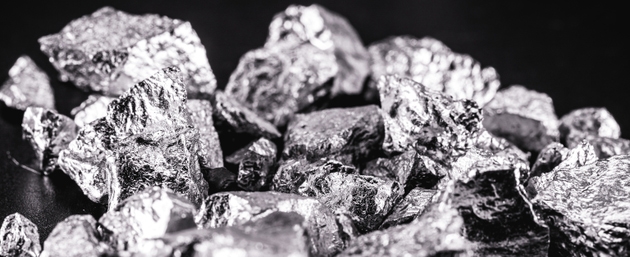
Core Viewpoint - USA Rare Earth (USAR.US) shares rose over 9%, reaching $15.289, following the announcement of a supply agreement by its subsidiary Less Common Metals (LCM) with Solvay and Arnold Magnetic Technologies, which is part of Compass Diversified [1] Group 1: Company Developments - LCM has signed a rare earth materials supply agreement with Solvay and Arnold Magnetic Technologies [1] - The agreement aims to further localize the rare earth supply chain in the United States and Europe [1] - LCM will leverage its technical capabilities in rare earth metal and alloy manufacturing to provide high-quality and stable rare earth materials for Arnold's advanced permanent magnet production [1]
Down 41% From Its Highs, Should You Buy the Dip in MP Materials Stock?
Yahoo Finance· 2025-12-03 14:30
MP Materials (MP), a cornerstone of America’s rare-earth industry, has been on a turbulent ride. Its shares peaked near the $100 mark in mid-October, fueled by fears of Chinese export restrictions, only to slide 3.57% over the past month as U.S.-China trade tensions eased. It now trades 39.7% below its 52-week high. On Nov. 24, however, the stock staged a rebound, climbing 6.8% after BMO Capital (BMO) upgraded it from “Market Perform” to “Outperform” rating. It is the equivalent of “Buy” from “Hold,” even ...
X @The Wall Street Journal
The Wall Street Journal· 2025-12-03 00:00
Export Restrictions & Workarounds - Chinese rare-earth magnet companies are finding ways to circumvent government's strict export restrictions [1] - The goal is to maintain sales to Western buyers while avoiding issues with Chinese authorities [1] Industry Focus - The report focuses on the rare-earth magnet industry [1] - It highlights the challenges and strategies related to exporting these materials from China [1]
X @Bloomberg
Bloomberg· 2025-12-02 08:14
At least three Chinese rare-earth magnet producers have been granted export licenses that will enable them to accelerate shipments, Reuters reports https://t.co/jtfLQ3F6N0 ...