
Airlines

Search documents
Worst in the skies? The airline with the most delays in 2025 has finally been revealed
The Economic Times· 2025-12-16 17:30
Core Insights - The most delayed airline in 2025 is Ryanair, which shares the top spot with easyJet and Air France, each having 29% of their flights delayed [3][12]. Flight Data Overview - In 2025, Flighty users took over 22 million flights, resulting in a total of 78 million flying hours [2]. - Passengers lost approximately 3.9 million hours due to delays in 2025 [2]. Delay Rankings - Frontier Airlines ranked fourth with 28% of its flights delayed, making it the worst airline for delays in the United States [3][15]. - Lufthansa and Qantas tied for fifth place, each with 26% of flights delayed [3][15]. - KLM Royal Dutch, Air Canada, JetBlue Airways, and Southwest Airlines tied for tenth place, each with 25% of flights delayed [4][15]. Lost Time Metrics - Flighty introduced a "lost time" measure, indicating the time between a plane's scheduled arrival and when passengers exit the aircraft, affected by factors like runway congestion and taxi times [4][15]. - In 2025, about 30% of flights tracked were extended after landing, impacting around six million flights and resulting in an additional 1.4 million hours of waiting time [5][15]. - On average, passengers experienced an extra wait of 14 minutes per flight to reach the gate [5][15]. Upcoming Travel Disruptions - Major delays are anticipated during the festive travel period, with estimates suggesting one in three passengers may face flight delays [6][8]. - Strikes by airport workers, particularly at London Luton Airport, are expected to disrupt flight schedules [8][9]. - National Rail has confirmed planned engineering works during the festive season, which may also affect train passengers [10][15].



Barclays LUV Upgrade, Stock Flies on 11-Day Winning Streak
Youtube· 2025-12-16 16:30
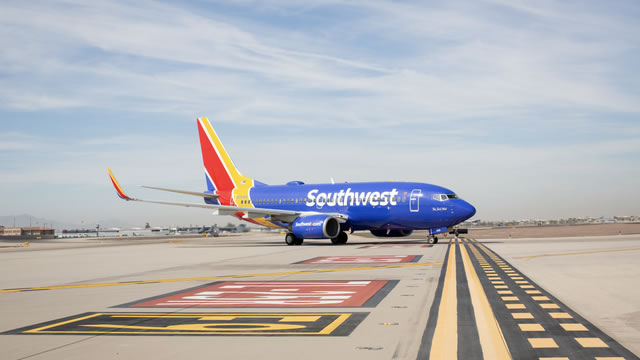
Core Viewpoint - Barclays upgraded Southwest Airlines to overweight from equal weight, raising the price target to $56 from $34, indicating a potential upside of over 30% from current levels [3]. Company Strategy - The upgrade is based on positive sentiment surrounding Southwest's new commercial strategy, which includes assigned seating and baggage fees, expected to drive revenue growth [3][4]. - Barclays anticipates that these changes will lead to significant improvements in revenue generation, particularly in early 2026 when the new options are fully implemented [4]. Market Performance - Southwest shares have reached a three-year high, with a 2.3% increase noted in the morning trade, reflecting strong market action and investor confidence [2]. - The stock has performed well, rising approximately 34% over the last six months [6]. Analyst Ratings - Other analysts have also raised their price targets for Southwest, with TD Cowan increasing theirs from $31 to $42, while Beimo Capital set a target of $43 and Citigroup at $38 [6][7]. - The average rating for Southwest remains a hold, with the average price target just below $39 [8].

Stocks Slide on Sluggish US Economic News
Yahoo Finance· 2025-12-16 16:10
Economic Indicators - Weekly initial unemployment claims in the US are expected to fall by 11,000 to 225,000 [1] - November CPI is projected to increase by 3.1% year-on-year, while core CPI is expected to rise by 3.0% year-on-year [1] - November existing home sales are anticipated to increase by 1.2% month-on-month to 4.15 million [1] - The University of Michigan's December consumer sentiment index is expected to be revised upward by 0.2 to 53.5 from the previously reported 53.3 [1] Labor Market - November nonfarm payrolls rose by 64,000, exceeding expectations of 50,000, while October nonfarm payrolls fell by 105,000, worse than the expected decline of 25,000 [3] - The unemployment rate in November increased by 0.1 to a four-year high of 4.6% [3] - November average hourly earnings rose by 0.1% month-on-month and 3.5% year-on-year, which is the smallest year-on-year increase in 4.5 years [2][4] Stock Market Performance - The S&P 500 Index fell by 0.32%, the Dow Jones by 0.293%, and the Nasdaq 100 by 0.14% [6] - Stocks are under pressure due to sluggish economic indicators, including a rise in the unemployment rate and stagnation in retail sales [5] - Energy producers are experiencing significant declines, with WTI crude oil falling over 3% to a 4.75-year low, impacting the broader market [5][14] International Markets - Overseas stock markets are also lower, with the Euro Stoxx 50 down by 0.68%, China's Shanghai Composite down by 1.11%, and Japan's Nikkei Stock 225 down by 1.56% [7] Interest Rates and Bonds - The 10-year T-note yield decreased by 0.8 basis points to 4.165%, influenced by the rise in unemployment and lower wage growth [8] - The 10-year breakeven inflation rate fell to a 1.5-week low of 2.240%, indicating falling inflation expectations [8] Company-Specific Movements - Pfizer Inc is down more than 4% after forecasting 2026 revenue below consensus estimates [16] - Humana is down more than 2% after its full-year adjusted EPS forecast fell short of expectations [16] - Archer-Daniels-Midland is down more than 2% following a downgrade by Morgan Stanley [17] - Cognex is up more than 5% after a double-upgrade by Goldman Sachs [17] - Ford Motor is up more than 1% after announcing a shift in production focus from electric to gas and hybrid vehicles [19]
Why Frontier Group Stock Just Crashed
The Motley Fool· 2025-12-16 15:46
Core Viewpoint - Frontier Group Holdings has experienced a significant leadership change with CEO Barry L. Biffle stepping down and James G. Dempsey appointed as interim CEO, leading to a 10.9% drop in stock price [1][3] Leadership Change - Barry L. Biffle will remain with the company in an advisory role until the end of the year, while James G. Dempsey, the company president, will take over as interim CEO [1][3] - The board chair, Bill Franke, expressed appreciation for Biffle's 11 years of service and confidence in Dempsey's ability to lead the airline [3] Stock Performance - Frontier's stock price fell by 11.37%, closing at $5.11, with a market capitalization of $1.3 billion [4] - The stock's 52-week range is between $2.89 and $10.26, indicating significant volatility [4] Financial Guidance - Despite the leadership change, Frontier reiterated its previous guidance for Q4 2025, expecting non-GAAP earnings between $0.04 and $0.20 per share with "roughly flat" capacity growth [4][5] - The company reported a 5% revenue decline in the last quarter, but flat capacity growth could indicate stabilization in revenue [5] Profitability Concerns - Frontier's stock is currently unprofitable, trading at over 21 times forward earnings, raising questions about the justification for its current price [5]


潍坊铁路运营里程、邮政业务总量增速等多项数据位居全省第一
Qi Lu Wan Bao· 2025-12-16 13:20
Core Viewpoint - Weifang City is actively developing a modern comprehensive transportation system centered around ports, achieving stable growth in transportation investment and enhancing its logistics capabilities [1][2][3] Group 1: Transportation Infrastructure Development - Weifang aims to build a major port with a throughput capacity of over 100 million tons and is advancing key projects such as the Weifang to Jining high-speed rail and major expressways [1] - The total railway operating mileage in Weifang has reached 884 kilometers, ranking first in the province, with high-speed rail mileage at 357.8 kilometers, second in the province [1] - The total length of highways in Weifang has reached 29,800 kilometers, maintaining the third position in the province, with 866.9 kilometers of expressways [2] Group 2: Investment and Economic Growth - The city completed transportation fixed asset investment of 13.3 billion yuan, exceeding the annual plan by 55.7% [1] - The postal business volume grew by 27%, ranking first in the province, and 32 new enterprises were added, leading the service industry in the city [1] - Port throughput reached 45 million tons, with container throughput at 900,000 TEUs and foreign trade exports at 3.5 million tons, showing year-on-year growth of 7%, 11%, and 30% respectively [2] Group 3: Innovation and Technology - Weifang has implemented the first national "dual-track collaborative" regulatory mechanism for ride-hailing services and has been recognized for innovative experiences in highway overload control [2] - The city has built the first green hydrogen "production, transmission, storage, and utilization" integrated station at a port in the country [3] - The application of drone technology for bridge inspections has become a national pilot project [2][3] Group 4: Future Development Goals - Weifang's transportation sector aims to enhance effective investment, develop new productive forces, reduce logistics costs, and improve public travel efficiency [3]
JustFly Partners with Frontier Airlines to Expand Access to Ultra-Low-Cost Flights
Businesswire· 2025-12-16 12:00
Core Insights - JustFly has announced a new partnership with Frontier Airlines to enhance travel options and booking experiences for customers [1] - The collaboration allows JustFly to connect directly to Frontier's fares and ancillary products, facilitating real-time browsing, comparison, and booking of ultra-low-cost flights [1] - This partnership is a significant step in JustFly's mission to simplify travel for consumers [1]

X @The Wall Street Journal
The Wall Street Journal· 2025-12-16 11:54
Leadership Change - Frontier Group Holdings appoints James Dempsey as interim CEO, effective immediately [1] - Barry Biffle, the previous CEO, held the position since 2016 [1]
Being a 401(k) millionaire matters more than ever in the AI era
Yahoo Finance· 2025-12-16 10:00
Core Insights - The article discusses the growing number of "moderate millionaires" in the U.S., highlighting that the number of millionaires has quadrupled since 2000, reaching 52 million in 2023, with approximately 1,000 new millionaires added daily in the U.S. last year [5][12] - Achieving a $1 million balance in retirement accounts is seen as a significant psychological milestone, providing a sense of financial security and stability, especially for individuals who have faced economic challenges [2][4][19] - The article emphasizes a divide in consumer sentiment and financial security, with a stark contrast between those benefiting from stock market gains, particularly in AI-driven sectors, and those without stock ownership [12][14][18] Financial Trends - UBS estimates that the number of millionaires has increased significantly, indicating a broader trend of wealth accumulation among a specific demographic [5] - The article notes that a 46-year-old with $1 million invested in index funds could expect to see that amount grow to approximately $2.2 million in 12 years at a 7% annual return, highlighting the potential for substantial retirement savings [8] - The "safe withdrawal rate" for retirement income is discussed, suggesting that a $1 million portfolio could yield between $100,000 to $120,000 annually, providing a livable income independent of wage earnings [9][10] Economic Divide - The article illustrates a "k-shaped" economic recovery, where the top 20% of earners, who own 87% of stocks, continue to thrive, while those without stock investments face economic uncertainty [12][14] - Research indicates that gains in top AI stocks have added $5 trillion to household wealth, significantly influencing consumer spending patterns [14] - The disparity in financial security is further emphasized by contrasting consumer behaviors, with wealthier individuals spending more freely compared to those with limited financial resources [15][18] Psychological Impact - The psychological shift associated with reaching a $1 million balance is highlighted, as it represents a form of financial security that is less vulnerable to job market fluctuations [7][10] - The article suggests that in an AI-driven economy, owning stocks may provide a more stable financial future than reskilling for new job opportunities, as capital income becomes increasingly important [16][17] - Achieving millionaire status in retirement accounts is framed as a new benchmark for upper-middle-class security, marking a transition where compounding wealth can outweigh economic challenges [19][20]
X @The Economist
The Economist· 2025-12-16 05:40
IndiGo’s dominance is built on highly optimised operations, including super-tight schedules. But it had granted itself too little wriggle room to accommodate new rules https://t.co/iCzjtq7x8L ...
美股策略-美联储行动支撑 “热度延续” 假说,但力度是否足够?-US Equity Strategy-Fed Actions Support Our Run It Hot Thesis, but Are They Enough
2025-12-16 03:30
Summary of Key Points from the Conference Call Industry and Company Overview - The conference call primarily discusses the actions of the Federal Reserve (Fed) and their implications for the equity market, particularly focusing on sectors such as Consumer Discretionary Goods, Small Caps, Financials, Healthcare, and Software. Core Insights and Arguments 1. **Fed's Actions**: The Fed executed a 25 basis point rate cut and announced a $40 billion per month asset purchase program, which was larger than expected. This is seen as a bullish signal for the market, indicating the Fed's readiness to support liquidity in financial markets [4][18][10]. 2. **Market Sentiment**: Despite the Fed's actions, market sentiment remains muted, particularly in sectors that are expected to benefit from a rebound in nominal earnings growth. The focus is on Consumer Discretionary Goods and Small Caps, which have shown relative strength [4][24]. 3. **Earnings Outlook**: Positive operating leverage and pricing power are highlighted as critical factors for the earnings recovery anticipated in small caps through 2026. The Employment Cost Index showed a reduction in compensation growth, which is bullish for margins [4][25]. 4. **Labor Market Data**: Upcoming labor data is expected to significantly influence market perceptions of interest rate policy. A moderate weakness in the labor market could be viewed positively by equity markets, while a strong jobs report may challenge the Fed's ability to cut rates further [5][19]. 5. **Liquidity Concerns**: The Fed's decision to restart asset purchases is seen as a response to tightening liquidity conditions that have begun to affect funding markets. The Fed's actions are tied to maintaining financial stability and assisting the Treasury in funding the government [10][18]. 6. **Pricing Power Dynamics**: Companies are experiencing a resurgence in pricing power, which is crucial for revenue growth. This is particularly evident in the Consumer Discretionary sector, where companies are adapting to inflationary pressures and changing consumer behaviors [26][71]. 7. **Sector Recommendations**: The report recommends a focus on sectors such as Consumer Discretionary Goods, Small Caps, and Software, while suggesting a cautious approach towards Semiconductors due to elevated positioning [4][34]. Additional Important Insights 1. **Impact of Tariffs**: Companies are actively implementing strategies to mitigate the impact of tariffs, with many reporting strong pricing power and sustainable growth strategies despite macroeconomic uncertainties [71][72]. 2. **AI Adoption**: Companies are increasingly adopting AI technologies to enhance customer engagement and operational efficiency, indicating a trend towards digital transformation in various sectors [56][58]. 3. **Health and Wellness Trends**: There is a growing focus on health and wellness among consumers, influenced by medical advancements and lifestyle changes, which is expected to drive demand in related sectors [64][66]. 4. **Consumer Behavior**: The bifurcation in consumer spending, particularly between lower and higher income groups, is affecting revenue dynamics across different companies, with some reporting declines while others maintain stable demand [45][46]. This summary encapsulates the key points discussed in the conference call, providing insights into the Fed's actions, market sentiment, earnings outlook, and sector-specific dynamics.
