
保险

Search documents
徽商银行(03698)获纳入恒生综合指数 有望成为港股通标的
智通财经网· 2026-02-13 11:32
Group 1 - The Hang Seng Index Company announced the results of the quarterly review for the Hang Seng Index series as of December 31, 2025, with Huishang Bank (03698) being included in the Hang Seng Composite Index [1] - The changes will take effect after the market closes on March 6, 2026, and will be effective from March 9, 2026, leading to adjustments in the eligible stocks for the Hong Kong Stock Connect [1] - According to a report by CICC, Huishang Bank may be included in the Hong Kong Stock Connect due to meeting various criteria, including market capitalization, liquidity, and listing time [1] Group 2 - On January 20, Sunshine Life Insurance Co., Ltd. reduced its holdings in Huishang Bank by 11.694 million shares at a price of HKD 3.2896 per share, totaling approximately HKD 38.4686 million [1] - After the reduction, the latest number of shares held by Sunshine Life is approximately 241 million, with a new holding percentage of 6.93% [1]
博泰车联(02889)获纳入恒生综合指数 有望成为港股通标的
智通财经网· 2026-02-13 11:18
Group 1 - The Hang Seng Index Company announced the quarterly review results for the Hang Seng Index series as of December 31, 2025, with Botai Car Union (02889) being included in the Hang Seng Composite Index [1] - The changes will be implemented after the market closes on March 6, 2026, and will take effect on March 9, 2026, leading to adjustments in the eligible stocks for the Hong Kong Stock Connect [1] - According to a report by CICC, Botai Car Union is likely to be included in the Hong Kong Stock Connect due to meeting various criteria, including market capitalization, liquidity, and listing time [1] Group 2 - Botai Car Union announced a framework cooperation agreement with Ping An Property & Casualty Insurance Company on January 31, 2026, aimed at promoting the deep integration of "technology + finance + automotive + services" [1] - The collaboration will leverage "AI + Internet of Vehicles technology + insurance services" to innovate and break down the boundaries between the automotive and financial insurance industries [1] - The goal is to achieve a leap from "basic services" to "personalized, full-scenario empowerment," reconstructing the smart travel insurance ecosystem and leading the transformation of insurance services and user experience in the era of smart travel [1]
新春走基层 | 笋农的“新年礼物”
Jin Rong Jie· 2026-02-13 10:31
Core Viewpoint - The introduction of a comprehensive income insurance for bamboo shoots in Qingyuan City has provided significant financial support to local farmers, enhancing their confidence in the industry and contributing to rural revitalization efforts [1][3][4]. Group 1: Insurance Implementation and Impact - The first batch of insurance compensation amounting to 1.68 million yuan was delivered to local enterprises and farmers, marking a positive step towards stabilizing the bamboo shoot industry [1]. - Farmers like Zeng Yalin, who planted 600 acres of bamboo shoots, received timely compensation of 204,000 yuan due to market price drops, which reassured them about their income stability [3]. - The insurance scheme is designed to trigger compensation when the market price falls below a set target price of 0.9 yuan per pound, with the average market price dropping to 0.73 yuan triggering the claims process [3][4]. Group 2: Financial Support and Agricultural Development - The insurance product aims to create a dual protection system against natural disasters and market price fluctuations, thereby safeguarding farmers' incomes [4]. - A total of 69 bamboo shoot operators have received risk coverage amounting to 24.56 million yuan, demonstrating the effectiveness of the insurance in mitigating market risks [4]. - The Qingyuan branch of PICC is committed to enhancing the "insurance, prevention, rescue, and service" system to strengthen the resilience of the bamboo shoot industry and contribute to the development of a 100 billion yuan agricultural industry cluster [4]. Group 3: Future Prospects - By 2025, the total planting area for bamboo shoots in the city is expected to reach 863,900 acres, with a comprehensive output value exceeding 10.746 billion yuan, indicating robust growth in the sector [4].


新春走基层|温暖回家路
Jin Rong Jie· 2026-02-13 10:31
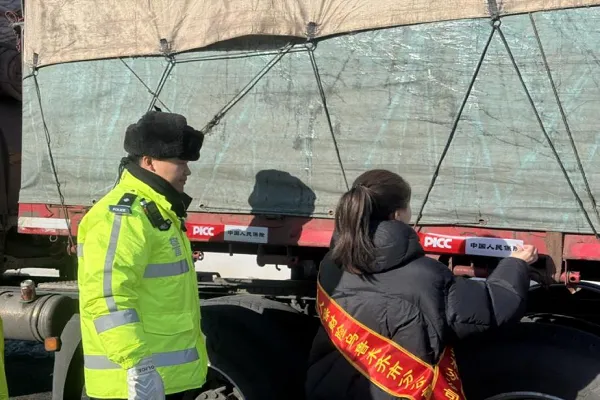
乌尉高速,这条连接乌鲁木齐与南疆的交通动脉,在春运期间变得更加繁忙。车流中,有归心似箭的游 子,也有保障物资的司机。 为了让每个人的回家路更平安,人保财险与交警队员们早早就位。他们为风尘仆仆的货车贴上醒目的反 光条,向小车司机耐心讲解冬季高速行车的要领,并为每位有需要的旅客递上一杯热气腾腾的茶水。 "我们的工作,就是想在大家最需要的时候,伸手帮一把,提个醒。"一位在现场服务的人保员工说道。 2月2日(腊月廿四),清晨的乌尉高速还笼罩在一层薄薄的寒气中。永丰服务区内,从大货车司机到返 乡的小轿车家庭,行色匆匆的人们在这里短暂歇脚。 一碗热茶,一句叮咛,一份特制的"安全守护卡"……由人保财险新疆乌鲁木齐市分公司与市公安局交通 警察支队共同设立的联合服务点,像寒冬里的一处暖炉,为南来北往的春运人潮添上一份别样的安心。 手里攥着刚领到的"安全守护卡",跑长途货运的张师傅仔细看了又看。这张卡片设计简洁,却信息周 全:不仅有清晰的路段示意图、紧急联系电话,还特别标注了乌尉高速上几处易起雾、易结冰的风险 点。 "我常跑这条线,有时候摸黑赶路,心里确实不踏实。有了这个,就像副驾驶坐了位老向导。"他笑着说 道。春运期间车流量显 ...
新华保险:深度研究治理革新+权益弹性+负债质变,三层驱动重塑成长逻辑-20260214
东方财富· 2026-02-13 10:20
Investment Rating - The report maintains a "Buy" rating for the company, reflecting optimism about its future performance and growth potential [2][15]. Core Insights - The company is expected to benefit from governance reforms, asset flexibility, and a transformation in liabilities, which together reshape its growth logic. The projected net profit for 2025E-2027E is estimated at 39.244 billion, 42.360 billion, and 44.130 billion yuan, representing year-on-year growth of 49.6%, 7.9%, and 4.2% respectively [2][15]. - The company has demonstrated strong short-term performance, capitalizing on the recovery of the capital market and effective business transformation, leading to significant increases in revenue and net profit [14][15]. Summary by Sections 1. Mechanism-Asset-Business Three-Layer Linkage - The company leverages a three-layer logic of governance reform, asset enhancement, and liability transformation to create a synergistic effect that enhances its value [14][20]. - Governance reforms are seen as the foundational engine driving comprehensive transformation, with a focus on professionalization and marketization across all business lines [20][21]. 2. Industry Environment - The insurance industry is transitioning into a phase characterized by "stock game + value priority," with a focus on value creation rather than mere scale expansion [32][34]. - The overall performance of the insurance industry remains stable, with significant growth in premium income and improved solvency ratios, indicating enhanced risk resilience [32][34]. 3. Company Overview - The company has undergone significant historical evolution, transitioning from scale expansion to high-quality development, with a clear strategic focus on governance and value creation [52][53]. - The company has established a robust capital and governance foundation through its A+H share listing, enabling it to navigate industry challenges effectively [52][53].

新华保险(601336):深度研究:治理革新+权益弹性+负债质变,三层驱动重塑成长逻辑
East Money Securities· 2026-02-13 09:52
Investment Rating - The report maintains a "Buy" rating for the company, reflecting optimism about its future performance and potential for profit growth [2][15]. Core Insights - The company is expected to benefit from governance reforms, asset flexibility, and a transformation in liabilities, which together reshape its growth logic. The projected net profit for 2025E-2027E is estimated at 39.244 billion, 42.360 billion, and 44.130 billion yuan, representing year-on-year growth of 49.6%, 7.9%, and 4.2% respectively [2][15]. - The report highlights a synergistic effect from governance innovation, high equity allocation, and liability transformation, which is anticipated to enhance the company's value and operational efficiency [14][20]. Summary by Sections 1. Mechanism-Asset-Business Three-Layer Linkage - The company has established a three-layer logic of governance innovation, asset capability enhancement, and liability business transformation, creating a unique growth momentum and performance elasticity [20]. - Governance reforms are seen as the foundational engine driving comprehensive transformation, with a focus on professionalization and marketization across all business lines [20][14]. 2. Industry Environment - The insurance industry is transitioning into a phase characterized by "stock game + value priority," with a focus on governance advantages, investment capabilities, and transformation speed as key competitive factors [32]. - The overall performance of the insurance industry remains stable, with premium income reaching 3.74 trillion yuan in the first half of 2025, a year-on-year increase of 5.04% [32]. 3. Company Overview - The company has undergone significant historical evolution, transitioning from rapid expansion to a focus on high-quality development, with governance modernization as a core strategy [52]. - The company has successfully optimized its business structure, shifting from low-value insurance products to a focus on health insurance and individual premium products, resulting in a substantial increase in internal value [52].
下马威 | 谈股论金
水皮More· 2026-02-13 09:27
Market Overview - A-shares experienced a collective decline on the last trading day before the holiday, with the Shanghai Composite Index falling by 1.26% to 4082.07 points, the Shenzhen Component Index down 1.28% to 14100.19 points, and the ChiNext Index decreasing by 1.57% to 3275.96 points [3] - The trading volume in the Shanghai and Shenzhen markets was only 1.9991 trillion, a decrease of 161.9 billion compared to the previous day [3] Impact of External Markets - The significant drop in U.S. stocks, driven by fears surrounding AI, led to a negative sentiment in the A-share market, with major institutions not stepping in to support the market [5] - The catalyst for the U.S. market decline was a small logistics company's announcement of an AI software that could quadruple delivery efficiency, causing a sell-off in the logistics sector [5] AI Technology Concerns - The market is currently grappling with the unpredictable impacts of AI technology across various industries, leading to a preemptive risk-averse behavior among investors [5] - While AI is expected to enhance productivity and reduce costs, it poses potential threats to certain intermediary sectors, although it is not expected to cause catastrophic damage [6] A-share Market Dynamics - The A-share market has seen excessive speculation around AI-related stocks, with a notable example being the market's initial positive interpretation of ByteDance's Seedance 2.0, which may actually lower industry barriers and reduce future funding and labor needs in the film industry [6] - The market's reaction to AI advancements reflects a duality, recognizing both the productivity benefits and the potential disruptions, particularly concerning employment [6] Trading Data Insights - On the trading day, 3687 stocks declined while only 1463 stocks rose, with a median market drop of 0.77% and a net outflow of 69 billion from major funds [7] - The decline was primarily driven by heavyweight stocks in sectors like coal, electricity, and major banks, which collectively contributed to the market downturn [7] Future Outlook - The Hang Seng Technology Index showed a smaller decline than expected, indicating potential support levels for tech stocks despite the broader market's challenges [9] - As AI applications continue to gain traction and public acceptance, there is potential for a rebound in the Hang Seng Technology Index, warranting further observation [9]
摩根大通对中国平安的多头持仓比例增至8.23%
Xin Lang Cai Jing· 2026-02-13 09:20
Group 1 - JPMorgan's long position in Ping An Insurance (Group) Company of China, Ltd. - H shares increased from 7.95% to 8.23% as of February 9, 2026 [1]


摩根大通(JPMorgan)对中国平安的多头持仓比例增至8.23%
Xin Lang Cai Jing· 2026-02-13 09:12
Core Viewpoint - JPMorgan has increased its long position in Ping An Insurance (Group) Company of China, Ltd. - H shares from 7.95% to 8.23% as of February 9, 2026 [1] Company Summary - JPMorgan's long position in Ping An Insurance has seen an increase, indicating a growing confidence in the company's performance and potential [1]
一周保险速览(2.6—2.13)
Cai Jing Wang· 2026-02-13 09:05
Industry Focus - The ten bank-affiliated insurance companies are projected to achieve a total premium income of 477.15 billion yuan by 2025, representing a year-on-year growth of 15.29% [1] - The net profit for these companies is expected to reach 24.364 billion yuan, a significant increase of 145.06% compared to 2024, with all companies reporting profitability [1] - Notably, CITIC Prudential Life and Everbright Sun Life have turned losses into profits [1] - The average simple investment return rate is projected to be 4.153%, with five companies exceeding 4%, although the comprehensive investment return rate has declined to an average of 1.71%, down 8.004 percentage points year-on-year [1] Corporate Dynamics - Ping An Life Insurance Co., Ltd. has increased its registered capital from 33.8 billion yuan to approximately 36.003 billion yuan, marking a growth of about 7% [2] - This capital increase, driven by shareholders, aims to enhance the company's capital strength and solvency, potentially improving its comprehensive solvency and market competitiveness [2] Financial Personnel Changes - The chairman of China Post Life Insurance Co., Ltd., Han Guangyue, has submitted his resignation due to personal age reasons, with his 60th birthday approaching in two months [3] - Zeng Shangyou has been appointed as the temporary head and party secretary of PICC Reinsurance Co., Ltd., following the resignation of former chairman Xiao Jianyou in October 2025 [4] - Lei Wanchun has been approved as the general manager of Three Gorges Life Insurance Co., Ltd. by the Chongqing Financial Regulatory Bureau [5] - Yan Wenbo, the party secretary and president of Huajin Securities, is set to be appointed as the chairman of Hengqin Life Insurance, succeeding Qian Zhonghua, who resigned on January 22 [6]