
Autonomous Vehicles

Search documents
Ruter and Holo Choose MOIA with Mobileye Drive for Next Stage of AVs
Businesswire· 2025-12-10 12:34
Core Insights - Ruter, the public transport agency of Oslo, Norway, is partnering with Holo and MOIA to deploy the ID. Buzz AD equipped with the Mobileye Drive™ self-driving system, aiming for deployment as early as spring 2026 [1] Group 1: Partnership and Deployment - The collaboration involves Ruter, Holo, and MOIA to enhance autonomous driving capabilities in Europe [1] - The ID. Buzz AD will utilize the Mobileye Drive™ self-driving system, indicating a significant technological advancement in public transport [1] Group 2: Testing and Development - Extensive testing of autonomous development vehicles has been conducted by Ruter and Holo using the Mobileye Drive™ system [1]



Pony AI Expands Sunlight Mobility Partnership to Accelerate Scalable, Capital-Efficient Fleet Growth
Yahoo Finance· 2025-12-09 16:19
Group 1 - Pony AI Inc. is recognized as one of the best new tech stocks to buy, with Goldman Sachs maintaining a Buy rating and a price target of HK$122.07 [1] - The company announced an expanded partnership with Sunlight Mobility to implement an asset-light model, building on a previous collaboration from June 2024 [2] - This partnership aims to create a scalable, capital-efficient, and rapidly deployable mobility ecosystem to accelerate fleet expansion [2][3] Group 2 - Sunlight Mobility will fund the Gen-7 Robotaxi vehicles, with the initial fleet planned for deployment in Guangzhou by the end of 2025 [3] - The agreement signifies growing market recognition of Pony AI's Robotaxi business model, as more third parties are willing to fund fleet deployment and lease Pony AI's Virtual Driver for commercial operations [4] - The collaborative fleet supply will be integrated into both Pony AI and Sunlight Mobility's platforms, ensuring shared economic benefits [4]
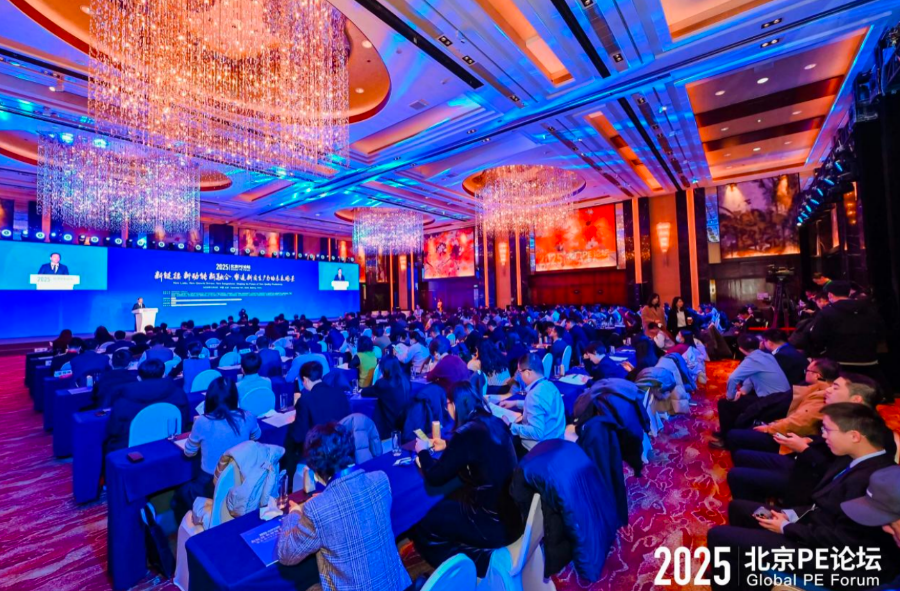
PE/VC正把钱投向哪里?北京这场论坛披露了这些新动向
2 1 Shi Ji Jing Ji Bao Dao· 2025-12-09 07:16
Group 1: Investment Trends - Investment is increasingly focused on artificial intelligence, green technology, and biomedicine as areas for long-term returns [1] - Capital is shifting towards sectors with clear technological barriers and deep integration into specific industrial scenarios [1][2] - The trend indicates a move from simple online consultations in healthcare to complex long-term health management and precision treatment [2] Group 2: Healthcare Innovations - The "Home Doctor" project exemplifies a successful AI-driven family doctor service model, achieving a membership renewal rate of over 95% for three consecutive years [2] - Investment is gravitating towards projects that combine advanced biotechnologies and AI algorithms, demonstrating clinical effectiveness [3] - The "SaiFu Gene" project integrates genetic big data with AI to focus on hereditary and rare diseases, creating a dual-driven model of clinical services and research empowerment [3] Group 3: Autonomous Driving and Low-altitude Economy - Autonomous driving technology is moving beyond demonstration phases to large-scale commercial operations in logistics and mining [5] - New Stone Technology's delivery vehicles have entered 306 cities in China, providing integrated solutions of hardware, software, and operational services [5] - The mining sector is experiencing significant economic benefits from automation, with estimates suggesting annual savings of approximately 160 million yuan in labor costs [5] Group 4: Green and Hard Technologies - Investment is flowing into hard technologies that support future industries like AI and low-carbon transitions, characterized by high technical barriers and long R&D cycles [8] - Companies like Chip Vision Technology are developing advanced monitoring systems for environmental management, showcasing the integration of cutting-edge sensor technology with practical needs [8] - Investment in foundational technologies is aimed at domestic alternatives and cost reductions, such as the development of domestically produced cryo-electron microscopes [8] Group 5: Evolving Investment Strategies - Investment institutions are transitioning from a focus on financial returns to providing deep value-added services and industry empowerment [11] - Funds are adopting long-term strategies, exemplified by investments in biodegradable plastics and industrial water treatment over a decade [11] - Financial institutions are innovating their service models to better accommodate the unique needs of technology companies, such as the introduction of "technology achievement transformation loans" [12]
X @TechCrunch
TechCrunch· 2025-12-08 22:00
Growth Metrics - Waymo's robotaxi rides are experiencing skyrocketing growth [1]
Investor letter reveals skyrocketing growth of Waymo's robotaxi rides
TechCrunch· 2025-12-08 21:58
Core Insights - Waymo has increased its weekly robotaxi rides to 450,000, nearly double the 250,000 rides reported six months ago [1][2] - The company is planning to expand its service to 12 additional cities by 2026, including Dallas, Denver, Houston, Nashville, and San Diego [3] Company Performance - Waymo's current weekly ride count reflects significant growth and operational scaling [2] - The increase in rides is part of an aggressive rollout strategy, indicating strong demand and operational capacity [3] Future Expansion - Waymo is set to expand its commercial robotaxi services from five cities to a total of 17 cities by 2026 [3] - The expansion plan highlights the company's commitment to increasing its market presence and service availability [3]


Guident(GDNT) - Prospectus(update)
2025-12-08 21:27
As filed with the U.S. Securities and Exchange Commission on December 8, 2025. Registration Number 333-290340 UNITED STATES SECURITIES AND EXCHANGE COMMISSION Washington, D.C. 20549 AMENDMENT NO. 4 TO FORM S-1 REGISTRATION STATEMENT UNDER THE SECURITIES ACT OF 1933 Guident Corp. (Exact Name of Registrant as Specified in its Charter) (State or other jurisdiction of incorporation or organization) (Primary Standard Industrial Classification Code Number) Florida 3714 84-5172003 (I.R.S. Employer Identification N ...
UBER vs. GRAB: Which Ride-Hailing Stock Reigns Supreme Currently?
ZACKS· 2025-12-08 16:15
Core Insights - Uber Technologies (UBER) and Grab (GRAB) are significant players in the ride-hailing industry, each with distinct business models and regional strategies [1][2] Uber's Position - Uber operates a global platform, primarily focused on ride-sharing, but has expanded into food delivery and freight services [2] - The company reported strong demand in both ridesharing and delivery sectors, with third-quarter 2025 earnings exceeding expectations [4] - For Q4 2025, Uber anticipates gross bookings between $52.25 billion and $53.75 billion, reflecting a year-over-year growth of 17% to 21% [5] - Uber is advancing into the robotaxi market through partnerships, launching services in Abu Dhabi and Dallas with autonomous vehicles [6][7] - The company has authorized up to $20 billion in share repurchases, indicating confidence in its long-term strategy and enhancing shareholder value [8][9] - Uber's market capitalization stands at $189.75 billion, providing it with greater resilience during economic uncertainties [23][24] Grab's Position - Grab is a leading "super-app" in Southeast Asia, offering a range of services tailored to local market needs, including food delivery and digital payments [11] - The company reported a 24% year-over-year increase in On-Demand Gross Merchandise Value (GMV) in Q3 2025, with expected revenues between $3.38 billion and $3.40 billion for 2025 [12] - Grab has faced challenges with earnings consistency, missing consensus estimates in two of the last four quarters [13] - The company is partnering with Amazon Web Services to enhance its operational efficiency and service offerings [14] - Grab is also entering the autonomous mobility space with a strategic investment in WeRide, planning to launch its first AV service in Singapore [15][16] Comparative Analysis - Over the past year, Uber's shares have increased by over 38%, while Grab's shares have declined by more than 2% [17] - Uber's forward price-to-sales multiple is 3.18, while Grab's is higher at 5.14, indicating that Grab appears more expensive [21] - Uber's ongoing diversification and shareholder-friendly buybacks suggest a strong financial position compared to Grab, which operates in a narrower geographic base and faces regional economic challenges [23][24] - Based on the analysis, Uber is currently viewed as the stronger investment choice over Grab [25]



Waymo to issue software recall over how robotaxis behave around school buses
TechCrunch· 2025-12-05 23:11
Core Viewpoint - Waymo plans to voluntarily issue a software recall to address concerns regarding its robotaxis' operation around school buses, following scrutiny from federal regulators and local officials [1][6]. Group 1: Incident Overview - The National Highway Traffic Safety Administration (NHTSA) initiated an investigation into Waymo after observing footage of its robotaxi maneuvering around a stopped school bus with its stop sign extended and lights flashing in Atlanta [2]. - Reports from the Austin School District indicated that Waymo's robotaxis illegally passed school buses 19 times in the current year, prompting further inquiries from regulators [4]. Group 2: Company Response - Waymo updated its software on November 17, claiming that the update significantly improved performance in scenarios involving school buses, asserting that it now performs better than human drivers [3][6]. - The company emphasizes its commitment to safety, stating that no injuries have occurred related to the behavior addressed by this recall, and it will continue to analyze and improve vehicle performance [6][7]. Group 3: Industry Context - Software recalls are increasingly common in modern vehicles, including robotaxis, where operations are primarily managed by software. These updates often occur before an official recall is filed with the federal government [8].

Feds ask Waymo about robotaxis repeatedly passing school buses in Austin
TechCrunch· 2025-12-04 22:54
Core Points - The National Highway Traffic Safety Administration (NHTSA) has requested additional information from Waymo regarding its self-driving system after reports of illegal maneuvers around school buses [1][2] - Waymo's robotaxis have been reported to illegally pass school buses 19 times since the start of the 2025-26 school year, raising safety concerns [5][10] - Waymo claims that its software updates have improved safety, reporting a fivefold reduction in injury-related crashes compared to human drivers [6][8] Regulatory Actions - NHTSA's Office of Defects Investigation opened an investigation into Waymo in October after observing footage of a robotaxi maneuvering around a stopped school bus [3] - A letter from NHTSA to Waymo requested detailed information about its fifth-generation self-driving system and operations [2] - The Austin School District has requested that Waymo cease operations during peak school hours until further software updates are completed [9][10] Company Response - Waymo stated that the bus was partially blocking the driveway, which affected the robotaxi's visibility of the stop sign and flashing lights [4] - The company has issued software updates aimed at improving performance and has committed to continuous improvement [8] - Waymo maintains that its robotaxis are safer than human drivers, citing data on reduced injury crashes [6][8]

Aurora Innovation (AUR) Jumps 13% Ahead of Next Week’s Key Data
Yahoo Finance· 2025-12-04 17:55
Group 1 - Aurora Innovation, Inc. (NASDAQ:AUR) experienced a significant increase of 13.03% on Wednesday, closing at $4.51, driven by market optimism ahead of the Federal Reserve's interest rate decision [1] - The Federal Reserve is expected to announce a 25-basis point rate cut on December 10, which is influencing market sentiment [1] Group 2 - Aurora Innovation has expanded its commercial operations in Texas by launching a second route from Fort Worth to El Paso, covering a distance of 600 miles [2] - The company has successfully achieved 100,000 miles of driverless operation with its five autonomous trucks on public roads [2] Group 3 - Next year, Aurora plans to introduce next-generation hardware aimed at reducing costs by 50% while enhancing performance and durability [2] - The new hardware will include increased reliability for over a million miles, a new generation of FirstLight lidar capable of detecting objects from 1,000 meters away, and improved sensor cleaning for harsher weather conditions [3]
