
Insurance

Search documents
Real Matters to Announce First Quarter Fiscal 2026 Financial Results on January 29, 2026
Globenewswire· 2026-01-06 15:00
Group 1 - Real Matters Inc. will announce its first quarter fiscal 2026 financial results on January 29, 2026, before market open [1] - A conference call to review the results will be held at 10:00 a.m. (ET) on the same day, hosted by CEO Brian Lang and CFO Rodrigo Pinto [2] - The company is a leading network management services provider for the mortgage lending and insurance industries, utilizing proprietary technology and a network of independent professionals [3] Group 2 - Real Matters serves top 100 mortgage lenders in the U.S. and major banks and insurance companies in Canada, focusing on residential real estate appraisals and title and mortgage closing services [3] - The company is headquartered in Markham, Ontario, with principal offices in Buffalo, New York, and Middletown, Rhode Island [3] - Real Matters is listed on the Toronto Stock Exchange under the symbol REAL [3]



Jackson Financial (NYSE:JXN) Earnings Call Presentation
2026-01-06 14:00
Strategic Partnership with TPG - TPG will acquire approximately 6.5% common equity stake in JFI at $106.03 per share, totaling $500 million at close[7] - Jackson will receive $150 million of TPG common equity at $65.82 per share[7] - TPG's AUM managed by TPG needs to reach $4 billion by the end of year 2 and $12 billion by the end of year 5[7] - TPG is a leading global alternative asset management firm with $286 billion of AUM[12] Formation of Hickory Re - Hickory Re is a Michigan-based captive reinsurer 100% owned by Brooke Re[18] - Hickory Re will reinsure new FA and FIA sales, initially reinsuring $1.2 billion inforce FA/FIA block[18] - Initial capitalization of Hickory Re is $650 million, including $150 million from JFI and $500 million from TPG investment in JFI common equity[10, 18] Financial Impact and Outlook - Expect capital capacity and efficiency to write $10-15 billion of cumulative FA and FIA sales over the medium-term[23] - Actuarial assumption review is expected to have an after-tax impact to Brooke Re equity of approximately $(350) million[26] - Brooke Re continues to be well capitalized relative to regulatory requirements[26]
5 Low Price-to-Sales Growth Picks That Could Deliver Outsized Returns
ZACKS· 2026-01-06 13:31
Core Insights - Investing in stocks based on valuation metrics, particularly the price-to-sales (P/S) ratio, can identify opportunities with strong upside potential, especially for companies that are unprofitable or in early growth phases [1][2] Group 1: Price-to-Sales Ratio - The P/S ratio provides a clearer picture of value when earnings are minimal or volatile, as it compares a company's market capitalization to its revenues [2][5] - A stock with a P/S ratio below 1 is considered a good bargain, indicating that investors pay less than a dollar for each dollar of revenue generated [6] - The P/S ratio is preferred over the price-to-earnings ratio because sales are harder to manipulate, making it a more reliable metric [7] Group 2: Screening Parameters - Stocks with a P/S ratio less than the median for their industry are highlighted as better investment opportunities [9][10] - The screening process pairs low P/S ratios with solid balance sheets to avoid valuation traps associated with excessive debt [10] Group 3: Company-Specific Insights - Hamilton Insurance Group (HG) is benefiting from strong execution and a clear growth roadmap, with gross premiums written rising significantly, reflecting momentum in various insurance lines [12][13] - Macy's Inc. (M) is undergoing a transformation under its Bold New Chapter program, focusing on digital initiatives and omnichannel retailing, which has led to consistent outperformance [14][15] - GIII Apparel Group (GIII) is driving growth through product differentiation and strengthening direct-to-consumer channels, with owned brands generating higher margins [16][17] - Green Dot (GDOT) is well-positioned for growth with a strong balance sheet and significant cash reserves, expanding its addressable market through Banking-as-a-Service programs [18][20] - Gibraltar Industries (ROCK) is benefiting from operational improvements and a focus on its Three-Pillar Strategy, with high demand in its Residential segment and agricultural facilities [21][22]






Aon’s Eric Andersen named AIG President and CEO as Peter Zaffino transitions to Executive Chair
ReinsuranceNe.ws· 2026-01-06 13:09
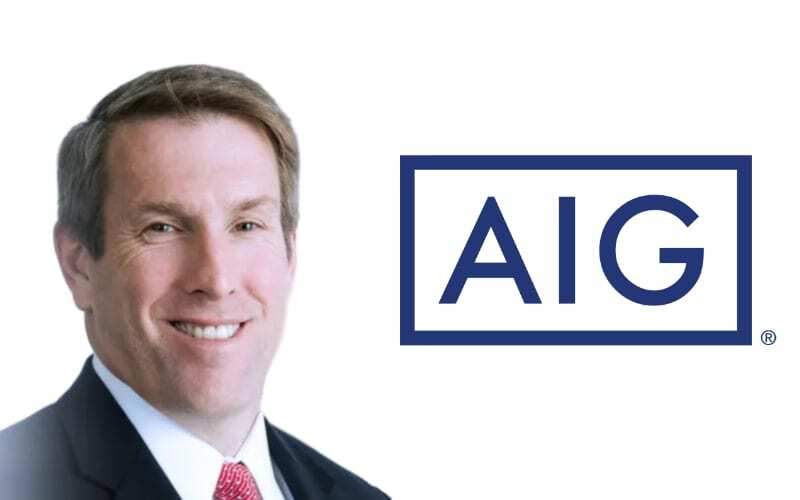
Core Insights - Peter Zaffino, President and CEO of AIG, plans to transition to Executive Chair and retire as CEO by mid-2026, with Eric Andersen from Aon named as his successor [1][5] - Andersen has nearly 30 years of experience at Aon, holding various senior leadership roles, and is recognized for his strategic vision and ability to drive shareholder value [3][6] Leadership Transition - Andersen will join AIG as President and CEO-elect on February 16, 2026, and will report to Zaffino during the transition period [5] - Zaffino has successfully led AIG's transformation, achieving five consecutive years of underwriting profitability from 2021 to 2025 [7][10] Company Performance - Under Zaffino's leadership, AIG has returned over $19 billion in stock repurchases and dividends to shareholders, enhancing its capital base for sustainable growth [9] - AIG has built a strong culture of underwriting excellence and modernized its operations and technology infrastructure, including the implementation of GenAI [8][10] Future Outlook - Andersen expressed enthusiasm for the opportunity to lead AIG, emphasizing the company's strong foundation and strategic positioning for future growth [7] - Zaffino believes that Andersen is well-suited to lead AIG into its next chapter, focusing on long-term profitable growth and stakeholder value [11]

AIG Taps Aon's Eric Andersen to Succeed Peter Zaffino as CEO
WSJ· 2026-01-06 13:06
Core Viewpoint - American International Group's chairman and chief executive, Peter Zaffino, is set to retire as chief executive in midyear, with Eric Andersen, a longtime executive from Aon, taking over the position [1] Company Transition - Peter Zaffino will step down from his role as chief executive in midyear [1] - Eric Andersen, who has extensive experience at Aon, will succeed Zaffino as the new chief executive [1]


Insurance Company Bankruptcy: How Protected Are You Really?
Investopedia· 2026-01-06 13:00
Core Insights - The article discusses the mechanisms in place for consumer protection against life insurance company failures, emphasizing that state governments, rather than the federal government, are responsible for monitoring the financial health of these companies [2][5]. Group 1: Life Insurance Company Failures - Failures and bankruptcies of life insurance companies are rare, with no bankruptcies reported since the 2008 financial crisis according to the National Organization of Life and Health Insurance Guaranty Associations (NOLHGA) [4]. - In the event of a life insurance company failure, state regulators will attempt to transfer policies to a stable insurance fund or keep them active through the state's central guaranty fund [5][6]. - Life insurance companies are mandated by state law to maintain capital reserves to pay out policyholder death benefits, which can be utilized in case of bankruptcy [6]. Group 2: Risk Mitigation Strategies - Reinsurance is a strategy used by life insurance companies to spread risk, allowing them to mitigate potential losses if a company fails [7]. - Guaranty associations, such as NOLHGA, provide additional protection by guaranteeing payment of benefits if a member company goes out of business, although the payout may be capped based on state law [8]. Group 3: Variable Annuities and Coverage - Variable annuities may not be covered under the same protections as life insurance policies, and policyholders need to review their contracts to understand their coverage [10][11]. - In states like Florida, variable annuity policies are only covered if some aspect of the policy is guaranteed by the insurer [11]. Group 4: Maximizing Coverage - To increase coverage limits, consumers can work with multiple insurers, as individual coverage limits are typically applied per company [14][15]. - This strategy is more practical for annuities than for life insurance due to the complexities involved in obtaining multiple life insurance policies [16][17]. Group 5: Finding a Reliable Life Insurance Company - Selecting a financially healthy life insurance company is crucial for minimizing the need for protective measures, with resources like AM Best ratings available to assess financial strength [19][20]. - Consumers should also consider other industry ratings and reviews to evaluate potential insurers [21][22].

TPG (NasdaqGS:TPG) Earnings Call Presentation
2026-01-06 13:00
Strategic Partnership - TPG and Jackson have established a long-term strategic investment management partnership [2, 12] - TPG will manage select general account assets of Jackson's subsidiaries [4] - TPG will invest $500 million in Jackson common stock, representing approximately 65% pro forma ownership [13] - Jackson will receive $150 million of TPG common stock [13] Investment Management Agreement (IMA) - TPG and Jackson will enter into a long duration, auto-renewing investment management agreement [13] - The minimum allocation is $12 billion, with a path to scale to at least $20 billion over time [13] - The initial focus will be on Investment Grade Asset Based Finance (IG ABF) and Direct Lending [13] - A minimum fee of 50 bps is applicable throughout the life of the partnership [17, 21] TPG Credit Expansion - The partnership more than doubles TPG's insurance commitments with 100% fee-paying capital [19] - TPG expects to raise approximately $20 billion of credit capital in 2025 [39] - Total TPG Credit AUM has grown 44% since the end of 2023 [39]

Roadzen Announces Major Strategic Acquisition of AI-Powered Vehicle Repair Platform VehicleCare at CES 2026; Transaction Consideration Values Standalone India Business at ~$277 Million
Globenewswire· 2026-01-06 13:00
Core Viewpoint - Roadzen Inc. has announced a definitive agreement to acquire VehicleCare, an AI-powered vehicle repair and workshop aggregation platform, marking a significant milestone in its evolution from a claims intelligence provider to a full-stack claims operating system [1][2] Company Overview - Roadzen Inc. operates at the intersection of insurance and mobility, utilizing AI to enhance claims processing and risk management for insurers, automakers, and fleets [11][12] - VehicleCare is an AI-driven platform that digitizes vehicle repair workflows and aggregates independent workshops, optimizing repair processes and improving cost efficiency [14] Acquisition Details - The acquisition is structured as an equity issuance at Roadzen's India subsidiary level, valuing VehicleCare at approximately $277 million, which represents a 50% premium to Roadzen's current public market price [5][8] - The transaction is expected to close within two weeks, subject to customary closing conditions, and will result in approximately 2% dilution at the India subsidiary level, with no dilution at the Nasdaq-listed parent company level [5][16] VehicleCare's Capabilities - VehicleCare's platform includes over 350 independent workshops across 21+ states in India, serving more than 15 insurers and brokers, and has executed over 40,000 claims with a 30% reduction in loss costs compared to OEM garages [3][4] - The platform enables insurers to guarantee repair timelines, which has been a challenge in the industry, and is expected to contribute approximately $10 million in revenue over the next twelve months [4][8] Strategic Implications - The combination of Roadzen and VehicleCare is anticipated to provide insurers with end-to-end control over the motor claims lifecycle, from digital decision-making to physical repair execution, a capability that is rare in the market [7][10] - The acquisition is seen as a natural progression for Roadzen, allowing it to expand its AI capabilities into areas such as parts cataloging and repair intelligence, thereby addressing complex global markets [10]

Peter Zaffino to Transition to Executive Chair of AIG's Board of Directors by Mid-2026
Businesswire· 2026-01-06 12:38
Core Viewpoint - American International Group, Inc. (AIG) announced that Chairman & CEO Peter Zaffino will transition to Executive Chair and retire as CEO by mid-year, marking a significant leadership change after successfully transforming the company into a leading global property and casualty insurer [1] Group 1 - Peter Zaffino has informed the AIG Board of Directors about his intention to step down as CEO [1] - The transition aligns with AIG's comprehensive multi-year succession planning process [1] - The company has undergone a strategic repositioning under Zaffino's leadership [1]

Ascot names Ashleigh Edwards as group head of ceded reinsurance
Yahoo Finance· 2026-01-06 12:01
Ascot Group has appointed Ashleigh Edwards as group head of ceded reinsurance, effective from 5 January 2026. According to the insurer, Edwards will have “ultimate responsibility” for its ceded reinsurance strategy across its global platforms. Her responsibilities include supervision of reinsurance structures, placement approaches and the various classes of business covered under the programme. She will report to Mark Pepper, the group’s chief underwriting officer, and work alongside ceded reinsurance ...